Jazz At Lincoln Center is a jazz artist featured on JazzMore. Genres: Jazz, Contemporary Jazz, Swing, Big Band, Bebop. Explore 35 albums in our catalog, arranged by release date.
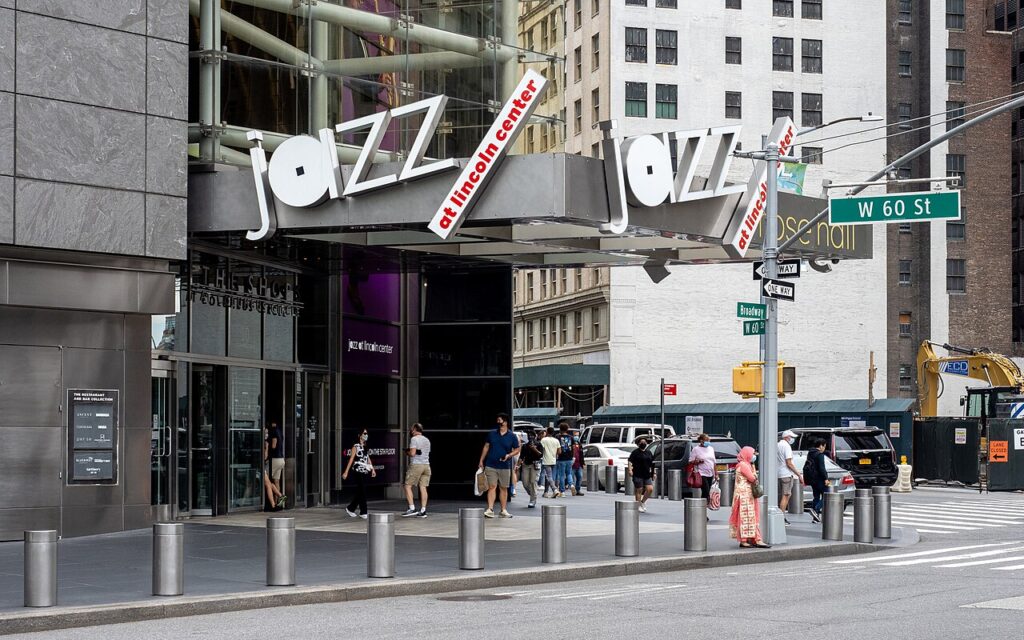
Jazz at Lincoln Center (JALC) is a New York City institution and part of Lincoln Center. Founded in 1987, it officially opened in October 2004 at the Time Warner Center (now Deutsche Bank Center). Its mission is to celebrate the full breadth of jazz through education, programming, archives, and ceremonies. It promotes jazz, culture, and arts education around the world. Wynton Marsalis is its artistic director and the music director of the Jazz at Lincoln Center Orchestra.
The center presents performances by its orchestra and guest musicians and is also home to New York City Opera. Many concerts are streamed on its YouTube channel. It runs educational programs in its building, online, and in schools across the country.
Through concerts—more than 90 percent of seats at major performances are filled—tours, music education, sheet music, recordings on its Blue Engine label, and live performances on its JAZZ LIVE platform, the organization reaches about three million people of all ages each year.
Speakers throughout the building play recordings by great jazz artists such as Ella Fitzgerald, Dizzy Gillespie, and Louis Armstrong.
History
In the mid-1980s, Lincoln Center sought to attract younger audiences. Its venues sat unused during the summer, so the center wanted to put them to use while resident companies performed elsewhere. Jazz supporters at Lincoln Center campaigned to have the music recognized by the institution. In a 1986 report, the center said, “Lincoln Center should focus on improving the quality of its programming, and there is no compelling reason to include areas such as jazz.” Alina Bloomgarden, then director of visitor services, had proposed a resident jazz program for the third time. Some feared jazz audiences might be too rowdy, so Bloomgarden invited Wynton Marsalis to help plan a summer concert series. To succeed, the series had to be financially viable and demonstrate the value of its music and community.
In 1987, trumpeter Wynton Marsalis helped launch the Classical Jazz concert series, Lincoln Center’s first jazz series. It opened in August 1987 with a tribute to women in jazz, including Betty Carter, Sasha Dalton, and Marian McPartland. The series’ success mattered at a difficult time: many great jazz innovators had died, jazz clubs were closing, many colleges had no jazz programs, and electronic music was becoming commercialized. American society was also deeply divided. Many places remained segregated; the AIDS epidemic was spreading; the Cold War intensified militarization and globalization; and Ronald Reagan’s war on drugs led to mass incarceration. By the following year, the series had its own program on National Public Radio and began touring.
The music Marsalis hoped to preserve is captured in the three-movement suite “A New Orleans Ritual,” modeled on a New Orleans funeral procession. Stanley Crouch, a co-founder of Jazz at Lincoln Center, wrote an impassioned speech that the Reverend Jeremy Wright delivered. It came to be seen as a declaration of the organization’s purpose:
“Perhaps we listeners heard an enduring truth from the descendants of people who had been bought and sold as commodities—the people who stood on auction blocks and lived in slave quarters, whose existence formed the cross on which this nation’s Constitution was nailed. Yet even after that crucifixion, in the third century of slavery in the Americas, people rose with a vision of freedom. They lit the powerful wick extending from a candle and passed it on. Through music they showed what light meant: they would not submit to self-righteous dragons or let their hearts grow dark. They said, ‘Listen closely.’ They said, ‘If you give me a fair chance, I will help you understand democracy better.’ Yes, that is what they said. ‘If you give me a fair chance, I will help you understand democracy better.’ These are the people who created a noble sound.”
Gordon Davis, a Lincoln Center board member and its founding chairman, saw the summer series succeed and advocated for a permanent jazz program. The board agreed. By 1996, Jazz at Lincoln Center had become a constituent member alongside the New York Philharmonic, New York City Ballet, Metropolitan Opera, and European Arts Center. Its budget was $4 million in 1996, compared with the Metropolitan Opera’s $150 million; by 2016 it had exceeded $50 million. Marsalis has served as artistic director since 1987. Greg Scholl became executive director in 2012.
In January 2026, the Jazz at Lincoln Center Orchestra performed at the Sheldon Theatre in St. Louis, Missouri. Marsalis conducted the orchestra, which tours internationally in addition to performing at Appel Room and Rose Theater. Concerts are also streamed online, and educational programs appear on the center’s YouTube channel. Since 2015, the orchestra’s albums have been released on its own Blue Engine Records label.
The center promotes jazz education in high schools through its Essentially Ellington program. Professional musicians visit schools through Let Freedom Swing. In New York City, it operates tuition-free middle-school and high-school jazz academies and a summer academy. Each year, its orchestra tours the United States and visits schools. The Essentially Ellington High School Jazz Band Competition and Festival is held each year at Jazz at Lincoln Center.
In January 2026, Marsalis announced that he would step down as artistic director in July 2027 and serve as an adviser through June 2028. In an interview, he said, “Now is the best time to find the next generation of leaders. We want to do everything we can to cultivate what we have built, because we know this is an art form that will keep evolving and this institution will continue to thrive.” He will continue to perform with the Jazz at Lincoln Center Orchestra from time to time.
Lincoln Center Building Guide
Rose Hall
Rose Theater, 2007
120 yards; 13 Jazz at Lincoln Center; 13 Jazz at Lincoln Center; 12; 11 David H. Koch Theater; 11 David H. Koch Theater; 10 Damrosch Park; 10 Damrosch Park; 9 Josie Robertson Plaza, Revson Fountain; 9 Josie Robertson Plaza, Revson Fountain; 8 Metropolitan Opera House; 8 Metropolitan Opera House; 7 New York Public Library for the Performing Arts (including Bruno Walter Auditorium); 7 New York Public Library for the Performing Arts (including Bruno Walter Auditorium); 6 David Geffen Hall; 6 David Geffen Hall; 5 Elinor Bunin Munroe Film Center; 5 Elinor Bunin Munroe Film Center; 4 Vivian Beaumont Theater (including the Mitzi E. Newhouse and Claire Tow theaters); 4 Vivian Beaumont Theater (including the Mitzi E. Newhouse and Claire Tow theaters); 3 Alice Tully Hall; 3 Alice Tully Hall; 2 Juilliard School; 2 Juilliard School; 1 Samuel B. and David Rose Building (including Walter Reade Theater); 1 Samuel B. and David Rose Building (including Walter Reade Theater).
Frederick P. Rose Hall is a performing arts center designed by Rafael Viñoly on the fifth floor of Deutsche Bank Center (formerly Time Warner Center). The $131 million facility opened in fall 2004 and was the world’s first center devoted entirely to jazz performance, education, and broadcasting. It was designed to give jazz a warm, clear sound. Rose Hall has three venues: Rose Theater, Appel Room, and Dizzy’s Club, named after trumpeter Dizzy Gillespie. The hall also houses the Irene Diamond Education Center, with rehearsal and recording studios. Its location was criticized because it sits in the upscale shopping complex at Columbus Circle, four blocks from Lincoln Center’s main campus. Jazz at Lincoln Center responded that this “temple of consumerism” presented music born of the struggle for freedom, music that encourages performers and listeners to strive for higher ideals.
Lincoln Center Jazz at Night
In 2025, the Rose Hall sign is visible during Lincoln Center Jazz at Night.
Leaders of Jazz at Lincoln Center set out to build a venue with acoustics suited to swing and blues. They also wanted it to house the organization’s educational and archival work. To attract a wider audience, Marsalis collaborated with popular musicians outside jazz, including Stevie Wonder, Paul Simon, and Bob Dylan. This drew new listeners and created a rich interplay among swing, rock, and rhythm and blues.
Rose Theater uses a “box within a box” design and has no rigid structural connection to the other Jazz at Lincoln Center venues. Its 1,233 seats can be adapted for opera, dance, drama, film, and orchestral performances. Rubber pads under the floor reduce outside noise and preserve a quiet, intimate atmosphere. Movable seating towers allow the theater to switch between concert and theater layouts. In concert mode, seats are placed behind and around the musicians, supporting the sound and sightlines while increasing capacity. In theater mode, the seating towers retract into an air-cushion system, creating a platform for opera, ballet, or modern dance sets.
Appel Room has 583 seats and a relaxed, intimate atmosphere. It normally has seven separate seating levels, but these can be reconfigured into four to make dancing and movement easier. A 50-foot glass wall looks out over Central Park. It tilts slightly upward so sound can reflect directly from the atrium and stage monitors to the ceiling. Sound-absorbing panels hang from the ceiling and walkways to diffuse and absorb sound.
Dizzy’s Club, named after American jazz trumpeter Dizzy Gillespie and sponsored by Coca-Cola, seats 140. It is designed as an intimate jazz club for live trios, pianists, and singers, with city views over Columbus Circle and Central Park. Its design aims for a “golden” sound that encourages interaction between artists and audiences, much like New York’s early jazz clubs.
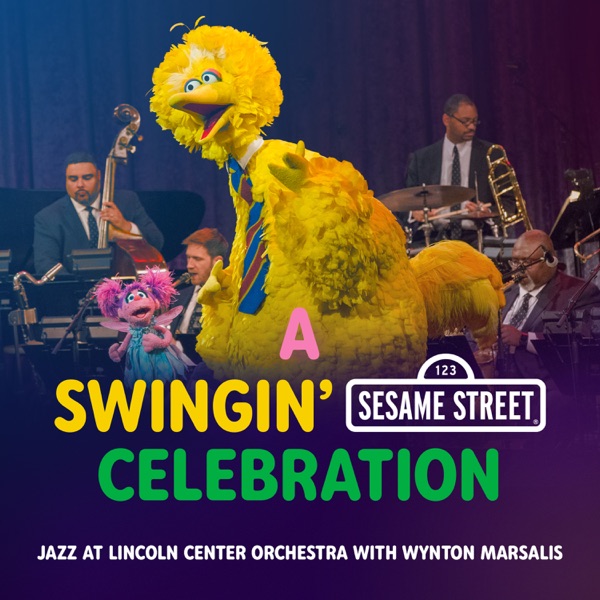
Explore 35 albums and recordings, arranged by release date.







Explore other jazz artists who share genre tags with Jazz At Lincoln Center.