
Beijing News Book Review Weekly
What is jazz, and how did it develop? Why do jazz musicians all play “the same tunes”? As the book Jazz from the Beginning puts it, jazz has always been a “world music” that brings together musical traditions from around the globe. To this day, it continues to absorb a wide range of sounds from around the world and evolve.
Original author | Masahiro Goto
Jazz from the Beginning
Author: Masahiro Goto
Translator: Yu Mengjiao
Edition: WeRead | Sichuan Fine Arts Publishing House
February 2026
New Orleans, a “World Music” City
Jazz was, of course, born in the United States. But from the beginning, it has been a highly diverse “world music,” bringing together traditions from across the globe.
The music now known as jazz took shape from the late 19th century into the early 20th. Its formative center was New Orleans, a southern U.S. port near where the Mississippi River flows into the Gulf of Mexico. Founded by the French in the early 18th century, the city was acquired by the United States from France in 1803. Languages from many countries mingled there, making it a “melting pot of peoples and ethnicities.” Its residents included French settlers, Black and white Americans with varied backgrounds, Cajuns who had migrated from French-speaking Canada, and people from what are now Haiti, other Caribbean nations, and Central and South America. This diversity shaped not only language and food, but also the many kinds of music heard in New Orleans.
Jazz still eagerly absorbs music from around the world and continues to change. New Orleans, a city with its arms open to the world, is the source of jazz’s all-embracing spirit.
New Orleans was home to a group known as Creoles, people of mixed African and European ancestry. Many had received a basic classical music education and played instruments such as piano for pleasure. During the Civil War era, they faced discrimination, like Black people, and often had to play piano or other instruments in bars to make a living. Jazz’s early form can be understood as a meeting of Creoles’ European musical training, African American music popular in the South—including spirituals, blues, and ragtime—African-influenced Caribbean music, and the popular music of the day.
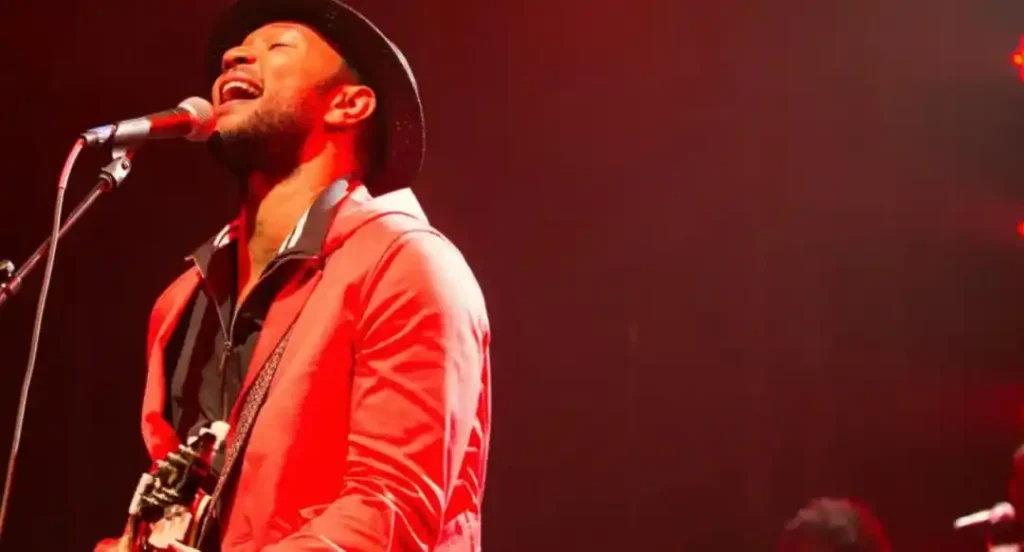
Still from La La Land (2016).
One notable Creole musician was pianist Jelly Roll Morton (1890–1941). In recordings made late in life, Morton used his own playing to demonstrate how classical music could become jazz through rhythmic transformation, and how Caribbean rhythms—which he called “the Spanish tinge”—could blend with blues and evolve into jazz.
It is thought that Black and white residents of New Orleans, alongside Creoles, also began playing early New Orleans jazz. They freely combined several wind instruments, creating exuberant, sometimes loosely organized music. Legendary cornetist Buddy Bolden (1877–1931) was a leading figure in early jazz, though, unfortunately, no recordings of him survive.
The Earliest Jazz Recordings
and the Great Migration North
The earliest jazz recordings date to 1917 and were made by the Original Dixieland Jass Band, a white group from New Orleans.
That same year, the United States entered World War I. Even before then, many Black Americans had left the South for northern cities, where they found work in factories and service industries—a movement known as the Great Migration. The war accelerated the trend. New Orleans was a naval port, and the entertainment district where many musicians worked was shut down, prompting most of them to move to northern cities. Prohibition followed in 1920, and musicians who had reached Chicago often found work in underground clubs controlled by the notorious gangster Al Capone.
The most important figure among them was Louis Armstrong, nicknamed “Satchmo.” Born in New Orleans in 1901, he moved to Chicago in 1923. It was through Armstrong’s playing in the 1920s that jazz came to prize the swing, individuality, and originality of a solo—values that remain central today.
Other New Orleans-born jazz musicians also had their first chance to record after moving to Chicago. Radio broadcasts, which began in 1920, helped carry these records—and a music once confined to a region—across the United States and around the world.
During World War I, the Hellfighters band, led by Black bandleader James Reese Europe, was sent to Europe and performed in major cities including Paris. European audiences encountered the appeal of this American popular music for the first time.
In Chicago, several white high school students were drawn to Black jazz and later became musicians themselves. They included Eddie Condon, Gene Krupa, and Benny Goodman, all of whom would play important roles in the later swing boom.
Still from La La Land (2016).
Among white jazz musicians active in the Midwest around Chicago, cornetist Bix Beiderbecke was one of the most distinctive. He died in 1931 at just 28, but his playing was more than an imitation of Black musicians: it had a lyrical, refined character of its own. Listening to recordings with his collaborators—saxophonist Frankie Trumbauer and guitarist Eddie Lang—offers a glimpse of white predecessors such as Stan Getz, Chet Baker, and Paul Desmond, who would later help shape the cool jazz movement.
Jazz’s Center Moves to New York
Born in New Orleans, jazz flourished in Chicago before its seeds spread around the world. Which U.S. city has the most vibrant jazz scene today? Without question, it is New York.
As the country’s largest metropolis, New York also received Black migrants from the South during the Great Migration. Many “new immigrants” who came to the United States from Europe in the second half of the 19th century also disembarked in New York and settled there. They included Catholic communities from Italy, Greece, and Ireland, as well as Jewish immigrants from Russia, Central Europe, and Eastern Europe. In New York around the turn of the 20th century, the languages, cultures, and music brought by these newcomers and by Black communities intertwined. The musical, one of the great symbols of American culture, also took shape in the late 19th and early 20th centuries. Many composers of musical-theater songs still performed today—the jazz standards—were Jewish immigrants. These histories reveal the complexity of American culture.
Jazz’s center shifted from Chicago to New York in the 1920s. The Cotton Club, an upscale jazz club in Harlem, a predominantly Black neighborhood in northern Manhattan, opened in 1920. Duke Ellington’s orchestra became its house band in 1927. Radio broadcasts of the club’s performances helped Ellington become a national star.
In the postwar economic boom, a young white population in New York embraced a pleasure-seeking lifestyle, and jazz became a popular soundtrack to it. Novelist F. Scott Fitzgerald called this brief flourishing the “Jazz Age.” One of the most popular acts among young white listeners was Paul Whiteman’s large orchestra, which included strings. Whiteman is less often mentioned today, but he commissioned George Gershwin’s Rhapsody in Blue and sought to combine classical music with jazz to create a distinctly American music. His contribution deserves renewed attention.
The Jazz Age’s prosperity vanished almost overnight in October 1929. A stock-market crash on the New York Stock Exchange spread around the world and ushered in the Great Depression, leaving unemployed people across the United States.
The Great Depression marked the start of the 1930s. President Franklin D. Roosevelt, who took office in 1933, launched the New Deal, supporting public works to ease unemployment and fight the downturn. In 1935, as the New Deal began to take effect, an orchestra led by white cornetist Benny Goodman—previously not especially popular—became an overnight sensation. Its dance-friendly performances attracted a general audience with little prior exposure to jazz. The style they represented came to be called “swing” and sparked a major craze.
Still from La La Land (2016).
Near the geographic center of the United States, straddling the Kansas–Missouri border, lies Kansas City. Its political boss, the forceful Tom Pendergast, made it an entertainment hub largely beyond the reach of Prohibition, drawing talented musicians from across the country. Count Basie’s orchestra, made up of renowned Black musicians, became known for its energetic, driving performances. After producer John Hammond championed the band, it moved into the New York scene and caused a sensation. Charlie Parker, who would help create bebop, was also born in Kansas City.
World War I brought jazz to France, where it captivated guitarist Django Reinhardt. Born to a Romani family near the Belgian–French border, Reinhardt developed a distinctive blend of musette music popular in 1920s France, Romani traditions, and jazz. The result was a new jazz style with both swing and an unhurried feel, later known as “Gypsy jazz,” which still has devoted fans today.
Adapted and abridged from Jazz from the Beginning, published with the publisher’s permission. Original author: Masahiro Goto; adapted by He Ye; editor: Zhang Jin; introduction proofread by Zhao Lin. Reproduction without written permission from Beijing News is prohibited. Sharing on social media is welcome.
Original article: https://baijiahao.baidu.com/s?id=1861062056407070226&wfr=spider&for=pc