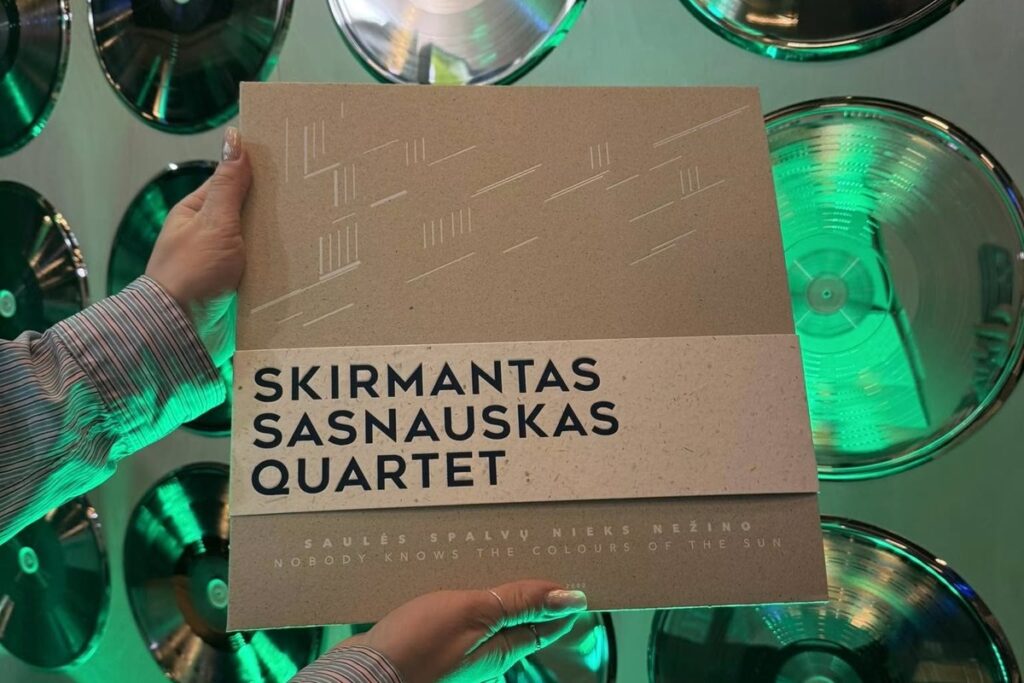
One evening in 2002, at the Neringa restaurant in Vilnius. The Lithuanian National Radio tape was rolling, Skirmantas Sasnauskas’s quartet was on stage, and the room was getting on with its evening. Twenty-four years later, the tape is set to appear on vinyl through the Uzbek archival label Maqom Soul Records, out on December 3, 2026.
The most counterintuitive thing about this record first: this quartet has no bass and no drums.
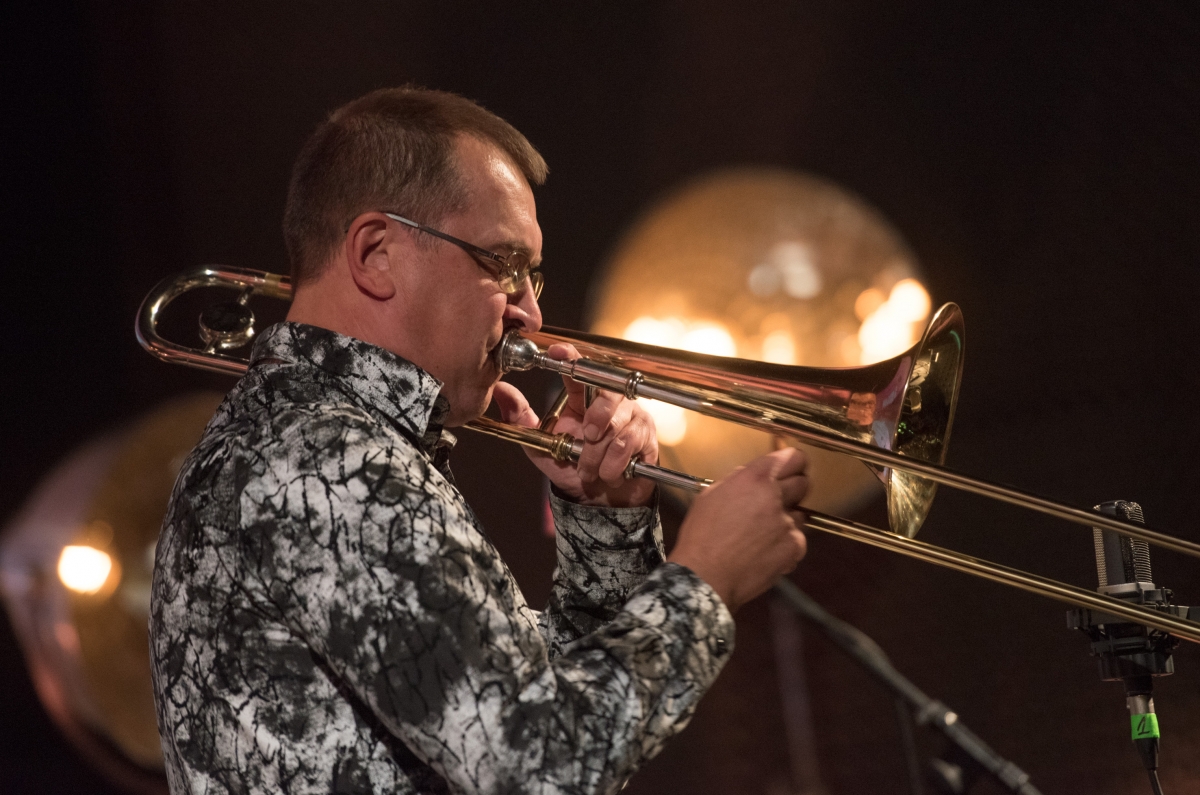
Sasnauskas himself plays trombone, sings and plays bagpipes; guitarist Juozas Milašius; bassoonist Šarūnas Kačionas, doubling on contrabassoon; French horn player Zigmantas Augaitis. Trombone and electric guitar stand side by side, bassoon and horn on the other, with voice and Lithuanian bagpipes appearing throughout. In the liner notes, label founder Anvar Kalandarov writes that after a while you simply stop noticing the absence of a conventional rhythm section — and he is right. With no fixed rhythmic foundation, tempo and density can shift freely within a single piece: at times the four sound like a small contemporary chamber ensemble, at others they slide into free improvisation before returning to a melodic theme. And the thread running through the whole evening is Sasnauskas’s trombone and voice.
That evening
Neringa was no ordinary venue. Since the late 1960s it had been a stronghold of jazz in Vilnius, hosting Ganelin, Tarasov, Chekasin, Vyšniauskas and many others. Sasnauskas came here as a young musician to listen, to sit in at jam sessions and to play alongside older musicians — the restaurant is part of his own history too.
The recording keeps the evening as it was. Glasses and cutlery clink, conversations continue at the neighbouring tables, people get on with their night. Anvar likes that, and so do we: this was no staged studio session, and nobody at the time was treating it as an album that would be pressed to vinyl more than twenty years later. It was simply a real evening.
Seven pieces, one work
All seven pieces are Sasnauskas’s own. The programme opens with a lullaby and closes with an anthem — Lopšinė (Lullaby, 5:16), Improvizacija lopšinei (Improvisation for a Lullaby), Ratas (Circle, 7:16), Poezija ir upė (Poetry and the River), Poezija, nerimas ir romantiška medžioklė (Poetry, Anxiety and a Romantic Hunt), Tango, and Himnas (Anthem, 2:49).
The arc is worth noticing. The opening lullaby is gentle and quiet — that same year, the quartet took third prize at the international Shortest Night competition in Pärnu for a lullaby. From there the music gradually opens up: Sasnauskas’s trombone and scat singing meet Milašius’s abrasive electric guitar, while bassoon and horn pull the quartet back towards a chamber-music character; the moment the bagpipes appear, the connection to Lithuanian traditional music becomes unmistakable. And the closing Himnas is slow, heavy, almost funereal — anything but a triumphant anthem. Seven separate pieces, heard in sequence, feel like a single continuous work.
The folk element runs deeper than the surface
Anvar makes a point of it in the liner notes: he is not particularly comfortable calling this folk jazz. Folk music rarely appears here as ready-made material for jazz improvisation to be laid over; it runs deeper — in the intonation, in Sasnauskas’s voice, in the traditional instruments, in the way melody itself is treated. And that is why even the strangest combinations on the record sound completely natural.
Sasnauskas has walked this road for decades. Born in 1961, he began playing jazz in 1978, graduated in trombone from the Lithuanian Academy of Music in 1986 and formed his quartet the same year; at the same time he immersed himself in Lithuanian folk music, singing, playing traditional instruments and working with folklore ensembles. In 1988 his composition Skudutis won a special prize at the Birštonas Jazz Festival for its use of folklore; in 1989 the quartet’s first album, Giesmė vaikams, was released by Melodiya — the very LP Anvar happened upon a few years ago, which set him off in pursuit of Sasnauskas’s music. In 2002, when Lithuania was Guest of Honour at the Frankfurt Book Fair, this quartet was one of the projects chosen to represent contemporary Lithuanian music. That same year they opened the 15th Vilnius Jazz Festival — just as they had opened the very first one in 1987.
What colour is the Sun, really?
The album’s title comes from a question that once occupied Sasnauskas: what colour is the Sun really? White, yellow, pink? And can we ever know without getting too close?
Heard more than twenty years later, the question fits the record itself rather well. You can hear jazz, Lithuanian folk music, free improvisation and contemporary classical music here, and at times a meditative, almost spiritual quality too — yet no single label quite covers it. Perhaps that is why Anvar, years after discovering that 1989 Melodiya LP, found himself coming back to hear where Sasnauskas’s music had travelled by 2002.
This is a live recording worth sitting down and hearing from beginning to end. The clink of glasses, the conversation, the bagpipes, the trombone — all of it is in there.
Release and edition information
Edition note: Green Lakes Records also released this 2002 Neringa recording on March 30, 2026. The preorder prices, December 3 release date and estimated December 7 shipping date below refer to the Maqom Soul Records edition. This review draws on the supplied listening materials and label notes; it does not compare the sound of physical pressings. Green Lakes Records official release page
Release information: Skirmantas Sasnauskas Quartet, Nobody Knows the Colours of the Sun (Live at Neringa 2002), Maqom Soul Records, out December 3, 2026. Record/Vinyl + Digital Album €35, ships on or around December 7, 2026; digital album €8, out December 3, 2026. Purchase link: Maqom Soul Records · Bandcamp
Images: media materials supplied by the label.