
Ella Fitzgerald
Biography
Born: 25 April 1917 in Newport News, Virginia, USA.
Died: 15 June 1996 in Beverly Hills, California, USA (aged 79).
Dubbed 'The First Lady Of Song', Ella Fitzgerald was the most popular female jazz singer in the US for more than half a century. In her lifetime, she sold over 40 million albums and won 13 Grammy Awards:
- Best Jazz Performance, Individual for [m=514542]
- Best Vocal Performance, Female for [m=452934]
- Best Jazz Performance - Soloist for [m=243842]
- Best Vocal Performance, Female for But Not For Me from [m=303629]
- Best Vocal Performance Album, Female for [m=123332]
- Best Vocal Performance Single Record Or Track, Female for Mack The Knife from [m=123332]
- Best Solo Vocal Performance, Female for [m=260698]
- Best Jazz Vocal Performance for [m=243845]
- Best Jazz Vocal Performance for [m=260701]
- Best Jazz Vocal Performance, Female for [m=96849]
- Best Jazz Vocal Performance, Female for [m=519172]
- Best Jazz Vocal Performance, Female for [m=511661]
- Best Jazz Vocal Performance, Female for [m=734749]
Mother of jazz pianist/singer [a=Ray Brown Jr.], ex-wife of jazz double-bassist [a=Ray Brown].
Also known as: *Fitzgerald, E Fitzgerald, E. Fitzgerald, E.Fitzgerald, Ella, Ella "For Dancers", Ella "Satchmo" Fitzgerald, Ella F, Ella Fitgerald, Ella Fitsgerald, Ella Fitzerald, Ella Fitzgerald & Group, Ella Fitzgerald & Her Fellas, Ella Fitzgerald All Stars, Ella Fitzgerald And Her Fellas, Ella Fitzgerald Con Accomp. Orchestra, Ella Fitzgerald Quintet, Ella Fitzgeraldová, Ella Fitzgerals, Ella Fizgerald, Ella Fiztgerald, Ella Jane Fitzgerald, Ellla, Elly Fitzgerald, Ferdinand J. "Jelly Roll" Morton, Fitzgerald, Fitzgerald-E., Fitzjerald, Fritzgerald, LaQueen E. Fitzgerald, Miss Ella Fitzgerald, Only Ella, With The, Ела Фицджералд, Ела Фицџералд, Елла Фитцжерьльд, Э. Фитцджеральд, Э. Фицджеральд, Э.Фицджеральд, Эллa Фитцджepaльд, Элла Фитцджеральд, Элла Фитцжеральд, Элла Фицджералд, Элла Фицджеральд, Элла Фицжеральд, エラ, エラ・フィッツジェラルド
Links:
- https://www.ellafitzgerald.com/
- https://www.instagram.com/firstladyofsong/
- https://www.youtube.com/ellafitzgerald
- https://www.facebook.com/EllaFitzgerald
- https://x.com/EllaFitzgerald
- https://www.allmusic.com/artist/ella-fitzgerald-mn0000184502
- https://en.wikipedia.org/wiki/Ella_Fitzgerald

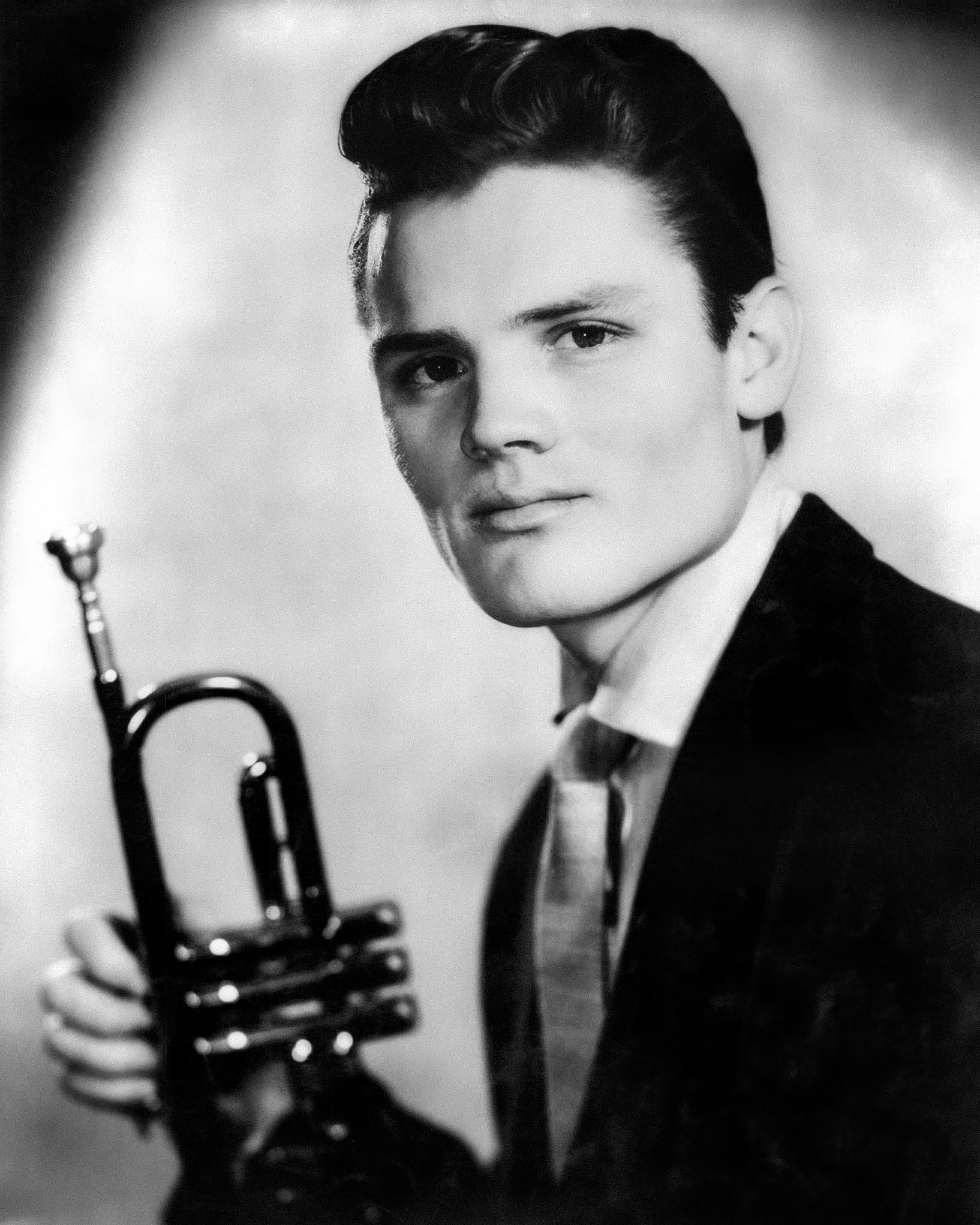
Chet Baker
After Cannonball Adderley, here is a concise biography ofChet Baker (1929–1988). Known as the “Prince of Cool,” he was admired for his tender trumpet playing and whisper-soft singing, and became a leading figure incool jazz.
1. Golden Years and a James Dean–Like Idol (1950s)
-
Breakthrough: In 1952, he joined Gerry Mulligan’s piano-less quartet and became famous overnight with “My Funny Valentine,” which remained his signature song.
-
A Double Talent: Alongside his trumpet playing, Baker sang with a tender, fragile voice. The 1954 album Chet Baker Sings made him widely known.
-
Matinee-Idol Looks: In his youth, Baker had movie-star looks and was often called jazz’s James Dean. He also made a brief attempt at acting in Hollywood.
2. Addiction and Decline (1960s)
-
Struggles with Addiction: From the late 1950s onward, he struggled with heroin addiction. Drug-related arrests and deportations took him in and out of the United States and several European countries, including Italy, Germany, and the United Kingdom.
-
A Devastating Blow: In 1966, a dispute connected to drug dealing led to a severe beating in California. His front teeth were knocked out—a devastating injury for a trumpet player. For several years he could barely play and at one point worked at a gas station.
3. A Long Return and European Years (1970s–1980s)
-
Back to the Trumpet: In the early 1970s, he began practicing arduously with dentures in an effort to recover his playing. He officially returned to the New York jazz scene in 1973.
-
Years in Europe: During the final decade of his life, he spent much of his time touring and recording in Europe. Years of drug use had taken a visible toll, yet his playing and singing gained a weathered, broken depth that resonated strongly with European audiences.
4. A Strange Death (1988)
-
: On May 13, 1988, Baker was found dead on the street outside a hotel in Amsterdam, the Netherlands, with severe head injuries. Police concluded that he had fallen from a second-floor window. Drugs were found in his system, and his death was ruled accidental, though it has continued to inspire speculation.
Artistic Style and Legacy
-
The Beauty of Restraint: His music relied less on technical display than on beautiful melodies, open space, and emotional subtlety.
-
Influence Beyond Music: His image and tragic life inspired many works, including the documentary Let’s Get Lost (Let’s Get Lost) and the biographical film Born to Be Blue, starring Ethan Hawke (Born to Be Blue)。
In Summary:If Cannonball Adderley was “sunshine,” Chet Baker was “moonlight.” His music is full ofloneliness, fragility, and a tenderness that can break your heart. He remains one of jazz history’s most romantic and heartbreaking talents.
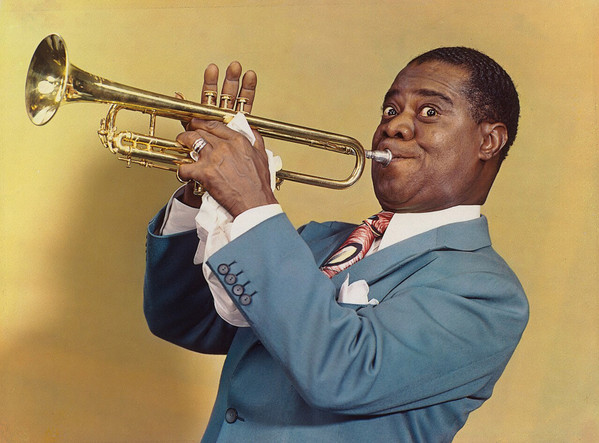
Louis Armstrong
Career
Louis Daniel Armstrong (August 4, 1901 – July 6, 1971), nicknamed “Satchmo,” “Satch,” and “Pops,” was an American jazz and blues trumpeter and singer. One of the most influential figures in jazz, his career spanned five decades and several eras. Armstrong received many honors, including a 1965 Grammy for Best Male Vocal Performance for “Hello, Dolly!” and a posthumous Grammy Lifetime Achievement Award in 1972. He has been inducted into the DownBeat Jazz Hall of Fame, the Rock & Roll Hall of Fame, and the National Rhythm & Blues Hall of Fame, among others.
Armstrong was born and raised in New Orleans. In the 1920s, his highly creative trumpet and cornet playing helped make him one of jazz’s founding figures, shifting the music’s focus from collective improvisation toward the soloist. Around 1922, he followed his mentor Joe “King” Oliver to Chicago and joined Oliver’s Creole Jazz Band. Armstrong made his mark in cutting contests, and his reputation reached bandleader Fletcher Henderson. He later moved to New York, where he became an influential soloist and recording artist. By the 1950s, Armstrong was an international music icon, appearing regularly on radio, television, and in films. Beyond music, he was a beloved entertainer who joked with audiences and maintained a warm, upbeat public image.
Among Armstrong’s best-known songs are “What a Wonderful World,” “La Vie en Rose,” “Hello, Dolly!,” “On the Sunny Side of the Street,” “Dream a Little Dream of Me,” “When You’re Smiling,” and “When the Saints Go Marching In.” He made three albums with Ella Fitzgerald: Ella and Louis (1956), Ella and Louis Again (1957), and Porgy and Bess (1959). His film appearances included A Rhapsody in Black and Blue (1932), Cabin in the Sky (1943), High Society (1956), Paris Blues (1961), A Man Called Adam (1966), and Hello, Dolly! (1969).
Armstrong had an unmistakable, deep, gravelly voice. He was an influential singer and a remarkable improviser, and he was also skilled at scat singing. By the final years of his life, his influence had reached well beyond jazz into popular music. He was among the first Black entertainers to cross over and win broad white and international audiences. Armstrong rarely spoke publicly about race, a silence that sometimes disappointed other Black Americans, but he publicly supported desegregation during the Little Rock Crisis. At a time when Black men had few opportunities to enter elite American society, he managed to do so. His recording of “Mack the Knife” was included on the Voyager Golden Record, a collection of images and sounds from Earth sent into space.
Early Life
Armstrong is believed to have been born in New Orleans on August 4, 1901, although the date has long been disputed. He often claimed that he was born on July 4, 1900. His parents were Mary Estelle “Mayann” Albert and William Armstrong. Albert came from Boutte, Louisiana, and gave birth to him at home at about age 16. Less than a year and a half later, she had a daughter, Beatrice “Mama Lucy” Armstrong (1903–1987), who was raised by Albert. William Armstrong left the family soon afterward.
Armstrong was raised by his grandmother until he was five, when he returned to his mother. He grew up poor in a rough neighborhood known as “the Battlefield,” in the southern part of Rampart Street. At six, he began attending Fisk School for Boys, a school for Black children, as New Orleans schools were segregated.
During this period, Armstrong lived with his mother and sister and worked for the Karnoffsky family, Lithuanian Jewish immigrants. He helped their sons, Morris and Alex, collect rags and scrap and deliver coal. In 1969, while being treated for heart and kidney problems at Beth Israel Hospital in New York City, Armstrong wrote a memoir, Louis Armstrong and the Jewish Family in New Orleans, 1907, about his time working for them.
In the memoir, Armstrong wrote that he sang “Russian Lullaby” with the Karnoffskys while their baby son David was being put to sleep. He believed they had taught him to “sing from the heart.” The lyrics he quoted appear to match “Russian Lullaby,” copyrighted by Irving Berlin in 1927, although Armstrong recalled singing the song as a child roughly twenty years earlier. In 1969, Gary Zucker, a doctor at Beth Israel Hospital, had shared Berlin’s lyrics with him, and Armstrong included them in his memoir. The discrepancy may reflect the fact that he wrote the memoir more than sixty years after the events. In any case, the Karnoffskys treated him well. Knowing that he had no father at home, they cared for him and helped raise him.
In Louis Armstrong and the Jewish Family in New Orleans, 1907, he described realizing that the family also faced discrimination from “other white people” who considered themselves superior to Jews: “I was only seven years old, but I could clearly see how white people treated the poor Jewish family I worked for.” Armstrong wrote that he learned from them “how to live—real life and toughness.” His first musical performance may have been beside the Karnoffskys’ junk wagon, where he played a tin horn to attract customers and compete with other vendors. Morris Karnoffsky advanced him money to buy a cornet at a pawnshop. As an adult, Armstrong wore a Star of David given to him by his Jewish manager, Joe Glaser, until his death, partly in gratitude to the family that had helped raise him.
Armstrong left school at eleven. His mother moved with Armstrong, Lucy, and her partner Tom Lee into a one-room cottage on Perdido Street, next door to her brother Ike and his two sons. Armstrong joined a quartet of four boys who sang on the street to earn money. Cornetist Bunk Johnson said that he taught the eleven-year-old to play by ear at Dago Tony’s bar. Later in life, Armstrong credited King Oliver with inspiring him. Recalling his youth, he said, “Every time I close my eyes and blow my trumpet—I look right in the heart of old New Orleans… It has given me something to live for.”
A January 2, 1913, report in the New Orleans Times-Democrat used a racial term that is now outdated. On December 31, 1912, Armstrong borrowed his stepfather’s gun without permission and fired a blank into the air. He was arrested, spent the night in juvenile court, and the next day was sent to the Colored Waif’s Home. Conditions there were stark: there were no mattresses, and meals were often just bread and molasses. Captain Joseph Jones ran the home like a military camp and used corporal punishment.
Armstrong developed his cornet playing in the home’s band. Peter Davis, who often visited the Armstrong home at Jones’s invitation, became his first music teacher and chose him to lead the band. Through it, Armstrong attracted the attention of Kid Ory at age thirteen.
On June 14, 1914, Armstrong was released into the care of his father and stepmother, Gertrude. He lived there with two stepbrothers for several months. After Gertrude had a daughter, Armstrong’s father continued to reject him, and he returned to his mother, Mary Albert. Armstrong had to share a bed with his mother and sister in their small home. His mother still lived near the Battlefield, leaving him exposed to old temptations, but he tried to find work in music.
Armstrong found work at Henry Ponce’s dance hall; Ponce was connected to organized crime. There he met Black Benny, a six-foot drummer who became his guide and bodyguard. At about fifteen, Armstrong acted as a pimp for a sex worker named Nootsy. Their relationship ended badly: Nootsy stabbed him in the shoulder, and his mother nearly strangled her.
Armstrong briefly studied shipping management at a local community college but had to leave when he could not afford the tuition. While selling coal in Storyville, he heard “spasm bands,” which made music with household objects. He also listened to early jazz in brothels and dance halls, including Pete Lala’s, where King Oliver had played.
Riverboat Education
Armstrong (fourth from left) with Fate Marable’s New Orleans band aboard the SS Sidney in 1919.
Early in his career, in the late 1910s, Armstrong played in New Orleans brass bands and on excursion boats. He toured with Fate Marable’s band aboard the Streckfus Steamers’ Sidney, traveling up and down the Mississippi River. Marable took pride in Armstrong’s musical knowledge and insisted that he and the other musicians learn to read music. Armstrong later compared his time with Marable to “going to college,” because it gave him broad experience reading scores. In 1918, Armstrong’s mentor King Oliver decided to head north and left his position in Kid Ory’s band; Armstrong took his place. He also became second trumpet in the Tuxedo Brass Band.
On the riverboat tours, Armstrong’s musicianship matured. By twenty he could read music. He became one of the first jazz musicians to play extended trumpet solos, bringing his own personality and style to them. He also began singing during performances.
Chicago recordings
“Dippermouth Blues”
Running time: 2 minutes, 24 seconds
A 1923 recording of Louis Armstrong playing cornet with King Oliver’s Creole Jazz Band.
In 1922, Armstrong moved to Chicago at King Oliver’s invitation, although he would return to New Orleans from time to time throughout his life. At the all-Black Lincoln Gardens on Chicago’s South Side, he played second cornet in Oliver’s Creole Jazz Band and earned enough to leave his day job. Despite strained racial relations, Chicago’s economy was booming. The city offered Black residents opportunities in factories, where they could earn good wages, as well as in entertainment.
Oliver’s band was among the most influential jazz groups in Chicago in the early 1920s. Armstrong lived in a luxurious apartment and had his first private bathroom. Excited by his arrival in Chicago, he took up a lifelong habit of writing to friends in New Orleans. He could play 200 high C’s in one breath. As his fame grew, other musicians began challenging him to cutting contests.
Armstrong’s first studio recordings were made with Oliver for Gennett Records on April 5 and 6, 1923. They endured hours of train travel to reach Richmond, Indiana, and the band was paid little. The recordings suffered from a lack of rehearsal, primitive equipment, poor acoustics, and a cramped studio. These were true acoustic recordings: the band played directly into a large horn connected to a stylus that cut grooves into the master disc. Electrical recording, with its wider dynamic range and more striking results, was not developed until 1926. At first Armstrong played so loudly that Oliver was barely audible when they stood side by side. To solve the problem, Armstrong had to stand in a corner of the room, fifteen feet away from Oliver.
Lil Hardin married Armstrong in 1924. She urged him to seek better opportunities and move beyond Oliver’s influence so he could develop his own style. At her suggestion, he played classical music at church concerts to broaden his skills and dressed more fashionably to offset his stocky build. Hardin’s influence eventually strained Armstrong’s relationship with his mentor, especially over pay: Oliver withheld extra earnings from Armstrong and other band members. In the summer of 1923, Armstrong’s mother, Mayann Albert, came to Chicago after learning that he was “unemployed, penniless, hungry, cold, and sick.” Hardin found and furnished an apartment for her to stay in during Armstrong’s visit.
Fletcher Henderson Orchestra
The Fletcher Henderson Orchestra in 1925. Armstrong is third from the left.
In 1924, Armstrong and Oliver parted amicably. Soon afterward, Armstrong was invited to New York City to join the Fletcher Henderson Orchestra, then the leading African American band. To fit in better with the other musicians, he switched to trumpet. Recordings from this period show Armstrong’s influence on Henderson’s tenor saxophone soloist, Coleman Hawkins.
Armstrong adapted to Henderson’s disciplined style, playing trumpet and trying trombone as well. The other musicians were influenced by his emotionally charged performances, which included singing and stories about New Orleans characters, especially preachers. The Henderson Orchestra played at prominent venues reserved for white audiences, including Roseland Ballroom, with arrangements by Don Redman. Duke Ellington’s orchestra went to Roseland to hear Armstrong.
During this period, Armstrong recorded with Clarence Williams, a friend from New Orleans, Williams’s Blue Five, Sidney Bechet, and blues singers Alberta Hunter, Ma Rainey, and Bessie Smith.
Hot Five
In 1925, disappointed with New York, Armstrong returned to Chicago. Lil arranged recording sessions for him with Okeh Records and a booking at the Dreamland Café. To his annoyance, she promoted him as “the world’s greatest trumpet player.” For a time, he joined the Lil Hardin Armstrong Band and worked for his wife. Armstrong formed Louis Armstrong and His Hot Five and recorded hits including “Potato Head Blues” and “Muggles.” “Muggles” was slang for marijuana, which Armstrong used throughout his life.
Louis Armstrong and His Hot Five, “Heebie Jeebies,” 1926
The Hot Five included Kid Ory on trombone, Johnny Dodds on clarinet, Johnny St. Cyr on banjo, and Lil Armstrong on piano; it usually had no drummer. In the twelve months beginning in November 1925, the group made 24 records. Armstrong led the band in a relaxed, informal way. As St. Cyr said, “You could feel very relaxed working with him; he was very liberal… always trying to give every musician a chance to show what he could do.”
The Hot Five and Hot Seven records included “Cornet Chop Suey,” “Struttin’ with Some Barbecue,” “Hotter Than That,” and “Potato Head Blues,” all featuring Armstrong’s inventive solos. Thomas Brothers described recordings such as “Struttin’ with Some Barbecue” as “tightly arranged and varied, with a bluesy feel and virtuosity”; the arrangements may have been performed at the Sunset Café. Soon afterward, Armstrong recorded with pianist Earl “Fatha” Hines. Their celebrated 1928 duet “Weather Bird,” along with Armstrong’s trumpet introduction and solo on “West End Blues,” remain among the most influential improvisations in jazz history. Young trumpeters across the country bought the records and learned his solos by heart.
Armstrong was now free to develop his own style, which included plenty of buoyant swing numbers such as “Whip That Thing, Miss Lil” and “Mr. Johnny Dodds, Aw, Play That Thing, Boy!”
Armstrong also performed with Erskine Tate’s little symphony orchestra, mostly at the Vendome Theatre. They provided music for silent films and live shows, including jazz versions of classical works such as Madama Butterfly. This gave Armstrong experience with longer compositions and taught him to perform for large audiences. He began experimenting with scat singing—improvised jazz singing with nonsense syllables—and became one of the first musicians to record it when he made “Heebie Jeebies” with the Hot Five in 1926. The record was so popular that the band became one of the best-known jazz groups in the country, even though it rarely performed live. Young musicians across the country, Black and white, were drawn to Armstrong’s new kind of jazz.
After splitting from Lil, Armstrong began playing at the Sunset Café with Carroll Dickerson’s orchestra, managed by Joe Glaser, an associate of Al Capone, with Earl Hines on piano. The group was later renamed Louis Armstrong and His Stompers. Hines served as musical director, while Glaser managed the band. Hines and Armstrong soon became close friends and successful collaborators. At the Sunset, Armstrong accompanied singer Adelaide Hall. During her engagement there, she experimented with and expanded her scat singing with Armstrong’s guidance and encouragement.
In the first half of 1927, Armstrong formed the Hot Seven, adding drummer Al “Baby” Dodds and tuba player Pete Briggs while retaining most of the Hot Five. John Thomas replaced Kid Ory on trombone. Later that year, Armstrong organized a new series of Hot Five sessions, which produced nine records. In the second half of 1928, he began recording with a new band: Zutty Singleton on drums, Earl Hines on piano, Jimmy Strong on clarinet, Fred Robinson on trombone, and Mancy Carr on banjo.
Harlem Renaissance
Armstrong had a major influence during the Harlem Renaissance of the 1920s. His music deeply affected the celebrated writer Langston Hughes, who admired him and considered him one of the era’s greatest musicians. Hughes wrote many books celebrating jazz and saw Armstrong as a leading figure in the Harlem Renaissance’s renewed appreciation of African American culture. Jazz, and musicians such as Armstrong, influenced Hughes’s writing; like them, he used jazz rhythms in his words.
Armstrong changed jazz during the Harlem Renaissance. As “the world’s greatest trumpet player,” he cemented his legendary status while continuing to focus on his singing career. His popularity brought Black and white audiences together.
Armstrong in 1955
By the 1950s, Armstrong was a beloved American icon and cultural ambassador with fans around the world. But a growing generation gap separated him from younger postwar jazz musicians such as Charlie Parker, Miles Davis, and Sonny Rollins. The postwar generation viewed its music as abstract art and considered Armstrong’s comic style—part musician, part stage entertainer—outdated and “Uncle Tom-like.” One critic said, “…he seemed to embody the blackface minstrel show we were so proud of.” Armstrong called bebop “Chinese music.” When asked during his 1954 Australian tour whether he played bebop, he rasped, “Bebop? I just play music. The people who invented that term are walking around with their instruments under their arms.”
Armstrong visiting Brazil in 1957
After his contract with Decca Records ended, Armstrong became a freelance musician and recorded for other labels. He continued touring extensively but suffered a heart attack in Italy in 1959 and had to rest.
In 1964, after more than two years away from the studio, Armstrong recorded his biggest-selling record, “Hello, Dolly!,” written by Jerry Herman and first sung by Carol Channing. His version spent 22 weeks on the Billboard Hot 100—longer than any other record that year—and reached No. 1. At 62 years, nine months, and five days old, he became the oldest singer to reach the top spot. His hit knocked the Beatles from the No. 1 position, where three different songs of theirs had held it for fourteen consecutive weeks.
External audio: Louis Daniel Armstrong in conversation with Studs Terkel on WFMT, June 24, 1962, 33:43; Studs Terkel Radio Archive
Armstrong toured into his sixties and, in 1965, visited several countries in the Communist bloc. Sponsored by the U.S. State Department, he also toured Africa, Europe, and Asia to great success, earning the nickname “Ambassador Satch” and inspiring Dave Brubeck’s jazz musical The Real Ambassadors. His travels included Egypt, Ghana, and Nigeria.
By 1968, approaching seventy, Armstrong’s health was deteriorating. Heart and kidney problems forced him to stop touring, although he continued to record. “What a Wonderful World” was among those recordings and topped the U.K. chart for a month. Armstrong made no public appearances in 1969 and spent most of the year recovering at home. His longtime manager, Joe Glaser, died during this period. By the summer of 1970, doctors considered Armstrong well enough to perform live again. He began another world tour, but a heart attack forced him to stop for two months.
Armstrong’s final trumpet recording was on his 1968 album The Satchmo Way, featuring Disney songs.
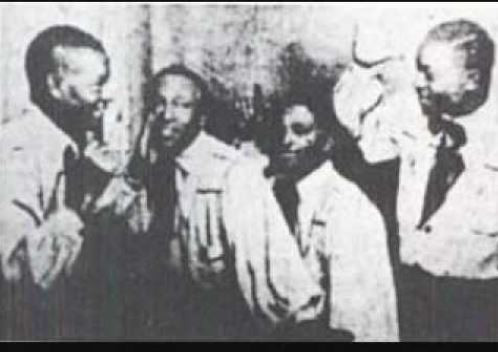
Norfolk Jazz Quartette
Biography
The vocal harmony group the Norfolk Quartette released dozens of records between 1921 and 1940, primarily labeled as the Norfolk Jubilee Quartette.
The Jazz Quartette name was used when the group recorded non-religious material. Founded by bass singer Len Williams and baritone Delroy Hollins, the Norfolks were performing in public as early as 1919 with Otto Tuston and James "Buddy" Butts singing tenor. Hollins acted as manager for the quartet and rehearsed them at home in his living room. During the early '20s they were mainly a vaudeville unit specializing in blues and jazz but also capable of singing gospel. From the get-go their signature sound was shaped by Len Williams, who anchored each song with scat-like rhythmic patterns in the bass clef which were strongly influenced by the jazz music of the day. The Norfolks cut their first records for Okeh in 1921 and appeared in a variety show starring vocalist Mamie Smith in Baltimore during the spring of the following year. They spent much of that summer with the Miller & Lyles musical revue The Flat Below, but were forced to withdraw after Butts was fatally attacked on August 19, 1922 by an enraged knife-wielding girlfriend.
Also known as: Norfolk Jazz, Norfolk Jazz Quartet, The Norfolk Jazz Quartet, The Norfolk Jazz Quartette
Links:
- http://www.redhotjazz.com/norfolk.html
- http://www.allmusic.com/artist/norfolk-jazz-jubilee-quartet-mn0000455381
- https://itunes.apple.com/us/album/norfolk-jazz-and-jubilee-quartet-vol-1-1921-1923/id76927871
- https://de.wikipedia.org/wiki/Norfolk_Jazz_%26_Jubilee_Quartet

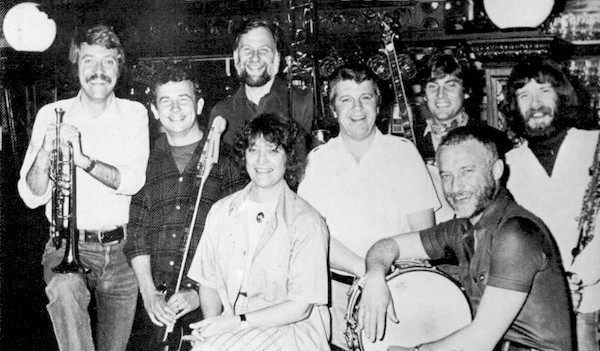
Jazz Doctors
Biography
Swedish Dixieland jazz band founded 1960.
Members: Gösta Linderholm, Marie Johnson, Bo Juhlin, Gunnar Larsson, Göran Pettersson, Hans Pettersson, Staffan Kjellmor, Holger Gross, Eddie Andersson, Gunnar Reichman, Benny Rigman, Lars Johnson, Bernt Helsing, Tommy Jacobsson, Sten Westling (2), Pelle Höbinger, Lars Jelder, Uno Karlén
Links:
The Jazz Passengers
Biography
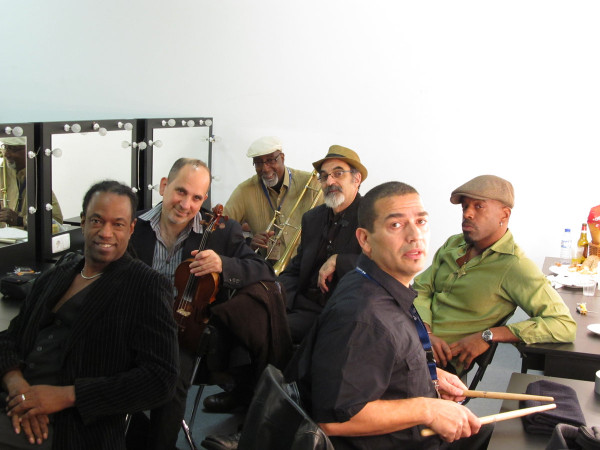
American jazz band, formed in 1987 by Roy Nathanson and Curtis Fowlkes.
Roy Nathanson (Saxophone)
Curtis Fowlkes (Trombone)
Bill Ware (Vibraphone)
E. J. Rodriguez (Drums)
Brad Jones (Bass)
Sam Bardfeld (Violin)
Since the 1994 album 'Jazz Passengers in Love' [a=Deborah Harry] has been a regular vocalist.
Also known as: J.P.'s, Jazz Passengers, 재즈 패신저스
Members: Roy Nathanson, Marc Ribot, Bill Ware, Brad Jones, E.J. Rodriguez, Curtis Fowlkes, Tony Garnier, Ben Perowsky, Jim Nolet, Rob Thomas (2), Sam Bardfeld
Links:
- http://www.jazzpassengers.com/
- https://jazzpassengerfs.bandcamp.com/
- http://en.wikipedia.org/wiki/The_Jazz_Passengers
Jazz Gitti
Biography
*13 May 1946 in Vienna, Austria
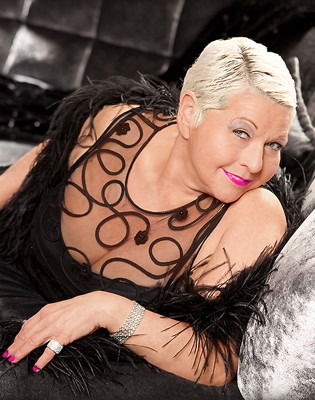
Jazz Gitti is an Austrian Schlager singer whose recording career spans several decades, beginning in the 1980s and peaking in popularity during the early '90s, when she fronted the band [a1576148]. Born Martha Bohdal on May 13, 1946, in Vienna, Austria, she made her recording debut in 1984 with the 7" single "[r=3020536]" on the label Sing Sang. However, her career didn't take flight until 1990 with the release of her chart-topping full-length album debut, [m=329472]. Billed to [a1576148], the album spawned the number three smash hit single "[r=3037584]".
Subsequent albums [m=357229] (1991), [m=3295714] (1993), [m=2113675] (1995), and [m=2113672] (1996) were fairly popular, reaching the Top 20 or so, but none could rival the success of [m=329472], and none spawned a smash hit single as big as "[r=3037584]". While Jazz Gitti was steadily active in the years that followed, releasing the albums [r=5247310] (1998), [r=24200336] (2001), Es Geht Immer Bergauf (2003), and [r=2837375] (2004), her popularity declined considerably. Not until she moved to the Rebeat label for the release of [r=2838791] in 2006 did she score a major hit. A pair of similarly successful Top Ten albums, [r=2837457] (2007), [r=2837441] (2009) and [r=2837411] (2011) followed.
Also known as: Jazz-Gitti
Links: