
Avant-Garde Jazz: Style Guide and Listening Recommendations
Avant-garde jazz brings improvisation together with experimental composition to explore new sounds, structures, and ways of playing together.
Origins and Development
Avant-garde jazz grew out of experiments from the 1950s onward. Drawing on modern composition, improvisation, and musical ideas from different cultures, musicians rethought how an ensemble could organize sound. The term covers many approaches and often overlaps with free jazz.
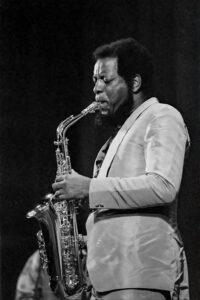
Musical Characteristics
A piece may use unusual instruments, extended techniques, open notation, irregular meters, or collective improvisation; it may also leave room for improvisation within a carefully composed structure. The approaches vary widely, so dissonance or volume alone does not define avant-garde jazz.
How It Relates to Nearby Styles
Free jazz often emphasizes moving beyond established harmonic and rhythmic constraints, while avant-garde jazz is a broader term for experimental work. The two share many recordings but are not synonymous. Listen for what seems planned and what emerges through interaction.
Where to Start Listening
Explore different entry points through the work of Charles Mingus, recordings by the Art Ensemble of Chicago, or performances by Cecil Taylor. First pick out recurring sounds and themes, then hear how the ensemble reshapes them into new passages.
A Closer Look and What to Listen For
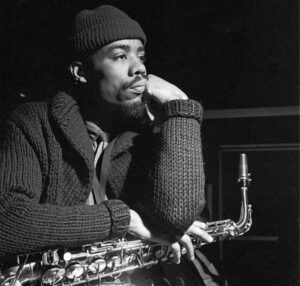
Avant-garde jazz is a broad description for musicians exploring established ideas about improvisation, form, timbre, and instrumentation. It overlaps with free jazz, but avant-garde works may also use carefully written structures. Each musician’s experiments can take a different direction.
Shift your attention from familiar themes and steady beats to timbre, density, and interaction. Who introduces an idea? How do the others respond? How does the music grow from sparse to dense? Even without a clear song form, you can often hear structure and communication.
Essential Recordings and Listening Recommendations
Ornette Coleman — The Shape of Jazz to Come
Hear how a melodic theme opens into more open-ended ensemble interplay.
Cecil Taylor — Unit Structures
Notice the piano’s touch, the density of the parts, and the ensemble’s changing energy.
Sun Ra — The Magic City
Listen for experiments in timbre and a sense of space in a large ensemble.
Frequently Asked Questions
What is the difference between avant-garde jazz and free jazz?
They overlap. Free jazz emphasizes moving beyond some established performance conventions; avant-garde jazz is broader and can include experimental works with clearly written arrangements.
What should I listen for when there is no steady beat?
Follow the instruments’ timbres and dynamics, recurring motifs, and responses to one another. Notice how the density of the music changes.
Explore Further
Further reading: Culture.ac.cn: An Overview of Jazz Styles. Style boundaries and representative figures vary by source and perspective.