
Free Jazz: Style Guide and Listening Recommendations
Free jazz loosens fixed chords, beats, or forms, letting musicians explore new structures through spontaneous interaction.
Origins and Development
Free jazz gained wide attention from the late 1950s through the 1960s. The work of Ornette Coleman, Cecil Taylor, Albert Ayler, and others expanded ideas about melody, timbre, and collective improvisation in jazz. Their approaches cannot be reduced to a single formula.
Musical Characteristics
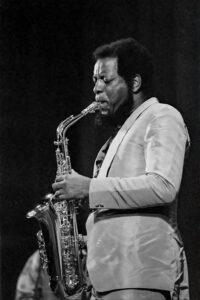
Some pieces reduce fixed chord progressions, others loosen a steady beat, and some keep a short theme as a starting point for improvisation. Musicians may shape the music through timbre, dynamics, density, recurring motifs, and their responses to one another. “Free” does not mean formless or inattentive.
How It Relates to Nearby Styles
Free jazz often overlaps with avant-garde jazz, which covers a wider range of experiments and compositional approaches. Free improvisation also exists beyond jazz. When comparing styles, listen to how musicians handle themes, rhythm, and collaboration rather than focusing only on tempo or volume.
Where to Start Listening
Ornette Coleman’s “The Shape of Jazz to Come” is one possible starting point. First remember the theme, then listen to how musicians change timbre between solos and ensemble passages. Notice whether the drums and bass maintain a fixed accompaniment throughout.
A Closer Look and What to Listen For
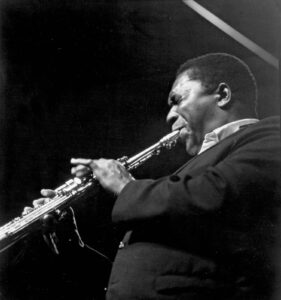
Free jazz developed in the late 1950s and 1960s as musicians explored ways to move beyond predetermined chord cycles, forms, or steady beats. The degree of freedom varies: some pieces retain a clear theme, while others focus more on sound, energy, and spontaneous exchange.
On a first listen, do not rush to find a steady beat. Notice how dynamics, timbre, tempo, and density change. Listen for whether one musician’s idea is echoed or answered by others; in open forms, structure often comes from decisions made together in the moment.
Essential Recordings and Listening Recommendations
Ornette Coleman — Free Jazz
Hear two groups of musicians improvise together and listen to how their sounds weave together.
John Coltrane — Ascension
Notice the shifts between solos and ensemble passages in a large group.
Albert Ayler — Spiritual Unity
Listen for a vivid theme, saxophone timbre, and open interaction with the rhythm section.
Frequently Asked Questions
Is free jazz completely without rules?
Not necessarily. Musicians may agree on a theme, structure, or way of interacting, without having to follow traditional chord cycles and steady beats throughout.
Where is a good place to start with free jazz?
Start with a piece that has a more distinct melody, then try a more open group improvisation and listen for how the musicians respond to one another.
Explore Further
Further reading: Culture.ac.cn: An Overview of Jazz Styles. Style boundaries and representative figures vary by source and perspective.