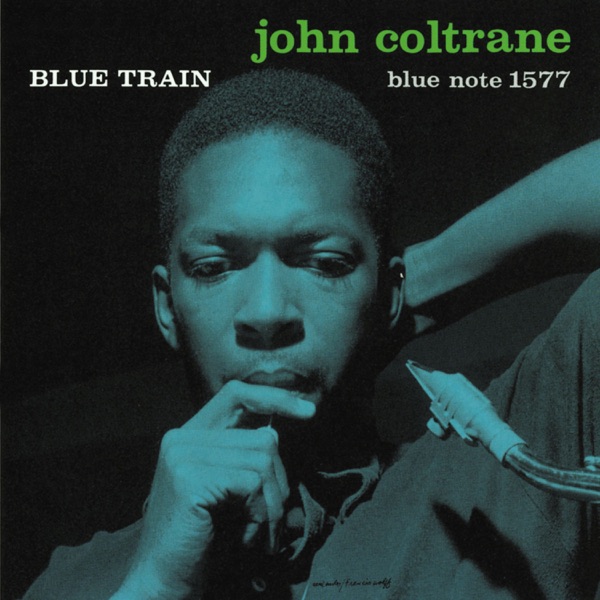
Blue Train is an album by John Coltrane. Released in 1970. Genres: Jazz, Hard Bop. Released by Blue Note. Genre tags. Listen on Spotify, Apple Music.
Across the long history of jazz, if one album had to define the golden age of hard bop, John Coltrane’s Blue Train, released by Blue Note in 1958, would be a powerful candidate. It is not only the sole complete Blue Note album on which Coltrane appears as a bandleader; it is also the turning point at which a gifted accompanist began to transform into the master who would open up the future of “sheets of sound” and spiritual exploration.
The success of Blue Train begins with its luxurious yet balanced sextet. It was recorded at Rudy Van Gelder’s studio in New Jersey in 1957, just after Coltrane’s work with Thelonious Monk, when his technique and harmonic understanding were advancing rapidly.
The horn line: Nineteen-year-old trumpet prodigy Lee Morgan brings a bright, incisive tone. Trombonist Curtis Fuller adds a warm, deep foundation, making the three-horn harmonies especially rich.
The rhythm engine: Pianist Kenny Drew joins bassist Paul Chambers and drummer Philly Joe Jones, both from Miles Davis’s classic quintet. Their rhythm section is rock-solid, yet able to engage the horns in tense, vivid conversation during the improvisations.
The album contains five tracks, four written by Coltrane. Each feels like a carefully honed design: tightly structured, yet generous with space for improvisation.
“Blue Train”: The title track begins with a catchy minor-key blues motif tinged with suspense. Coltrane’s solo is a textbook example of the form: he keeps testing the blues framework’s boundaries, and his dense runs hint at the “sheets of sound” to come. Lee Morgan follows like lightning cutting through the night, creating a dramatic contrast between the two soloists.
“Moment’s Notice”: The album’s most challenging track. Coltrane experiments with extremely fast, complex chord changes. The piece anticipates Giant Steps, which would astonish the jazz world two years later. The musicians move through a dense harmonic maze with breathtaking technical command.
“Locomotion”: A brisk blues-based tune with the drive of a speeding train. Philly Joe Jones’s drums are highly infectious, pushing the music toward a thrilling climax.
Blue Train is great partly because it arrived at exactly the right moment. It brings together the strengths of mid-to-late-1950s hard bop: deep blues roots, a powerful swing, elaborate harmonies, and solos full of tension.
It is also a turning point in Coltrane’s artistic life. Here we hear a giant shedding his early uncertainty and taking complete command. The music does not yet have the metaphysical, religious fervor of A Love Supreme or the late, freely raging sound that breaks away from tonality. Instead, the energy of searching for freedom within a rigorous structure gives Blue Train an exceptionally satisfying balance.
For anyone building a systematic listening journey, this album is both an ideal introduction and a classic that rewards repeated close study.
Which has had the deeper influence on modern jazz: the compositional craft Coltrane displays on Blue Train, or his radical exploration of harmony on Giant Steps?
Release Date: 1958
Country: US