

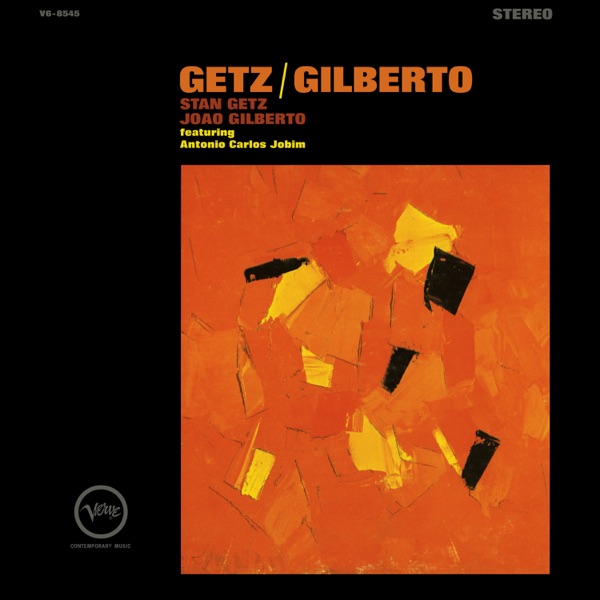
Getz/Gilberto is an album by Stan Getz. Released in 1964. Genres: Jazz. This page includes the complete tracklist of 8 tracks. Genre tags. Listen on Spotify, Apple Music, Discogs.
March 18, 1963, at A&R Recording in New York. Stan Getz lay on the control-room couch, refusing to record because he thought João Gilberto’s guitar accompaniment was too busy, “like chasing mosquitoes between the notes.” Engineer and producer Creed Taylor spent more than an hour mediating. João finally simplified his fingering, and Getz reluctantly walked to the microphone. Everyone knows what happened next.
Getz/Gilberto sold millions of copies, won the Grammy for Album of the Year, and made “The Girl from Ipanema” one of the most-covered songs on earth. Those facts can make it harder to hear the album seriously; it has been consumed until its outlines are blurred.
Set aside the ubiquitous elevator-music versions and return to the original. Its subtlety goes far beyond its popular reputation. João Gilberto’s guitar, not Getz’s saxophone, is the real rhythmic center of the record. The delicate syncopations plucked by João’s right index finger create a floating pulse that is neither samba nor jazz, but a new thing between the two, before anyone had a name for it.
Tom Jobim’s piano appears on only a few tracks, but his songs shape the entire album: “Corcovado,” “Desafinado,” and “Só Danço Samba.” Their structures look simple, yet the harmony often takes one more turn just when you expect it to end. Jobim’s music has an unusual quality: even without understanding Portuguese, the melody makes you feel that you understand an emotion that cannot be translated.
And then, of course, there is Astrud Gilberto. She had never sung in a studio before. Her English accent was strong and, technically, she was far from a professional vocalist. Yet that untrained innocence turned the everyday feeling of a young woman walking past the beach in “The Girl from Ipanema” into a worldwide obsession. Getz’s sax solo enters midway through like a cool breeze—professional, elegant, effortless—and contrasts perfectly with Astrud’s youthful simplicity.
Listeners who have heard it too many times may call the album “too safe.” The music was never safe; it has simply been damaged by too many safe ears.