
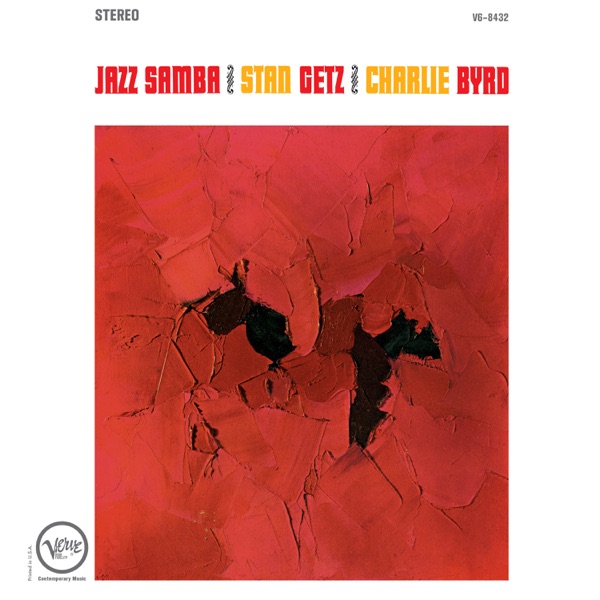
Jazz Samba is an album by Stan Getz. Released in 1962. Genres: Jazz. This page includes the complete tracklist of 8 tracks. Genre tags. Listen on Spotify, Apple Music, Discogs.
Jazz Samba was the real starting point for bossa nova’s globalization, a full year before Getz/Gilberto. In early 1962, guitarist Charlie Byrd returned from a Brazilian tour with a stack of João Gilberto and Jobim records. He brought Stan Getz to a church studio in Washington, and they recorded this seven-track album in a single day.
The church’s acoustics give the album an unusual texture. Without studio soundproofing, the music reflects off stone walls. Getz’s tenor saxophone carries a cool echo, like winter sunlight passing through stained glass. Charlie Byrd’s acoustic guitar is warmer in that space; the nylon-string notes are so clear that you can hear his fingertips brush the strings.
On the opening “Desafinado,” Jobim answers those who accused him of singing off-key. Getz’s solo is so elegant it nearly sounds arrogant, every note falling in the most comfortable place, seemingly unconcerned with the song’s defiant lyrics. That nonchalance typifies how early American jazz musicians approached bossa nova: Brazilian anxiety and delicacy became a smooth, exotic mood. It is hard to criticize when the result sounds so comfortable.
There is an exception. In the second half of the album, Byrd’s solo guitar piece “Baía” leaves the jazz framework entirely and becomes a meditation in Brazilian rhythm. For those three minutes there is no Getz saxophone, no American intervention—only a guitar talking to itself in a church. Those may be the most soulful minutes on the album.
Jazz Samba’s historical importance is beyond dispute; it set off the bossa nova boom of the 1960s. As music, though, it is almost too clean. The way it brought bossa nova to the United States resembles turning an Amazonian butterfly into a specimen: beautiful and intact, but motionless.