
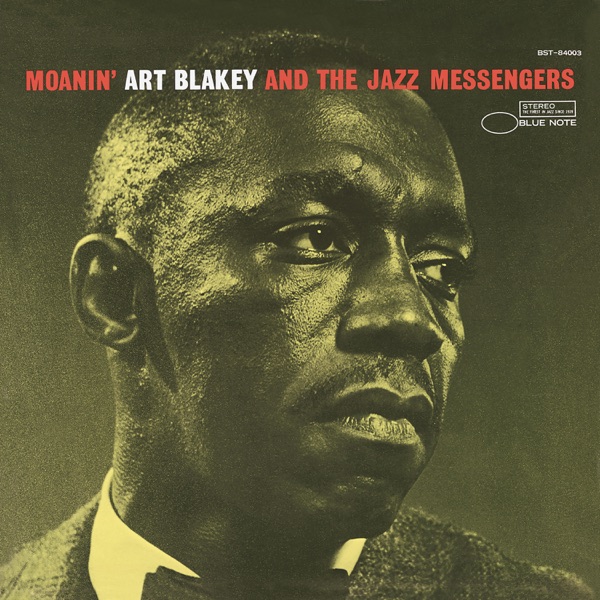
Moanin’
Album: Moanin’. Released in 1970. Genres: Jazz, Bop. Released by WaxTime. This page includes the complete tracklist of 9 tracks. Genre tags. Listen on Spotify, Apple Music.
- Release Year
- 1970
- Format
- Album
- Label
- WaxTime
- Country/Region
- Europe
- Tracks
- 9
Album Genres
Moanin’ · Review
The Jazz Messengers who entered Rudy Van Gelder’s studio in New Jersey on October 30, 1958, are widely regarded as the group’s most perfectly matched “dream team.”
-
Art Blakey (drums): One of jazz’s greatest talent scouts and its engine. His polyrhythms and signature press-roll technique drive this album with tremendous force.
-
Lee Morgan (trumpet): A trumpet prodigy who was only 20 at the time. His bright, explosive tone and pronounced blues inflection perfectly complement the warmth of the tenor saxophone.
-
Benny Golson (tenor saxophone / musical director): The album’s central intelligence. Alongside his deep, controlled solos, he wrote four of its six tracks, compressing a big-band arranger’s way of thinking into a quintet.
-
Bobby Timmons (piano): A key figure in bringing the spirit of Black church gospel into jazz.
-
Jymie Merritt (bass): A steady, solid foundation that keeps this fire-powered vehicle firmly on the road.
Key Tracks
The album’s greatness lies in retaining bebop’s sophisticated improvisation while making the music more accessible to everyday listeners, restoring jazz’s earthbound pleasure of swinging with both feet on the floor.
“Moanin’”: A Perfect Union of Gospel and Jazz
This opening number by Bobby Timmons contains one of the most famous call-and-response passages in jazz. The piano asks a short question steeped in Black gospel, and the horns answer with the firm, full harmony of a church choir. Lee Morgan’s solo is highly infectious, driving the laid-back blues toward a climax.
“Blues March”: Bringing the Parade into the Jazz Club
Benny Golson’s inspired idea was to have Art Blakey play a twelve-bar blues with the marching-band rhythms of a New Orleans parade. The accents of Blakey’s snare and the horn melody intertwine, giving the piece an irresistible forward momentum.
“Along Came Betty” and “Are You Real”
These two Golson compositions display his remarkable gift for melody. “Along Came Betty” is an exceptionally elegant mid-tempo ballad, with subtle, romantic harmony that perfectly balances the earthy feel of “Moanin’.” “Are You Real” is hard bop at full speed: tightly constructed, with a knife-sharp unison line from the horns.
“The Drum Thunder Suite”
This miniature suite was tailored for Art Blakey. Across three contrasting themes, he shows that he is not simply a timekeeper, but a melodic storyteller able to make a drum kit speak on a symphonic scale.
Key insight: Bebop, through artists such as Charlie Parker, pushed jazz toward extreme complexity and away from a broad audience. Moanin’ represents hard bop’s return to its roots, bringing the blues, gospel, and soul deeply embedded in African American life back to center stage.
From an engineering perspective, Rudy Van Gelder’s signature recording technique shines on the original mono release: the brass sounds vividly real, and the snap of Blakey’s snare and depth of his bass drum are preserved beautifully. This is both the culmination of Blue Note’s aesthetic and an essential textbook for modern musicians studying rhythm-section interaction.
Tracklist
- A1 Moanin' 9:34
- A2 Are You Real 4:50
- A3 Along Came Betty 6:11
- 4 The Drum Thunder Suite 7:35
- 5 B1.1 First Theme: Drum Thunder
- 6 B1.2 Second Theme: Cry A Blue Tear
- 7 B1.3 Third Theme: Harlem's Disciples
- B2 Blues March 6:17
- B3 Come Rain Or Come Shine 5:47