
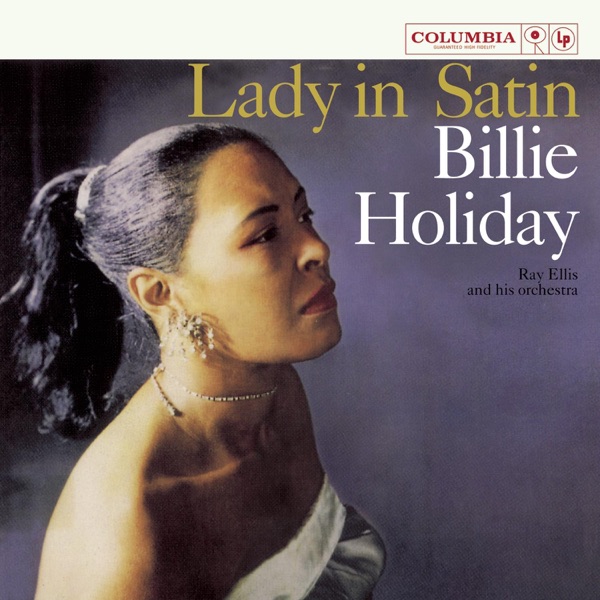
Lady In Satin - Billie Holiday
Lady In Satin is an album by Billie Holiday. Released in 1958. Genres: Jazz. This page includes the complete tracklist of 16 tracks. Genre tags. Listen on Spotify, Apple Music, Discogs.
- Artist
- Billie Holiday
- Release Year
- 1958
- Tracks
- 16
Album Genres
Lady In Satin · Review
In 1958, when Billie Holiday entered the studio to record this album, she had less than a year to live. Alcohol, heroin, and unhappy relationships had worn down a voice that had once been light, swinging, and able to make any melody her own. Now it sounded like a cracked porcelain cup: every note trembled at the edge, ready to break.
Ray Ellis arranged the music and gave Holiday a forty-piece string orchestra. It was a risky choice. Strings in jazz can easily turn cloying, and surrounding a singer whose voice was visibly failing with a full orchestra could have been disastrous. Ellis’s arrangements are remarkably restrained, though. The strings do not fill every gap; they hang like a thin mist around Holiday’s voice, reflecting its fragility with just the right touch.
Then Holiday begins to sing. When the first line of “I’m a Fool to Want You” arrives, it is hard to breathe. On the word “joy,” her voice bends slightly—not as an intentional ornament, but as if her throat no longer obeyed her. That imperfection turns the song into something else. A person knows she is being destroyed and cannot stop loving anyway. This is not a performance; it is a medical record.
“You’ve Changed” may be the album’s most devastating moment. The lyric says “you’ve changed,” and Holiday’s voice really has changed. High notes she once reached with ease now require care; free-flowing improvisation has become a spare, elegiac simplicity. She understands her condition completely and will not conceal it. That is the difference between a great singer and a great performer: a performer hides flaws; a singer turns them into another kind of truth.
Many people find it difficult to return to Lady in Satin, not because it is poor, but because they cannot bear its feeling of approaching death. If you stay with it, you will hear that Holiday never gave up one thing, even at the end: turning pain into beauty. This time the beauty has no adornment. It is bare, scarred, and refuses to heal.
Tracklist
- A1 I'm A Fool To Want You
- A2 For Heaven's Sake
- A3 You Don't Know What Love Is
- A4 I Get Along Without You Very Well
- A5 For All We Know
- A6 Violets For Your Furs
- B1 You've Changed
- B2 It's Easy To Remember
- B3 But Beautiful
- B4 Glad To Be Unhappy
- B5 I'll Be Around
- B6 The End Of A Love Affair