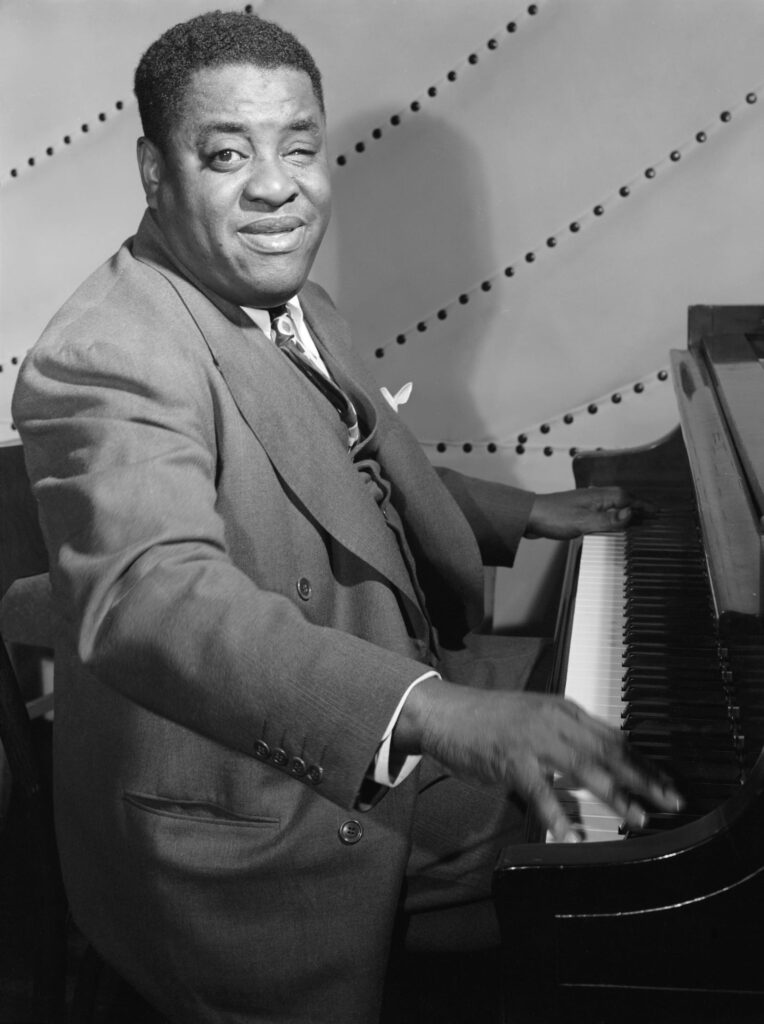
Widely regarded as one of the greatest jazz pianists ever, Tatum was a virtuoso whose playing astonished even classical masters of his day, including Vladimir Horowitz.
A Physical Challenge: Born in Ohio, Tatum had severe cataracts from childhood. Despite several operations, he was blind in one eye and had only very limited vision in the other.
Self-Taught: He began by learning from player-piano rolls. Some recordings he studied had been made by two pianists playing four hands, but he assumed they were played by one person. The misunderstanding helped him develop astonishing speed and complex voicings that sounded as if two pairs of hands were playing at once.
A Sensation in the Jazz World: In 1933, Tatum came to New York for a legendary stride-piano cutting contest. He easily defeated James P. Johnson and Fats Waller, two of the reigning piano greats.
The Highest Praise: Waller left behind a famous line that night: “I’m just a piano player, but God is in the house.” From then on, Tatum was known in jazz circles as “God.”
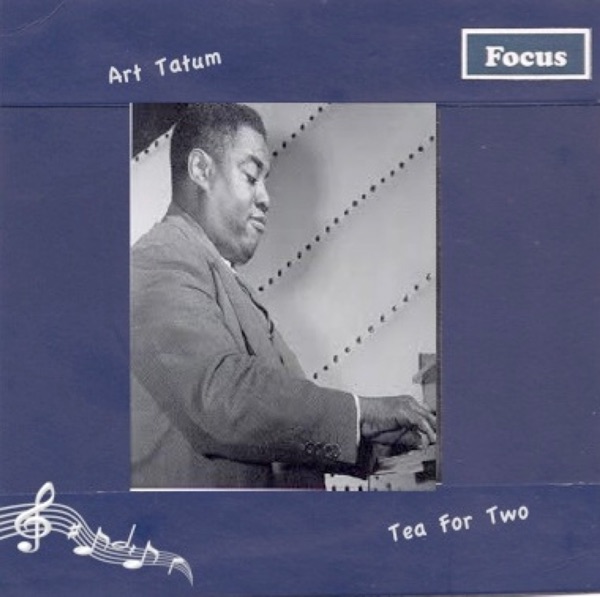
A Technical Revolution: His celebrated “Tea for Two” demonstrates sophisticated harmonic substitutions and rapid ornamentation rarely heard in the 1930s.
Trio and Solo Work: In the 1940s, Tatum formed a highly popular trio. In the last years of his life, he recorded an extensive series of solo performances for Norman Granz, later issued as The Solo Masterpieces. They remain an encyclopedia of jazz piano.
Tatum died of uremia in Los Angeles in 1956, aged 46.
Crystal-Clear Precision: Tatum’s fingers moved at remarkable speed, while every note retained perfect clarity and control. His runs have been called “waterfalls of ornamentation.”
Harmonic Thinking Ahead of Its Time: The substitutions and frequent modulations he used in the 1930s anticipated the harmonic foundations of modern jazz and bebop in the 1940s.
Complete Independence: His hands could manage extraordinarily complex counterpoint and rhythmic shifts independently, allowing him to create the depth of an entire orchestra as a soloist.
In Summary:Art Tatum was jazz’s“Mount Everest”. He demonstrated the limits of speed, logic, and beauty that a human being could reach on the piano.
An Aesthetic Reflection: For a designer interested in structural precision, Tatum’s music is the sound ofadvanced topology—extreme complexity held in perfect balance and logic.
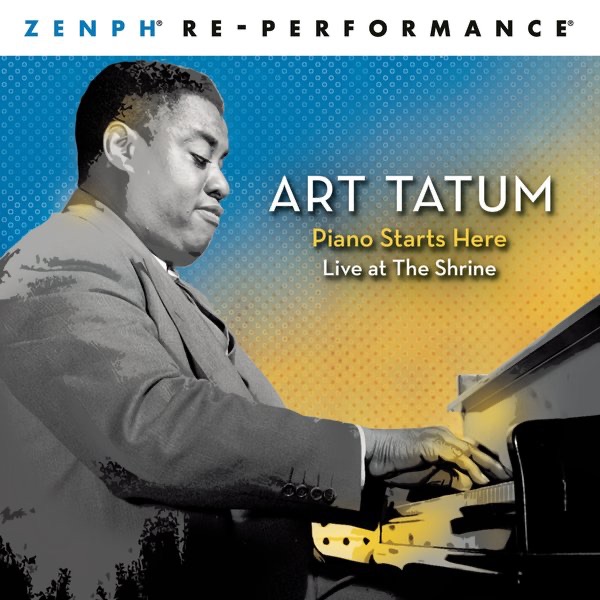
Explore 49 albums and recordings, arranged by release date.





Explore other jazz artists who share genre tags with Art Tatum.