
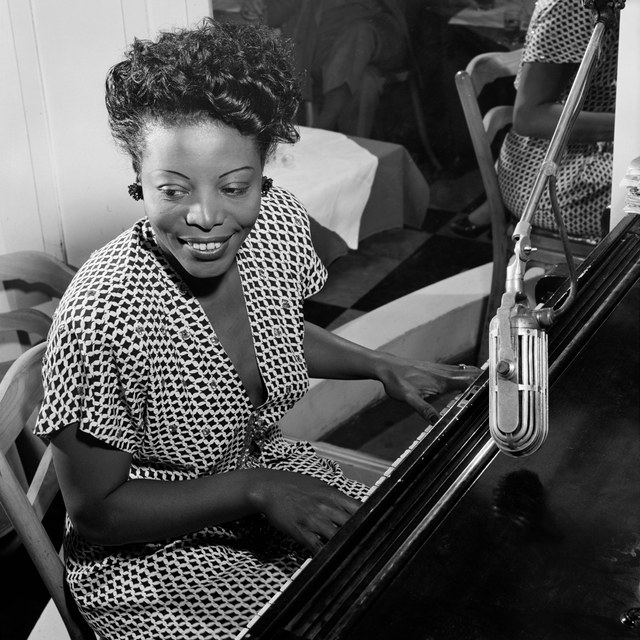
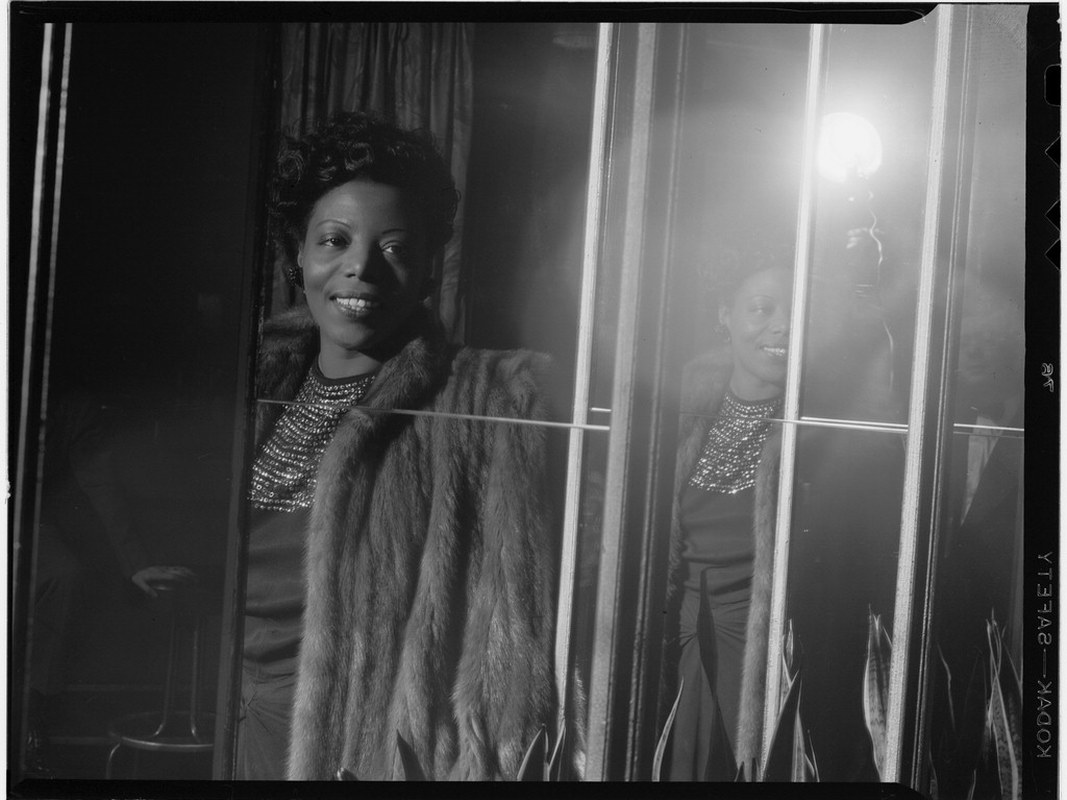
Mary Lou Williams
Mary Lou Williams (born Mary Elfrieda Scruggs on May 8, 1910, in Atlanta; died May 28, 1981, in Durham, North Carolina) was an American jazz pianist, composer, and arranger. She grew up in Pittsburgh’s East Liberty neighborhood and could reproduce tunes by ear as a child, earning the name “the little piano girl” from neighbors. As a teenager, she accompanied dancers and silent films in Pittsburgh bars and theaters, making her living as a musician while still young.
In 1925, she married saxophonist John Williams. In 1929, she began touring with Andy Kirk’s Twelve Clouds of Joy, becoming the Kansas City band’s pianist and principal arranger in the 1930s. Her arrangement of “Until the Real Thing Comes Along” became a hit in 1936, while “Walkin’ and Swingin’,” “Mary’s Idea,” and “Little Joe from Chicago” also came from this period. In an industry dominated by male arrangers, her success rested on precise control of voicing and dance rhythms.
In the 1940s, Williams settled in New York, reworked “Trumpet No End” for Duke Ellington, and wrote for Benny Goodman. Her Harlem apartment became a gathering and rehearsal place for young musicians such as Dizzy Gillespie, Thelonious Monk, Bud Powell, and Tadd Dameron, and is often considered one of the incubators of bebop. On December 31, 1945, she premiered Zodiac Suite, a twelve-part jazz suite based on the signs of the zodiac; she recorded it for Asch Records that year, making it one of jazz’s earliest works to treat an abstract theme as a suite.
Williams became a Catholic in 1954 and briefly stopped performing to focus on the relationship between faith and music. After returning in 1957, she turned toward religious and historical subjects. In 1964 she founded Mary Records and released Black Christ of the Andes with a choir; in 1970 she wrote Music for Peace; and in 1974 she recorded Zoning. Later, she was artist-in-residence at Duke University (1977–1981), presented jazz history in the 1978 work The History of Jazz, and left recordings including Live at the Cookery (1976) and Embraced (1978), made with Cecil Taylor.

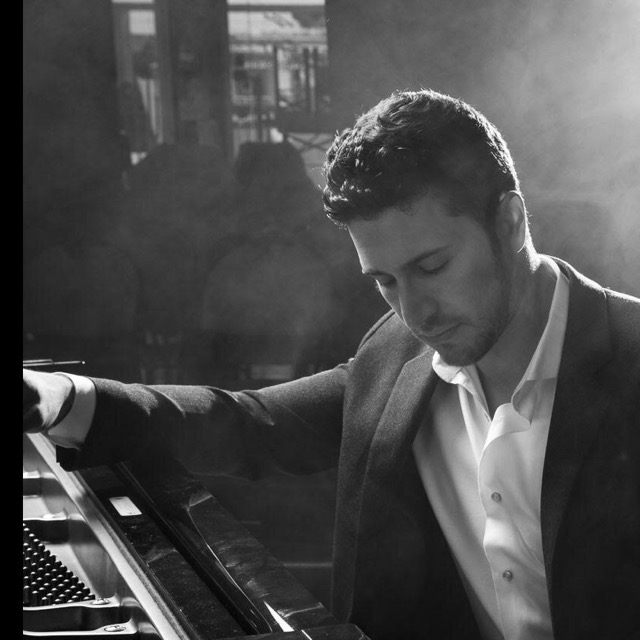
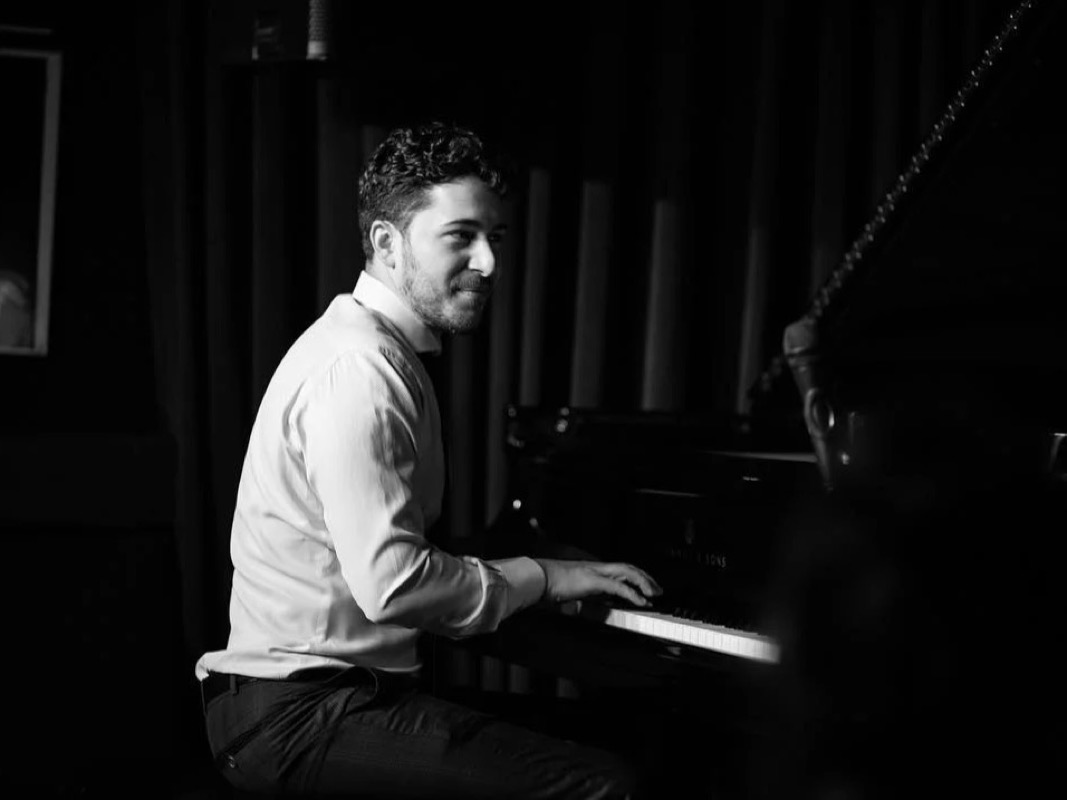
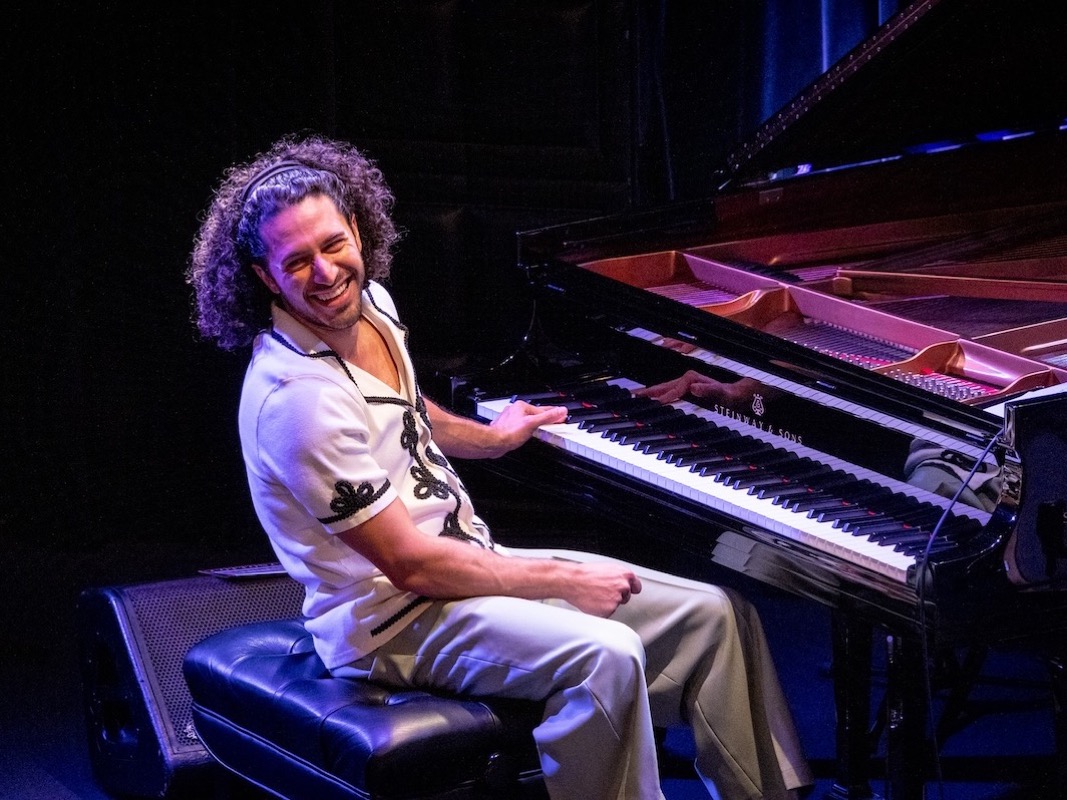
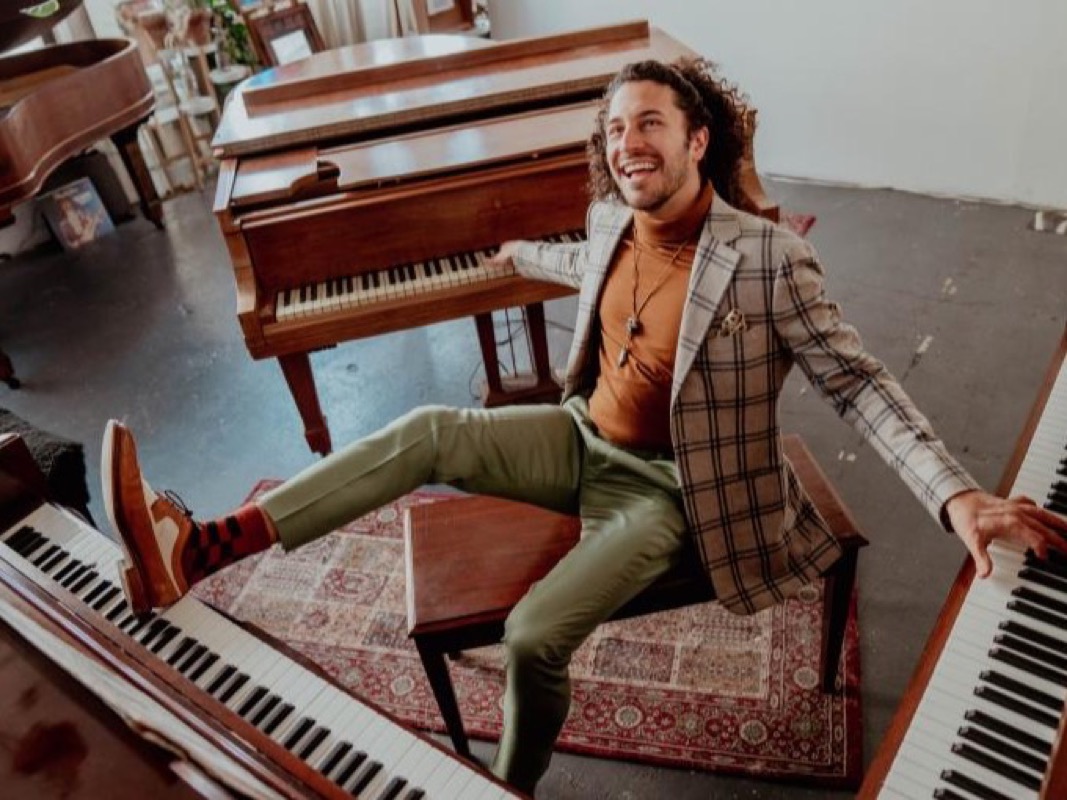
Emmet Cohen
Emmet Cohen is an American jazz pianist, composer, bandleader, and educator, and one of the contemporary musicians connecting jazz tradition with a new generation. He began Suzuki-method piano lessons at age three and showed an early gift for music and technique. He developed a personal style marked by clear touch, elegant expression, and strong rhythmic drive, moving across stride, swing, bebop, and modern jazz while honoring tradition and developing a voice of his own.
Cohen is known for his solo and trio performances as well as his collaborations across generations. He leads the Emmet Cohen Trio and curates the Masters Legacy Series, honoring jazz masters through albums, concerts, and interviews. Collaborators have included Jimmy Cobb, Ron Carter, Benny Golson, Albert “Tootie” Heath, George Coleman, and Houston Person. As both pianist and producer, Cohen hopes to keep jazz’s oral tradition alive through collaboration and to give young musicians the chance to learn alongside veteran players.
During the 2020 pandemic, Cohen launched an online concert series calledLive From Emmet’s Place. The series brought live jazz to a wider audience and became a platform for musical exchange and support for emerging artists. Alongside performance and recording, he teaches jazz and helps organize tours and festivals.
Cohen received the American Pianists Awards and a Cole Porter Fellowship in 2019. He holds a master’s degree from the Manhattan School of Music and attended the University of Miami’s Frost School of Music as an undergraduate. An artist on Mack Avenue Records, his albums includeFuture Stride(2021)、Uptown in Orbit(2022)、Vibe Provider(2024) andUniversal Truth(2026). He has performed at Carnegie Hall, the Village Vanguard, and Birdland, and appeared at jazz festivals including Newport and Monterey.

Caity Gyorgy
Singer · Calgary, Canada
Caity Gyorgy (pronounced “George”) is a Canadian jazz singer born in Calgary on May 25, 1998. She graduated from Humber College’s music program and earned a master’s degree in jazz performance from McGill University. Known for singing bebop and swing, she draws on the Great American Songbook and writes original songs. Her work won the jazz category of the 2021 John Lennon Songwriting Contest. Signed to Brooklyn’s La Reserve Records, she has won the Juno Award for Vocal Jazz Album of the Year three times: for the EP Now Pronouncing: Caity Gyorgy (2021), her debut LP Featuring (2022), and Hello! How Are You? (2024). With pianist Mark Limacher, she also recorded the duo albums You’re Alike, You Two (2023) and Asking For Trouble (2025), as well as the string album Caity Gyorgy with Strings (2025). She has toured Canada, the United States, Mexico, Finland, and Japan, and has more than 100,000 young followers on Instagram and TikTok.
https://www.caitygyorgy.com
Selected Releases: Featuring (2022) · Hello! How Are You? (2024) · Caity Gyorgy with Strings (2025)
Official Website





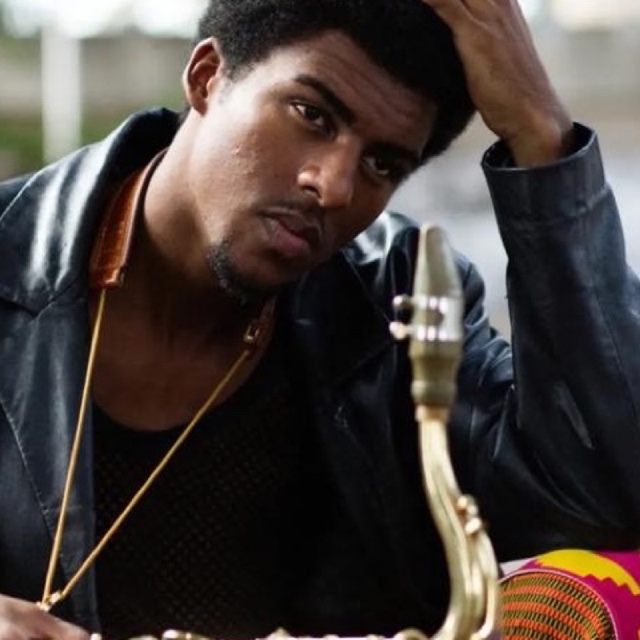
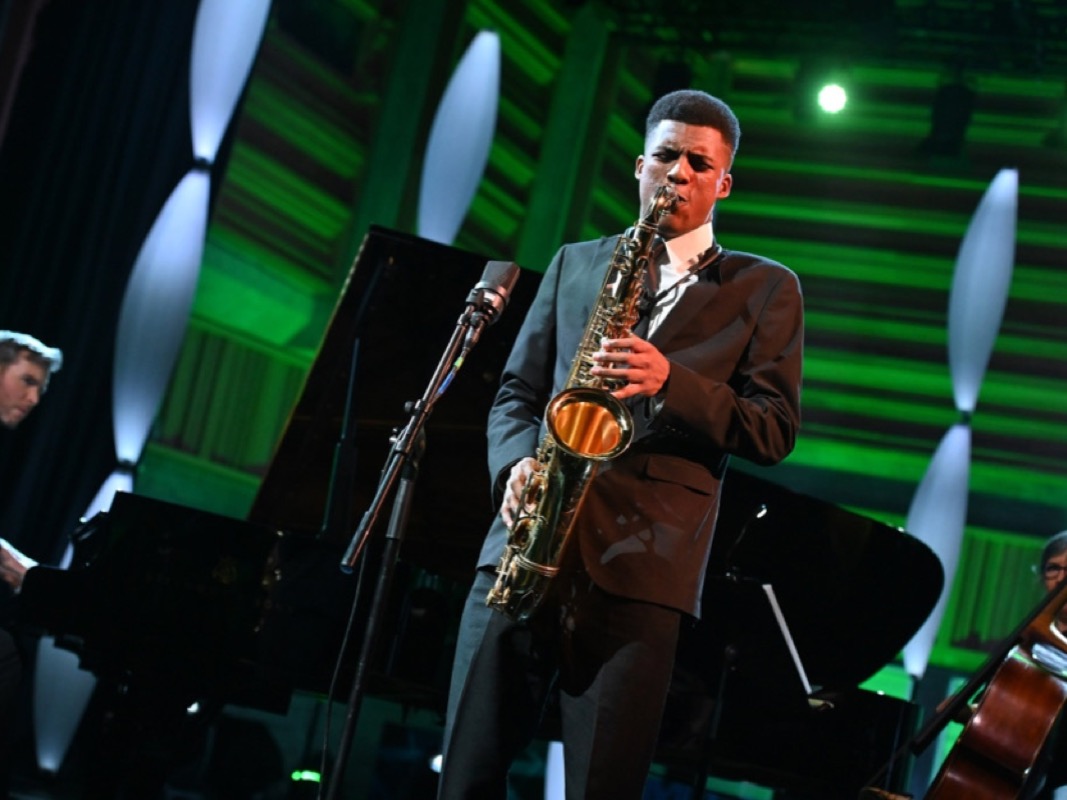
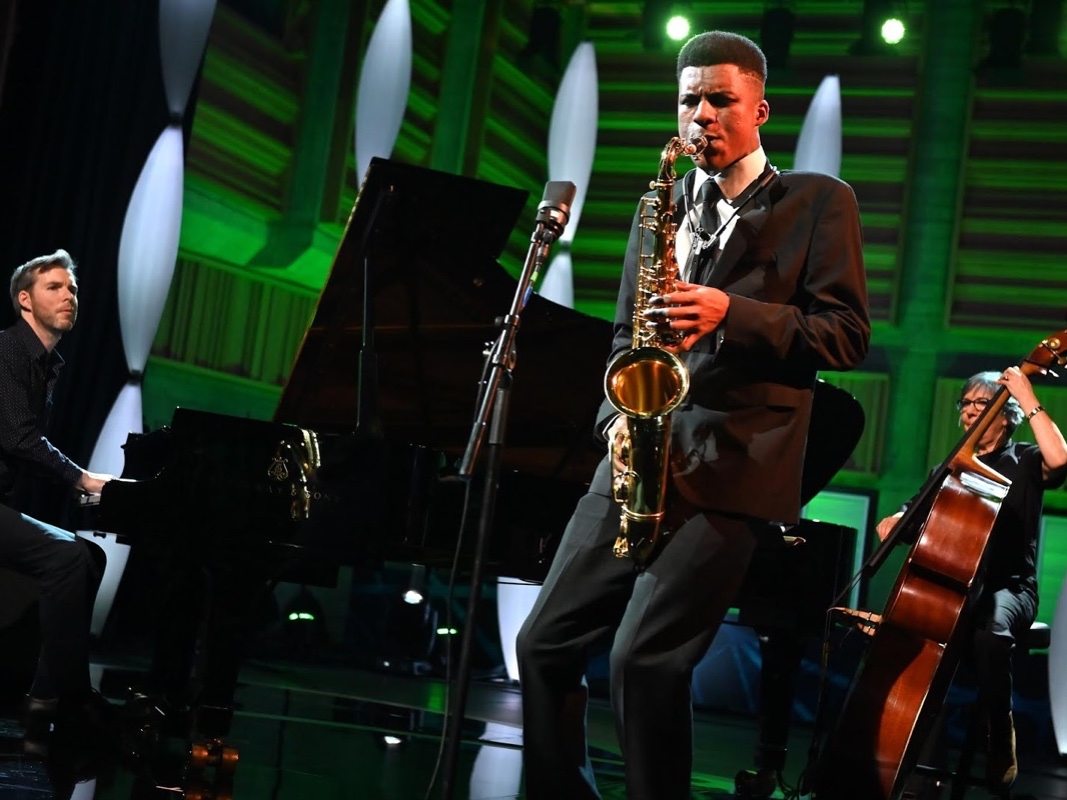
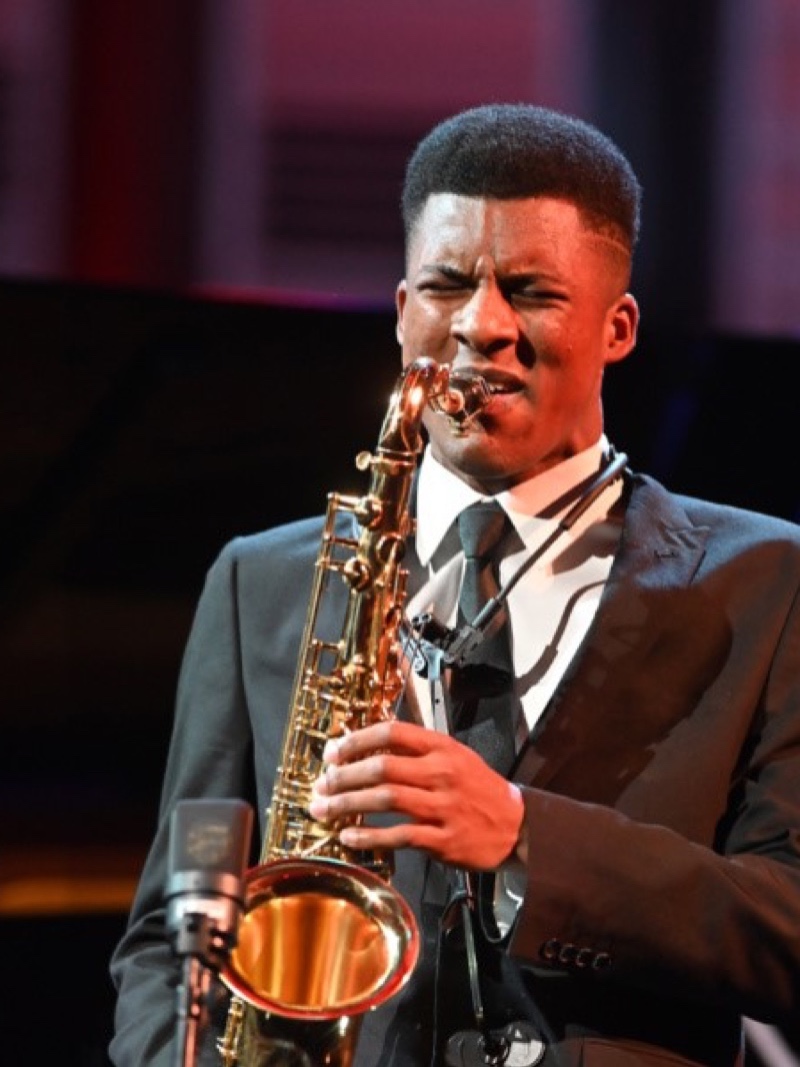
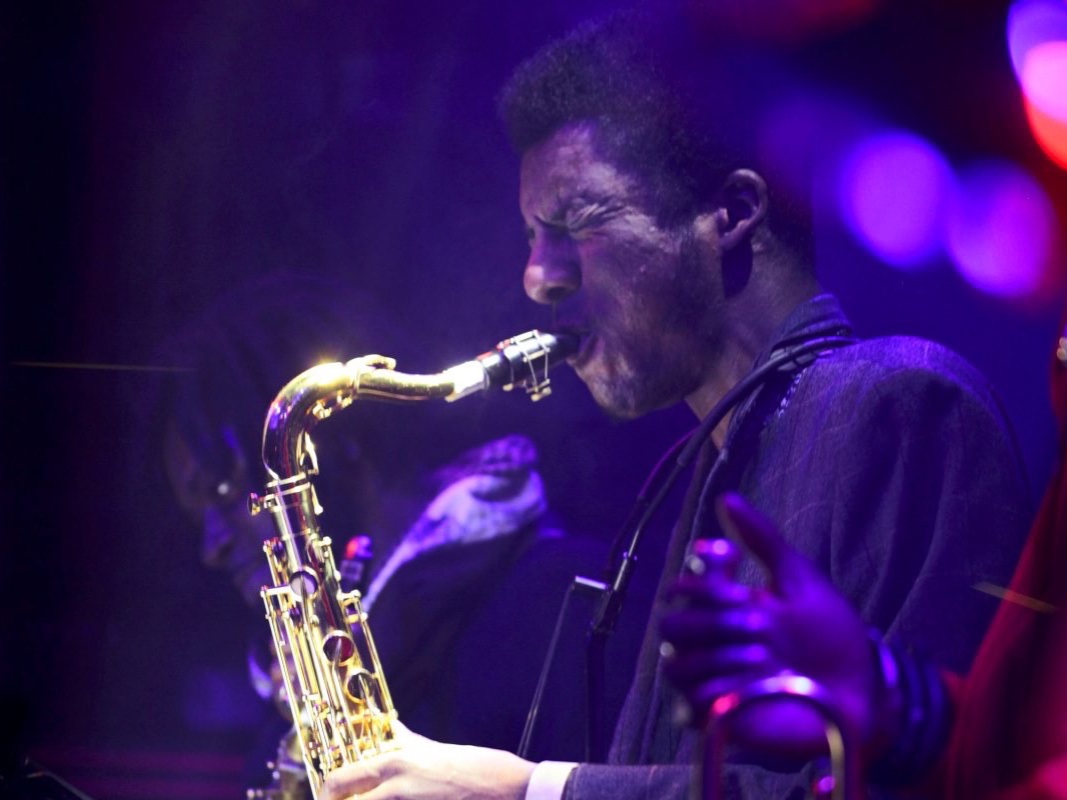
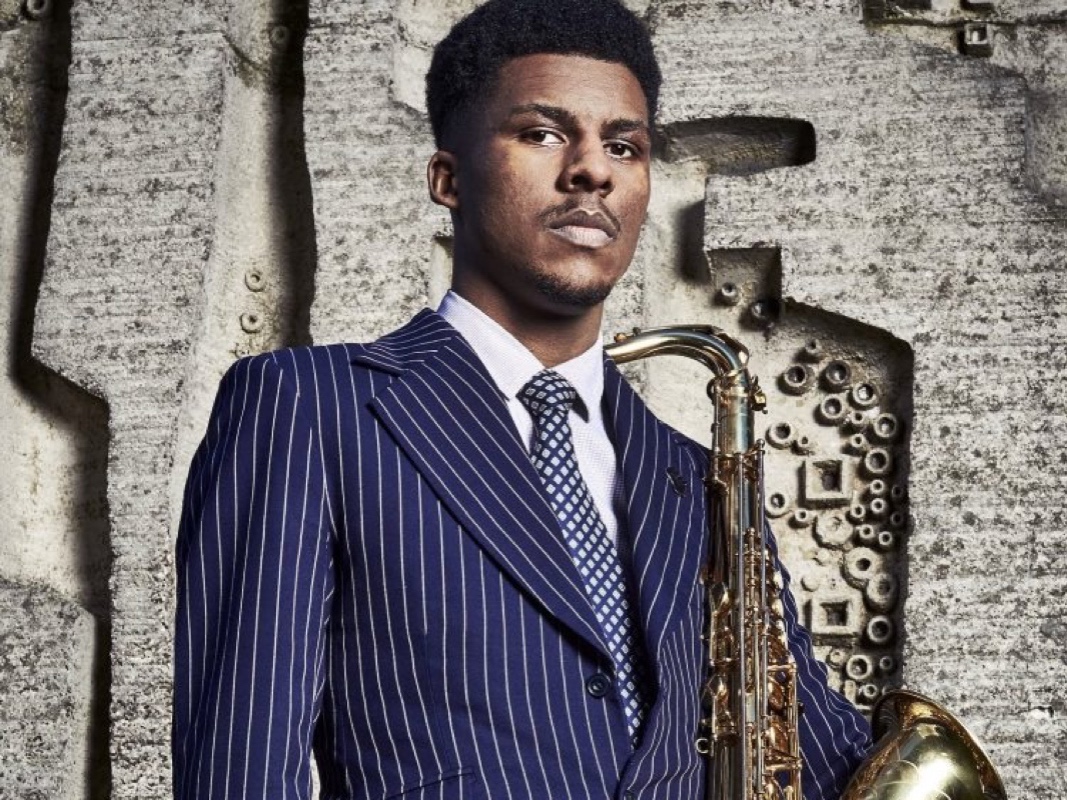
Xhosa Cole
Tenor saxophone · Birmingham, United Kingdom
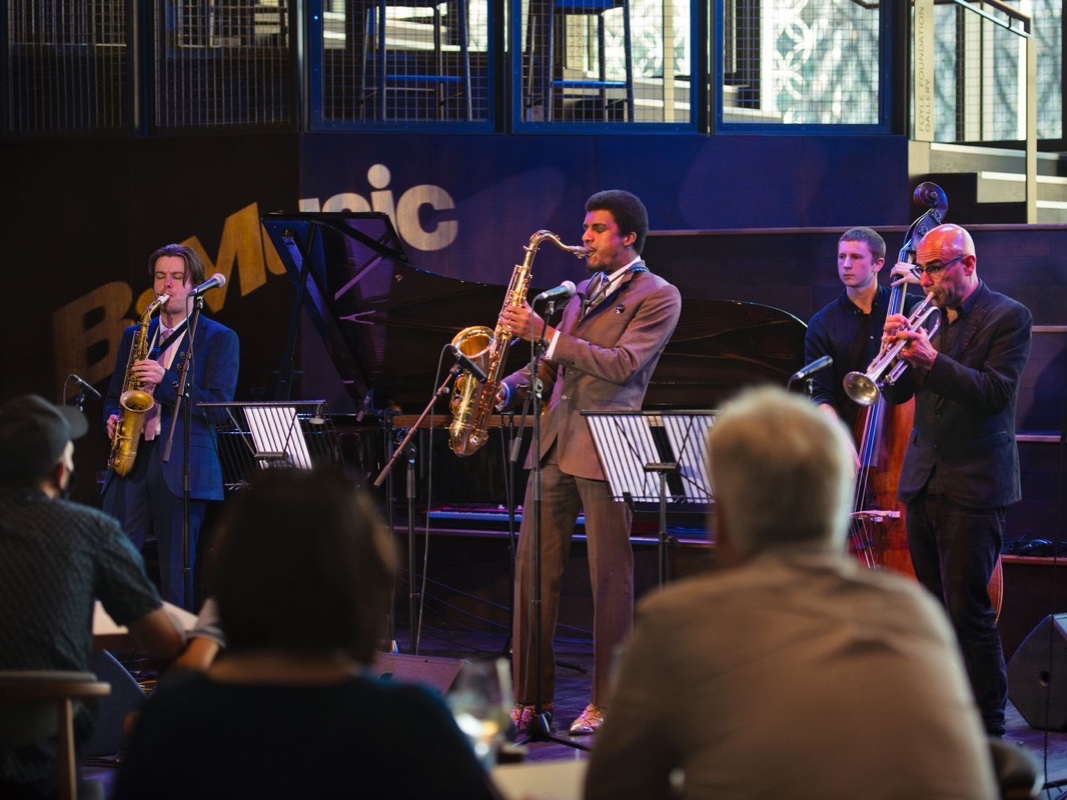
Xhosa Cole is a British tenor saxophonist born in Handsworth, Birmingham, in 1996 or 1997. He was named BBC Young Jazz Musician of the Year in 2018 and Jazz Newcomer of the Year at the 2019 Parliamentary Jazz Awards. He is seen as part of a new generation of Birmingham saxophonists following Soweto Kinch and Shabaka Hutchings. His debut album K(no)w Them, K(no)w Us, released on Stoney Lane in 2021, reimagines classics from the American songbook and was praised by the Financial Times as “mature and wide-ranging.” His second album, Ibeji (2022), pairs him with seven African percussionists to explore the Yoruba idea of twins. On his third album, On A Modern Genius Vol. 1 (2025), he revisits the music of Thelonious Monk. He has performed twice at the BBC Proms and in recent years has toured European clubs and festivals with his FreeMonk project. In 2026, he held a residency at Vortex Jazz Club.
https://xhosacole.bandcamp.com/album/ibeji
Selected Releases: K(no)w Them, K(no)w Us (2021) · Ibeji (2022) · On A Modern Genius Vol. 1 (2025)
Official Bandcamp page (xhosacole.com was temporarily unavailable during research)
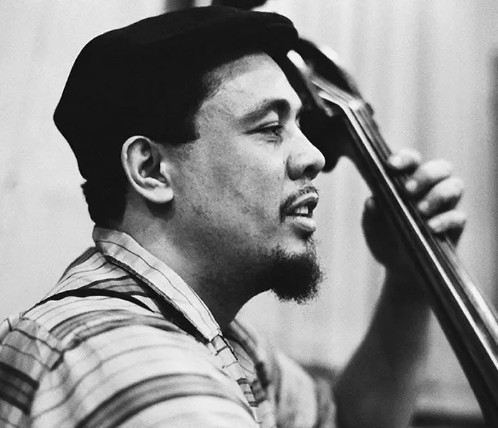
Charles Mingus
Biography
American jazz double bass player and pianist, composer, bandleader, and civil rights activist.
Born April 22, 1922 in Nogales, Arizona, USA.
Died January 5, 1979 in Cuernavaca, Mexico (aged 56).
Mingus was a pioneer in double bass technique, he also pioneered in overdubbing and cutting-up/reassembling tapes of different takes in the studio to achieve the best version to put on record. He also authored an autobiographical novel called "Beneath The Underdog". He died from Amyotrophic lateral sclerosis (ALS or Lou Gehrig's disease).
Also known as: A. Mingus, A. Sipiagin, Baron Mingus, C .Mingus, C Mingus, C. MIngus, C. Mingus, C. Mingus & His Rhythm, C.M., C.MIngus, C.Mingus, Cahrles Mingus, Ch. Mingus, Chales Mingus, Char. Mingus, Charles, Charles "Barron" Mingus, Charles 'Baron' Mingus, Charles Mingus Jr., Charles Mingus, Jr., Charlie Mingue, Charlie Mingus, Charly Mingus, Chas. Mingus, Chaz. Mingus, Chazz Mingus, Manges, Mingus, Mingus/Charles, Мингус, Ч. Мингус, Чарлз Мингус, Чарли Мингус, Чарльз Мингус, チャーリー・ミンガス, チャールス・ミンガス, チャールス・ミングス, チャールズ・ミンガス
Links:
- https://www.charlesmingus.com/
- https://www.allmusic.com/artist/charles-mingus-mn0000009680
- https://www.facebook.com/charlesmingus
- https://www.imdb.com/name/nm0591323/
- https://www.jazzdisco.org/charles-mingus/
- https://www.latimes.com/archives/la-xpm-1993-08-08-ca-21794-story.html
- https://www.npr.org/artists/15373151/charles-mingus
- httpd://twitter.com/Mingus
- https://www.whosampled.com/Charles-Mingus/
- https://en.wikipedia.org/wiki/Charles_Mingus
- https://adp.library.ucsb.edu/index.php/mastertalent/detail/331840/Mingus_Charles

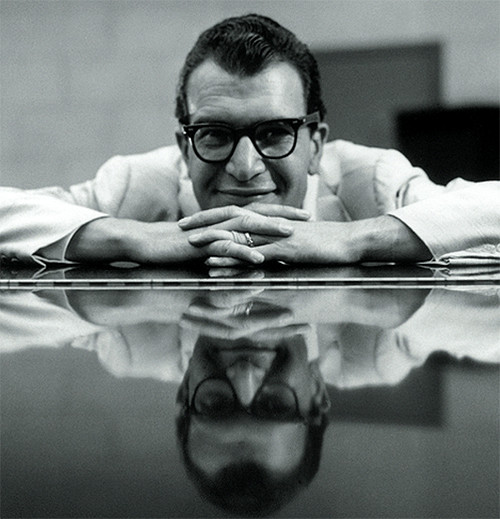
Dave Brubeck
Biography
American jazz pianist and composer. Born 6 December 1920 in Concord, California, USA, died 5 December 2012 in Norwalk, Connecticut, USA.
Younger brother of composer [a488682].
Husband of [a1006047].
Father of [a265658], [a416302], [a265660], and [a1981452].
Also known as: Brewback, Brn Beck, Brubeck, Brubeckl, Brubek, Bruberk, Brubexk, D Brubeck, D Brubeck, D-Brubeck, D. Brubeck, D.B., D.Brubeck, D: Brubeck, Dave, Dave Blubeck, Dave Brubeck Son Piano Et Ses Rythmes, Dave Brubek, Dave Burbeck, David Brubeck, David W. Brubeck, Prubeck, Брубек, Д. Брубек, Дэйв Брубек, דייב ברובק, デイブ・ブルーベック, デイヴ・ブルーベック, 戴夫布魯貝克
Links:
- https://www.davebrubeck.com/
- https://www.facebook.com/DaveBrubeckMusic/
- https://concord.com/artist/Dave-Brubeck/
- https://www.legacyrecordings.com/artists/dave-brubeck/
- https://en.wikipedia.org/wiki/Dave_Brubeck
- https://www.imdb.com/name/nm0115399/
- https://www.whosampled.com/Dave-Brubeck/
- https://adp.library.ucsb.edu/index.php/mastertalent/detail/201213/Brubeck_Dave
- https://www.allmusic.com/artist/dave-brubeck-mn0000958533
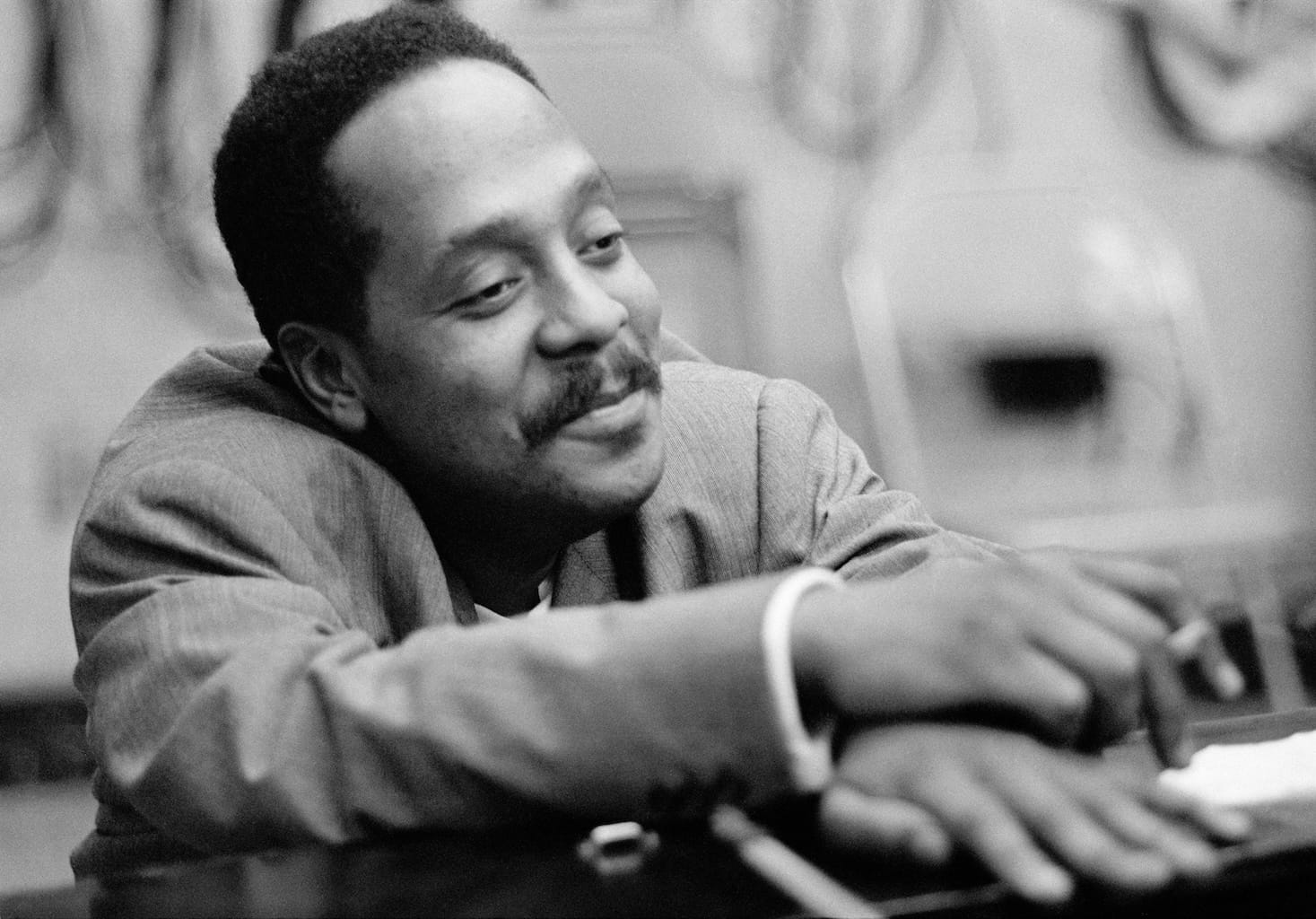
Bud Powell
Bud Powell (1924–1966) was one of the greatest jazz pianists in American history and a pioneer ofbebop. His playing transformed jazz-piano technique, earning him the nickname “Charlie Parker of the piano.”
This concise biography is adapted from Wikipedia:
1. Early Life and Recognition (1924–1944)
-
A Musical Family: Powell was born in Harlem, New York. His grandfather played guitar and his father played piano. He received classical piano training as a child and showed exceptional ability from an early age.
-
Monk as a Mentor: At Harlem clubs, Powell met fellow jazz master Thelonious Monk. Monk introduced him to the emerging bebop scene, and the two became close friends.
-
First Steps as a Professional: In 1943, Powell joined Cootie Williams’s band and began to make his name as a professional musician.
2. A Turning Point and Health Challenges (1945–1955)
-
A Violent Encounter: In 1945, police severely beat Powell in Philadelphia, injuring his head. The assault contributed to lifelong headaches and mental-health problems. He was repeatedly hospitalized and subjected to brutal electroshock treatment.
-
Landmark Recordings: Despite mental illness and struggles with drug and alcohol addiction, Powell recorded many classics from the late 1940s into the early 1950s, including his Blue Note sessions. These recordings secured his place among the defining pianists of modern jazz.
3. Years in Paris (1959–1964)
-
: To escape racism and pressures in the United States, Powell moved to Paris in 1959. There he was cared for by the French jazz admirer Francis Paudras, and his life became more stable for a time. He also left behind many excellent live recordings.
-
Those years in Paris later helped inspire the film Round Midnight (Round Midnight).
4. Later Years and Death (1964–1966)
-
He returned to New York in 1964, by which time he had tuberculosis and his mental health was highly unstable.
-
Powell died in Brooklyn in 1966, aged 41.
Historical Importance and Influence
-
A Technical Innovation: He brought saxophone-like melodic complexity to the right hand, while the left supplied concise, syncopated chords. This broke with the wide-stride technique of earlier piano styles and helped define the framework of modern jazz piano.
-
Essential Compositions: His best-known works include “Un Poco Loco,” “Bouncing with Bud,” and “Parisian Thoroughfare,” all now jazz standards.
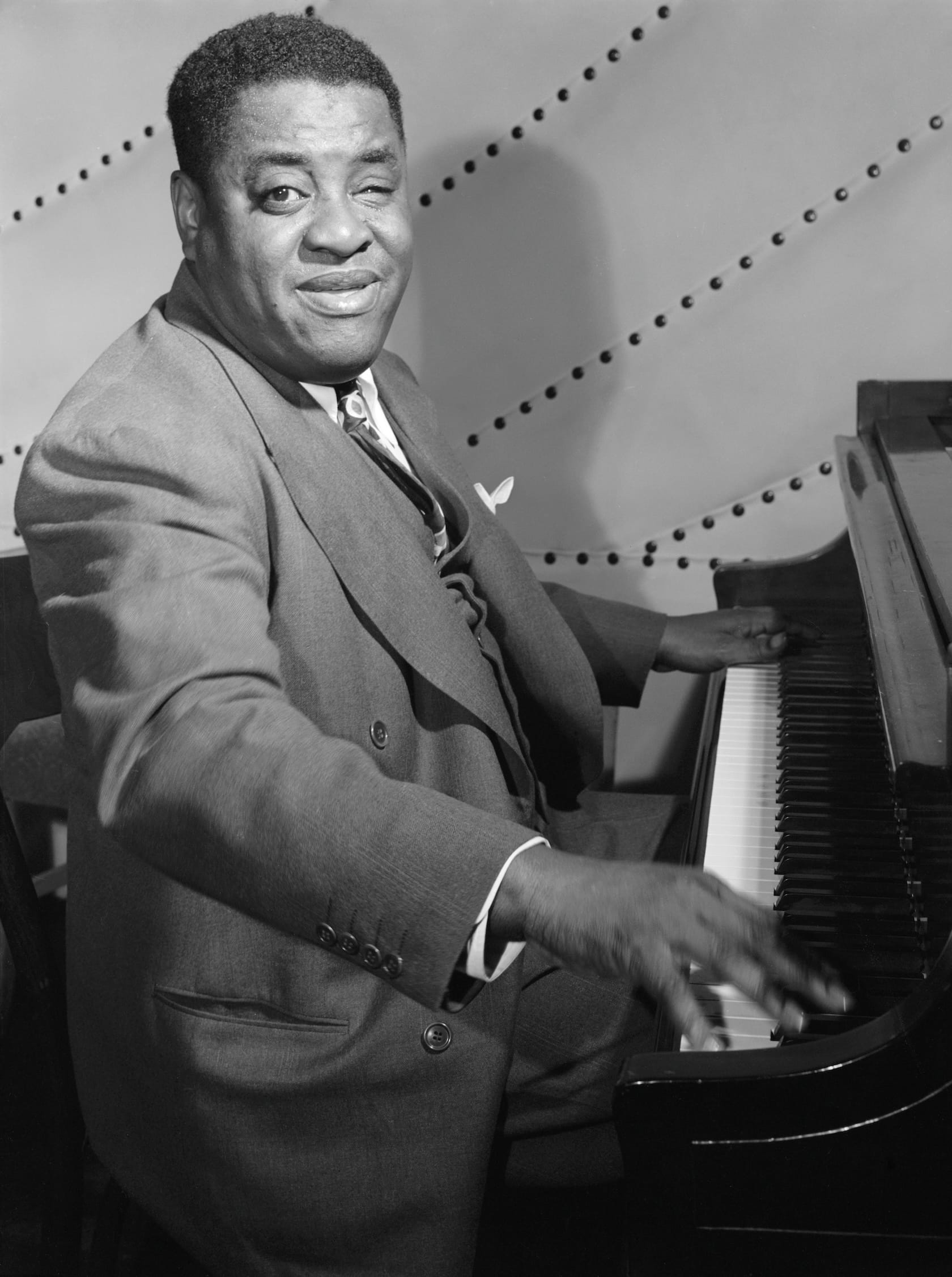
Art Tatum
Art Tatum (1909–1956)
Widely regarded as one of the greatest jazz pianists ever, Tatum was a virtuoso whose playing astonished even classical masters of his day, including Vladimir Horowitz.
1. Visual Impairment and the Awakening of a Prodigy
-
A Physical Challenge: Born in Ohio, Tatum had severe cataracts from childhood. Despite several operations, he was blind in one eye and had only very limited vision in the other.
-
Self-Taught: He began by learning from player-piano rolls. Some recordings he studied had been made by two pianists playing four hands, but he assumed they were played by one person. The misunderstanding helped him develop astonishing speed and complex voicings that sounded as if two pairs of hands were playing at once.
2. “God” Arrives in New York
-
A Sensation in the Jazz World: In 1933, Tatum came to New York for a legendary stride-piano cutting contest. He easily defeated James P. Johnson and Fats Waller, two of the reigning piano greats.
-
The Highest Praise: Waller left behind a famous line that night: “I’m just a piano player, but God is in the house.” From then on, Tatum was known in jazz circles as “God.”
3. Recordings and the Trio
-
A Technical Revolution: His celebrated “Tea for Two” demonstrates sophisticated harmonic substitutions and rapid ornamentation rarely heard in the 1930s.
-
Trio and Solo Work: In the 1940s, Tatum formed a highly popular trio. In the last years of his life, he recorded an extensive series of solo performances for Norman Granz, later issued as The Solo Masterpieces. They remain an encyclopedia of jazz piano.
4. Death and Legacy
-
Tatum died of uremia in Los Angeles in 1956, aged 46.
Musical Style: The Limits of Human Possibility
-
Crystal-Clear Precision: Tatum’s fingers moved at remarkable speed, while every note retained perfect clarity and control. His runs have been called “waterfalls of ornamentation.”
-
Harmonic Thinking Ahead of Its Time: The substitutions and frequent modulations he used in the 1930s anticipated the harmonic foundations of modern jazz and bebop in the 1940s.
-
Complete Independence: His hands could manage extraordinarily complex counterpoint and rhythmic shifts independently, allowing him to create the depth of an entire orchestra as a soloist.
In Summary:Art Tatum was jazz’s“Mount Everest”. He demonstrated the limits of speed, logic, and beauty that a human being could reach on the piano.
An Aesthetic Reflection: For a designer interested in structural precision, Tatum’s music is the sound ofadvanced topology—extreme complexity held in perfect balance and logic.
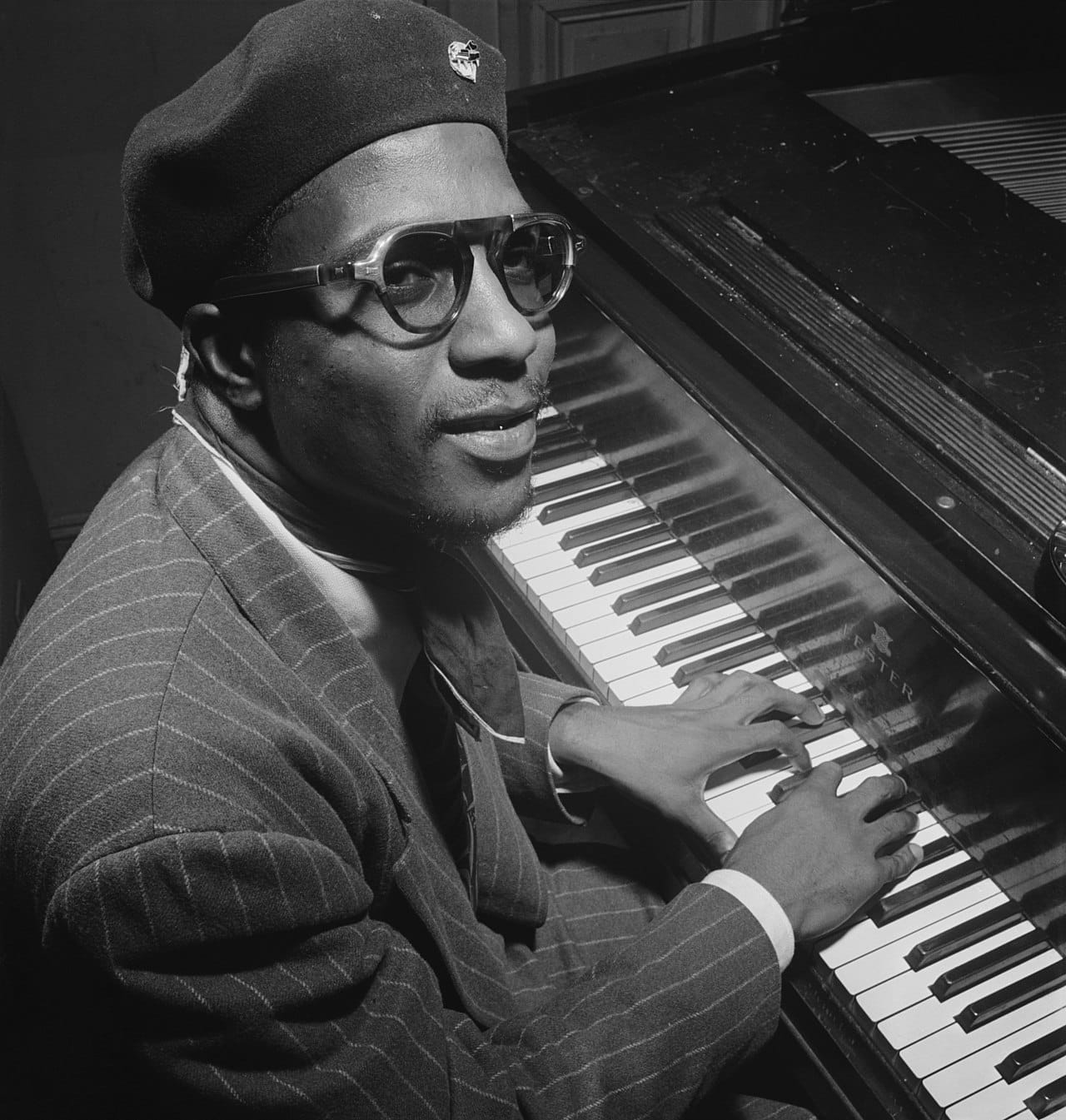
Thelonious Monk
Thelonious Monkwas one of jazz history’s most original and uncompromising pianists and composers. A founder of the bebop movement, he developed a fractured, off-kilter style and an unconventional sense of harmony that made him impossible to categorize. His compositions are among the most frequently recorded in jazz, second only to those ofDuke Ellington. Considering thatMonkwrote only about 70 pieces in his life, compared withEllington’s more than a thousand, this is remarkable.
Minton’s Playhouse and the Bebop Laboratory (1940s)
Born in North Carolina, Monk moved with his family to Harlem as a child.MonkAs the house pianist at Minton’s Playhouse, he helped invent a new musical language—bebop—withDizzy Gillespie、Charlie Parkerand others. While his contemporaries pursued dazzling runs of fast notes,Monkwent in the opposite direction, focusing on unusual rhythmic intervals and sharp dissonances. In 1944, he wrote the enduring classic “’Round Midnight” forCootie Williams, which became his best-known composition.
Years of Silence and Blue Note (1947–1952)
From the late 1940s into the early 1950s,Monkrecorded a series of far-sighted works forBlue Note, including “Epistrophy” and “Straight, No Chaser.” His musical ideas were ahead of their time, and a drug case after he tried to protect a friendBud Powellled to the loss of his cabaret card, preventing him from performing in New York clubs. For years, he faced financial hardship and remained on the margins of the mainstream.
The Quintet’s Peak and a Time Cover (1950s–1960s)
After his cabaret card was restored in 1957,Monkbegan a legendary engagement at the Five Spot Cafe withJohn Coltrane. It became one of the great moments in jazz history. He later released acclaimed albums forRiverside, including《Brilliant Corners》. By 1964,Monk’s work had finally gained broad recognition, and he became one of the few jazz musicians to appear on the cover of Time.
Withdrawal and Final Years (1970s–1982)
From the 1970s onward,Monk’s health and mental state gradually declined. He grew quiet and eventually withdrew from public life. During the final decade of his life, he rarely played piano and lived in the home of his close friend,Pannonica de Koenigswarter. In 1982, the jazz world’s “high priest” died of a stroke, aged 64.
3. Musical Style: An Architecture of Silence and Displacement
-
A Percussive Touch at the Piano:MonkHe played with fingers that barely bent, striking the keys vertically as if they were percussion instruments. The result was a crisp, stark, and forceful sound.
-
The Art of Space: He excelled at sudden pauses, using silence to intensify the notes around it. He once said, “There are no wrong notes on the piano, only wrong moments.”
-
Unusual Harmony and Rhythm: He favored dissonant intervals such as major seconds. His improvisations were jagged and full of unexpected rhythmic shifts. Listening to him can feel like missing a step—only to be caught by the surprising logic of the music.
-
Performance as Gesture: During live performances, while other musicians took solos,Monkwould often get up and dance in strange circles around the piano. It was his distinctive way of feeling the rhythm.
In Summary: Thelonious Monkwas jazz’s“deconstructivist architect”. He took apart traditional melody and rhythm and used the fragments to build a tightly structured, wonderfully strange spiritual space.
An Aesthetic Connection: For a 3D designer,Monk’s music is a model ofnonlinear modeling. He rejected smooth curves in favor of distinctive, forceful hard surfaces and geometric breaks. Every displacement carries an intense logic of its own.
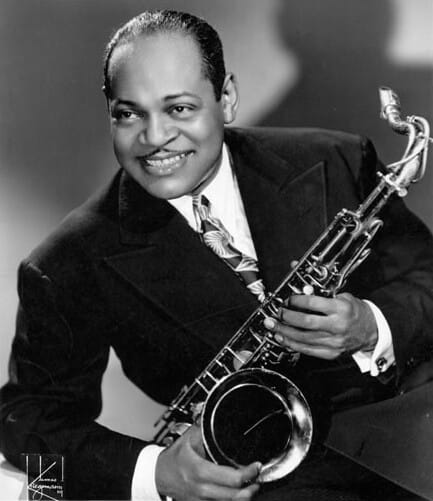
Coleman Hawkins
After several later-generation stars, we return to jazz’s roots with a concise biography ofColeman Hawkins (1904–1969).
Known as the father of the jazz tenor saxophone, Hawkins was nicknamed “Hawk” or “Bean.” Before he came along, the tenor saxophone was a peripheral instrument in jazz; he gave it a voice and a soul.
1. Defining the Tenor Saxophone (1920s–1934)
-
A Saxophone Pioneer: Born in Missouri, Hawkins studied piano and cello as a child and took up the saxophone at age nine.
-
With Fletcher Henderson’s Orchestra: In 1924, he joined Fletcher Henderson’s big band. Deeply influenced by Louis Armstrong, he helped transform the saxophone from a comic accompaniment instrument into a powerful, expressive voice for improvised solos.
2. Years in Europe and “Body and Soul” (1934–1939)
-
A European Haven: Seeking better opportunities and greater respect, Hawkins moved to Europe in 1934. There he worked with leading musicians, including gypsy-jazz guitarist Django Reinhardt.
-
A Landmark Recording: After returning to the United States in 1939, he recorded “Body and Soul.” In its famous two-chorus solo, he largely abandoned the original melody in favor of intricate improvisation over the chords. The record caused a sensation and is considered one of the greatest solos in jazz history. It also helped prepare the way for bebop.
3. A Master Across Generations (1940s–1950s)
-
A Mentor to Younger Musicians: Unlike many older musicians who resisted new music, Hawkins welcomed the younger generation. In 1944, he ledthe first bebop recording session, with emerging talents Dizzy Gillespie and Max Roach among the participants.
-
A Partnership with Monk: He was among the first to recognize Thelonious Monk’s genius and gave Monk important support and early recording opportunities.
4. Later Years and Final Chapter (1960s)
-
Still Exploring: Hawkins remained active into the 1960s, working with Duke Ellington and the younger standard-bearer Sonny Rollins.
-
Final Years: In his later years, Hawkins struggled with depression and alcoholism. He died of liver disease in 1969, aged 64.
Artistic Style and Standing
-
A Powerful Tone: Hawkins’s sound was broad, full, and emotionally charged, with a pronounced vibrato.
-
Vertical Improvisation: He favored improvising vertically throughchord structures and arpeggios, in striking contrast to Lester Young’s flowing, linear approach. Together, they established two major paths for the modern saxophone.
In Summary:Without Coleman Hawkins, the saxophone might never have become a leading voice in jazz. He representedpower and depthand served as a strong bridge from big-band swing to modern jazz.
Connections: You may notice that many of the older musicians who influenced Clifford Brown, Bud Powell, and others received support or inspiration from Hawkins. He was an anchor for his generation.
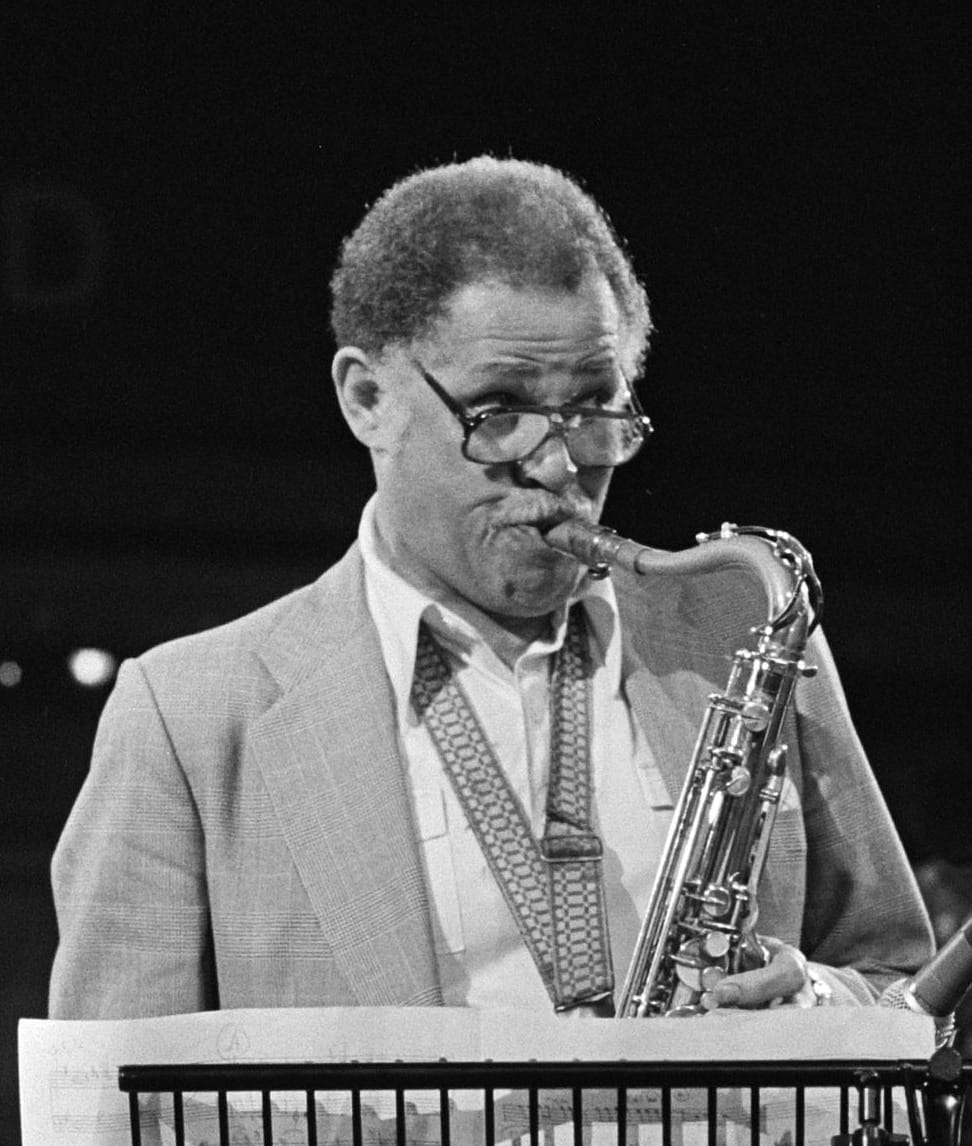
Dexter Gordon
A concise biography ofDexter Gordon (1923–1990).
One of the most iconic tenor saxophonists in jazz history, Gordon stood 6 feet 6 inches tall and was nicknamed “Long Tall Dexter.” He was the first musician to bring bebop successfully to the tenor saxophone and a key bridge between Coleman Hawkins, John Coltrane, and Sonny Rollins.
1. A Bebop Pioneer in Los Angeles (1940s)
-
A Medical Family: Born in Los Angeles, Gordon grew up in a family of doctors; his father had treated Duke Ellington. He began on clarinet at 13 and switched to tenor saxophone at 17.
-
Learning in the Bands: Early in his career, he developed his skills in the bands of Lionel Hampton and Louis Armstrong.
-
Saxophone Battles: In the late 1940s, his saxophone duels with Wardell Gray, including “The Chase,” caused a sensation. Their competitive style later became a jazz tradition.
2. Decline and Renewal (1950s–1961)
-
A Dark Decade: Drug addiction led Gordon to prison several times in the 1950s, and his career fell into a deep slump.
-
A Blue Note Revival: In 1961, he joined Blue Note and recorded Doin’ Allright, Dexter Calling…, and what is widely considered his masterpiece,《Go!》. These albums reveal his giant, mature sound and his characteristic laid-back sense of time, often described as playing “behind the beat.”
3. Years in Europe (1962–1976)
-
Paris and Copenhagen: Tired of racism and the drug environment in the United States, Gordon moved to Europe for 14 years.
-
Landmark Recordings: In Europe, he made the celebrated album Our Man in Paris with Bud Powell, showing remarkable creativity. He was treated like a rock star by European audiences, and his life became more stable.
4. A Hero’s Return and an Oscar Nomination (1976–1990)
-
A Triumphant Homecoming: When Gordon returned to the United States in 1976, his performances at the Village Vanguard in New York caused a sensation and were seen as a triumphant comeback for jazz.
-
A Film Legacy: In 1986, he starred inRound Midnight. He played a down-and-out jazz musician with striking realism and received anAcademy Award nomination for Best Actor.
-
Final Years: He died of kidney failure in Philadelphia in 1990, aged 67.
Artistic Style and Influence
-
A Signature Sound: Gordon’s saxophone tone was huge and spacious, with an unmistakable confidence.
-
A Distinctive “Behind-the-Beat” Feel: He liked to play on the edge of the beat. His relaxed yet deeply rhythmic approach became a personal signature.
-
Quoting the Masters: His improvisations were full of humor, and he would unexpectedly quote familiar songs—from “Happy Birthday” to passages from Wagner.
-
A Sense of Ritual: Before playing a ballad, he often recited its lyrics to help the audience understand its emotional world.
In Summary:Dexter Gordon was jazz’s“elegant giant”. He brought Coleman Hawkins’s weight and power together with Lester Young’s fluidity, carrying both into modern jazz.
Connections: Gordon was an important early model for John Coltrane and Sonny Rollins. After those younger players became famous, he in turn absorbed elements of their hard-bop styles. This kind of influence across generations is rare and moving in jazz history.
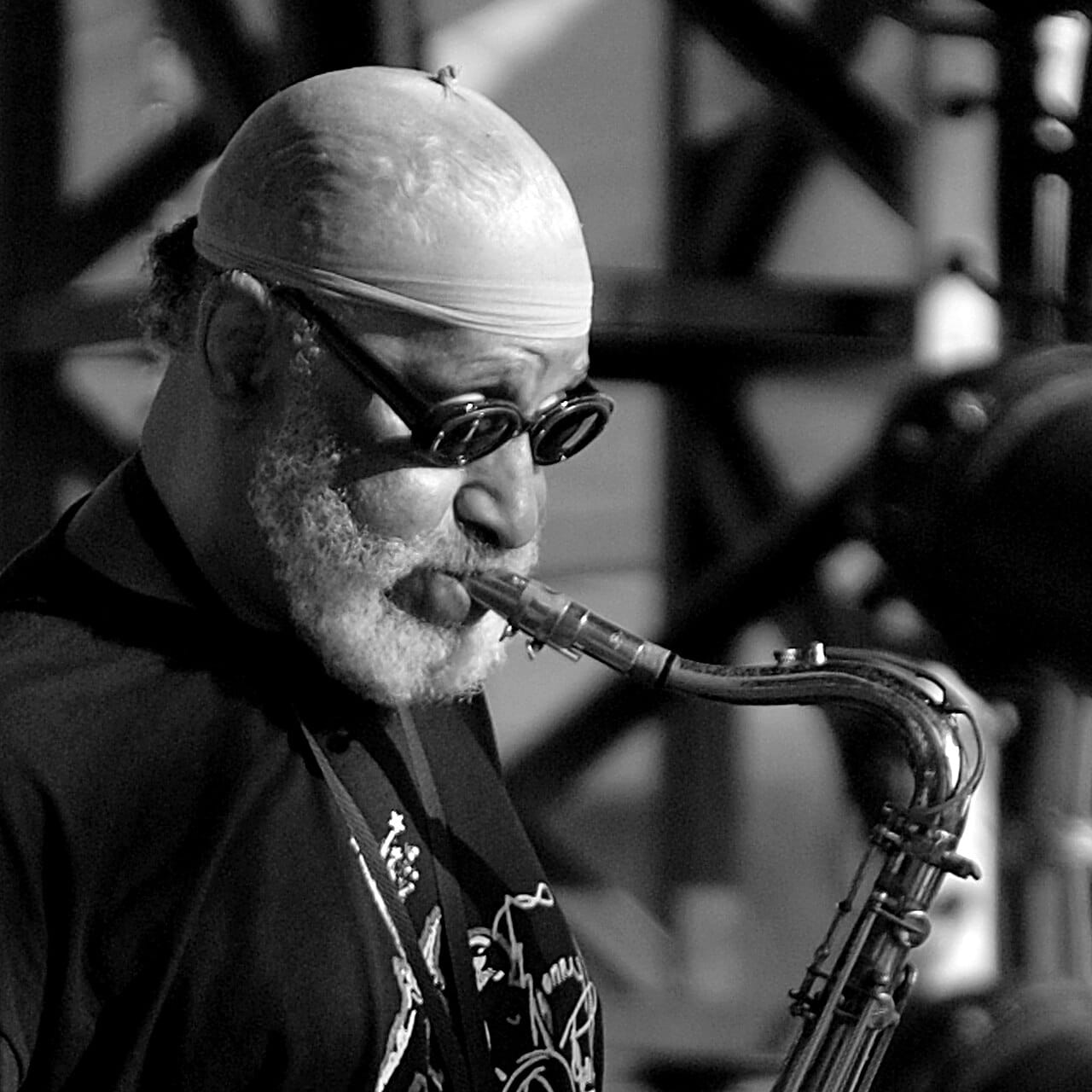
Sonny Rollins
Sonny Rollinsis widely regarded as one of jazz history’s greatest tenor saxophonists. His nickname was“Newk”. A defining figure of the hard-bop era, he was also a master of developing musical ideas through improvisation. Over a career spanning seven decades, his powerful breath, firm tone, and repeated retreats from the spotlight at the height of his success made him a symbol of self-renewal in jazz.
The Golden Boy of the Bebop Era (1940s–1954)
Born into a family of West Indian immigrants in Harlem, New York,Rollinsshowed remarkable talent as a teenager and played with bebop pioneers such asThelonious Monk、Bud Powell. In the early 1950s, he joinedMiles Davis’s band and recorded classic original compositions such as “Oleo” and “Airegin.” He was also struggling with addiction at the time. In 1954, he voluntarily stepped away from music for the first time, taking a manual-labor job in Chicago as he worked to recover and rebuild his life.
The Saxophone Colossus (1955–1958)
After returning in 1955,Rollinsjoined a quintet led byClifford BrownandMax Roach, launching an exceptionally creative period. In 1956, he recorded his best-known album,《Saxophone Colossus》(Saxophone Colossus). “St. Thomas” shows how deftly he brought Caribbean calypso rhythms together with jazz. He also established the piano-less trio format of saxophone, bass, and drums. Its spare setting gave him unusual freedom to improvise and confirmed his stature as a leading soloist.
The Hermit on the Bridge and His Return (1959–1971)
In 1959, at the height of his career,Rollinsannounced another retreat. Because practicing in his apartment disturbed his neighbors, he spent the next two years carrying his saxophone to New York’sWilliamsburg Bridgeeach day to practice over the East River. In 1962, he returned with the album《The Bridge》, showing a deeper and more exploratory sound. In the late 1960s, he traveled to India to study yoga and meditation, seeking the spiritual force behind music.
Crossing Genres and Later Honors (1972–2010s)
From the 1970s onward,Rollinswas open to funk and fusion. He even contributed a memorable solo on an album byRolling Stones. His generosity onstage was legendary; a single solo could last for tens of minutes. In 2011, he received the National Medal of Arts from President Barack Obama. Around 2014, respiratory problems led him to stop performing publicly, but he remains a spiritual beacon for jazz musicians.
3. Musical Style: Logic and Power
-
Thematic Improvisation:Rollins: One of Rollins’s greatest gifts was taking a simple melodic fragment—a motif—and developing it like a set of building blocks through rhythmic displacement, inversion, and variation into a sweeping statement.
-
A Tough, Full-Bodied Tone: His saxophone has a metallic, grainy quality, both powerful and witty. Even in serious improvisations, he may slip in a familiar melody or a sly phrase.
-
An Unerring Sense of Time: Even without a piano, he could create a powerful swing through accents and pauses in the saxophone line alone.
In Summary: Sonny Rollinswas jazz’s“seeker”. Through strict discipline and constant self-reinvention, he turned the saxophone into an instrument for thought and reflection.
An Aesthetic Connection: For a 3D designer interested in structural strength and dynamic balance,Rollins’s music is an excellent example ofgenerative modeling. He starts from a simple point, iterates on it, and gradually builds a complex, tension-filled topology.
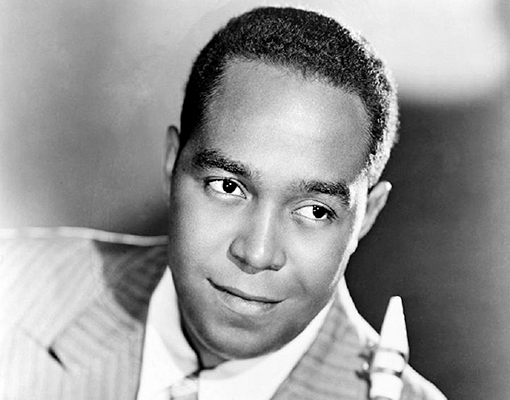
Charlie Parker
Charles Parker Jr. (August 29, 1920 – March 12, 1955)
Charles Parker Jr., nicknamed“Bird”or“Yardbird”, was an American jazz saxophonist, bandleader, and composer.
Parker was an exceptionally influential soloist and a leading figure in the development ofbebop, a style marked by fast tempos, virtuosity, and complex harmony. He introduced revolutionary rhythmic and harmonic ideas, including rapid passing chords, altered chords, and chord substitutions. His main instrument was the alto saxophone.
Parker became an icon to the hipster subculture and, later, the Beat Generation. He helped shape the image of the jazz musician as a uncompromising artist and intellectual rather than simply an entertainer.
Early Life
Charles Parker Jr. was born in Kansas City, Kansas, on August 29, 1920. His parents were Charles Parker Sr. and Adelaide “Addie” Bailey. His father worked as a Pullman porter and also toured as a pianist and singer, which had some influence on Parker’s musical development.
-
Age 11: Began studying the saxophone.
-
Age 14: Joined the Lincoln High School band and got a new alto saxophone.
-
1935: Left high school and began his professional music career.
Career
1936–1938: Improvisation and Intensive Study
In early 1936, Parker made a mistake during a jam session, and drummer Jo Jones threw a cymbal toward him to signal that he should leave the bandstand. The incident drove him to practice more intensely; he reportedly spent up to 15 hours a day practicing over the next few years. Late in 1936, he was seriously injured in a car accident while traveling to a performance, breaking ribs and injuring his spine. During his recovery, he further developed his ability to improvise over chord changes.
1939–1944: The Rise of Bebop
Parker moved to New York in 1939. While washing dishes at Jimmy’s Chicken Shack, he heard pianist Art Tatum. A breakthrough came while he was practicing “Cherokee”: he realized he could use a chord’s upper extensions as a melodic line, helping him develop the language ofbebop.
Between 1942 and 1944, a recording ban by the musicians’ union meant that much of bebop’s early development went undocumented. Parker formed a close friendship with Dizzy Gillespie, and together they helped define the new style.
1945–1953: A Career as a Leader
-
1945: Recorded classics including “Ko-Ko” and “Billie’s Bounce.”
-
1946: Suffered a physical and emotional breakdown in California and was treated at Camarillo State Hospital.
-
1949: Fulfilled a long-held wish to record with strings, making the celebrated Charlie Parker with Strings.
-
1953: Gave a legendary concert at Massey Hall in Toronto with Gillespie, Mingus, and others, playing a plastic saxophone.
Illness and Death
Parker struggled for years with heroin addiction, alcoholism, and mental health problems. The death of his daughter Pree in 1954 devastated him, and he attempted suicide.
On March 12, 1955, Parker died at age 34 in Baroness Pannonica de Koenigswarter’s suite at the Stanhope Hotel in New York. The official causes were lobar pneumonia and a bleeding ulcer. Because his body had been worn down, the medical examiner estimated his age at between 50 and 60.
Artistic Contributions and Style
| Feature | Description |
| Contrafact | Composing a new melody over the chord progression of an existing jazz standard, as in “Ornithology.” |
| Bird Changes | A distinctive reharmonization of the 12-bar blues, as in “Blues for Alice.” |
| Rhythmic Innovation | Flexible use of triplets and offbeat accents gave his solos a freer feel. |
| Notable Works | 《Confirmation》、《Anthropology》、《Scrapple from the Apple》、《Yardbird Suite》。 |
“You can tell the history of jazz in four words: Louis Armstrong, Charlie Parker.” —Miles Davis
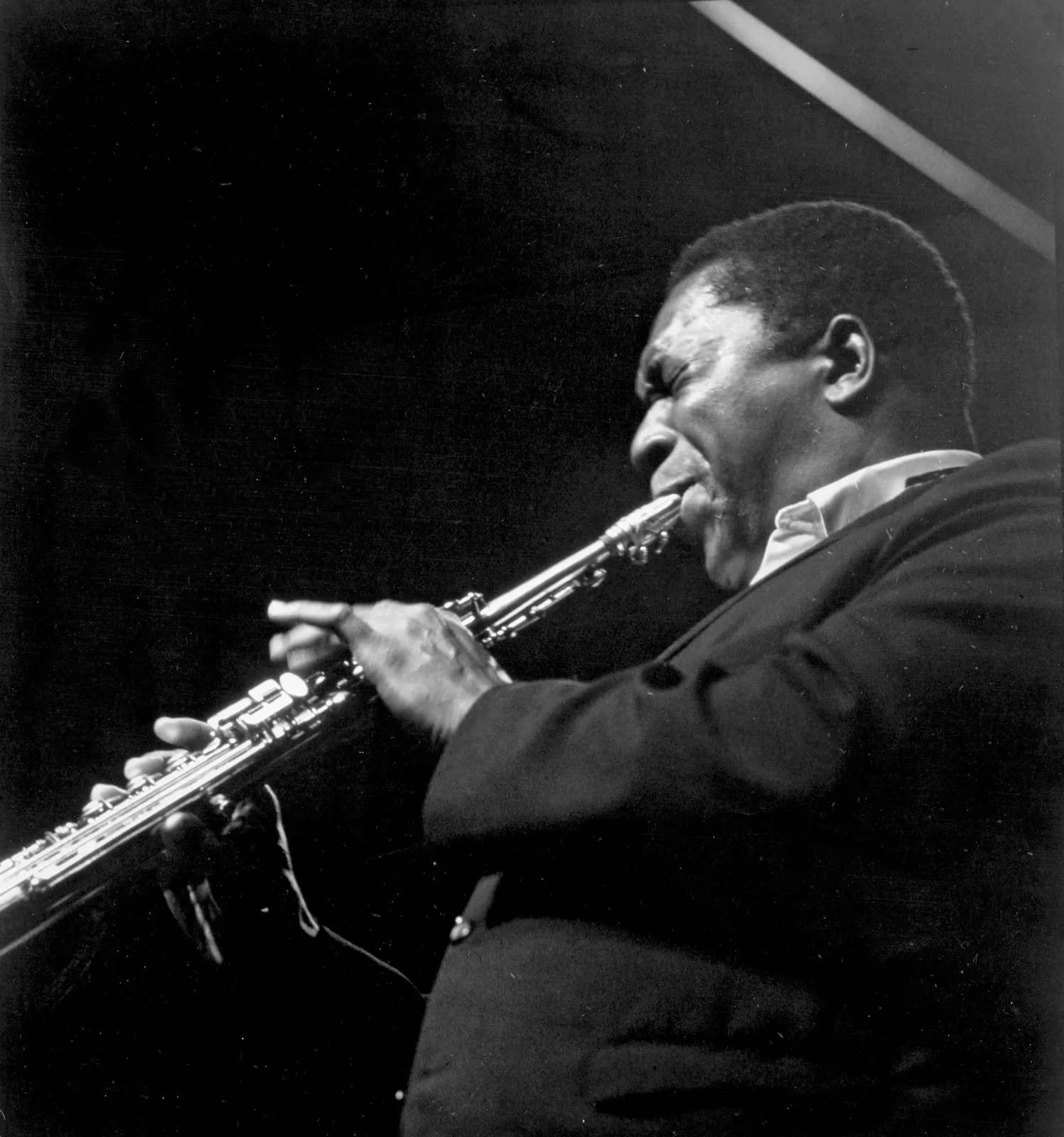
John Coltrane
A concise biography ofJohn Coltrane (1926–1967):
One of the greatest tenor saxophonists in jazz history, Coltrane was nicknamed “Trane.” He raised jazz from entertainment to a form ofspiritual practiceand became one of the music’s most influential innovators.
1. Apprenticeship and the Miles Davis Quintet (1940s–1957)
-
A Late-Blooming Star: Born in North Carolina, Coltrane developed his craft in Navy bands and various R&B groups. He did not become widely known until he joined Miles Davis’s quintet in 1955.
-
Recovery and Renewal: In 1957, Davis fired him because of his drug addiction. After a profound religious awakening, Coltrane overcame his drug and alcohol problems, returned to the scene, and began an inspiring collaboration with Thelonious Monk.
2. “Sheets of Sound” and Modal Jazz (1958–1960)
-
Sheets of Sound: After rejoining Davis’s band, Coltrane played on the landmark album《Kind of Blue》. On his own album《Giant Steps》, he showcased his fast, intricate, tightly reasoned “sheets of sound,” pushing beyond the limits of improvising over conventional chord changes.
-
The Soprano Saxophone: He revived interest in the neglected soprano saxophone and recorded one of the instrument’s most successful jazz adaptations, “My Favorite Things.”
3. The Classic Quartet and A Love Supreme (1961–1965)
-
A Spiritual Peak: With pianist McCoy Tyner, bassist Jimmy Garrison, and drummer Elvin Jones, Coltrane formed one of the most powerful quartets in jazz history.
-
A Landmark Album: In 1965, he released the spiritual suiteA Love Supreme. More than a record, it was an offering of gratitude to God and marked a turn from modal jazz toward spiritual exploration.
4. Free Jazz and the Final Years (1966–1967)
-
Free Jazz: In his later years, Coltrane broke down the restraints of rhythm and melody, recording controversial free-jazz works such as《Ascension》in pursuit of pure emotional force and spiritual transcendence.
-
Death: Coltrane died of liver cancer in 1967, aged 40.
Musical Style: A Relentless Explorer
-
Relentless Curiosity: Coltrane was a jazz ascetic, practicing saxophone for more than ten hours a day. He once said, “I never feel that my playing is complete. I always feel there is something better to come.”
-
Spirituality and Tension: His playing carried enormous tension and intensity; his later works often had the solemnity of a ritual.
-
A Global Outlook: He was among the first jazz musicians to bring Indian music, African elements, and Eastern scales into the music.
In Summary:John Coltrane was jazz’s“saint”. His music is more than a sequence of notes; it is an ongoingquestion addressed to the universe and the divine。
Connections: Among the musicians mentioned earlier,Joe HendersonandDexter Gordonwere deeply influenced by Coltrane. After 1967, it can seem that tenor saxophonists everywhere were trying to find a way out of his enormous shadow.
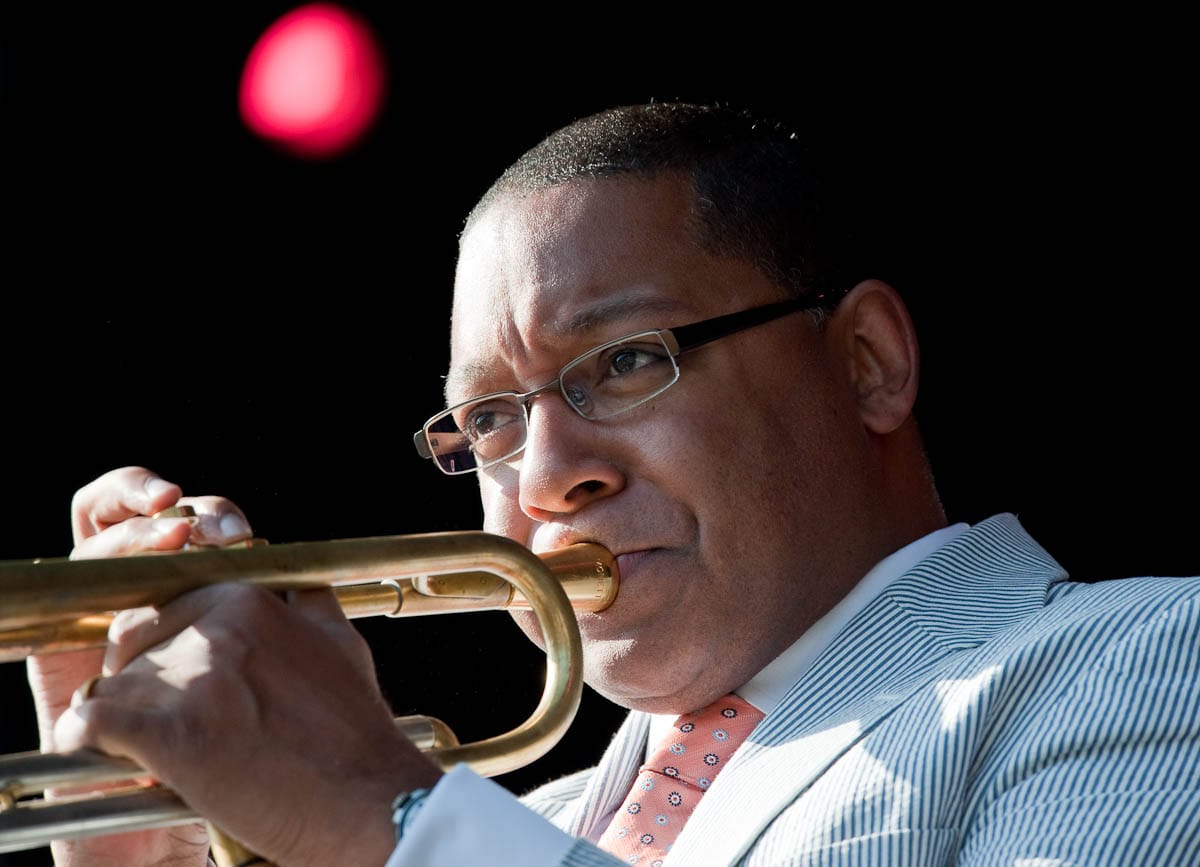
Wynton Marsalis
Wynton Marsalisis one of the most powerful and controversial figures in contemporary jazz. Alongside formidable trumpet technique, he is a prolific composer and educator, and a leading advocate of neoclassical jazz. He was the first musician to win Grammy Awards in both the jazz and classical categories in the same year, 1983, breaking down barriers between the two traditions.
A Musical Family and a Dual Talent (1961–1979)
Born into a musical family in New Orleans, his fatherEllis Marsalis Jr.was a noted piano teacher, while his brotherBranford Marsalisbecame a leading saxophonist.Wynton MarsalisHe began serious trumpet study at 12, and at 14 performed Haydn’s Trumpet Concerto with the New Orleans Philharmonic. At 17, he entered the Juilliard School. His exceptional ability in both classical music and jazz quickly made him a focus of the New York scene.
The Jazz Messengers and the Neoclassical Wave (1980s)
In 1980, at just 19,Wynton MarsalisjoinedArt Blakey’sJazz Messengers(the Jazz Messengers), an experience widely viewed as a turning point in his career. As free jazz and fusion waned in the 1980s, he helped lead a “return to tradition.” He argued for reclaiming the swing and blues spirit ofLouis Armstrong、Duke Ellingtonand theMiles Davis’s early work, and pushed back against the electronic and commercial trends of the day. He became a leader of the Young Lions and the neotraditional movement.
Jazz at Lincoln Center and the Pulitzer Prize (1987–Present)
helped establish Jazz at Lincoln Center in New York in 1987 and has served as its artistic director ever since. He helped give jazz a lasting institutional home and the stature of a respected American classical art. In 1997, his expansive composition《Blood on the Fields》won thePulitzer Prize for Music, the first jazz work to receive the award.
Cultural Diplomacy and Debate (2000s–Present)
As a leading international spokesperson for jazz,Wynton Marsalishas promoted the music through education and tours around the world. He has also defended a strict, conservative definition of “real jazz” and publicly criticizedMiles Davis’s later fusion work and hip-hop. His views have sparked enduring debate, but his role in renewing popular interest in traditional jazz is undeniable.
3. Musical Style: Precision and Historical Depth
-
Flawless Technique:Wynton Marsalis’s playing is known for its pitch accuracy, crisp articulation, and broad dynamic range. From blistering bebop lines to complex classical concertos, he shows remarkable control.
-
A Deep Commitment to Blues and Swing: He sees the blues and swing as essential to jazz. His improvisations often draw strongly on New Orleans traditions, with an emphasis on counterpoint and collective interplay.
-
A Composer’s Sense of Structure: As a composer, he brings big-band jazz together with the forms of classical suites. His works often tell broad historical stories and explore race, freedom, and the American experience.
In Summary: Wynton Marsalisis jazz’s “pope.” With the discipline of a classical musician, he restored dignity to the music and built a sturdy stronghold for tradition amid constant change.
An Aesthetic Reflection: For a 3D designer drawn to order and precise structure,Wynton Marsalis’s music is like aperfectly proportioned Parthenon. Every note seems carefully calculated, creating a beauty grounded in reason.
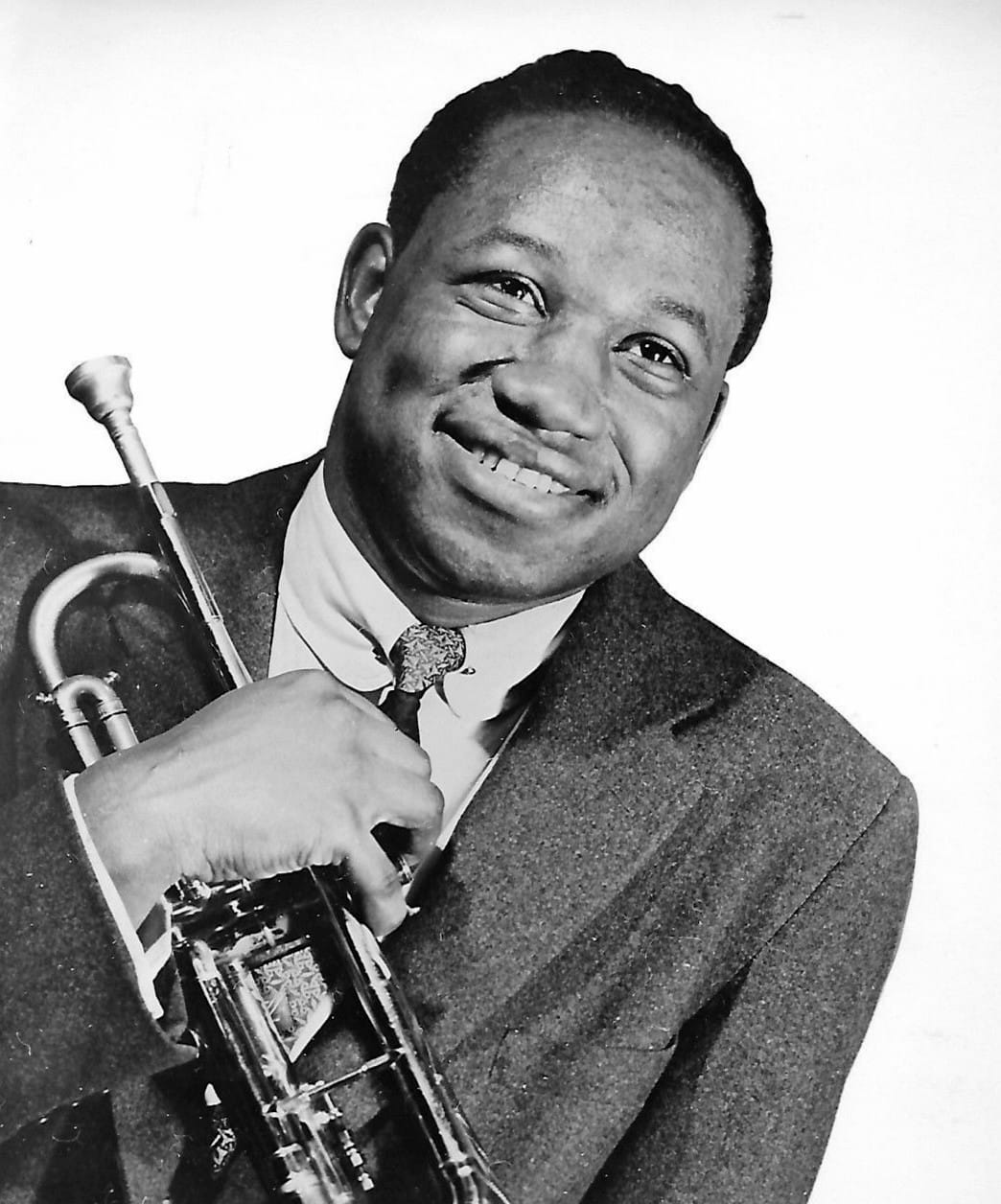
Clifford Brown
After several of jazz’s great masters, here is a concise biography ofClifford Brown (1930–1956). One of the most poignant losses in jazz history, he transformed modern trumpet playing in just 25 years and became a central voice ofhard bop.
1. A Prodigy with a Mathematical Mind (1930–1950)
-
Early Musical Promise: Born into a musical family in Wilmington, Delaware, Brown began piano lessons at age ten and quickly showed exceptional talent.
-
A Student of Music and Mathematics: He studied mathematics at Delaware State College before transferring to Maryland State College. The rigor of his thinking later came through in improvisations that were disciplined, fluent, and carefully structured.
2. A Near-Fatal Car Crash and a New Beginning (1950–1953)
-
The First Crash: In 1950, Brown was seriously injured in a car accident and spent a year in hospital. During his recovery, jazz master Dizzy Gillespie visited him and offered encouragement.
-
Return to the Scene: After recovering, he honed his skills in R&B bands, then joined the groups of Tadd Dameron and Lionel Hampton. A live album recorded with Art Blakey at Birdland in 1954 became one of hard bop’s foundational statements.
3. The Clifford Brown–Max Roach Quintet at Its Peak (1954–1956)
-
A Dream Team: In 1954, Brown formed the celebrated Clifford Brown–Max Roach Quintet with the legendary drummer. It is regarded as one of the finest hard-bop groups in jazz history.
-
A Model of Excellence: Brown was known for his exceptionally clear tone, astonishing speed, and logical phrasing. Just as significant, in an era when drug use was widespread, he maintained ahealthy, disciplinedlife and became a role model for musicians such as Sonny Rollins.
4. A Star Falls (1956)
-
The Tragedy: In the early hours of June 26, 1956, Brown, pianist Richie Powell (Bud Powell’s younger brother), and Powell’s wife were driving to Chicago when their car crashed on a rain-slick road. Brown, just 25, was killed.
-
A Lasting Tribute: His death stunned the jazz world. Saxophonist Benny Golson wrote the elegy “I Remember Clifford,” one of the most moving tributes in jazz.
Artistic Style and Legacy
-
Technical Mastery: Brown brought together Dizzy Gillespie’s power and Fats Navarro’s lyrical beauty. His improvisations seemed carefully considered, with every phrase fitting precisely into place.
-
A Legacy of Character: Brown showed that jazz’s highest artistic achievements could be reached through discipline and practice, without drugs or self-destruction.
In Summary:Clifford Brown was a shooting star in jazz. Though his time in the spotlight was brief, his brilliance continues to illuminate generations of trumpet players. He embodiedtechnical purity and personal integrity.
A Connection to Other Artists: In an earlier biography, Chick Corea mentioned Bud Powell. Clifford Brown was killed in the same accident as Bud’s younger brother, Richie Powell. The lives of the great musicians of jazz’s golden age were often closely intertwined.
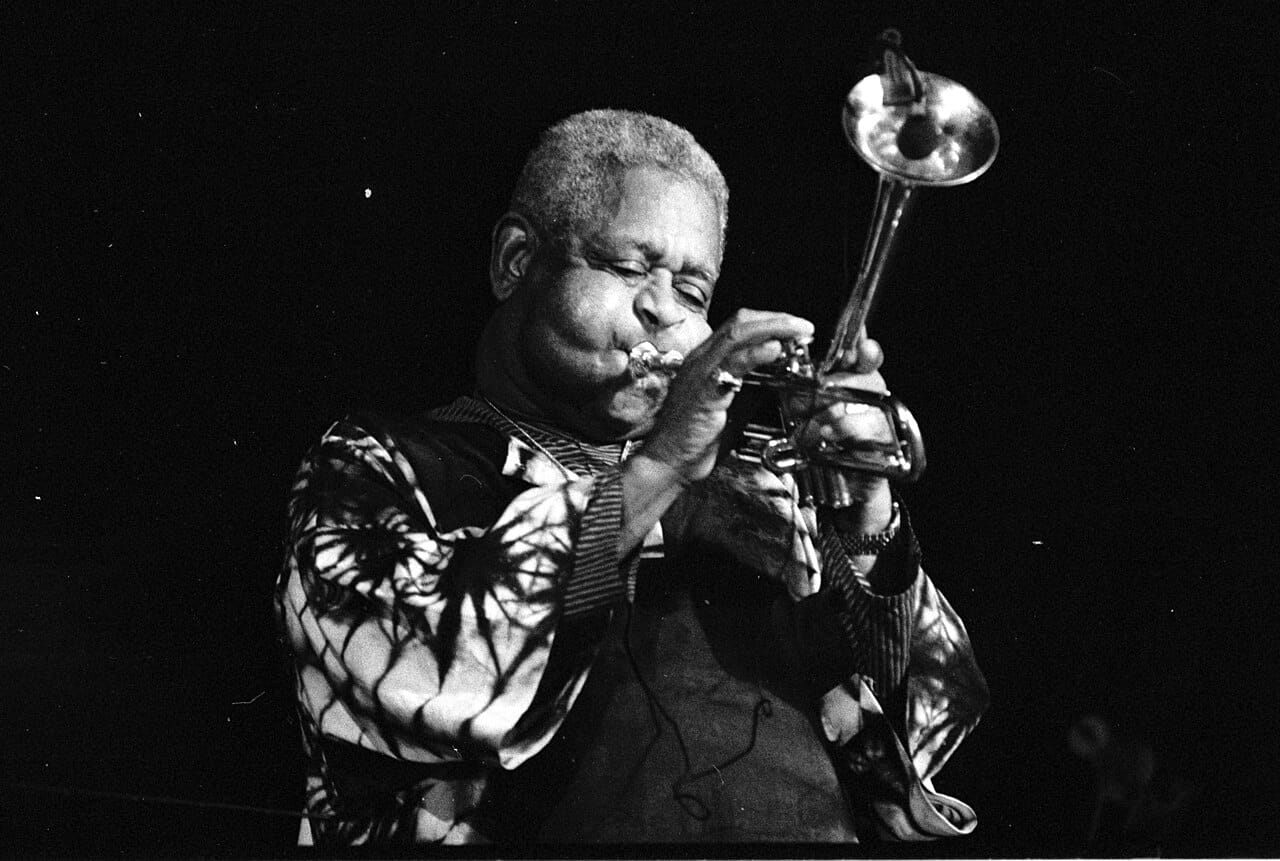
Dizzy Gillespie
Building on the musicians who came before him, we arrive at one of jazz history’s greatest characters and teachers—Dizzy Gillespie (1917–1993)。
If Charlie Parker was the soul of bebop, Dizzy was itsbrain, diplomat, and evangelist. He combined astonishing technique with a rare gift for passing complex musical ideas on to younger players.
1. Co-Founder of Bebop (1940s)
-
Revolutionary Partner: He helped conceive and advance the bebop revolution alongside Charlie Parker. Dizzy’s deep understanding of harmony—especially the tritone substitution—gave the music much of its theoretical foundation.
-
First Bebop Recordings: In 1944, he took part in what is widely considered the first bebop recording session, led by Coleman Hawkins. His compositions “A Night in Tunisia,” “Salt Peanuts,” and “Groovin’ High” became jazz cornerstones.
2. Pioneer of Afro-Cuban Jazz (1947–1950s)
-
Rhythmic Fusion: Gillespie had a deep sensitivity to rhythm. In 1947, he brought Cuban percussionist Chano Pozo into his band, helping pioneerLatin jazz. “Manteca” fused bebop’s complex harmony with the raw energy of Afro-Cuban rhythm.
-
Big-Band Breakthrough: While many bebop musicians turned to small groups, Gillespie successfully led several large bebop bands, showing that this forward-looking music could also have a grand scale.
3. Jazz Diplomat and Presidential Candidate (1960s–1980s)
-
Cultural Ambassador: He was the first jazz musician to lead overseas cultural tours on behalf of the U.S. State Department, performing across the Middle East and Latin America.
-
A Presidential Run: In 1964, he jokingly announced a run for U.S. president. He proposed renaming the White House the “Blues House” and appointing Miles Davis as CIA director. The episode captured his humor, fearlessness, and willingness to engage with public life.
4. Later Years and Mentorship
-
A Generous Mentor: Known for his generosity, Gillespie discovered and encouraged many younger musicians, including Cuban trumpet virtuoso Arturo Sandoval.
-
Final Years: He died of pancreatic cancer in 1993, aged 75.
His Signature Look
-
The Upturned Trumpet: The bell of his trumpet pointed upward at a 45-degree angle. The change followed an accident when someone stepped on his horn, but Gillespie found that the new angle helped him hear himself better. It became his visual trademark.
-
Puffed Cheeks: When he played, his cheeks ballooned like a bullfrog’s. Although this is discouraged in traditional trumpet training, Gillespie turned it into part of his singular sound and image.
-
Signature Style: Beret, thick-rimmed glasses, and goatee: the look became an enduring image of bebop cool around the world.
Musical Style: Speed and Wit
-
Virtuosity with Humor: His playing moved at remarkable speed, full of astonishing high notes and complex rhythmic leaps, yet it never felt heavy. It always carried Dizzy’s wit and sense of fun.
-
Scat Singing: He was also a great scat singer, using his voice to imitate the intricacies of a trumpet solo.
In Summary:Dizzy Gillespie was the“sun”of the jazz world. With his warmth and humor, he cleared away bebop’s reputation for being aloof and difficult, helping audiences around the world fall in love with the music. He brought technique, theory, and entertainment together like few others.
A Personal Connection: You may remember thatClifford Brownreceived a personal visit and encouragement from Gillespie while recovering from an early car accident. Dizzy was more than a musician; he was one of modern jazz’s pillars.
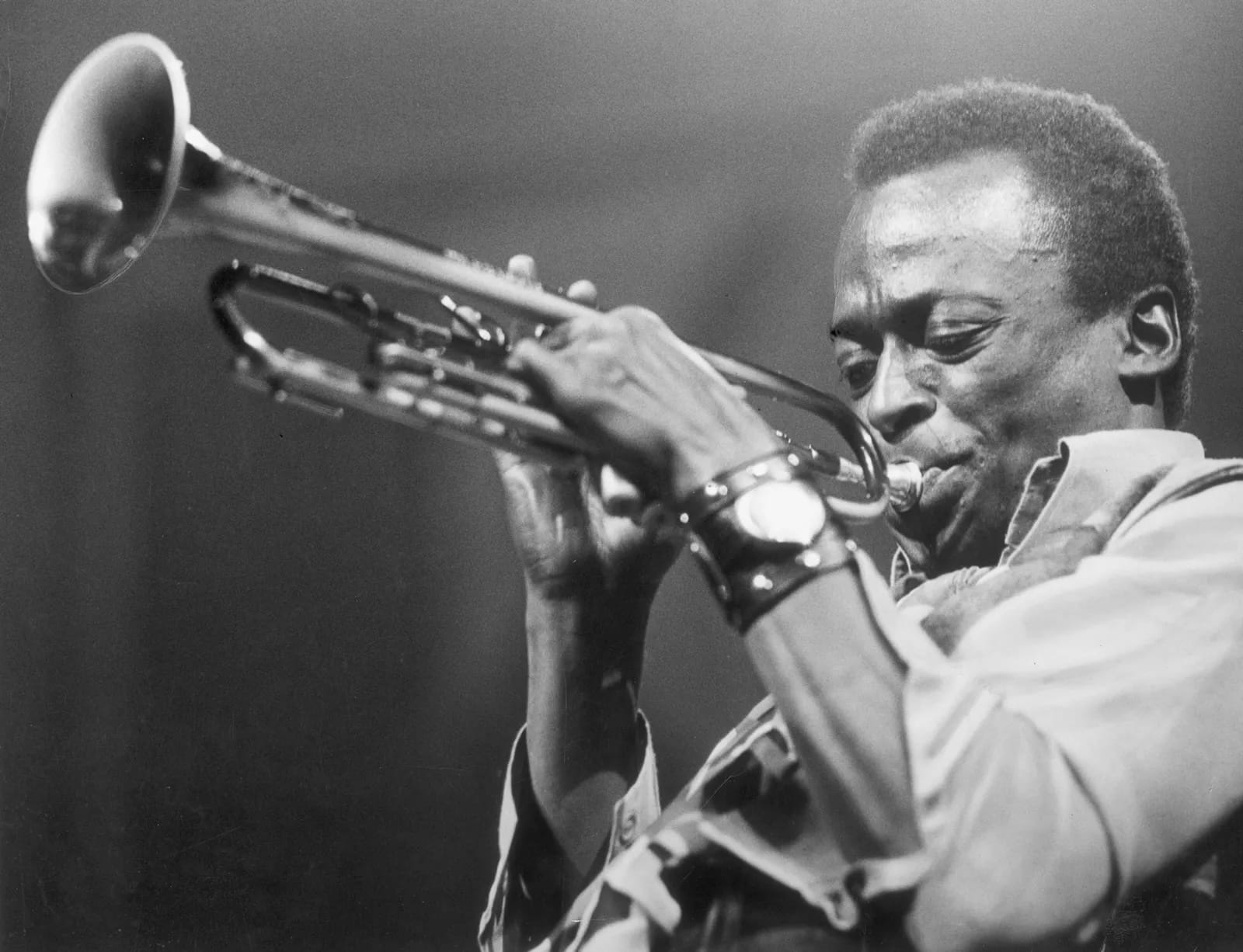
Miles Davis
Trumpeter, bandleader, and composer
Born May 26, 1926 in Alton, Illinois, USA, died September 28, 1991 in Santa Monica, California, USA (aged 65)
One of the most important figures in jazz history, Davis adopted multiple musical directions in a five-decade career that kept him at the forefront of many major stylistic developments in jazz. His album "[m=5460]" (1959) is the highest selling jazz album ever with over five million copies sold.
Miles settled in New York City to study at Juilliard School. He made his professional debut as a member of [a272028] from 1944 to 1948. In 1948, Davis began to found his own ensembles. At that time, he met [a255137], who contributed to [a497768]'s scores and arrangements. The dozen sides they recorded in 1949-50 were eventually assembled as the LP "[m=62308]" (1957), with Davis and Evans working together again from 1957 on further projects.
Miles Davis was prominent in the creation of the 'Hard Bop' style in the mid-1950s (his first regular quintet featured [a97545]), and the "time, no changes" approach in his second quintet a decade later. In the late 1960s, he introduced electronic instruments and rock and funk rhythms in his music. Around 1975, he went on a hiatus over health and personal problems, re-emerging in 1980.
He married dancer/actress [a7671712] on December 12, 1959; the couple divorced in 1968. He then married singer [a1076460] in September 1968; they divorced in 1970. He then married actress [a6279083] on November 26, 1981; they divorced in 1989. Father of [a680784] and [a1493787]. Uncle of [a279708] (Jr).
Inducted into Rock And Roll Hall of Fame in 2006 (Performer).
Winner of eight Grammy Awards:
- Best Jazz Composition Of More Than Five Minutes Duration for Sketches Of Spain on [m=48172]
- Best Jazz Performance - Large Group Or Soloist With Large Group for [m=8260]
- Best Jazz Instrumental Performance, Soloist for [m=65130]
- Best Jazz Instrumental Performance, Soloist for [m=63355]
- Best Jazz Instrumental Performance, Big Band for [m=62288]
- Best Jazz Instrumental Performance, Soloist (On A Jazz Recording) for [m=62288]
- Best R&B Instrumental Performance for [m=62359]
- Best Large Jazz Ensemble Performance for [m=188032]
The Modern Jazz Sextet
Biography
Jazz group, recorded for Norgran in 1956.
[b]Do not confuse with [a=Modern Jazz Sextet].[/b]
Also known as: Modern Jazz Sekstet, Modern Jazz Sextet, The Modern Jazz Sextett
Members: Dizzy Gillespie, Sonny Stitt, Percy Heath, John Lewis (2), Charlie Persip, Skeeter Best
Links:
Zagrebački Jazz Kvartet
Biography
Jazz quartet from Zagreb, Croatia (ex Yugoslavia) active between 1959-1967. 'Zagrebački Jazz Kvartet' was among the first significant jazz ensembles in Croatia. They performed original music inspired with tradition of their country, so their style was often called "Mediterranean Jazz". In 1968, after famous trumpet player [a=Art Farmer] joined the band it was transformed into [a=Zagreb Jazz-Quintet] - Zagrebački Jazz Kvintet .
Members were:
Boško Petrović - vibraphone
Zdravko Šatrak - bass
Zlatko Kružić - piano
Ivica Gereg - drums
Krešimir Remeta - double-bass
Davor Kajfeš - piano
Miljenko Prohaska - double-bass
Silvije Glojnarić - drums
Also known as: The Zagreb Jazz Quartet, ZJQ, Zagreb Jazz Quartet, Zagrebački Džez Kvartet, Загребски Джаз Квартет, Загребский Джазовой Квартет, Члены Загребского Джазового Квартета
Members: Miljenko Prohaska, Ivica Gereg, Silvije Glojnarić, Boško Petrović, Krešimir Remeta, Davor Kajfeš, Zlatko Kružić, Zdravko Šatrak
Links:
Ljubljanski Jazz Ansambel
Biography
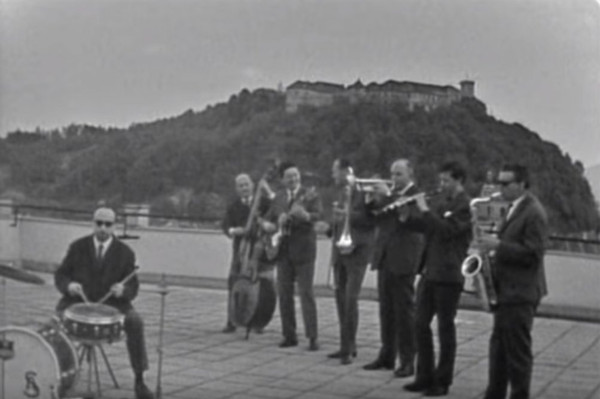
Formed by soloists of [a=Plesni Orkester RTV Ljubljana] in 1955. They played traditonal jazz (dixieland). In 1960 they recorded the first jazz record in former Yugoslavia. The first leader was [a=Urban Koder].
Also known as: "Ljubljanski Jazz Ansambel" Sa Gudačima, Ljublj. Jazz Ansambel, Ljublj. Jazz-Ansambl, Ljubljanski Jazz - Ansambl, Ljubljanski Jazz Ansambel Z Godali, Ljubljanski Jazz Ansambel Z Godali, Ljubljanski Jazz Ansambl, Ljubljanski Jazz-Ansambl, Ljubljanski Jazz-ansambl, Ljubljanski Studijski Ansambel, Люблянский Джазовой Ансамбль
Members: Mario Rijavec, Milan Ferlež, Aleksander Skale, Ati Soss, Urban Koder, Miško Hočevar, Franci Puhar, Borut Bučar, Franc Jagodic, Kajetan Zupan, Dušan Veble, Mitja Trtnik, Jože Gjura, Mik Soss
Jazz Quintet 60
Biography
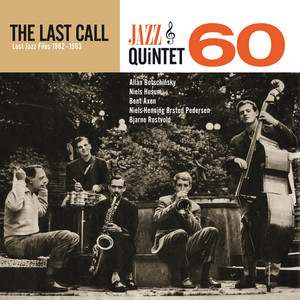
Danish jazz quintet lead by pianist [a645195], house orchestrater at his restaurant Vingården in Copenhagen. It was with this band double bassist [a285231] debuted professionally as a teenager.
Also known as: 'Jazz Quintet -60', Jazz Kvintet 60, Jazz Quintet '60, Jazz Quintet -60, Jazz Quintet 58, Jazzquintet 60, Quintet
Members: Niels-Henning Ørsted Pedersen, Allan Botschinsky, Bent Axen, Niels Husum, Bjarne Rostvold, Erik Moseholm, Finn Frederiksen, Ole Laumann
Jazz At Lincoln Center
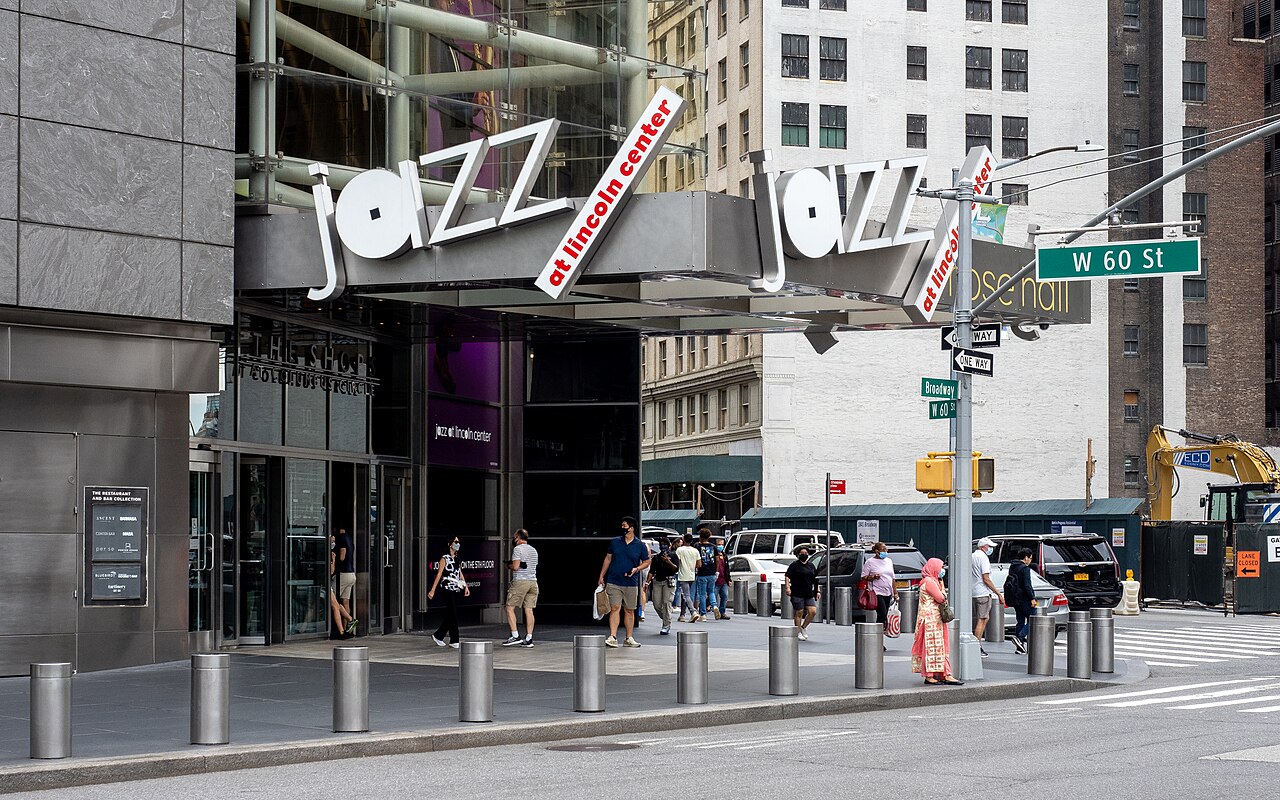
Jazz at Lincoln Center (JALC) is a New York City institution and part of Lincoln Center. Founded in 1987, it officially opened in October 2004 at the Time Warner Center (now Deutsche Bank Center). Its mission is to celebrate the full breadth of jazz through education, programming, archives, and ceremonies. It promotes jazz, culture, and arts education around the world. Wynton Marsalis is its artistic director and the music director of the Jazz at Lincoln Center Orchestra.
The center presents performances by its orchestra and guest musicians and is also home to New York City Opera. Many concerts are streamed on its YouTube channel. It runs educational programs in its building, online, and in schools across the country.
Through concerts—more than 90 percent of seats at major performances are filled—tours, music education, sheet music, recordings on its Blue Engine label, and live performances on its JAZZ LIVE platform, the organization reaches about three million people of all ages each year.
Speakers throughout the building play recordings by great jazz artists such as Ella Fitzgerald, Dizzy Gillespie, and Louis Armstrong.
History
In the mid-1980s, Lincoln Center sought to attract younger audiences. Its venues sat unused during the summer, so the center wanted to put them to use while resident companies performed elsewhere. Jazz supporters at Lincoln Center campaigned to have the music recognized by the institution. In a 1986 report, the center said, “Lincoln Center should focus on improving the quality of its programming, and there is no compelling reason to include areas such as jazz.” Alina Bloomgarden, then director of visitor services, had proposed a resident jazz program for the third time. Some feared jazz audiences might be too rowdy, so Bloomgarden invited Wynton Marsalis to help plan a summer concert series. To succeed, the series had to be financially viable and demonstrate the value of its music and community.
In 1987, trumpeter Wynton Marsalis helped launch the Classical Jazz concert series, Lincoln Center’s first jazz series. It opened in August 1987 with a tribute to women in jazz, including Betty Carter, Sasha Dalton, and Marian McPartland. The series’ success mattered at a difficult time: many great jazz innovators had died, jazz clubs were closing, many colleges had no jazz programs, and electronic music was becoming commercialized. American society was also deeply divided. Many places remained segregated; the AIDS epidemic was spreading; the Cold War intensified militarization and globalization; and Ronald Reagan’s war on drugs led to mass incarceration. By the following year, the series had its own program on National Public Radio and began touring.
The music Marsalis hoped to preserve is captured in the three-movement suite “A New Orleans Ritual,” modeled on a New Orleans funeral procession. Stanley Crouch, a co-founder of Jazz at Lincoln Center, wrote an impassioned speech that the Reverend Jeremy Wright delivered. It came to be seen as a declaration of the organization’s purpose:
“Perhaps we listeners heard an enduring truth from the descendants of people who had been bought and sold as commodities—the people who stood on auction blocks and lived in slave quarters, whose existence formed the cross on which this nation’s Constitution was nailed. Yet even after that crucifixion, in the third century of slavery in the Americas, people rose with a vision of freedom. They lit the powerful wick extending from a candle and passed it on. Through music they showed what light meant: they would not submit to self-righteous dragons or let their hearts grow dark. They said, ‘Listen closely.’ They said, ‘If you give me a fair chance, I will help you understand democracy better.’ Yes, that is what they said. ‘If you give me a fair chance, I will help you understand democracy better.’ These are the people who created a noble sound.”
Gordon Davis, a Lincoln Center board member and its founding chairman, saw the summer series succeed and advocated for a permanent jazz program. The board agreed. By 1996, Jazz at Lincoln Center had become a constituent member alongside the New York Philharmonic, New York City Ballet, Metropolitan Opera, and European Arts Center. Its budget was $4 million in 1996, compared with the Metropolitan Opera’s $150 million; by 2016 it had exceeded $50 million. Marsalis has served as artistic director since 1987. Greg Scholl became executive director in 2012.
In January 2026, the Jazz at Lincoln Center Orchestra performed at the Sheldon Theatre in St. Louis, Missouri. Marsalis conducted the orchestra, which tours internationally in addition to performing at Appel Room and Rose Theater. Concerts are also streamed online, and educational programs appear on the center’s YouTube channel. Since 2015, the orchestra’s albums have been released on its own Blue Engine Records label.
The center promotes jazz education in high schools through its Essentially Ellington program. Professional musicians visit schools through Let Freedom Swing. In New York City, it operates tuition-free middle-school and high-school jazz academies and a summer academy. Each year, its orchestra tours the United States and visits schools. The Essentially Ellington High School Jazz Band Competition and Festival is held each year at Jazz at Lincoln Center.
In January 2026, Marsalis announced that he would step down as artistic director in July 2027 and serve as an adviser through June 2028. In an interview, he said, “Now is the best time to find the next generation of leaders. We want to do everything we can to cultivate what we have built, because we know this is an art form that will keep evolving and this institution will continue to thrive.” He will continue to perform with the Jazz at Lincoln Center Orchestra from time to time.
Lincoln Center Building Guide
- Samuel B. and David Rose Building (including the Walter Reade Theater)
- The Juilliard School
- Alice Tully Hall
- Vivian Beaumont Theater (including the Mitzi E. Newhouse and Claire Tow Theaters)
- Eleanor Bunin Munroe Film Center
- David Geffen Hall
- New York Public Library for the Performing Arts (including Bruno Walter Auditorium)
- Metropolitan Opera House
- Josie Robertson Plaza and Revson Fountain
- Damrosch Park
- David H. Koch Theater
- David Rubenstein Atrium
- Jazz at Lincoln Center
Rose Hall
Rose Theater, 2007
120 yards; 13 Jazz at Lincoln Center; 13 Jazz at Lincoln Center; 12; 11 David H. Koch Theater; 11 David H. Koch Theater; 10 Damrosch Park; 10 Damrosch Park; 9 Josie Robertson Plaza, Revson Fountain; 9 Josie Robertson Plaza, Revson Fountain; 8 Metropolitan Opera House; 8 Metropolitan Opera House; 7 New York Public Library for the Performing Arts (including Bruno Walter Auditorium); 7 New York Public Library for the Performing Arts (including Bruno Walter Auditorium); 6 David Geffen Hall; 6 David Geffen Hall; 5 Elinor Bunin Munroe Film Center; 5 Elinor Bunin Munroe Film Center; 4 Vivian Beaumont Theater (including the Mitzi E. Newhouse and Claire Tow theaters); 4 Vivian Beaumont Theater (including the Mitzi E. Newhouse and Claire Tow theaters); 3 Alice Tully Hall; 3 Alice Tully Hall; 2 Juilliard School; 2 Juilliard School; 1 Samuel B. and David Rose Building (including Walter Reade Theater); 1 Samuel B. and David Rose Building (including Walter Reade Theater).
Frederick P. Rose Hall is a performing arts center designed by Rafael Viñoly on the fifth floor of Deutsche Bank Center (formerly Time Warner Center). The $131 million facility opened in fall 2004 and was the world’s first center devoted entirely to jazz performance, education, and broadcasting. It was designed to give jazz a warm, clear sound. Rose Hall has three venues: Rose Theater, Appel Room, and Dizzy’s Club, named after trumpeter Dizzy Gillespie. The hall also houses the Irene Diamond Education Center, with rehearsal and recording studios. Its location was criticized because it sits in the upscale shopping complex at Columbus Circle, four blocks from Lincoln Center’s main campus. Jazz at Lincoln Center responded that this “temple of consumerism” presented music born of the struggle for freedom, music that encourages performers and listeners to strive for higher ideals.
Lincoln Center Jazz at Night
In 2025, the Rose Hall sign is visible during Lincoln Center Jazz at Night.
Leaders of Jazz at Lincoln Center set out to build a venue with acoustics suited to swing and blues. They also wanted it to house the organization’s educational and archival work. To attract a wider audience, Marsalis collaborated with popular musicians outside jazz, including Stevie Wonder, Paul Simon, and Bob Dylan. This drew new listeners and created a rich interplay among swing, rock, and rhythm and blues.
Rose Theater uses a “box within a box” design and has no rigid structural connection to the other Jazz at Lincoln Center venues. Its 1,233 seats can be adapted for opera, dance, drama, film, and orchestral performances. Rubber pads under the floor reduce outside noise and preserve a quiet, intimate atmosphere. Movable seating towers allow the theater to switch between concert and theater layouts. In concert mode, seats are placed behind and around the musicians, supporting the sound and sightlines while increasing capacity. In theater mode, the seating towers retract into an air-cushion system, creating a platform for opera, ballet, or modern dance sets.
Appel Room has 583 seats and a relaxed, intimate atmosphere. It normally has seven separate seating levels, but these can be reconfigured into four to make dancing and movement easier. A 50-foot glass wall looks out over Central Park. It tilts slightly upward so sound can reflect directly from the atrium and stage monitors to the ceiling. Sound-absorbing panels hang from the ceiling and walkways to diffuse and absorb sound.
Dizzy’s Club, named after American jazz trumpeter Dizzy Gillespie and sponsored by Coca-Cola, seats 140. It is designed as an intimate jazz club for live trios, pianists, and singers, with city views over Columbus Circle and Central Park. Its design aims for a “golden” sound that encourages interaction between artists and audiences, much like New York’s early jazz clubs.
The Jazz Couriers
Biography
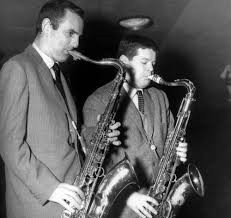
Quintet in existence from 1957 to 1959.
Also known as: The Couriers Of Jazz
Members: Ronnie Scott, Jeff Clyne, Tubby Hayes, Kenny Napper, Terry Shannon, Bill Eyden, Phil Bates, Phil Seamen
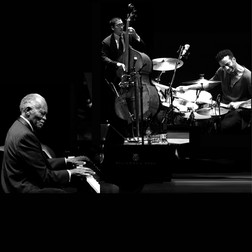
The Great Jazz Trio
Also known as: G.J.T., GJT, Great Jazz Trio, Great Jazz Trio+1, The Great Jazz Trio & Friends, The Great Jazz Trio +, ザ・グレイト・ジャズ・トリオ, ザ・グレート・ジャズ・トリオ
Members: Ron Carter, Elvin Jones, Buddy Williams, Jack DeJohnette, Jimmy Cobb, Billy Hart, John Patitucci, David Finck, Omar Hakim, Mads Vinding, Anthony Williams, Richard Davis (2), Hank Jones, Al Foster, Eddie Gomez, Lee Pearson (2), Jerome Jennings, David Wong, Yosuke Inoue
Links:
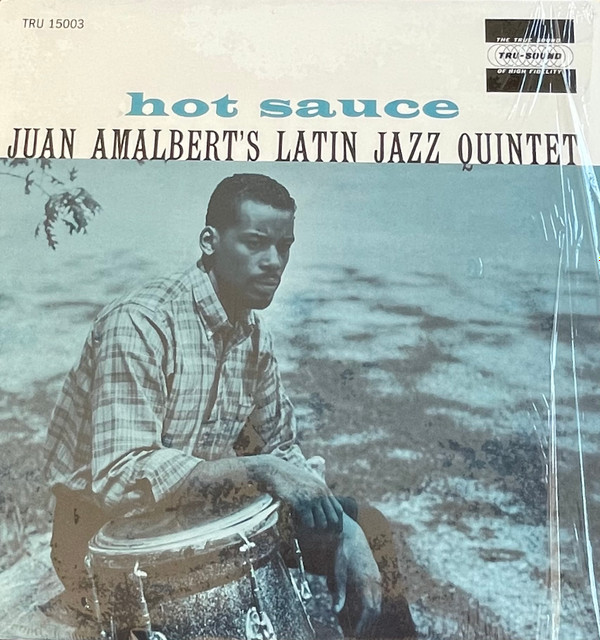
Latin Jazz Quintet
Also known as: Juan Amalbert's Latin Jazz Quintet, Juan Amalbert's Latin Jazz Quintet, Juan Amalbert´s Latin Jazz Quintet, L.A. Jazz, Latin Jazz 5, Latin Jazz Quartet, Latin Septet, The Latin Jazz Quartet, The Latin Jazz Quintet, The Latin Jazz Quintett, The Latin-Jazz Quintet, ザ・ラテン・ジャズ・クインテット
Members: Virgil Jones, Tommy Derrick, Tommy Lopez, Sr., Bill Ellington, Juan Amalbert, Charlie Simons
Jazz At The Philharmonic
Biography
Jazz At The Philharmonic is a trademark used by jazz entrepreneur and label owner [a=Norman Granz].
Please note: When used as a banner for the ever-changing jam session groups in his touring events or on records, Jazz At The Philharmonic can be used as main artist. But only when Jazz At The Philharmonic is billed on the release in the main artist's place - and when no other obvious main artist is billed on the release or promoted on cover and labels.
Norman Granz's Jazz at the Philharmonic releases do not follow a usual industry pattern for naming and crediting:
All JATP releases with the name and/or logo on them should be listed under the [l=Norman Granz Presents Jazz At The Philharmonic] series, even when Jazz At The Philharmonic is used as main artist. The shorter Jazz At The Philharmonic or any other variation of JatP ahould never be listed as a label, but instead as a series, with the relevant label in brackets afterward if necessary - such as [l=Norman Granz Presents Jazz At The Philharmonic (Verve)].
Company: In the 50's with the Inc. extension, the entity was also a company; [l=Jazz At The Philharmonic, Inc.]
Office: 451 N Canon Dr, Beverly Hills, CA
Also known as: J.A.T.P., J.A.T.P. All Stars, J.A.T.P. All-Stars, JATP, JATP All Stars, JATP All-Stars, Jazz All Stars, Jazz At The Philharmonic All Stars, Jazz At The Philharmonic All-Stars, Jazz At The Philharmonic Concert, Jazz At The Philharmonic Vol. 5, Jazz at the Philharmonic All-Stars, Norman Grantz' Jazz At The Philharmonic, Norman Granz "Jazz At The Philharmonic", Norman Granz Jazz, Norman Granz Jazz At The Philharmonic, Norman Granz' J.A.T.P., Norman Granz' Jazz At The Philharmonic, Norman Granz' Jazz At The Philharmonic Vol. #1, The All Stars, The JATP ALL-STARS, The JATP All Stars, The JATP's, The JATPs, The Jazz All Stars, The Jazz At The Philharmonic All-Stars
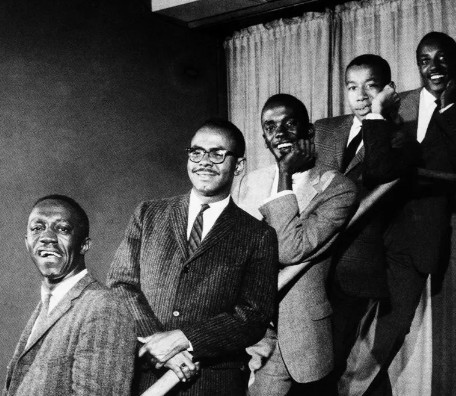
Art Blakey & The Jazz Messengers
Biography
Archetypal hard-bop group of the late 1950s, most date their origin to 1954 or '55 when the first recordings credited to the band appeared.
Playing a driving, aggressive extension of bop with pronounced blues roots, the group continued until [url=http://www.discogs.com/artist/29977-Art-Blakey]Blakey[/url]'s death in 1990.
The name Jazz Messengers had been used by [a=Art Blakey] earlier, but when [a=Horace Silver] and [url=http://www.discogs.com/artist/29977-Art-Blakey]Blakey[/url] began working together in the early 1950's the name had been dormant several years. The Jazz Messengers formed as a collective, nominally led by Silver or Blakey. Blakey credited Silver with reviving the Messengers name for the group. The original lineup of Blakey, Silver, [a=Hank Mobley], & [a=Kenny Dorham], was relatively shortlived. By late 1956 [a=Art Blakey] was the remaining original member.
Over the years the Jazz Messengers served as a springboard for young jazz musicians, a proving ground for young jazz talent.
Also known as: Art Balkey & The Jazz Messengers, Art Blakely With The Original Jazz Messengers, Art Blakely's Messengers, Art Blakey, Art Blakey !!!!! Jazz Messengers !!!!!, Art Blakey & All Star Jazz Messengers, Art Blakey & His Jazz Messengers, Art Blakey & Jazz Messengers, Art Blakey & Les Jazz Messengers, Art Blakey & Les Jazz-Messengers, Art Blakey & The All Star Jazz Messengers, Art Blakey & The All Star Jazzmessengers, Art Blakey & The Jazz Messagers, Art Blakey & The Jazz Messengers Big Band, Art Blakey & The Jazzmessengers, Art Blakey & The Jazzmessengers Big Band, Art Blakey & The Messengers, Art Blakey & The New Jazz Messengers, Art Blakey + The Jazz Messengers, Art Blakey / Jazz Messengers, Art Blakey And His Jazz Messengers, Art Blakey And His Jazz-Messengers, Art Blakey And His Messengers, Art Blakey And His The Jazz Messengers, Art Blakey And Jazz Messengers, Art Blakey And The "Jazz Messengers", Art Blakey And The Jazz Messengers, Art Blakey And The Jazz Messengers Big Band, Art Blakey And The Jazzmessengers, Art Blakey And The Jazzmessengers Big Band, Art Blakey And The Jazzmessengers III, Art Blakey Et Les Jazz Messengers, Art Blakey Et Les Jazz-Messengers, Art Blakey Et The Jazz Messengers, Art Blakey Jazz Messengers, Art Blakey With The Jazz Messengers, Art Blakey With The Original Jazz Messengers, Art Blakey Y Los Jazz Messengers, Art Blakey Y Los Jazz-Messengers, Art Blakey Y Los Mensajeros Del Jazz, Art Blakey Y Los Nuevos Mensajeros Del Jazz, Art Blakey Y The Jazz Messengers, Art Blakey and The Jazz Messengers, Art Blakey and the Jazz Messengers, Art Blakey y Los Jazz-Messengers, Art Blakey • Bud Powell • Barney Wilen And The Jazz Messengers, Art Blakey's Jazz Messengers, Art Blakey's Jazz Messengers Plus Four, Art Blakey's Messengers, Art Blakey's The Jazz Messengers, Art Blakeys Jazz Messengers, Art Blakey’s Jazz Messengers, Jazz Messengers, Jazz Messengers & Art Blakey, Jazzmessengers, Les Jazz Messengers, Les Jazz Messengers D'Art Blakey, Los Jazz Messengers, Original Jazz Messengers, The Art Blakey Jazz Messengers, The Jazz Messengers, The Jazz Messengers Featuring Art Blakey, The Jazz Messengers With Art Blakey, The Reunion Jazz Messengers, Ансамбль "Jazz Messengers" п/у А. Блейки, Джаз Месенджерс, アート・ブレイキー&ザ・ジャズ・メッセンジャーズ, アート・ブレイキーとジャズ・メッセンジャーズ, アート・ブレイキー&ザ・ジャズ・メッセンジャーズ, ザ・ジャズ・メッセンジャーズ
Members: Carlos Garnett, Donald Byrd, Horace Silver, Lee Morgan, Art Blakey, Wayne Shorter, Freddie Hubbard, Barney Wilen, Donald Harrison, Robin Eubanks, Stanley Clarke, Chuck Mangione, Benny Green, Javon Jackson, Jackie McLean, Ray Mantilla, Ramon Morris, Hank Mobley, Cedar Walton, Reggie Workman, Keith Jarrett, Benny Golson, Johnny Griffin, J.J. Johnson, John Gilmore, Randy Brecker, Doug Watkins, Kenny Dorham, George Cables, Woody Shaw, Reggie Johnson, Curtis Fuller, Nat Bettis, Bobby Timmons, Jymie Merritt, Lucky Thompson, Mickey Tucker, Richard Landrum, Charles Fambrough, Mulgrew Miller, Terence Blanchard, Lonnie Plaxico, Jean Toussaint, Sonny Morgan, Brian Lynch, Billy Pierce, Bobby Watson (2), John Hicks, Johnny O'Neal, Frank Lacy, Dennis Irwin, Peter Washington, Sam Dockery, Bill Hardman, Spanky DeBrest, Cameron Brown, David Schnitter, Walter Davis Jr., James Williams (2), Donald Brown, Albert Dailey, Frank Mitchell, Philip Harper, Essiet Essiet, Mickey Bass, Carter Jefferson, Victor Sproles, Tim Williams (4), Geoff Keezer, Emanuel Boyd, Steve Davis (7), Ronnie Mathews, Emmanuel Abdul-Rahim, Laverne Barker, Buddy Terry, Jan Arnet, Yoshio Suzuki, Lawrence Evans, Valery Ponomarev, Ladjl Camara, David Schmitter
Links:
- https://en.wikipedia.org/wiki/The_Jazz_Messengers
- https://www.allmusic.com/artist/art-blakey-the-jazz-messengers-mn0000597266
- https://www.jazzmusicarchives.com/artist/art-blakey