

Benny Carter (born Bennett Lester Carter, August 8, 1907, in New York; died July 12, 2003, in Los Angeles) was an American jazz alto saxophonist, trumpeter, clarinettist, composer, arranger and bandleader. His mother gave him piano lessons; he began on trumpet, tried the C melody saxophone briefly and settled on alto. In the 1920s he played with June Clark, Billy Paige and Earl Hines and toured with Horace Henderson’s Wilberforce Collegians, making his first recordings in 1927 with Charlie Johnson’s Paradise Ten.
In the late 1920s he took over Don Redman’s chair as arranger for Fletcher Henderson’s big band, teaching himself orchestration by studying existing scores; Keep a Song in Your Soul (1930) and Lonesome Nights and Symphony in Riffs (1933) established his grammar for writing saxophone sections. He then led McKinney’s Cotton Pickers in Detroit and formed his own New York band in 1932 with Chu Berry, Sid Catlett, Frankie Newton and Teddy Wilson. By the early 1930s he and Johnny Hodges were considered the leading alto saxophonists in jazz, and he also returned to the trumpet, becoming one of the few players to leave major solos on both instruments.
From 1935 he lived in Europe, performing and recording in London and Paris with Django Reinhardt and Coleman Hawkins, among others. Back in the United States in 1938, he settled in Los Angeles and became one of the most trusted arrangers in radio and the film studios, writing for singers such as Billie Holiday and Ella Fitzgerald. After the war he worked closely with Norman Granz’s Jazz at the Philharmonic, made small-group records for Clef and Norgran such as Cosmopolite and Plays Pretty, recorded Jazz Giant for Contemporary in 1958 and Further Definitions for Impulse! in 1962, the latter reshaping the small jazz ensemble with a saxophone section of Coleman Hawkins, Phil Woods, Charlie Rouse and others.
From the 1970s he taught at Princeton University and continued to perform into the 1990s; in the 1980s and 1990s he received eight Grammy nominations and a Grammy Lifetime Achievement Award. When he died in 2003 his career had spanned seventy-five years.
This entry adds Cosmopolite (1953, Clef MG-C-141) and Jazz Giant (1958, Contemporary C3555): the first comes from sessions in New York in September and Los Angeles in December 1952 with Oscar Peterson, Barney Kessel, Ray Brown, Buddy Rich and J.C. Heard; the second was produced by Lester Koenig with André Previn, Jimmy Rowles, Ben Webster, Barney Kessel, Leroy Vinnegar and Shelly Manne, and is regarded as a peak of his mature years.
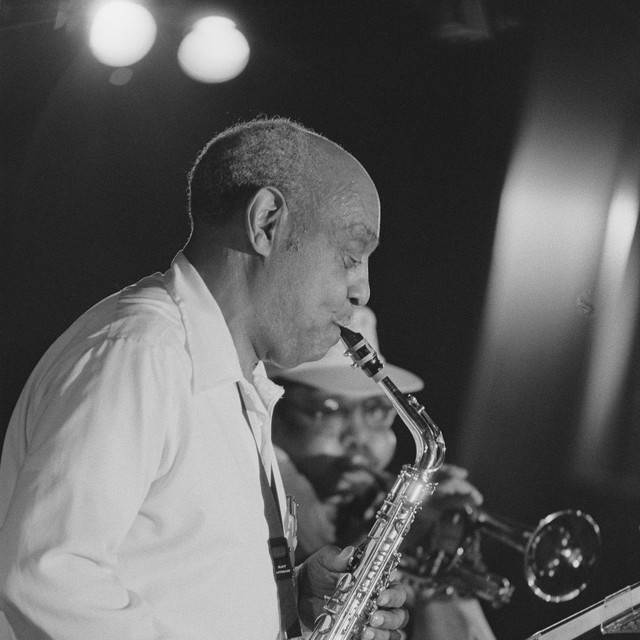
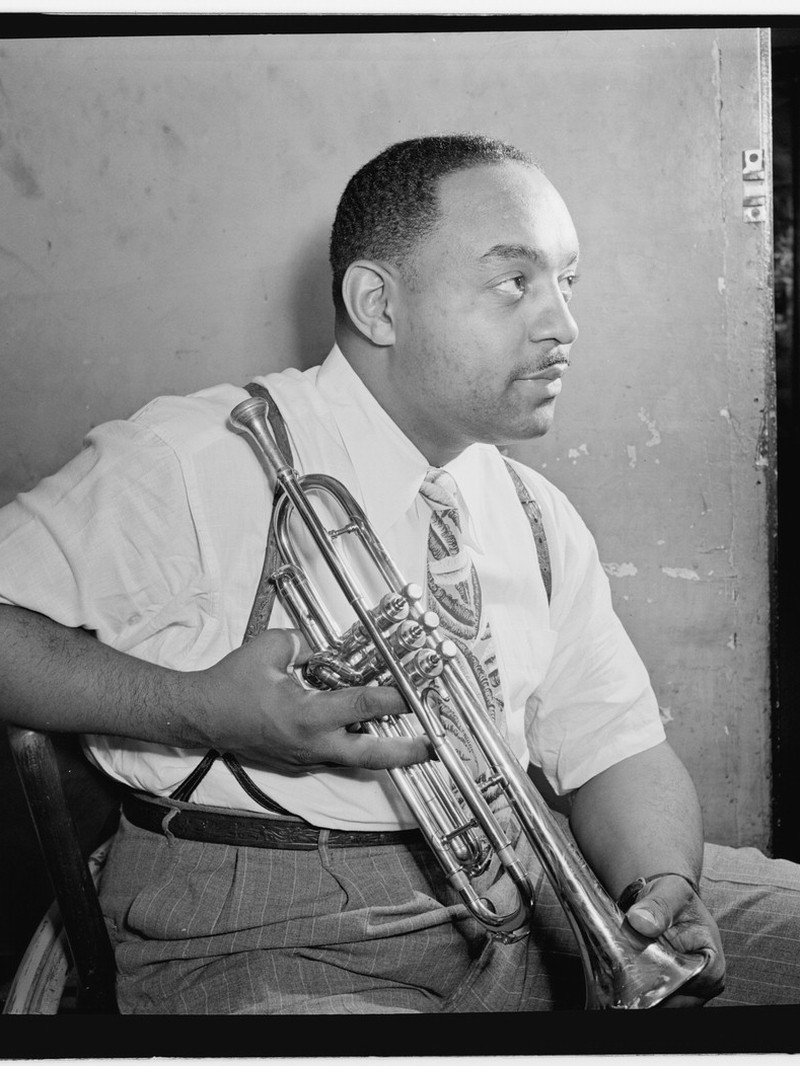
Cover photograph: Rob Bogaerts / Anefo, CC0, North Sea Jazz Festival, The Hague, 14 July 1985, via Wikimedia Commons (File:BennyCarter1985.jpg). Body photograph: William P. Gottlieb, public domain, Apollo Theatre, New York, October 1946 (File:Benny carter loc.jpg).
Explore other jazz artists who share genre tags with Benny Carter.