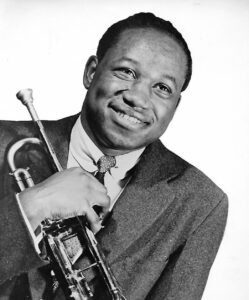
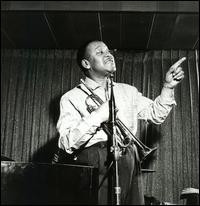
Jonah Joneswas a singular trumpet player in jazz history. He crossed over beyond the jazz world and became a household name in the 1950s. With his signature use of mutes and a swinging quartet, he turned complex jazz into something elegant, light, and commercially appealing. He is often seen as a pioneer of easy-listening jazz and swing in the era before mainstream rock.
Born in Louisville, Kentucky,Jonesdeveloped his craft early in riverboat bands. In the 1930s, he joined the celebrated sextet of bassistJohn Kirbyand the group led by violinistStuff Smith. His fiery, explosive, Armstrong-inspired style earned him a reputation in jazz. In the 1940s, he joinedCab Calloway’s big band, where he spent a decade as lead trumpeter and witnessed the height of the big-band era.
As the big-band era ended in the mid-1950s,Jonesformed his own quartet. During a residency at New York’sEmbersclub, he developed a new approach: using mutes—especially the tight mute—to play popular standards. The sound retained the improvisational spirit of jazz while offering a gentle, refined quality well suited to relaxed listening. In 1958, his album《I Dig Chicks!》won theGrammy Award for Best Jazz Performance by a Group. His gold-selling recordings, including “On the Street Where You Live,” became popular with a broad audience and made him one of the few jazz musicians of the period to achieve major public recognition.
Even after rock and modern jazz rose to prominence,Jonescontinued to perform regularly, touring internationally and appearing on television variety programs. His playing retained its clean, crisp swing. He died in New York in 2000, aged 91, after witnessing nearly a century of musical change.
3. Musical Style: Master of the Mute
The Use of Mutes:Joneswas a master of the mute. By changing mutes, he could give the trumpet a metallic edge or a playful, conversational intimacy.
Minimalism and Precise Swing: Rather than elaborate harmonic structures or lengthy solos, Jones emphasized clear melodies and a steady two-beat pulse, creating a style that listeners could feel physically.
A Bridge to a Wider Audience: He found a balance between serious improvisation and popular entertainment, showing that jazz could be welcoming and full of pleasure.
In Summary: Jonah Joneswas jazz’s“translator”. Through imaginative use of the mute, he turned sophisticated jazz language into romantic melodies listeners everywhere could understand. For a designer who values practical function combined with decorative beauty,Jonah Jones’s music is likea beautifully designed industrial object—with a rigorous functional structure rooted in jazz and an appealing exterior in the form of popular melody, it delivers exceptional reach within a compact design.
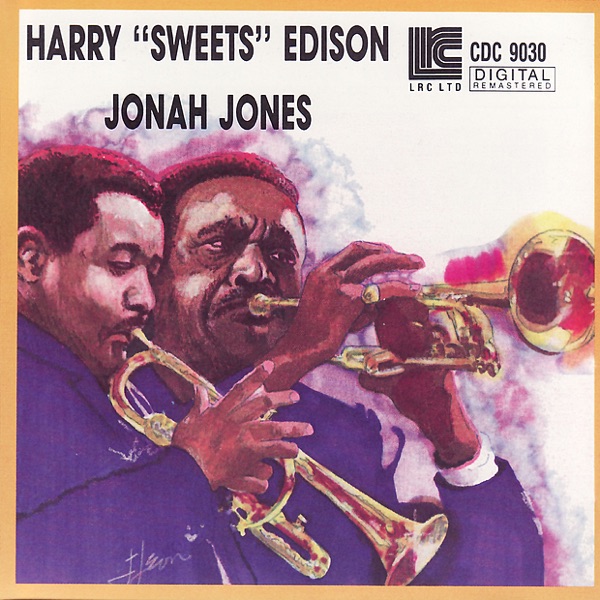
Explore 15 albums and recordings, arranged by release date.




Explore other jazz artists who share genre tags with Jonah Jones.