
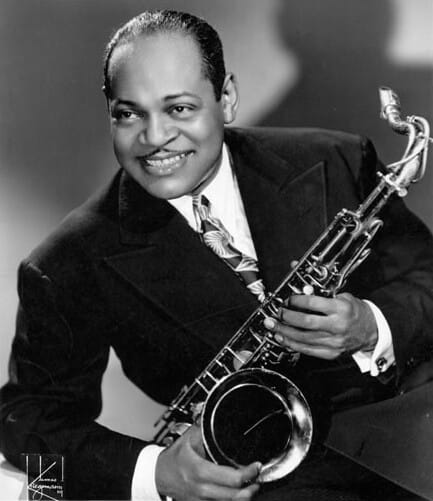
Coleman Hawkins
After several later-generation stars, we return to jazz’s roots with a concise biography ofColeman Hawkins (1904–1969).
Known as the father of the jazz tenor saxophone, Hawkins was nicknamed “Hawk” or “Bean.” Before he came along, the tenor saxophone was a peripheral instrument in jazz; he gave it a voice and a soul.
1. Defining the Tenor Saxophone (1920s–1934)
-
A Saxophone Pioneer: Born in Missouri, Hawkins studied piano and cello as a child and took up the saxophone at age nine.
-
With Fletcher Henderson’s Orchestra: In 1924, he joined Fletcher Henderson’s big band. Deeply influenced by Louis Armstrong, he helped transform the saxophone from a comic accompaniment instrument into a powerful, expressive voice for improvised solos.
2. Years in Europe and “Body and Soul” (1934–1939)
-
A European Haven: Seeking better opportunities and greater respect, Hawkins moved to Europe in 1934. There he worked with leading musicians, including gypsy-jazz guitarist Django Reinhardt.
-
A Landmark Recording: After returning to the United States in 1939, he recorded “Body and Soul.” In its famous two-chorus solo, he largely abandoned the original melody in favor of intricate improvisation over the chords. The record caused a sensation and is considered one of the greatest solos in jazz history. It also helped prepare the way for bebop.
3. A Master Across Generations (1940s–1950s)
-
A Mentor to Younger Musicians: Unlike many older musicians who resisted new music, Hawkins welcomed the younger generation. In 1944, he ledthe first bebop recording session, with emerging talents Dizzy Gillespie and Max Roach among the participants.
-
A Partnership with Monk: He was among the first to recognize Thelonious Monk’s genius and gave Monk important support and early recording opportunities.
4. Later Years and Final Chapter (1960s)
-
Still Exploring: Hawkins remained active into the 1960s, working with Duke Ellington and the younger standard-bearer Sonny Rollins.
-
Final Years: In his later years, Hawkins struggled with depression and alcoholism. He died of liver disease in 1969, aged 64.
Artistic Style and Standing
-
A Powerful Tone: Hawkins’s sound was broad, full, and emotionally charged, with a pronounced vibrato.
-
Vertical Improvisation: He favored improvising vertically throughchord structures and arpeggios, in striking contrast to Lester Young’s flowing, linear approach. Together, they established two major paths for the modern saxophone.
In Summary:Without Coleman Hawkins, the saxophone might never have become a leading voice in jazz. He representedpower and depthand served as a strong bridge from big-band swing to modern jazz.
Connections: You may notice that many of the older musicians who influenced Clifford Brown, Bud Powell, and others received support or inspiration from Hawkins. He was an anchor for his generation.

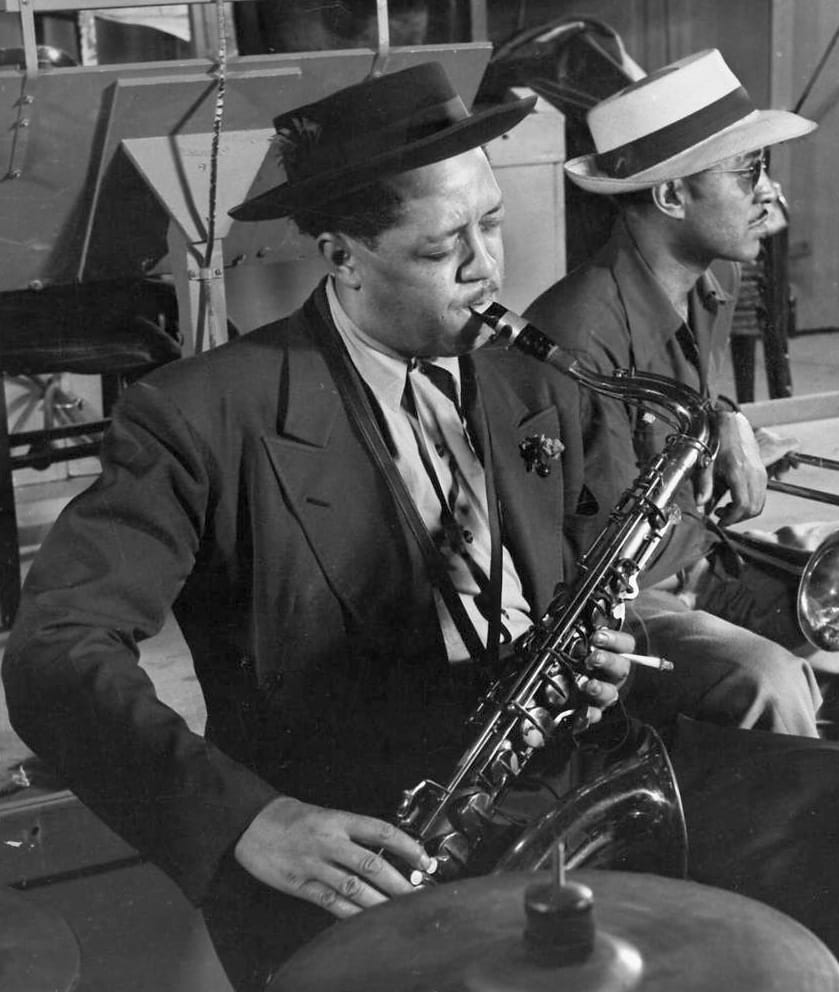
Lester Young
Lester Youngwas one of the most revolutionary tenor saxophonists in jazz history, nicknamed“Prez”(short for “the President,” a name given to him byBillie Holiday). In an era whenColeman Hawkinsdominated the saxophone, Young developed a very different style: light, poetic, and a clear forerunner of cool jazz.
A Fresh Voice in Kansas City (1909–1933)
Born into a musical family in Mississippi, Young toured across the country as a teenager with his family’s band.YoungHe first played drums and alto saxophone before settling on the tenor saxophone. Unlike the full, roaring tone then in fashion, he preferred a clear, light sound, close to that of the clarinet and with little vibrato. After settling in Kansas City in 1933, he soon joinedCount Basie’s big band and helped open a new chapter in jazz.
The Height of Swing and a Musical Soul Mate (1936–1943)
During his time with theCount Basieband,Young’s playing became one of its greatest strengths. On classics such as “Lester Leaps In,” he showed a remarkable gift for flowing melodic lines. During this period, he formed one of the most moving artistic friendships in music history withBillie Holiday.YoungHe gave her the nickname“Lady Day”, and she called him“Prez”. Their collaborations became a model of the close exchange between voice and horn, and each musician influenced the other’s musical language.
Military Trauma and a Change in Style (1944–1950)
In 1944,Youngwas drafted into the Army. For a sensitive, gentle artist who regularly used marijuana and alcohol, life in a deeply racist military camp was disastrous. He was court-martialed and confined for drug possession, an experience that severely damaged his health. WhenYoungreturned after the war, his tone had become darker and rougher. Some of its earlier lightness was gone, replaced by a heartbreaking weariness.
Isolation and Final Years (1950s–1959)
Although he was deeply admired by younger musicians such asStan Getz,Young’s health deteriorated amid years of heavy drinking. He became increasingly withdrawn and often spoke in a personal slang known as Lesterese. In 1959, he fell ill during a Paris engagement and returned to the United States. He died in a New York hotel hours after arriving, aged 49. His death prompted an outpouring of grief. Later,Charles Minguswrote the celebrated “Goodbye Pork Pie Hat,” named for the round pork-pie hat thatYoungoften wore.
3. Musical Style: A Pioneer of Linear Thinking
-
Linear Improvisation: UnlikeColeman Hawkins’s “vertical” approach, which focuses on chord structures,Younggave greater attention to the continuity of the melody. His improvisations moved like an unrestrained river, gliding around the beat and creating a sense of rhythmic weightlessness.
-
A Cool-Toned Sound: He set aside the heavy vibrato popular at the time in favor of a clear, airy tone. This cool aesthetic became a foundation of West Coast jazz a decade later.
-
Minimalism and Space: He was especially good at leaving space in his improvisations and letting the music breathe. His phrases could be unexpectedly simple yet land directly on the listener’s emotions.
In Summary: Lester Youngwas jazz’s“poet”. With restraint and elegance, he showed later saxophonists how to set aside force and conquer the world through melodic tenderness.
An Aesthetic Connection: For a 3D designer interested in lightweight construction and minimalism,Lester Young’s music is a model ofstreamlined surfaces. Its melody has no redundant structures; each turn follows a natural sense of momentum and ease.
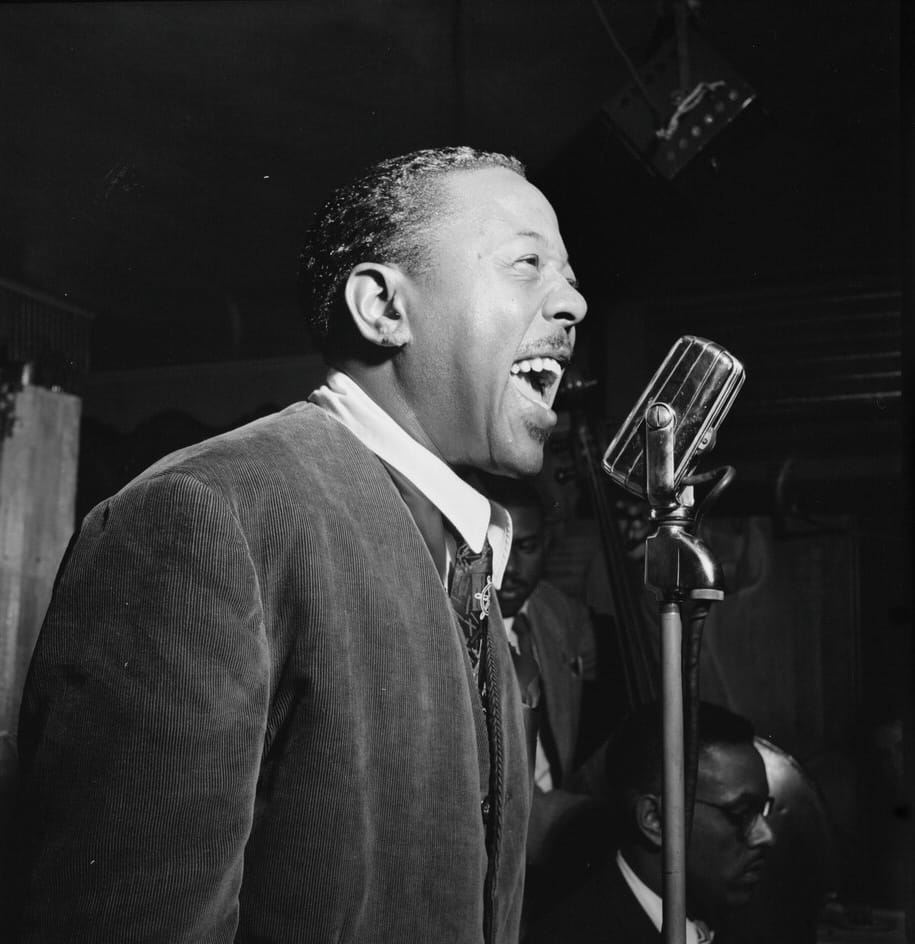
Roy Eldridge
Roy Eldridge, nicknamed“Little Jazz”, was a pivotal figure who connected early jazz with the modern era. He was one of the most important bridges between the pioneers of early jazzLouis Armstrongand the innovators who followedDizzy Gillespie. At the height of swing in the 1930s and 1940s, his extreme range, lightning speed, and combative spirit made him a model for trumpeters across the country.
The Pittsburgh Prodigy and the Rise of “Little Jazz” (1911–1935)
Born in Pittsburgh, Pennsylvania,EldridgeEldridge first studied drums and alto saxophone. The saxophone left a lasting mark on his trumpet style: he sought to play lines on the trumpet as fluid as a saxophonist’s. After moving to New York in the early 1930s, he quickly gained attention for his forceful improvisations. Because he was small in stature but full of energy, saxophone greatOtto Hardwickgave him“Little Jazz”, a nickname that stayed with him for life.
Challenging the Color Line (1936–1944)
Eldridgewas among the first Black musicians to break segregation barriers and join top white big bands. He played withGene KrupaandArtie Shaw. While with theGene Krupaband, his work with singerAnita O’Dayon “Let Me Off Uptown” became a major hit. On tour, however, he faced repeated and severe racism, which wounded his pride and led him to leave the groups in anger more than once.
A Guide toward Modern Jazz (1945–1950s)
When the bebop revolution began, the youngDizzy Gillespieopenly acknowledged that his own hero wasRoy Eldridge。Eldridge. His harmonic ideas and exploration of the upper register gave modern jazz some of its earliest blueprints. In the 1950s, he joined the Jazz at the Philharmonic (JATP) tours organized byNorman Granzand faced off in countless legendary trumpet-and-saxophone battles withColeman Hawkins, showing an unshakable competitive spirit.
Later Years and Final Chapter (1960s–1989)
Late in his career, Eldridge accompaniedElla Fitzgeraldand held a long residency at New York’s celebratedRyan’sclub. Even in his later years, he played with the same fierce, all-in commitment. A stroke in 1980 forced him to stop performing. He died in New York in 1989, aged 78, one of jazz history’s most fearless trumpet fighters.
3. Musical Style: Pushing Speed and Range to the Limit
-
A Trumpet Voice Shaped by the Saxophone:Eldridge’s playing leapt across wide intervals and raced through scales at high speed, breaking the limits of trumpet technique at the time.
-
Exploring the Upper Register: He greatly expanded the trumpet’s practical range. His high notes burst like fireworks, combining visual drama with intense emotional force.
-
Competitive Improvisation: He loved cutting contests. Whatever the opponent, he brought an almost obsessive intensity and aggression to an improvised exchange. That energy helped catalyze the shift from swing to bebop.
In Summary: Roy Eldridgewas jazz’s“torchbearer”. He forged speed and virtuosity from the trumpet tradition and personally carried that flame to the next generation of innovators.
An Aesthetic Connection: For designers who value performance and dynamic range,Roy Eldridge’s music is an art ofoverclocking. He worked at the instrument’s limits, turning every breath into a brilliant spark under pressure.
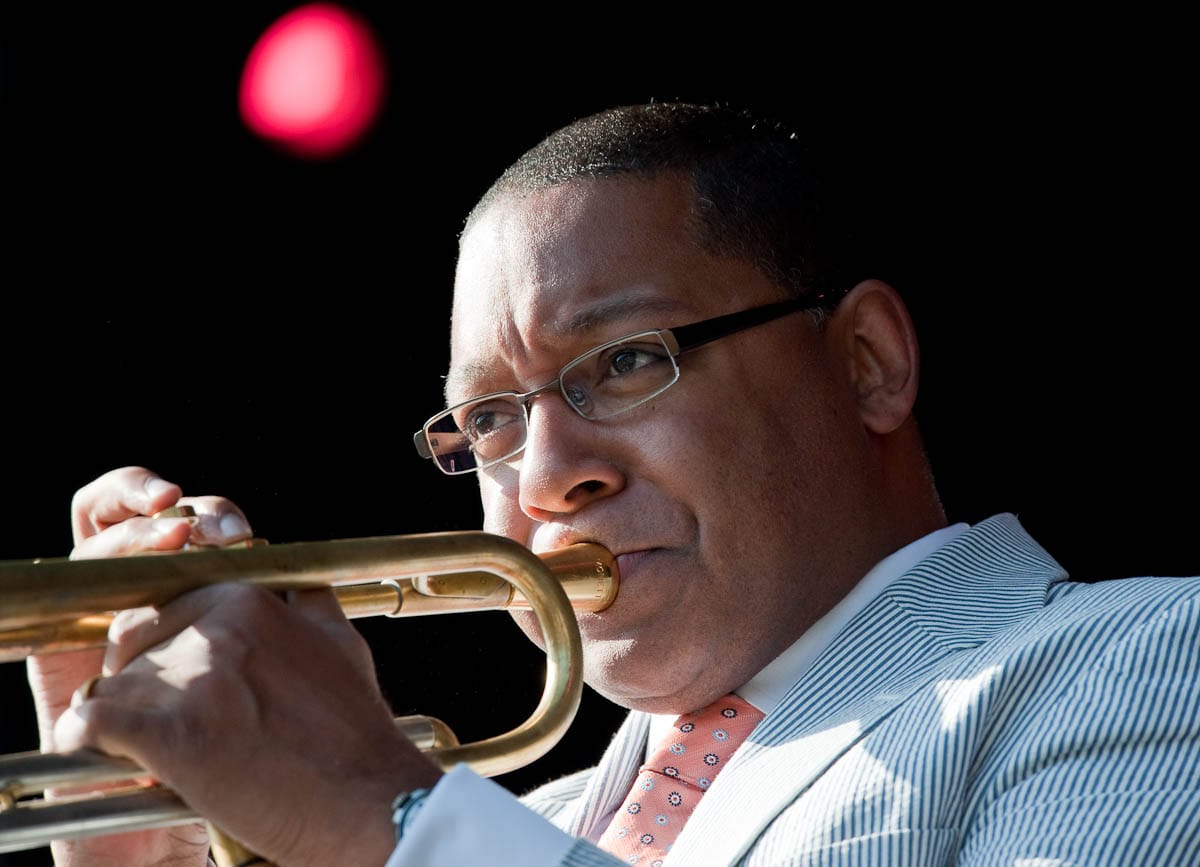
Wynton Marsalis
Wynton Marsalisis one of the most powerful and controversial figures in contemporary jazz. Alongside formidable trumpet technique, he is a prolific composer and educator, and a leading advocate of neoclassical jazz. He was the first musician to win Grammy Awards in both the jazz and classical categories in the same year, 1983, breaking down barriers between the two traditions.
A Musical Family and a Dual Talent (1961–1979)
Born into a musical family in New Orleans, his fatherEllis Marsalis Jr.was a noted piano teacher, while his brotherBranford Marsalisbecame a leading saxophonist.Wynton MarsalisHe began serious trumpet study at 12, and at 14 performed Haydn’s Trumpet Concerto with the New Orleans Philharmonic. At 17, he entered the Juilliard School. His exceptional ability in both classical music and jazz quickly made him a focus of the New York scene.
The Jazz Messengers and the Neoclassical Wave (1980s)
In 1980, at just 19,Wynton MarsalisjoinedArt Blakey’sJazz Messengers(the Jazz Messengers), an experience widely viewed as a turning point in his career. As free jazz and fusion waned in the 1980s, he helped lead a “return to tradition.” He argued for reclaiming the swing and blues spirit ofLouis Armstrong、Duke Ellingtonand theMiles Davis’s early work, and pushed back against the electronic and commercial trends of the day. He became a leader of the Young Lions and the neotraditional movement.
Jazz at Lincoln Center and the Pulitzer Prize (1987–Present)
helped establish Jazz at Lincoln Center in New York in 1987 and has served as its artistic director ever since. He helped give jazz a lasting institutional home and the stature of a respected American classical art. In 1997, his expansive composition《Blood on the Fields》won thePulitzer Prize for Music, the first jazz work to receive the award.
Cultural Diplomacy and Debate (2000s–Present)
As a leading international spokesperson for jazz,Wynton Marsalishas promoted the music through education and tours around the world. He has also defended a strict, conservative definition of “real jazz” and publicly criticizedMiles Davis’s later fusion work and hip-hop. His views have sparked enduring debate, but his role in renewing popular interest in traditional jazz is undeniable.
3. Musical Style: Precision and Historical Depth
-
Flawless Technique:Wynton Marsalis’s playing is known for its pitch accuracy, crisp articulation, and broad dynamic range. From blistering bebop lines to complex classical concertos, he shows remarkable control.
-
A Deep Commitment to Blues and Swing: He sees the blues and swing as essential to jazz. His improvisations often draw strongly on New Orleans traditions, with an emphasis on counterpoint and collective interplay.
-
A Composer’s Sense of Structure: As a composer, he brings big-band jazz together with the forms of classical suites. His works often tell broad historical stories and explore race, freedom, and the American experience.
In Summary: Wynton Marsalisis jazz’s “pope.” With the discipline of a classical musician, he restored dignity to the music and built a sturdy stronghold for tradition amid constant change.
An Aesthetic Reflection: For a 3D designer drawn to order and precise structure,Wynton Marsalis’s music is like aperfectly proportioned Parthenon. Every note seems carefully calculated, creating a beauty grounded in reason.
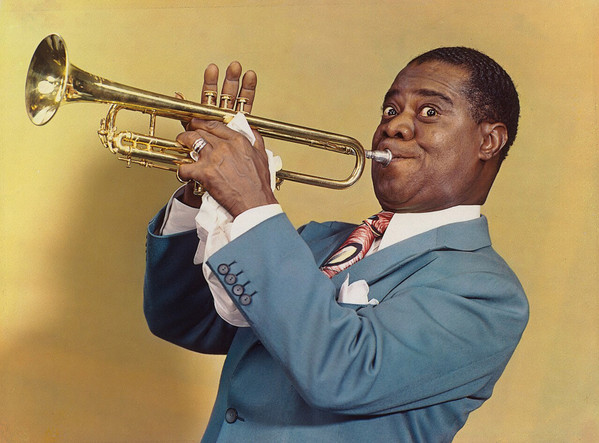
Louis Armstrong
Career
Louis Daniel Armstrong (August 4, 1901 – July 6, 1971), nicknamed “Satchmo,” “Satch,” and “Pops,” was an American jazz and blues trumpeter and singer. One of the most influential figures in jazz, his career spanned five decades and several eras. Armstrong received many honors, including a 1965 Grammy for Best Male Vocal Performance for “Hello, Dolly!” and a posthumous Grammy Lifetime Achievement Award in 1972. He has been inducted into the DownBeat Jazz Hall of Fame, the Rock & Roll Hall of Fame, and the National Rhythm & Blues Hall of Fame, among others.
Armstrong was born and raised in New Orleans. In the 1920s, his highly creative trumpet and cornet playing helped make him one of jazz’s founding figures, shifting the music’s focus from collective improvisation toward the soloist. Around 1922, he followed his mentor Joe “King” Oliver to Chicago and joined Oliver’s Creole Jazz Band. Armstrong made his mark in cutting contests, and his reputation reached bandleader Fletcher Henderson. He later moved to New York, where he became an influential soloist and recording artist. By the 1950s, Armstrong was an international music icon, appearing regularly on radio, television, and in films. Beyond music, he was a beloved entertainer who joked with audiences and maintained a warm, upbeat public image.
Among Armstrong’s best-known songs are “What a Wonderful World,” “La Vie en Rose,” “Hello, Dolly!,” “On the Sunny Side of the Street,” “Dream a Little Dream of Me,” “When You’re Smiling,” and “When the Saints Go Marching In.” He made three albums with Ella Fitzgerald: Ella and Louis (1956), Ella and Louis Again (1957), and Porgy and Bess (1959). His film appearances included A Rhapsody in Black and Blue (1932), Cabin in the Sky (1943), High Society (1956), Paris Blues (1961), A Man Called Adam (1966), and Hello, Dolly! (1969).
Armstrong had an unmistakable, deep, gravelly voice. He was an influential singer and a remarkable improviser, and he was also skilled at scat singing. By the final years of his life, his influence had reached well beyond jazz into popular music. He was among the first Black entertainers to cross over and win broad white and international audiences. Armstrong rarely spoke publicly about race, a silence that sometimes disappointed other Black Americans, but he publicly supported desegregation during the Little Rock Crisis. At a time when Black men had few opportunities to enter elite American society, he managed to do so. His recording of “Mack the Knife” was included on the Voyager Golden Record, a collection of images and sounds from Earth sent into space.
Early Life
Armstrong is believed to have been born in New Orleans on August 4, 1901, although the date has long been disputed. He often claimed that he was born on July 4, 1900. His parents were Mary Estelle “Mayann” Albert and William Armstrong. Albert came from Boutte, Louisiana, and gave birth to him at home at about age 16. Less than a year and a half later, she had a daughter, Beatrice “Mama Lucy” Armstrong (1903–1987), who was raised by Albert. William Armstrong left the family soon afterward.
Armstrong was raised by his grandmother until he was five, when he returned to his mother. He grew up poor in a rough neighborhood known as “the Battlefield,” in the southern part of Rampart Street. At six, he began attending Fisk School for Boys, a school for Black children, as New Orleans schools were segregated.
During this period, Armstrong lived with his mother and sister and worked for the Karnoffsky family, Lithuanian Jewish immigrants. He helped their sons, Morris and Alex, collect rags and scrap and deliver coal. In 1969, while being treated for heart and kidney problems at Beth Israel Hospital in New York City, Armstrong wrote a memoir, Louis Armstrong and the Jewish Family in New Orleans, 1907, about his time working for them.
In the memoir, Armstrong wrote that he sang “Russian Lullaby” with the Karnoffskys while their baby son David was being put to sleep. He believed they had taught him to “sing from the heart.” The lyrics he quoted appear to match “Russian Lullaby,” copyrighted by Irving Berlin in 1927, although Armstrong recalled singing the song as a child roughly twenty years earlier. In 1969, Gary Zucker, a doctor at Beth Israel Hospital, had shared Berlin’s lyrics with him, and Armstrong included them in his memoir. The discrepancy may reflect the fact that he wrote the memoir more than sixty years after the events. In any case, the Karnoffskys treated him well. Knowing that he had no father at home, they cared for him and helped raise him.
In Louis Armstrong and the Jewish Family in New Orleans, 1907, he described realizing that the family also faced discrimination from “other white people” who considered themselves superior to Jews: “I was only seven years old, but I could clearly see how white people treated the poor Jewish family I worked for.” Armstrong wrote that he learned from them “how to live—real life and toughness.” His first musical performance may have been beside the Karnoffskys’ junk wagon, where he played a tin horn to attract customers and compete with other vendors. Morris Karnoffsky advanced him money to buy a cornet at a pawnshop. As an adult, Armstrong wore a Star of David given to him by his Jewish manager, Joe Glaser, until his death, partly in gratitude to the family that had helped raise him.
Armstrong left school at eleven. His mother moved with Armstrong, Lucy, and her partner Tom Lee into a one-room cottage on Perdido Street, next door to her brother Ike and his two sons. Armstrong joined a quartet of four boys who sang on the street to earn money. Cornetist Bunk Johnson said that he taught the eleven-year-old to play by ear at Dago Tony’s bar. Later in life, Armstrong credited King Oliver with inspiring him. Recalling his youth, he said, “Every time I close my eyes and blow my trumpet—I look right in the heart of old New Orleans… It has given me something to live for.”
A January 2, 1913, report in the New Orleans Times-Democrat used a racial term that is now outdated. On December 31, 1912, Armstrong borrowed his stepfather’s gun without permission and fired a blank into the air. He was arrested, spent the night in juvenile court, and the next day was sent to the Colored Waif’s Home. Conditions there were stark: there were no mattresses, and meals were often just bread and molasses. Captain Joseph Jones ran the home like a military camp and used corporal punishment.
Armstrong developed his cornet playing in the home’s band. Peter Davis, who often visited the Armstrong home at Jones’s invitation, became his first music teacher and chose him to lead the band. Through it, Armstrong attracted the attention of Kid Ory at age thirteen.
On June 14, 1914, Armstrong was released into the care of his father and stepmother, Gertrude. He lived there with two stepbrothers for several months. After Gertrude had a daughter, Armstrong’s father continued to reject him, and he returned to his mother, Mary Albert. Armstrong had to share a bed with his mother and sister in their small home. His mother still lived near the Battlefield, leaving him exposed to old temptations, but he tried to find work in music.
Armstrong found work at Henry Ponce’s dance hall; Ponce was connected to organized crime. There he met Black Benny, a six-foot drummer who became his guide and bodyguard. At about fifteen, Armstrong acted as a pimp for a sex worker named Nootsy. Their relationship ended badly: Nootsy stabbed him in the shoulder, and his mother nearly strangled her.
Armstrong briefly studied shipping management at a local community college but had to leave when he could not afford the tuition. While selling coal in Storyville, he heard “spasm bands,” which made music with household objects. He also listened to early jazz in brothels and dance halls, including Pete Lala’s, where King Oliver had played.
Riverboat Education
Armstrong (fourth from left) with Fate Marable’s New Orleans band aboard the SS Sidney in 1919.
Early in his career, in the late 1910s, Armstrong played in New Orleans brass bands and on excursion boats. He toured with Fate Marable’s band aboard the Streckfus Steamers’ Sidney, traveling up and down the Mississippi River. Marable took pride in Armstrong’s musical knowledge and insisted that he and the other musicians learn to read music. Armstrong later compared his time with Marable to “going to college,” because it gave him broad experience reading scores. In 1918, Armstrong’s mentor King Oliver decided to head north and left his position in Kid Ory’s band; Armstrong took his place. He also became second trumpet in the Tuxedo Brass Band.
On the riverboat tours, Armstrong’s musicianship matured. By twenty he could read music. He became one of the first jazz musicians to play extended trumpet solos, bringing his own personality and style to them. He also began singing during performances.
Chicago recordings
“Dippermouth Blues”
Running time: 2 minutes, 24 seconds
A 1923 recording of Louis Armstrong playing cornet with King Oliver’s Creole Jazz Band.
In 1922, Armstrong moved to Chicago at King Oliver’s invitation, although he would return to New Orleans from time to time throughout his life. At the all-Black Lincoln Gardens on Chicago’s South Side, he played second cornet in Oliver’s Creole Jazz Band and earned enough to leave his day job. Despite strained racial relations, Chicago’s economy was booming. The city offered Black residents opportunities in factories, where they could earn good wages, as well as in entertainment.
Oliver’s band was among the most influential jazz groups in Chicago in the early 1920s. Armstrong lived in a luxurious apartment and had his first private bathroom. Excited by his arrival in Chicago, he took up a lifelong habit of writing to friends in New Orleans. He could play 200 high C’s in one breath. As his fame grew, other musicians began challenging him to cutting contests.
Armstrong’s first studio recordings were made with Oliver for Gennett Records on April 5 and 6, 1923. They endured hours of train travel to reach Richmond, Indiana, and the band was paid little. The recordings suffered from a lack of rehearsal, primitive equipment, poor acoustics, and a cramped studio. These were true acoustic recordings: the band played directly into a large horn connected to a stylus that cut grooves into the master disc. Electrical recording, with its wider dynamic range and more striking results, was not developed until 1926. At first Armstrong played so loudly that Oliver was barely audible when they stood side by side. To solve the problem, Armstrong had to stand in a corner of the room, fifteen feet away from Oliver.
Lil Hardin married Armstrong in 1924. She urged him to seek better opportunities and move beyond Oliver’s influence so he could develop his own style. At her suggestion, he played classical music at church concerts to broaden his skills and dressed more fashionably to offset his stocky build. Hardin’s influence eventually strained Armstrong’s relationship with his mentor, especially over pay: Oliver withheld extra earnings from Armstrong and other band members. In the summer of 1923, Armstrong’s mother, Mayann Albert, came to Chicago after learning that he was “unemployed, penniless, hungry, cold, and sick.” Hardin found and furnished an apartment for her to stay in during Armstrong’s visit.
Fletcher Henderson Orchestra
The Fletcher Henderson Orchestra in 1925. Armstrong is third from the left.
In 1924, Armstrong and Oliver parted amicably. Soon afterward, Armstrong was invited to New York City to join the Fletcher Henderson Orchestra, then the leading African American band. To fit in better with the other musicians, he switched to trumpet. Recordings from this period show Armstrong’s influence on Henderson’s tenor saxophone soloist, Coleman Hawkins.
Armstrong adapted to Henderson’s disciplined style, playing trumpet and trying trombone as well. The other musicians were influenced by his emotionally charged performances, which included singing and stories about New Orleans characters, especially preachers. The Henderson Orchestra played at prominent venues reserved for white audiences, including Roseland Ballroom, with arrangements by Don Redman. Duke Ellington’s orchestra went to Roseland to hear Armstrong.
During this period, Armstrong recorded with Clarence Williams, a friend from New Orleans, Williams’s Blue Five, Sidney Bechet, and blues singers Alberta Hunter, Ma Rainey, and Bessie Smith.
Hot Five
In 1925, disappointed with New York, Armstrong returned to Chicago. Lil arranged recording sessions for him with Okeh Records and a booking at the Dreamland Café. To his annoyance, she promoted him as “the world’s greatest trumpet player.” For a time, he joined the Lil Hardin Armstrong Band and worked for his wife. Armstrong formed Louis Armstrong and His Hot Five and recorded hits including “Potato Head Blues” and “Muggles.” “Muggles” was slang for marijuana, which Armstrong used throughout his life.
Louis Armstrong and His Hot Five, “Heebie Jeebies,” 1926
The Hot Five included Kid Ory on trombone, Johnny Dodds on clarinet, Johnny St. Cyr on banjo, and Lil Armstrong on piano; it usually had no drummer. In the twelve months beginning in November 1925, the group made 24 records. Armstrong led the band in a relaxed, informal way. As St. Cyr said, “You could feel very relaxed working with him; he was very liberal… always trying to give every musician a chance to show what he could do.”
The Hot Five and Hot Seven records included “Cornet Chop Suey,” “Struttin’ with Some Barbecue,” “Hotter Than That,” and “Potato Head Blues,” all featuring Armstrong’s inventive solos. Thomas Brothers described recordings such as “Struttin’ with Some Barbecue” as “tightly arranged and varied, with a bluesy feel and virtuosity”; the arrangements may have been performed at the Sunset Café. Soon afterward, Armstrong recorded with pianist Earl “Fatha” Hines. Their celebrated 1928 duet “Weather Bird,” along with Armstrong’s trumpet introduction and solo on “West End Blues,” remain among the most influential improvisations in jazz history. Young trumpeters across the country bought the records and learned his solos by heart.
Armstrong was now free to develop his own style, which included plenty of buoyant swing numbers such as “Whip That Thing, Miss Lil” and “Mr. Johnny Dodds, Aw, Play That Thing, Boy!”
Armstrong also performed with Erskine Tate’s little symphony orchestra, mostly at the Vendome Theatre. They provided music for silent films and live shows, including jazz versions of classical works such as Madama Butterfly. This gave Armstrong experience with longer compositions and taught him to perform for large audiences. He began experimenting with scat singing—improvised jazz singing with nonsense syllables—and became one of the first musicians to record it when he made “Heebie Jeebies” with the Hot Five in 1926. The record was so popular that the band became one of the best-known jazz groups in the country, even though it rarely performed live. Young musicians across the country, Black and white, were drawn to Armstrong’s new kind of jazz.
After splitting from Lil, Armstrong began playing at the Sunset Café with Carroll Dickerson’s orchestra, managed by Joe Glaser, an associate of Al Capone, with Earl Hines on piano. The group was later renamed Louis Armstrong and His Stompers. Hines served as musical director, while Glaser managed the band. Hines and Armstrong soon became close friends and successful collaborators. At the Sunset, Armstrong accompanied singer Adelaide Hall. During her engagement there, she experimented with and expanded her scat singing with Armstrong’s guidance and encouragement.
In the first half of 1927, Armstrong formed the Hot Seven, adding drummer Al “Baby” Dodds and tuba player Pete Briggs while retaining most of the Hot Five. John Thomas replaced Kid Ory on trombone. Later that year, Armstrong organized a new series of Hot Five sessions, which produced nine records. In the second half of 1928, he began recording with a new band: Zutty Singleton on drums, Earl Hines on piano, Jimmy Strong on clarinet, Fred Robinson on trombone, and Mancy Carr on banjo.
Harlem Renaissance
Armstrong had a major influence during the Harlem Renaissance of the 1920s. His music deeply affected the celebrated writer Langston Hughes, who admired him and considered him one of the era’s greatest musicians. Hughes wrote many books celebrating jazz and saw Armstrong as a leading figure in the Harlem Renaissance’s renewed appreciation of African American culture. Jazz, and musicians such as Armstrong, influenced Hughes’s writing; like them, he used jazz rhythms in his words.
Armstrong changed jazz during the Harlem Renaissance. As “the world’s greatest trumpet player,” he cemented his legendary status while continuing to focus on his singing career. His popularity brought Black and white audiences together.
Armstrong in 1955
By the 1950s, Armstrong was a beloved American icon and cultural ambassador with fans around the world. But a growing generation gap separated him from younger postwar jazz musicians such as Charlie Parker, Miles Davis, and Sonny Rollins. The postwar generation viewed its music as abstract art and considered Armstrong’s comic style—part musician, part stage entertainer—outdated and “Uncle Tom-like.” One critic said, “…he seemed to embody the blackface minstrel show we were so proud of.” Armstrong called bebop “Chinese music.” When asked during his 1954 Australian tour whether he played bebop, he rasped, “Bebop? I just play music. The people who invented that term are walking around with their instruments under their arms.”
Armstrong visiting Brazil in 1957
After his contract with Decca Records ended, Armstrong became a freelance musician and recorded for other labels. He continued touring extensively but suffered a heart attack in Italy in 1959 and had to rest.
In 1964, after more than two years away from the studio, Armstrong recorded his biggest-selling record, “Hello, Dolly!,” written by Jerry Herman and first sung by Carol Channing. His version spent 22 weeks on the Billboard Hot 100—longer than any other record that year—and reached No. 1. At 62 years, nine months, and five days old, he became the oldest singer to reach the top spot. His hit knocked the Beatles from the No. 1 position, where three different songs of theirs had held it for fourteen consecutive weeks.
External audio: Louis Daniel Armstrong in conversation with Studs Terkel on WFMT, June 24, 1962, 33:43; Studs Terkel Radio Archive
Armstrong toured into his sixties and, in 1965, visited several countries in the Communist bloc. Sponsored by the U.S. State Department, he also toured Africa, Europe, and Asia to great success, earning the nickname “Ambassador Satch” and inspiring Dave Brubeck’s jazz musical The Real Ambassadors. His travels included Egypt, Ghana, and Nigeria.
By 1968, approaching seventy, Armstrong’s health was deteriorating. Heart and kidney problems forced him to stop touring, although he continued to record. “What a Wonderful World” was among those recordings and topped the U.K. chart for a month. Armstrong made no public appearances in 1969 and spent most of the year recovering at home. His longtime manager, Joe Glaser, died during this period. By the summer of 1970, doctors considered Armstrong well enough to perform live again. He began another world tour, but a heart attack forced him to stop for two months.
Armstrong’s final trumpet recording was on his 1968 album The Satchmo Way, featuring Disney songs.
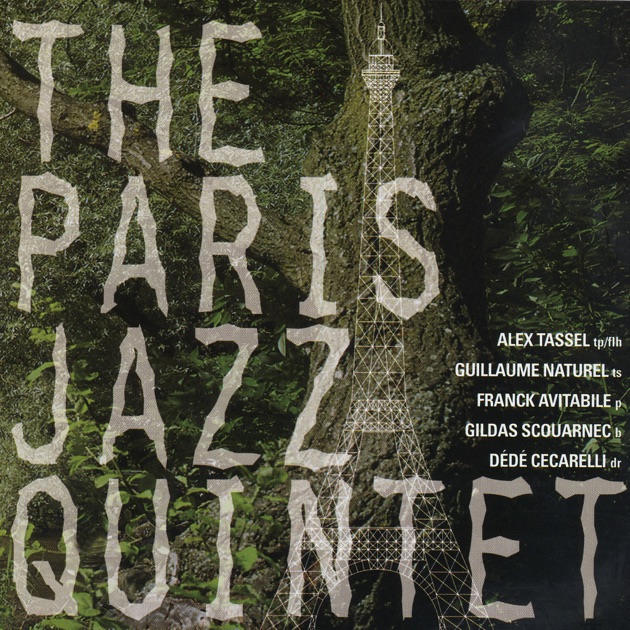
Quintet de Jazz Parisien
1. The LineupA supergroup of leading French jazz musicians active in the 2000s. Its core members included:
-
Alex Tassel(trumpet / flugelhorn)
-
Guillaume Naturel(saxophone / flute)
-
Franck Avitabile(piano)
-
Gildas Scouarnec(bass)
-
André “Dédé” Ceccarelli(drums)
2. Biography
The Paris Jazz QuintetThe quintet represented the high standard of French jazz in the early 21st century. It was not a temporary backing band, but a close-knit group built aroundoriginalityand a modern post-bop spirit.
-
A Modern Face of European Jazz: Working in the classic trumpet, saxophone, piano, bass, and drums format, the group showed how the Paris jazz scene could honor American bebop while adding a distinctly European elegance and sense of form.
-
Key Album: Their best-known release is the self-titled album issued in 2007,《The Paris Jazz Quintet》. Most of its tracks were written by band members. Pieces such as “Marineland” and “Passages Secrets” demonstrate tightly crafted arrangements and fiery improvisational exchanges.
-
A Masterful Rhythm Section: The drummerAndré Ceccarelliis one of Europe’s most respected players. His contribution gives the group a dynamic, finely textured rhythmic foundation, allowing it to navigate fast and complex lines with ease.
A Critic’s Column: A Modern Echo from Paris
As a critic, it is best to approach this quintet without the filter of “old-school tribute” and consider how itreimaginestradition.
-
A Balance of Technique and Poetry:Alex Tassel’s trumpet has a warm tone and a distinctly modern modal quality, whileGuillaume Naturel’s horn playing is more forceful. Their conversation creates the group’s most compelling balance: Parisian lyricism with the muscular energy of hard-driving jazz.
-
Post-Bop’s Intricate Design: Their music feels like a finely calibrated intellectual game. On tracks such as “Heerestraat 44,” you can hear the harmony shift and move through the interplay of piano and bass. It is both a sensory pleasure and a study in musical logic.
-
A City’s Soundtrack: IfDjango Reinhardtrepresents the old Paris of gypsy swing and street-side fire,The Paris Jazz Quintetstands for the contemporary city: composed, precise, internationally minded, and never indulgent.
In Summary: The Paris Jazz Quintetis apowerful calling cardfor contemporary French jazz. With assured technique and distinctly modern original music, the quintet shows that Paris remains one of the liveliest laboratories on the global jazz map.
A Note from the Critic:If you are tired of dated versions of jazz standards, try the self-titled album. Its clean, decisive modern sound makes every note feel precisely placed in space.
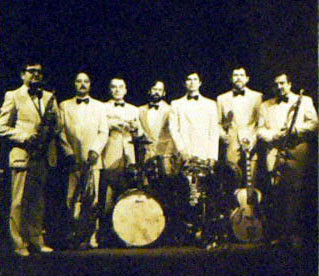
Classic Jazz Collegium
Biography
Czech traditional jazz orchestra.
Also known as: The Classic Jazz Collegium Orchestra
Members: Josef Rejman, Ivor Krátký, Miroslav Havránek, Pavel Klikar, Karel Mezera, Miroslav Klimeš, Zdeněk Fibrich, Jiří Pechar, Luboš Zajíček, Aleš Sládek, Eva Svobodová, Svatobor Macák, Bohumil Veselý, Václav Šalbaba, Josef Šťastný

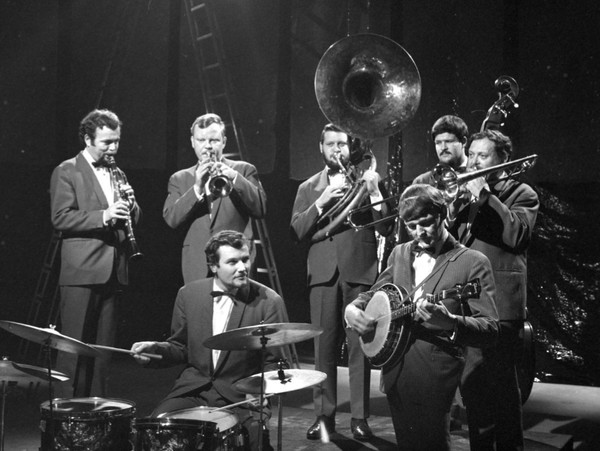
Papa Bue's Viking Jazz Band
Biography
Danish dixieland revival jazz band, founded in 1956 by trombone player Arne "[a=Papa Bue]" Jensen. Reportedly the band name was adopted from a review by then young journalist [a=Shel Silverstein]. Had it's prime in the late 50's, early 60's dixieland revival. In 1960 their "Schlafe Mein Prinzchen" sold over one million copies. Remained active until the mid 90's, backing touring international artists visiting Denmark such as [a=George Lewis] (1959), [a=Champion Jack Dupree] (1962), [a=Art Hodes] (1970) and [a=Wild Bill Davison] on record and in concert [a=Earl Hines], [a=Stuff Smith] and [a=Ben Webster]. Nationally they recorded with singers [a=Gustav Winckler] and [a=Bjarne Liller] a.m.o.
Also known as: "Papa Bue's" Viking Jazzband, Papa Bue, Papa Bue & His Viking Jazz Band, Papa Bue & His Viking Jazzband, Papa Bue & The Viking Jazz Band, Papa Bue And His Viking Jazz Band, Papa Bue And His Viking Jazzband, Papa Bue Jazz Band, Papa Bue Viking Jazzband, Papa Bue's Jazz Band, Papa Bue's Jazzband, Papa Bue's New Orleans Band, Papa Bue's Viking JazzBand, Papa Bue's Viking Jazzband, Papa Bue's Viking Jazzband - No.1, Papa Bue's Viking Jazzband - No.2, Papa Bues, Papa Bues Viking Jazz Band, Papa Bues Viking Jazzband, Papa Bues Vikinger, Papa Bue’s Jazzband, Papabue's Viking Jazzband, VJB
Members: Jim Bray, Gerhard Vohwinkel, Mike Peters (4), Mogens Seidelin, Bent Haastrup, Jørgen Svare, Jens Sølund, Arne Bue Jensen, Knud Ryskov, Graham Stewart (5), Søren Houlind, Ole Stolle, Finn Otto Hansen, Erik Andersen, Alan Elsdon, John Defferary, Ib Lindschouw, Joe Errington, Keith Smith (7), Jørn Jensen (2), Bjarne "Liller" Pedersen, Ole Olsen (6), Thomas Christensen (5)
Links:
- http://en.wikipedia.org/wiki/Papa_Bue#The_Viking_Jazz_Band
- https://www.chartsurfer.de/artist/papa-bue-s-viking-jazzband/biography-nr.html
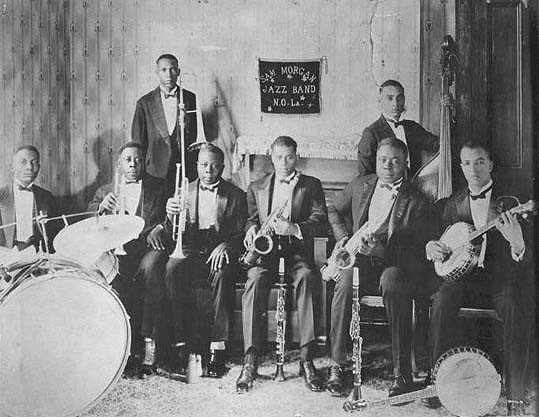
Sam Morgan's Jazz Band
Biography
Early jazz band from New Orleans, led by trumpeter [a=Sam Morgan]
Also known as: Sam Morgan's Jug Band, Sam Morgan's New Orleans Jazz Band
Members: Bunk Johnson, Sam Morgan, Jim Robinson (2), Walter Decou, Andrew Morgan (7), Sidney Brown (3), Johnny Davis (4), Ike Morgan, O.C. Blancher, Earl Fouche, Johnny Dave (2), Tink Baptiste, Nolan Williams (2), Roy Evans (5)
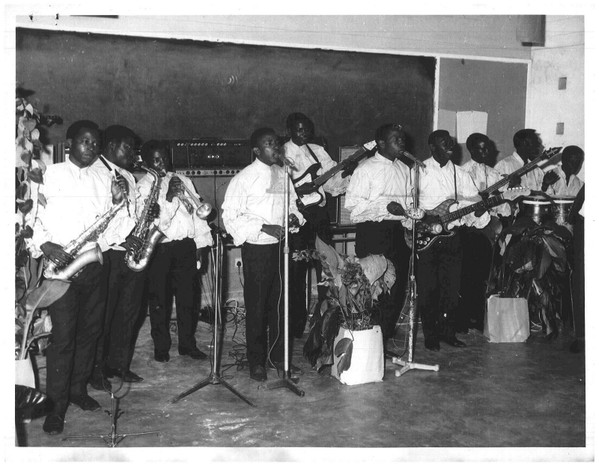
Nuta Jazz Band
Biography
Established in 1964, and named after its sponsor, the National Union of Tanganyika (NUTA) was the main Tanzanian trade union. In the early years of Dansi, the NUTA Jazz Band was very influential both artistically and in terms of financial organization; namely, it was one of the first Dansi bands to constitute itself into a "cooperative" of salaried musicians (a model that would become widespread in the 1970s). In the 1960s, NUTA Jazz Band was led by trumpeter-singer late Joseph Lusungu and saxophonist Mnenge Ramadhani, who defined the brass-centered sound of the band. NUTA Jazz Band held its position as one of the major Tanzanian Dansi bands throughout the latter half of the 1960's and most of the 1970's. In 1977 it experienced a major change in personnel, with many of its most talented musicians (including Muhiddin Maalim Gurumo and Hassani Rehani Bitchuka) leaving the band to form a new ensemble, [a1227567]. In 1977, the band changed its name to [a1789256], after the Swahili name of its sponsor (NUTA), Jumuiya ya Wafanyakazi Tanzania. At about the same time, guitarist Saidi Mabera became the new leader of the band. He wrote several of Juwata's hit songs of the 1980's. After Mabera, both Maalim and Bitchuka (who rejoined the band in 1991) became leaders. Muhidini Gurumo is credited with on the major hits of Juwata in the 1990s, Usia kwa watoto. The band changed its name again in 1991 from Juwata Jazz to [a1227572], when the trade union that sponsored it was renamed Organization of Tanzanian Trade Unions. The band is currently active as [a3978338].
.
Also known as: Nuta Jazz
Members: Hassani Bitchuka
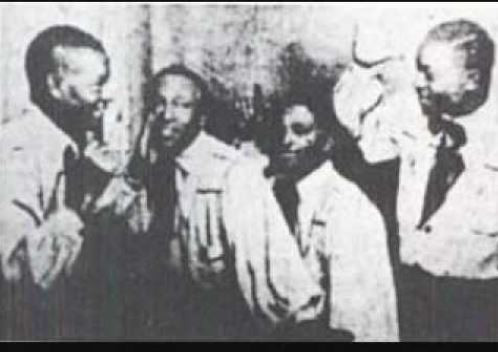
Norfolk Jazz Quartette
Biography
The vocal harmony group the Norfolk Quartette released dozens of records between 1921 and 1940, primarily labeled as the Norfolk Jubilee Quartette.
The Jazz Quartette name was used when the group recorded non-religious material. Founded by bass singer Len Williams and baritone Delroy Hollins, the Norfolks were performing in public as early as 1919 with Otto Tuston and James "Buddy" Butts singing tenor. Hollins acted as manager for the quartet and rehearsed them at home in his living room. During the early '20s they were mainly a vaudeville unit specializing in blues and jazz but also capable of singing gospel. From the get-go their signature sound was shaped by Len Williams, who anchored each song with scat-like rhythmic patterns in the bass clef which were strongly influenced by the jazz music of the day. The Norfolks cut their first records for Okeh in 1921 and appeared in a variety show starring vocalist Mamie Smith in Baltimore during the spring of the following year. They spent much of that summer with the Miller & Lyles musical revue The Flat Below, but were forced to withdraw after Butts was fatally attacked on August 19, 1922 by an enraged knife-wielding girlfriend.
Also known as: Norfolk Jazz, Norfolk Jazz Quartet, The Norfolk Jazz Quartet, The Norfolk Jazz Quartette
Links:
- http://www.redhotjazz.com/norfolk.html
- http://www.allmusic.com/artist/norfolk-jazz-jubilee-quartet-mn0000455381
- https://itunes.apple.com/us/album/norfolk-jazz-and-jubilee-quartet-vol-1-1921-1923/id76927871
- https://de.wikipedia.org/wiki/Norfolk_Jazz_%26_Jubilee_Quartet
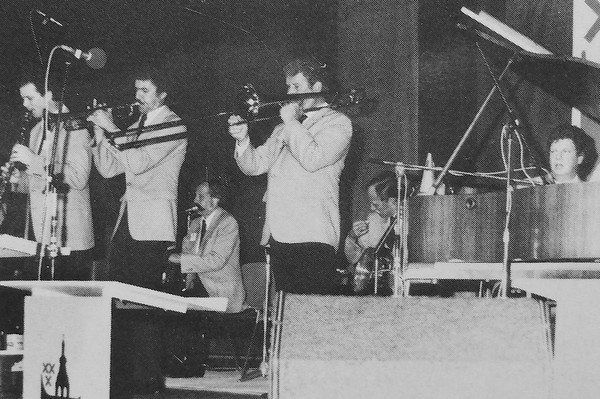
Turk Murphy's Jazz Band
Also known as: The Turk Murphy Band, The Turk Murphy Band Of San Francisco, The Turk Murphy Jazz Band, Turk Murphy & His Band, Turk Murphy & His Frisco Jazzband, Turk Murphy & His Jazz Band, Turk Murphy & His San Francisco Jazz Band, Turk Murphy And His Band, Turk Murphy And His Frisco Jazz Band, Turk Murphy And His Jazz Band, Turk Murphy And His Orchestra, Turk Murphy And His San Francisco Jazz Band, Turk Murphy Band, Turk Murphy Et Son Orchestre, Turk Murphy Jazz Band, Turk Murphy Jazz Band Of San Francisco, Turk Murphy U. S. Jazz Orchester, Turk Murphy U. S. Jazz-Band, Turk Murphy Und Seine Jazz-Band, Turk Murphy u. s. Band, Turk Murphy's Dixieland Band, Turk Murphy's Frisco Jazz Band, Turk Murphy's New Orleans Jazz Band, Turk Murphy's San Francisco Jazz Band, Turkmurphy And His Jazz Band, Turkmurphy E La Sua Jazz Band
Members: Bill Stanley, Bob Scobey, Bob Helm, Turk Murphy, Don Kinch, Bill Napier, Dick Lammi, George Bruns, Leon Oakley, Pat Patton, Thad Wilkerson, Pete Clute, Jim Maihack, Carl Lunsford, Phil Howe, Harry Mordecai, Burt Bales, Bill Newman, Thad Vandon, Al Conger, Larry Conger, Skippy Anderson, Jack Crook, Bill Carroll (2), Stan Ward, Squire Girsh, Bob Schulz, Harry (Walker) Witczak
Links:
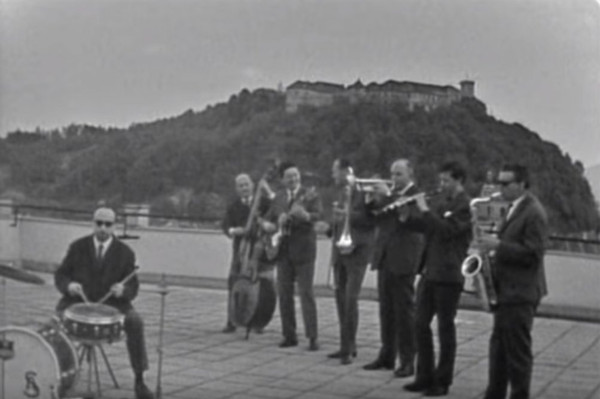
Ljubljanski Jazz Ansambel
Biography
Formed by soloists of [a=Plesni Orkester RTV Ljubljana] in 1955. They played traditonal jazz (dixieland). In 1960 they recorded the first jazz record in former Yugoslavia. The first leader was [a=Urban Koder].
Also known as: "Ljubljanski Jazz Ansambel" Sa Gudačima, Ljublj. Jazz Ansambel, Ljublj. Jazz-Ansambl, Ljubljanski Jazz - Ansambl, Ljubljanski Jazz Ansambel Z Godali, Ljubljanski Jazz Ansambel Z Godali, Ljubljanski Jazz Ansambl, Ljubljanski Jazz-Ansambl, Ljubljanski Jazz-ansambl, Ljubljanski Studijski Ansambel, Люблянский Джазовой Ансамбль
Members: Mario Rijavec, Milan Ferlež, Aleksander Skale, Ati Soss, Urban Koder, Miško Hočevar, Franci Puhar, Borut Bučar, Franc Jagodic, Kajetan Zupan, Dušan Veble, Mitja Trtnik, Jože Gjura, Mik Soss
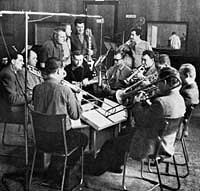
Czechoslovak Radio Jazz Orchestra
Biography
Big band of the Czechoslovak Radio, originally established in 1960 in Prague as “Taneční orchestr Československého rozhlasu” ([a=Czechoslovak Radio Dance Orchestra], 1967–1968 also known as [a=Orchestr Karla Krautgartnera (2)]) and led by [a=Karel Krautgartner] until 1968. Having identical personnel as the latter two, this orchestra name was used for jazz recordings and releases from 1962 until 1992, usually conducted by [a=Kamil Hála].
In 1993 the orchestra’s name was changed to “[a=Big Band Radio Praha]” and eventually to “[a=Big Band Českého Rozhlasu]” (BB ČRo), still featuring [a=František Kryka] as the longest active member since 1961, and led by [a=Václav Kozel] since September 2002 until December 2012. Since January 2013 until December 2014 the new Czech Radio “resident” big band is the former [a=Gustav Brom Orchestra], presently led by [a=Vladimír Valovič] as “Rozhlasový big band Gustava Broma”.
Also known as: CZ Radio Jazz Orchestra, Czechoslovak Radio Prague Jazz Orchestra, Džezový Orchestr Čs. Rozhlasu, JOČR, Jazz Orchestra Czech Radio, Jazz Orchestra Of The Czechoslovak Radio, Jazz Orchestra Radio Prague, Jazz-Orchestr, Jazz-Orchestr: Edy Valis, Jazz-Orchestra, Jazzový Orch. Čs. Rozhlasu, Jazzový Orchestr Československého Rozhlasu, Jazzový Orchestr Čs. Rozhlasu, Jazzový Orchestr Čs. Rozhlasu Praha, Jazzový Orchestr Čs. Rozhlasu V Praze, Jazzový Orchestr Čzechoslovenskeho Rozhlasu, Jazzový Orchestri, Jazzový orchestr Čs. rozhlasu, Jazzový orchestr Čs. rozhlasu v Praze, Jazzový Orchestr Čs. Rozhlasu, Prague Radio Dance Orchestra, Studie De La Jazz De La Radio Tchécoslovaque, Taneční Orchestr Československého Rozhlasu, Taneční Orchestr Čs. Rozhlasu, Tanečný Orchester Čs. Rozhlasu V Prahe, Ансамбль Пражского Радио
Members: Ivan Dominák, Josef Vejvoda, Laco Deczi, Karel Krautgartner, Rudolf Rokl, Felix Slováček, Ladislav Pikart, Václav Týfa, Radim Hladík, Zdeněk Dvořák, Michal Pavlíček, Jiří Tomek, Petr Kořínek, Jiří Jelínek, Zdeněk Pulec, Miroslav Koželuh, Jan Čapoun, Jiří Hlava, Miroslav Krýsl, Karel Růžička, Václav Hybš, Svatopluk Košvanec, Petr Král, Richard Kubernát, Pavel Vitoch, Josef Pavelka, Milan Ulrich, Vladimír Žižka, Vincenc Kummer, Bedřich Kuník, Kamil Hála, Luděk Hulan, Vladimír Tomek, Bedřich Beránek, Václav Král, František Kryka, Karel Turnovský, Artur Hollitzer, Štěpán Markovič, Jiří Doubrava, Tomáš Křemenák
Links:
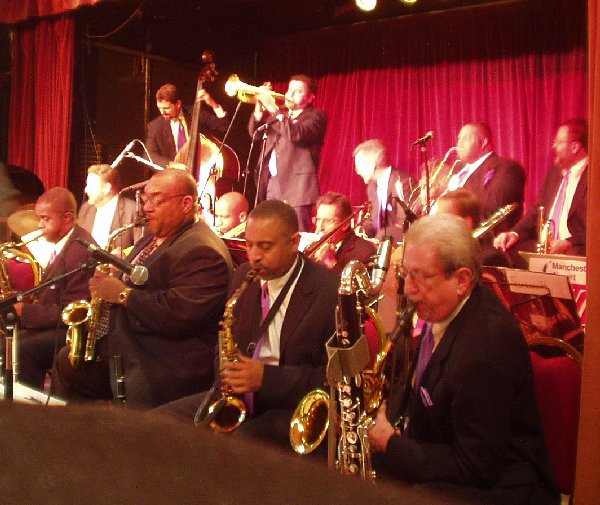
The Clayton-Hamilton Jazz Orchestra
Also known as: Clayton - Hamilton Jazz Orchestra, Clayton Hamilton Jazz Orchestra, Clayton-Hamilton Jazz Orchestra, The Clayton / Hamilton Jazz Orchestra, The Clayton Hamilton Jazz Orchestra, The Clayton Hamilton Orchestra, The Clayton-Hamilton Big Band, The Clayton-Hamilton Orchestra, The Clayton/Hamilton Jazz Orchestra
Members: Jacky Terrasson, Rickey Minor, Charles Davis, Anthony Wilson, Paul Jackson Jr., Jeff Hamilton, John Clayton, Luis Conte, Jack Nimitz, Oscar Brashear, Snooky Young, Bucky Pizzarelli, Chuck Findley, George Bohanon, Isaac Smith, Byron Stripling, Mike Lang, Bobby Bryant, Charles Owens, Thurman Green, David Duke, Richard Todd, Rick Baptist, Ray Brown (2), William Green, Herman Riley, Gilbert Castellanos, Maurice Spears, Joe Porcaro, Brad Warnaar, Sal Cracchiolo, Teddy Campbell, Bob Zimmitti, Robert Hurst, Tamir Hendelman, Yvonne S. Moriarty, Joe Meyer, Tom Peterson (2), Wayne Linsey, Jeff Clayton (3), Robert Hardaway, Ira Nepus, Terell Stafford, Rickey Woodard, George Thatcher, James Thatcher, John Thomas Johnson, Keith Fiddmont, Stephanie O'Keefe, Clay Jenkins, Bijon Watson, Kye Palmer, Ryan Porter, Marni Johnson, Lee Callet, Paul Klintworth, David Delhomme, Brian Swartz, Christoph Luty, Graham Dechter, James Ford (3), Doug Macdonald, Bill Cunliffe, William Barnhart, Adam Schroeder, Jim Hershman, Bobby Rodriguez (3), Robbie Hioki, Randy Napoleon, Jamie Hovorka, Herb Mickman, Juliane Gralle, Erik Hughes (2), Steve Kovalcheck, Larry Fuller (2), Dave Bjur, Jacob Scesney, Jon Hamar, Ivan Malespin
Links:
- http://www.hamiltonjazz.com/orchestra.html
- http://www.johnclaytonjazz.com/clayton_hamilton/index.html
- https://en.wikipedia.org/wiki/The_Clayton%E2%80%93Hamilton_Jazz_Orchestra
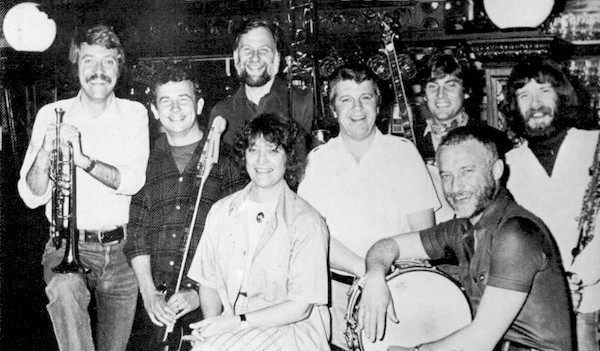
Jazz Doctors
Biography
Swedish Dixieland jazz band founded 1960.
Members: Gösta Linderholm, Marie Johnson, Bo Juhlin, Gunnar Larsson, Göran Pettersson, Hans Pettersson, Staffan Kjellmor, Holger Gross, Eddie Andersson, Gunnar Reichman, Benny Rigman, Lars Johnson, Bernt Helsing, Tommy Jacobsson, Sten Westling (2), Pelle Höbinger, Lars Jelder, Uno Karlén
Links:
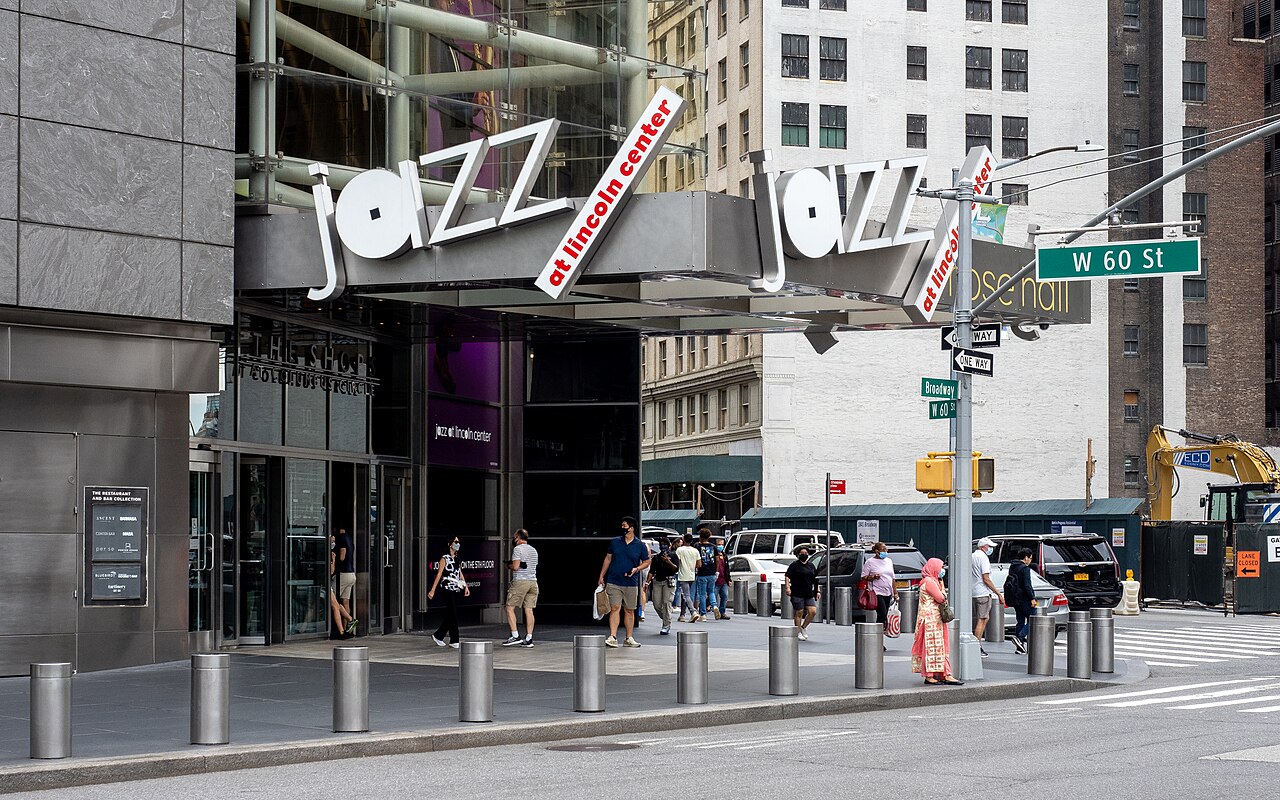
Jazz At Lincoln Center
Jazz at Lincoln Center (JALC) is a New York City institution and part of Lincoln Center. Founded in 1987, it officially opened in October 2004 at the Time Warner Center (now Deutsche Bank Center). Its mission is to celebrate the full breadth of jazz through education, programming, archives, and ceremonies. It promotes jazz, culture, and arts education around the world. Wynton Marsalis is its artistic director and the music director of the Jazz at Lincoln Center Orchestra.
The center presents performances by its orchestra and guest musicians and is also home to New York City Opera. Many concerts are streamed on its YouTube channel. It runs educational programs in its building, online, and in schools across the country.
Through concerts—more than 90 percent of seats at major performances are filled—tours, music education, sheet music, recordings on its Blue Engine label, and live performances on its JAZZ LIVE platform, the organization reaches about three million people of all ages each year.
Speakers throughout the building play recordings by great jazz artists such as Ella Fitzgerald, Dizzy Gillespie, and Louis Armstrong.
History
In the mid-1980s, Lincoln Center sought to attract younger audiences. Its venues sat unused during the summer, so the center wanted to put them to use while resident companies performed elsewhere. Jazz supporters at Lincoln Center campaigned to have the music recognized by the institution. In a 1986 report, the center said, “Lincoln Center should focus on improving the quality of its programming, and there is no compelling reason to include areas such as jazz.” Alina Bloomgarden, then director of visitor services, had proposed a resident jazz program for the third time. Some feared jazz audiences might be too rowdy, so Bloomgarden invited Wynton Marsalis to help plan a summer concert series. To succeed, the series had to be financially viable and demonstrate the value of its music and community.
In 1987, trumpeter Wynton Marsalis helped launch the Classical Jazz concert series, Lincoln Center’s first jazz series. It opened in August 1987 with a tribute to women in jazz, including Betty Carter, Sasha Dalton, and Marian McPartland. The series’ success mattered at a difficult time: many great jazz innovators had died, jazz clubs were closing, many colleges had no jazz programs, and electronic music was becoming commercialized. American society was also deeply divided. Many places remained segregated; the AIDS epidemic was spreading; the Cold War intensified militarization and globalization; and Ronald Reagan’s war on drugs led to mass incarceration. By the following year, the series had its own program on National Public Radio and began touring.
The music Marsalis hoped to preserve is captured in the three-movement suite “A New Orleans Ritual,” modeled on a New Orleans funeral procession. Stanley Crouch, a co-founder of Jazz at Lincoln Center, wrote an impassioned speech that the Reverend Jeremy Wright delivered. It came to be seen as a declaration of the organization’s purpose:
“Perhaps we listeners heard an enduring truth from the descendants of people who had been bought and sold as commodities—the people who stood on auction blocks and lived in slave quarters, whose existence formed the cross on which this nation’s Constitution was nailed. Yet even after that crucifixion, in the third century of slavery in the Americas, people rose with a vision of freedom. They lit the powerful wick extending from a candle and passed it on. Through music they showed what light meant: they would not submit to self-righteous dragons or let their hearts grow dark. They said, ‘Listen closely.’ They said, ‘If you give me a fair chance, I will help you understand democracy better.’ Yes, that is what they said. ‘If you give me a fair chance, I will help you understand democracy better.’ These are the people who created a noble sound.”
Gordon Davis, a Lincoln Center board member and its founding chairman, saw the summer series succeed and advocated for a permanent jazz program. The board agreed. By 1996, Jazz at Lincoln Center had become a constituent member alongside the New York Philharmonic, New York City Ballet, Metropolitan Opera, and European Arts Center. Its budget was $4 million in 1996, compared with the Metropolitan Opera’s $150 million; by 2016 it had exceeded $50 million. Marsalis has served as artistic director since 1987. Greg Scholl became executive director in 2012.
In January 2026, the Jazz at Lincoln Center Orchestra performed at the Sheldon Theatre in St. Louis, Missouri. Marsalis conducted the orchestra, which tours internationally in addition to performing at Appel Room and Rose Theater. Concerts are also streamed online, and educational programs appear on the center’s YouTube channel. Since 2015, the orchestra’s albums have been released on its own Blue Engine Records label.
The center promotes jazz education in high schools through its Essentially Ellington program. Professional musicians visit schools through Let Freedom Swing. In New York City, it operates tuition-free middle-school and high-school jazz academies and a summer academy. Each year, its orchestra tours the United States and visits schools. The Essentially Ellington High School Jazz Band Competition and Festival is held each year at Jazz at Lincoln Center.
In January 2026, Marsalis announced that he would step down as artistic director in July 2027 and serve as an adviser through June 2028. In an interview, he said, “Now is the best time to find the next generation of leaders. We want to do everything we can to cultivate what we have built, because we know this is an art form that will keep evolving and this institution will continue to thrive.” He will continue to perform with the Jazz at Lincoln Center Orchestra from time to time.
Lincoln Center Building Guide
- Samuel B. and David Rose Building (including the Walter Reade Theater)
- The Juilliard School
- Alice Tully Hall
- Vivian Beaumont Theater (including the Mitzi E. Newhouse and Claire Tow Theaters)
- Eleanor Bunin Munroe Film Center
- David Geffen Hall
- New York Public Library for the Performing Arts (including Bruno Walter Auditorium)
- Metropolitan Opera House
- Josie Robertson Plaza and Revson Fountain
- Damrosch Park
- David H. Koch Theater
- David Rubenstein Atrium
- Jazz at Lincoln Center
Rose Hall
Rose Theater, 2007
120 yards; 13 Jazz at Lincoln Center; 13 Jazz at Lincoln Center; 12; 11 David H. Koch Theater; 11 David H. Koch Theater; 10 Damrosch Park; 10 Damrosch Park; 9 Josie Robertson Plaza, Revson Fountain; 9 Josie Robertson Plaza, Revson Fountain; 8 Metropolitan Opera House; 8 Metropolitan Opera House; 7 New York Public Library for the Performing Arts (including Bruno Walter Auditorium); 7 New York Public Library for the Performing Arts (including Bruno Walter Auditorium); 6 David Geffen Hall; 6 David Geffen Hall; 5 Elinor Bunin Munroe Film Center; 5 Elinor Bunin Munroe Film Center; 4 Vivian Beaumont Theater (including the Mitzi E. Newhouse and Claire Tow theaters); 4 Vivian Beaumont Theater (including the Mitzi E. Newhouse and Claire Tow theaters); 3 Alice Tully Hall; 3 Alice Tully Hall; 2 Juilliard School; 2 Juilliard School; 1 Samuel B. and David Rose Building (including Walter Reade Theater); 1 Samuel B. and David Rose Building (including Walter Reade Theater).
Frederick P. Rose Hall is a performing arts center designed by Rafael Viñoly on the fifth floor of Deutsche Bank Center (formerly Time Warner Center). The $131 million facility opened in fall 2004 and was the world’s first center devoted entirely to jazz performance, education, and broadcasting. It was designed to give jazz a warm, clear sound. Rose Hall has three venues: Rose Theater, Appel Room, and Dizzy’s Club, named after trumpeter Dizzy Gillespie. The hall also houses the Irene Diamond Education Center, with rehearsal and recording studios. Its location was criticized because it sits in the upscale shopping complex at Columbus Circle, four blocks from Lincoln Center’s main campus. Jazz at Lincoln Center responded that this “temple of consumerism” presented music born of the struggle for freedom, music that encourages performers and listeners to strive for higher ideals.
Lincoln Center Jazz at Night
In 2025, the Rose Hall sign is visible during Lincoln Center Jazz at Night.
Leaders of Jazz at Lincoln Center set out to build a venue with acoustics suited to swing and blues. They also wanted it to house the organization’s educational and archival work. To attract a wider audience, Marsalis collaborated with popular musicians outside jazz, including Stevie Wonder, Paul Simon, and Bob Dylan. This drew new listeners and created a rich interplay among swing, rock, and rhythm and blues.
Rose Theater uses a “box within a box” design and has no rigid structural connection to the other Jazz at Lincoln Center venues. Its 1,233 seats can be adapted for opera, dance, drama, film, and orchestral performances. Rubber pads under the floor reduce outside noise and preserve a quiet, intimate atmosphere. Movable seating towers allow the theater to switch between concert and theater layouts. In concert mode, seats are placed behind and around the musicians, supporting the sound and sightlines while increasing capacity. In theater mode, the seating towers retract into an air-cushion system, creating a platform for opera, ballet, or modern dance sets.
Appel Room has 583 seats and a relaxed, intimate atmosphere. It normally has seven separate seating levels, but these can be reconfigured into four to make dancing and movement easier. A 50-foot glass wall looks out over Central Park. It tilts slightly upward so sound can reflect directly from the atrium and stage monitors to the ceiling. Sound-absorbing panels hang from the ceiling and walkways to diffuse and absorb sound.
Dizzy’s Club, named after American jazz trumpeter Dizzy Gillespie and sponsored by Coca-Cola, seats 140. It is designed as an intimate jazz club for live trios, pianists, and singers, with city views over Columbus Circle and Central Park. Its design aims for a “golden” sound that encourages interaction between artists and audiences, much like New York’s early jazz clubs.
The Jazz Couriers
Biography
Quintet in existence from 1957 to 1959.
Also known as: The Couriers Of Jazz
Members: Ronnie Scott, Jeff Clyne, Tubby Hayes, Kenny Napper, Terry Shannon, Bill Eyden, Phil Bates, Phil Seamen
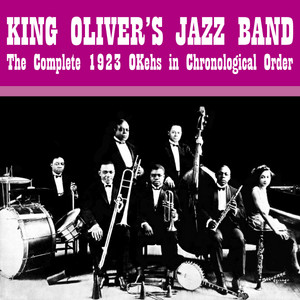
King Oliver's Jazz Band
1. Life and DeathMay 11, 1881 – April 10, 1938
2. Biography
King Oliver(bornJoseph Nathan Oliver) was a pivotal mentor in the formative years of jazz and one of the great standard-bearers of New Orleans jazz. As the spiritual guide and teacher ofLouis Armstrong, he helped establish the cornet’s central role in early jazz. Through his inventive use of mutes, he also gave brass instruments a voice that could seem almost human.
The King of New Orleans Cornet (1900s–1917)
In New Orleans, the cradle of jazz,King Oliverearned the title “King,” inherited fromBuddy Boldenwith his forceful tone and commanding presence. He was a fixture of the legendary Storyville district, leading some of the city’s finest marching bands and dance orchestras. His playing combined power with a vivid rhythmic and blues feel.
Chicago’s Golden Age and the Creole Jazz Band (1918–1924)
In 1918, amid the Great Migration,Olivermoved to Chicago and formed the celebratedKing Oliver’s Creole Jazz BandIn 1922, he wrote to his former New Orleans protégéLouis Armstrong, inviting him to join the band. Their two-cornet counterpoint in Chicago became the stuff of jazz legend. Recordings such as “Dippermouth Blues” captured New Orleans collective improvisation at its height and helped define early jazz.
Tragedy and the Final Years (1925–1938)
As the Swing Era rose,Oliverthe collective improvisation he championed began to seem out of step. His stubbornness cost him several commercial opportunities, including a residency offer at the Cotton Club that later helpedDuke Ellingtonrise to fame. Severe gum disease then robbed him of the embouchure he needed to play. In his later years, he ran a fruit stand in Georgia and even worked as a billiard-hall cleaner. The once-celebrated King of Jazz died in poverty and isolation in 1938.
A Critic’s Column: The Forgotten Creator
As a critic, to understandKing Oliverwe must look beyond his recordings to thegenetic code。
-
The Magician of the Mute: He was among the first to put a cup mute—and even a drinking glass or a bathtub plunger—into a horn. By reshaping the airflow, he made the cornet cry and laugh with a “wah-wah” voice. This person-like sound helped jazz break away from the restraint of European brass traditions and take on the soul of Black spirituals.
-
A Mentor Who Made Room for OthersWithoutOliver’s support,Louis Armstrongmight have remained an ordinary musician on the New Orleans docks. In Chicago, he gave his protégé room to shine, even taking the supporting second part in their two-cornet duets. That artistic generosity helped jazz move from collective improvisation toward the star soloist.
-
A Tragic Purity:Oliver’s final years are among jazz history’s most heartbreaking chapters. He was an old-school craftsman who refused to bend to commercial fashions. When you hear his recordings, which may sound dated today, remember theearthy rootsof jazz in their rawest form—unadorned and full of honest swing.
In Summary: King Oliverwas jazz’sJohn the Baptist. He cleared the way and baptized the talents who followed him in the Jordan. He passed the flame to others, then slowly faded into darkness himself.
A Note from the Critic:When you listen to “Dippermouth Blues,” listen for the signature shout, “Oh, play it!” It carries the vitality of jazz at its birth.King OliverHe missed the best years, but without him, the great jazz era that followed would never have existed.
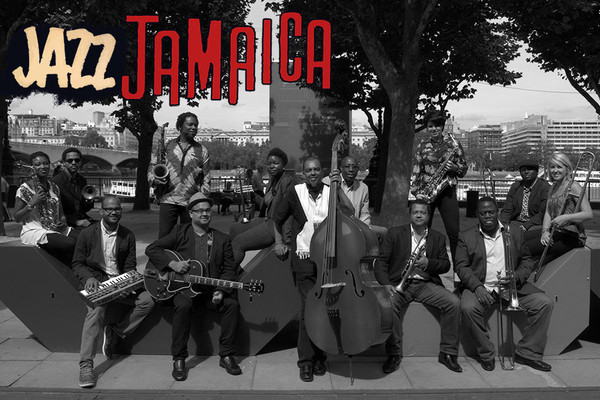
Jazz Jamaica
Biography
Ska/Reggae/Jazz band from UK lead by bass player [a=Gary Crosby] founded in the early 1990s. In big band formation, typically billed as "Jazz Jamaica All Stars" .
Also known as: Jazz Jamaica All Stars, Jazz Jamaica Limited
Members: Juliet Roberts, Andy Sheppard, Ray Carless, Guy Barker, Alex Wilson, Jason Yarde, Claude Deppa, Eddie "Tan Tan" Thornton, Rico Rodriguez, Gary Crosby, Orphy Robinson, Colin Graham, Tony Uter, Dennis Rollins, Michael "Bami" Rose, Clifton "Bigga" Morrison, Kevin Robinson (4), Sean Corby, Tony Kofi, Rodney Youngs, Kenrick Rowe, Alan Weekes, Patrick Clahar, Brian Edwards (2), Abram Wilson, Andy Grappy
Links:
- https://en.wikipedia.org/wiki/Jazz_Jamaica
- https://www.facebook.com/JazzJamaica/
- http://www.last.fm/music/Jazz+Jamaica
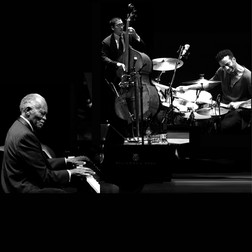
The Great Jazz Trio
Also known as: G.J.T., GJT, Great Jazz Trio, Great Jazz Trio+1, The Great Jazz Trio & Friends, The Great Jazz Trio +, ザ・グレイト・ジャズ・トリオ, ザ・グレート・ジャズ・トリオ
Members: Ron Carter, Elvin Jones, Buddy Williams, Jack DeJohnette, Jimmy Cobb, Billy Hart, John Patitucci, David Finck, Omar Hakim, Mads Vinding, Anthony Williams, Richard Davis (2), Hank Jones, Al Foster, Eddie Gomez, Lee Pearson (2), Jerome Jennings, David Wong, Yosuke Inoue
Links:
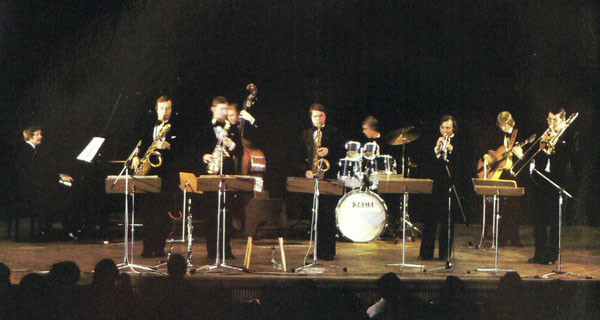
Traditional Jazz Studio
Biography
Czech dixieland orchestra, established and led by [a=Pavel Smetáček] since 1959. Still actively performing as of 2009.
Also known as: P.D., Stud. Skup. Trad. Jazzu, Studijní Skupina Tradičního Džezu, Studijní Skupina Tradičního Jazzu, Study Group Of Traditional Jazz, Study Group Of Traditional Jazz Prague, Study Group Of Traditional Jazz, Prague, The Traditional Jazz Studio, Trad., Trad. Yupanqui, Traditional Jazz Studio Pavla Smetáčka, Traditional Jazz Studio Prag, Traditional Jazz Studio Praha, Traditional Jazz Studio, Prag, Traditional Jazz-Studio, Traditionnel
Members: Jaroslav Fuksa, Petr Fleischer, Josef Rejman, Ivo Pluháček, Jiří Pechar, Pavel Smetáček, Jiří Jirásek, Luboš Zajíček, Hanus Berka, Eugen Jegorov, Jiří Niederle, František Ringo Čech, Antonín Bílý, Alan Vitouš, Eva Svobodová, Jan Antonín Pacák, Ivan Smetáček, Bohumil Veselý, Václav Širl, Evžen Richter, Eva Martínková, Michal Pálka, Jiří Kolář (3), Antonín Nachtman, Antonín Lodr, Vítězslav Marek, Eugen Richter (2), Josef Svechkovsky, Reinhard Schwarz
Links:
Jazz At The Philharmonic
Biography
Jazz At The Philharmonic is a trademark used by jazz entrepreneur and label owner [a=Norman Granz].
Please note: When used as a banner for the ever-changing jam session groups in his touring events or on records, Jazz At The Philharmonic can be used as main artist. But only when Jazz At The Philharmonic is billed on the release in the main artist's place - and when no other obvious main artist is billed on the release or promoted on cover and labels.
Norman Granz's Jazz at the Philharmonic releases do not follow a usual industry pattern for naming and crediting:
All JATP releases with the name and/or logo on them should be listed under the [l=Norman Granz Presents Jazz At The Philharmonic] series, even when Jazz At The Philharmonic is used as main artist. The shorter Jazz At The Philharmonic or any other variation of JatP ahould never be listed as a label, but instead as a series, with the relevant label in brackets afterward if necessary - such as [l=Norman Granz Presents Jazz At The Philharmonic (Verve)].
Company: In the 50's with the Inc. extension, the entity was also a company; [l=Jazz At The Philharmonic, Inc.]
Office: 451 N Canon Dr, Beverly Hills, CA
Also known as: J.A.T.P., J.A.T.P. All Stars, J.A.T.P. All-Stars, JATP, JATP All Stars, JATP All-Stars, Jazz All Stars, Jazz At The Philharmonic All Stars, Jazz At The Philharmonic All-Stars, Jazz At The Philharmonic Concert, Jazz At The Philharmonic Vol. 5, Jazz at the Philharmonic All-Stars, Norman Grantz' Jazz At The Philharmonic, Norman Granz "Jazz At The Philharmonic", Norman Granz Jazz, Norman Granz Jazz At The Philharmonic, Norman Granz' J.A.T.P., Norman Granz' Jazz At The Philharmonic, Norman Granz' Jazz At The Philharmonic Vol. #1, The All Stars, The JATP ALL-STARS, The JATP All Stars, The JATP's, The JATPs, The Jazz All Stars, The Jazz At The Philharmonic All-Stars
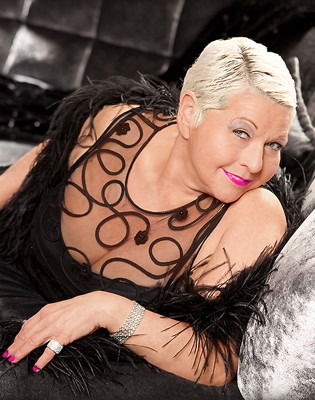
Jazz Gitti
Biography
*13 May 1946 in Vienna, Austria
Jazz Gitti is an Austrian Schlager singer whose recording career spans several decades, beginning in the 1980s and peaking in popularity during the early '90s, when she fronted the band [a1576148]. Born Martha Bohdal on May 13, 1946, in Vienna, Austria, she made her recording debut in 1984 with the 7" single "[r=3020536]" on the label Sing Sang. However, her career didn't take flight until 1990 with the release of her chart-topping full-length album debut, [m=329472]. Billed to [a1576148], the album spawned the number three smash hit single "[r=3037584]".
Subsequent albums [m=357229] (1991), [m=3295714] (1993), [m=2113675] (1995), and [m=2113672] (1996) were fairly popular, reaching the Top 20 or so, but none could rival the success of [m=329472], and none spawned a smash hit single as big as "[r=3037584]". While Jazz Gitti was steadily active in the years that followed, releasing the albums [r=5247310] (1998), [r=24200336] (2001), Es Geht Immer Bergauf (2003), and [r=2837375] (2004), her popularity declined considerably. Not until she moved to the Rebeat label for the release of [r=2838791] in 2006 did she score a major hit. A pair of similarly successful Top Ten albums, [r=2837457] (2007), [r=2837441] (2009) and [r=2837411] (2011) followed.
Also known as: Jazz-Gitti
Links:
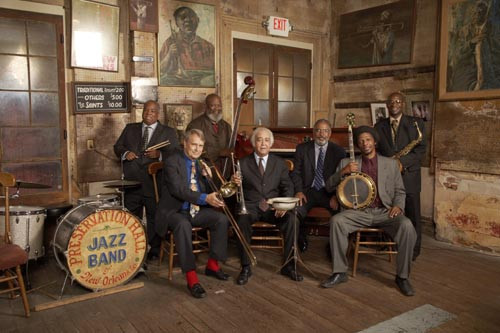
Preservation Hall Jazz Band
Biography
The Preservation Hall Jazz Band derives its name from [l=Preservation Hall], the venerable music venue located in the heart of New Orleans’ French Quarter, founded in 1961 by Allan and Sandra Jaffe. The band has traveled worldwide spreading their mission to nurture and perpetuate the art form of New Orleans Jazz.
The Preservation Hall Jazz Band is:
• Mark Braud - trumpet, vocals
• Charlie Gabriel - clarinet, vocals
• Freddie Lonzo - trombone
• Rickie Monie - piano
• Clint Maedgen - tenor saxophone, vocals
• Ben Jaffe - Creative Director, tuba
• Ronell Johnson - tuba
• Joe Lastie, Jr. - drums
Other members sometimes include:
• Frank Demond - trombone
• Shannon Powell - percussion
• Leroy Jones - trumpet
• Carl LeBlanc - banjo
• Darryl Adams - saxophone
• Elliot "Stackman" Callier - saxophone
• David Silverman - tuba
Also known as: Full Band, New Orleans' Sweet Emma And Her Preservation Hall Jazz Band, Preservation Hall, Preservation Hall Band, Preservation Hall Horns, The Preservation Hall Band, The Preservation Hall Horns, The Preservation Hall Jazz Band
Members: Leroy Jones, Rickie Monie, Emma Barrett, George Lewis (2), Freddie Lonzo, Dr. Michael White, Willie Humphrey, Walter Payton, Lester Caliste, Carl LeBlanc, Jim Robinson (2), Alcide (Slow Drag) Pavageau, Craig Klein, Shannon Powell, Ralph Johnson (2), Thaddeus Richard, Lucien Barbarin, Ronell Johnson, Darryl Adams (3), Chester Zardis, Don Vappie, Clint Maedgen, Emanuel Sayles, Josiah "Cie" Frazier, Percy Humphrey, Narvin Kimball, Sing Miller, Mark Braud, Joe Lastie, Jr., Charlie Gabriel, Allan Jaffe (2), Wendell Brunious, Jacques Gauthé, Ernie Elly, Maynard Chatters, Ben Jaffe (3), Frank Parker (4), John Brunious (2), David Grillier, Kyle Roussel, Kerry "Fatman" Hunter, Walter Harris (6), Klint Maedgen
Links:
- https://www.preservationhall.com/
- https://www.facebook.com/PreservationHall/
- https://www.youtube.com/user/preservationhall
- https://twitter.com/PresHall
- https://www.allmusic.com/artist/preservation-hall-jazz-band-mn0000358532
- https://en.wikipedia.org/wiki/Preservation_Hall_Jazz_Band
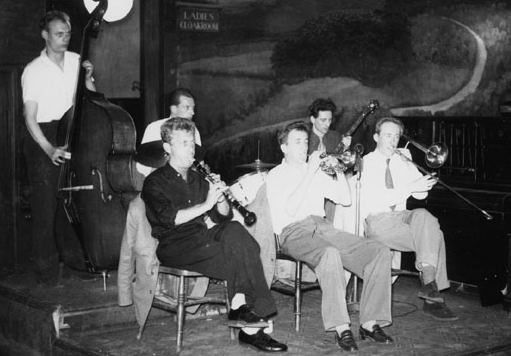
Chris Barber's Jazz Band
Biography
In 1954 the members of [a941219] split from Ken Colyer and became Chris Barber's Jazz Band. They have been one of Europe's most successful traditional jazz bands ever since.
Over the years, Chris Barber's Jazz Band evolved into [a271498], an eight-piece group, mixing the styles of blues and jazz. The demarcation of this transition is March 1973.
At the end of 2001 Chris extended his band with three more musicians into The Big Chris Barber Band.
[B]Note:[/B] Due to the complex nature of this bands history, please add all recordings prior to March 1973 to this page, variants of the Band name may include Chris Barber & His Band / Chris Barber's Travelling Band / Chris Barber's Jazz Band with Ottilie Patterson.
Also known as: Barber, Barber Jazz Band, Barber Jazz band, Barber's New Orleans Jazzband, Ch. Barber's Jazz Band, Chreis Barber's Jazz Band, Chris Babers Jazz Band, Chris Barber, Chris Barber And His Jazz Band, Chris Barber & Band, Chris Barber & His Band, Chris Barber & His Jazz Ban, Chris Barber & His Jazz Band, Chris Barber & His Jazzband, Chris Barber + Band, Chris Barber And His Band, Chris Barber And His Jazz Band, Chris Barber And His Jazzband, Chris Barber And His New Orleans Jazz Band, Chris Barber Band, Chris Barber Jazz Band, Chris Barber Jazzband, Chris Barber Mit Ensemble, Chris Barber Se Svým Orchestrem, Chris Barber Und Seine Jazzband, Chris Barber Y Su Conjunto, Chris Barber and his Jazz Band, Chris Barber mit Ensemble, Chris Barber y Su Banda de Jazz, Chris Barber's & His Jazz Band, Chris Barber's American Jazz Band, Chris Barber's Band, Chris Barber's Jazz & Blues Band, Chris Barber's Jazz Band And Singers, Chris Barber's Jazz and Blues Band, Chris Barber's Jazzband, Chris Barber's Jazzband Of 1954, Chris Barber's Jazzmen, Chris Barber's New Orleans Jazz Band, Chris Barbers Jazz Band, Chris Barbers Jazzband, Chris Barber´s Jazz Band, Ensemble, His Jazz Band, The Big Chris Barber Band, The Chris Barber And His Jazz Band, The Chris Barber Band, The Chris Barber Jazz Band, The Chris Barber Jazz-Band, The Chris Barber's Jazzband, Крис Барбер И Его Диксиленд
Members: Pat Halcox, Ron Bowden, John Crocker, Ian Wheeler, Chris Barber, John Slaughter, Lonnie Donegan, Monty Sunshine, Jim Bray, Eddie Smith (2), Graham Burbidge, Dick Smith (2), Steve Hammond (2), Stu Morrison, Jackie Flavelle, Ottilie Patterson, Dick Bishop, Micky Ashman, Alex Revell
Links:
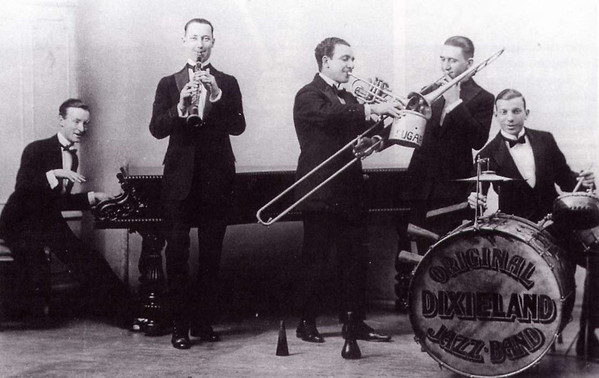
Original Dixieland Jazz Band
Biography
Jazz band consisting of five New Orleans musicians, founded in Chicago in 1916. On February 26, 1917 they recorded the first jazz record ever for the Victor Talking Machine Company, which was released in May, 1917. Soon after their first release, the Original Dixieland Jass Band changed their name to Original Dixieland Jazz Band. In 1918 they came to be the very first ever jazz band to perform in Europe. Band remained active till 1925.
The five original members of the Original Dixieland Jazz Band were:
[a326830] (cornet and director)
[a326853] (trombone)
[a326793] (clarinet)
[a412532] (piano)
[a326844] (drums)
Also known as: (Original Dixieland) Jazz Band, D. J., Die Original Dixieland Jass-Band, Dix. Jazz Band, Dixie Jazz Band, Dixieland Band, Dixieland Jass Band, Dixieland Jazz Band, Dr. Dixieland Jazz Band, Eddie Edwards Original Dixieland Jazz Band, J. B. LaRocca, Jimmy Larocca's Original Dixieland Jazz Band, L'Original "Jazz" De Dixie, Nick La Rocca And His Original Dixieland Jazz Band, Nick La Rocca And The Original Dixieland Band, Nick La Rocca And The Original Dixieland Jazz Band, Nick LaRocca And The Original Dixieland Band, O. D. J. B., O.D. J. B., O.D.J.B., O.J.D.B., ODJB, Odjb, Or. Dix. Jazzband, Or. Dixieland Jazzband, Orginal Dixieland Band, Orig. Dix. Jazzband, Orig. Dixiel. Jazz Band, Orig. Dixieland, Orig. Dixieland Band, Orig. Dixieland JB, Orig. Dixieland Jazz Band, Orig. Dixieland Jazzband, Orig. Dixiland, Orig. Dixiland Jazzband, Original Dixie Land, Original Dixie Land Jazz Band, Original Dixieland "Jass" Band, Original Dixieland "Jazz" Band, Original Dixieland 'Jass' Band, Original Dixieland <<Jass>> Band, Original Dixieland <<Jazz>> Band, Original Dixieland Band, Original Dixieland Five, Original Dixieland Jass Band, Original Dixieland Jassband, Original Dixieland Jazz Band The, Original Dixieland Jazz Band, The, Original Dixieland Jazz Bands, Original Dixieland Jazz-Band, Original Dixieland Jazzband, Original Dixieland Orchestra, Original Dixieland ‘Jass’ Band, Original Dixiland, Original Jazz-Band Dixieland, Original The Dixieland Jazz Band, Ortginal Dixie Land, The Dixie-Land Jazz Band, The O.D.J.B., The Orig. Dixieland Jazz Band, The Original Dixie Land Jass Band, The Original Dixieland Band, The Original Dixieland Five, The Original Dixieland Five (Original Dixieland Jazz Band), The Original Dixieland Jass Band, The Original Dixieland Jazz Band, The Original Dixieland Jazzband, Ориджинел Диксиленд Джасс Бэнд п/у Н. Ла Рокка, ディキシーランド・ジャズ
Members: Bobby Hackett, Jack Lesberg, Frank Signorelli, Max Kaminsky, Eddie Condon, Henry Vaniselli, Arthur Seaberg, Larry Shields, Don Parker, Nick LaRocca, Tony Sbarbaro, Eddie Edwards, Bob Casey, Gene Schroeder, Wild Bill Davison, Emile Christian, Henry Ragas, J. Russel Robinson, Bret Gowens, Teddy Roy, Billy Jones (11), Tony Spargo
Links:
- http://en.wikipedia.org/wiki/Original_Dixieland_Jass_Band
- http://www.odjb.com/
- http://www.redhotjazz.com/odjb.html
- https://adp.library.ucsb.edu/names/105432