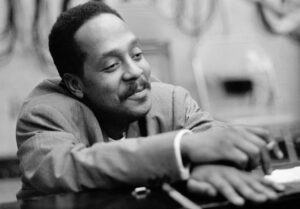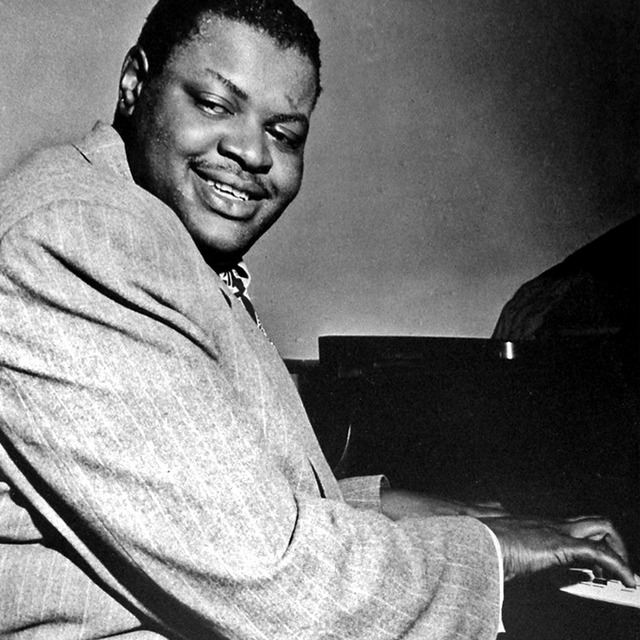

Oscar Emmanuel Peterson (born August 15, 1925, in Montreal; died December 23, 2007, in Mississauga, Ontario) was a Canadian jazz pianist, composer, and bandleader. His father, Daniel Peterson, worked as a railway porter and was the family’s first music teacher. Oscar received rigorous classical training from Hungarian-born pianist Paul de Marky, then, after winning amateur competitions as a teenager, performed in clubs and on radio in Montreal and Toronto.
In 1949, producer Norman Granz arranged for Peterson to appear at Carnegie Hall with Jazz at the Philharmonic, and he became famous overnight. He then formed a duo with bassist Ray Brown and, in 1952, his first trio with guitarist Barney Kessel, later replaced by Herb Ellis. In 1953, he recorded a series of “songbook” albums for Clef and Mercury devoted to Cole Porter, George Gershwin, Duke Ellington, and Irving Berlin, reinterpreting the American popular songbook in a trio setting.
By the late 1950s, the trio had settled into piano, bass, and drums, with Ray Brown and Ed Thigpen. Night Train (1963) and We Get Requests (1965) are representative recordings. His signature language paired a steady left-hand swing with dense right-hand octaves and fast scales. He also worked extensively with trumpeter Dizzy Gillespie, saxophonist Stan Getz, and singer Ella Fitzgerald, and wrote original works including “Hymn to Freedom” and Canadiana Suite.
Peterson won eight Grammy Awards, was appointed to the Order of Canada, and was named an NEA Jazz Master. A stroke later limited his right-hand movement, but he continued performing and recording with his left hand. He died in 2007. Concordia University’s concert hall in Montreal bears his name, and his recordings remain standard study material for jazz pianists.
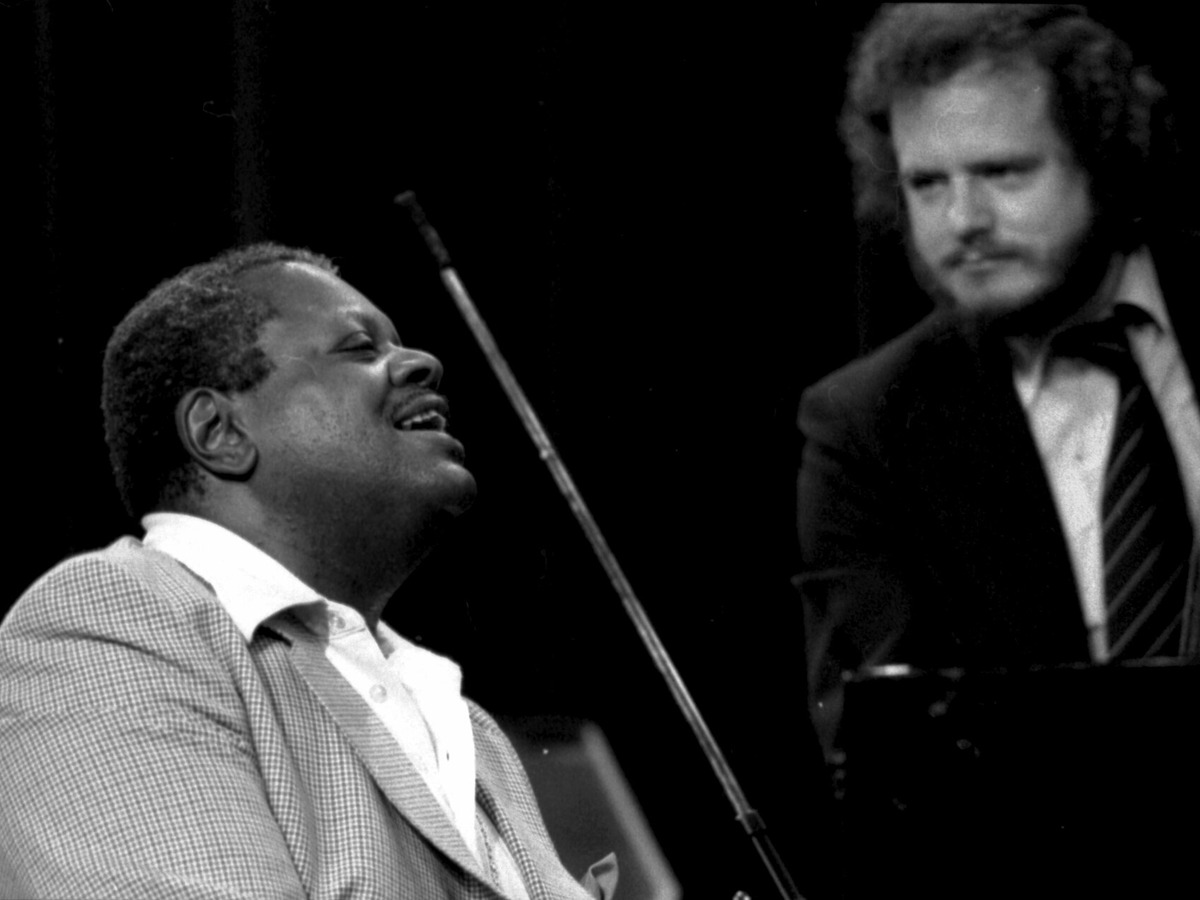
Explore other jazz artists who share genre tags with Oscar Peterson.