
Ella Fitzgerald
Biography
Born: 25 April 1917 in Newport News, Virginia, USA.
Died: 15 June 1996 in Beverly Hills, California, USA (aged 79).
Dubbed 'The First Lady Of Song', Ella Fitzgerald was the most popular female jazz singer in the US for more than half a century. In her lifetime, she sold over 40 million albums and won 13 Grammy Awards:
- Best Jazz Performance, Individual for [m=514542]
- Best Vocal Performance, Female for [m=452934]
- Best Jazz Performance - Soloist for [m=243842]
- Best Vocal Performance, Female for But Not For Me from [m=303629]
- Best Vocal Performance Album, Female for [m=123332]
- Best Vocal Performance Single Record Or Track, Female for Mack The Knife from [m=123332]
- Best Solo Vocal Performance, Female for [m=260698]
- Best Jazz Vocal Performance for [m=243845]
- Best Jazz Vocal Performance for [m=260701]
- Best Jazz Vocal Performance, Female for [m=96849]
- Best Jazz Vocal Performance, Female for [m=519172]
- Best Jazz Vocal Performance, Female for [m=511661]
- Best Jazz Vocal Performance, Female for [m=734749]
Mother of jazz pianist/singer [a=Ray Brown Jr.], ex-wife of jazz double-bassist [a=Ray Brown].
Also known as: *Fitzgerald, E Fitzgerald, E. Fitzgerald, E.Fitzgerald, Ella, Ella "For Dancers", Ella "Satchmo" Fitzgerald, Ella F, Ella Fitgerald, Ella Fitsgerald, Ella Fitzerald, Ella Fitzgerald & Group, Ella Fitzgerald & Her Fellas, Ella Fitzgerald All Stars, Ella Fitzgerald And Her Fellas, Ella Fitzgerald Con Accomp. Orchestra, Ella Fitzgerald Quintet, Ella Fitzgeraldová, Ella Fitzgerals, Ella Fizgerald, Ella Fiztgerald, Ella Jane Fitzgerald, Ellla, Elly Fitzgerald, Ferdinand J. "Jelly Roll" Morton, Fitzgerald, Fitzgerald-E., Fitzjerald, Fritzgerald, LaQueen E. Fitzgerald, Miss Ella Fitzgerald, Only Ella, With The, Ела Фицджералд, Ела Фицџералд, Елла Фитцжерьльд, Э. Фитцджеральд, Э. Фицджеральд, Э.Фицджеральд, Эллa Фитцджepaльд, Элла Фитцджеральд, Элла Фитцжеральд, Элла Фицджералд, Элла Фицджеральд, Элла Фицжеральд, エラ, エラ・フィッツジェラルド
Links:
- https://www.ellafitzgerald.com/
- https://www.instagram.com/firstladyofsong/
- https://www.youtube.com/ellafitzgerald
- https://www.facebook.com/EllaFitzgerald
- https://x.com/EllaFitzgerald
- https://www.allmusic.com/artist/ella-fitzgerald-mn0000184502
- https://en.wikipedia.org/wiki/Ella_Fitzgerald

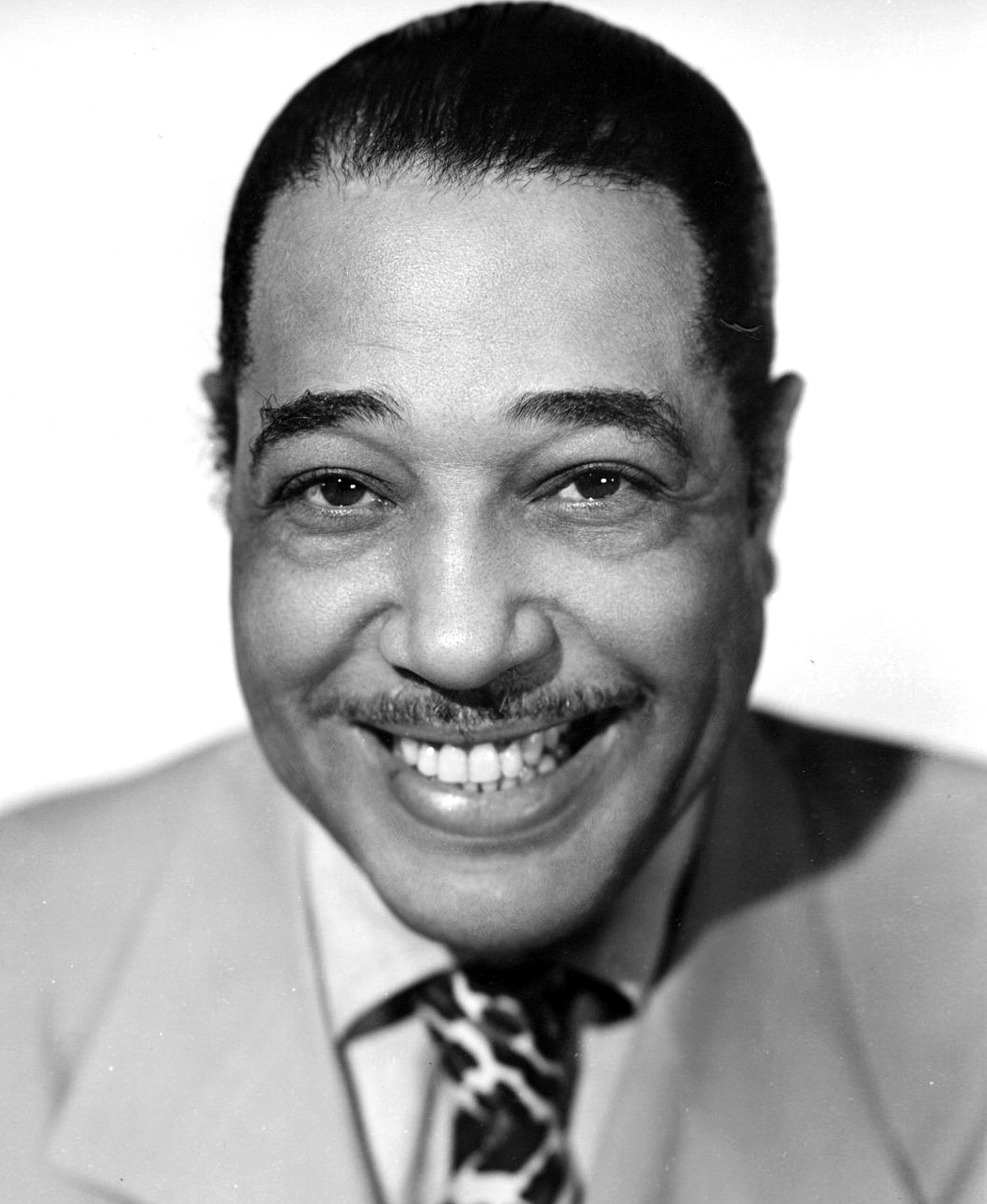
Duke Ellington
After discussing Hawkins and Dizzy, we arrive at one of the greatest creative forces in jazz history—Duke Ellington (1899–1974)。
If others were great performers, Duke was a greatcomposer and painter. He brought jazz from the clubs to Carnegie Hall and raised it to the level of an art form alongside classical music.
1. An Elegant Start and the Cotton Club (1899–1930s)
-
An Aristocratic Nickname: Born into a middle-class family in Washington, D.C., Ellington was called “Duke” by his classmates from childhood because of his elegant manner and dress.
-
The Jungle Style: In 1927, his orchestra began a residency at Harlem’s celebratedCotton Club. To accompany the club’s revues, he used brass mutes to create sounds that imitated animal calls, establishing the distinctive early style that became known as “jungle music.”
2. The Orchestra as an Instrument (1940s)
-
Writing for Individual Musicians: Ellington’s greatest innovation was that he did not write simply for “the tenor saxophone”; he wrote for “Ben Webster.” He knew each musician’s sound and tailored his music to the people in his orchestra.
-
Masterpieces: This period produced many lasting classics, including “Take the ‘A’ Train,” written by his creative partner Billy Strayhorn; “It Don’t Mean a Thing (If It Ain’t Got That Swing)”; and the extended narrative work Black, Brown and Beige.
3. Rebirth at Newport (1956)
-
A Career Resurges: Big bands fell out of fashion in the 1950s, and Ellington’s career entered a difficult period. At the 1956Newport Jazz Festival, saxophonist Paul Gonsalves played an extended solo of 27 choruses that sent the crowd into a frenzy. Ellington returned to the top and appeared on the cover of Time magazine.
4. Later Years and Final Chapter (1960s–1974)
-
A Cross-Generational Pioneer: In his later years, Ellington composed three celebrated Sacred Concerts and recorded with younger musicians such as Charles Mingus and John Coltrane, demonstrating his remarkable openness.
-
Final Years: He died of pneumonia in 1974. More than 12,000 people attended his funeral, marking the end of an era.
Artistic Style: Jazz as a Painter’s Palette
-
A Sense of Color: Ellington had an exceptional ear for timbre. He liked combining unlikely instruments—for example, clarinet with a muted trumpet—to create new and unexpected colors.
-
Beyond Categories: He disliked the label “jazz” and preferred to call his music“beyond category”. His work could be as grand as a big band and as nuanced as Impressionist music.
In Summary
Duke Ellington was jazz’s“Monet”. He used the big band as his paintbrush, layering colors across the canvas of time.
Connections: As you may know,Coleman HawkinsandDexter Gordonboth recorded tribute albums to Duke late in their careers. Ellington was a great tree whose shade sheltered nearly every modern jazz musician.
As a designer, you may appreciate Ellington’s command ofstructure and color: he never relied on force for its own sake, but pursued precise emotional expression.
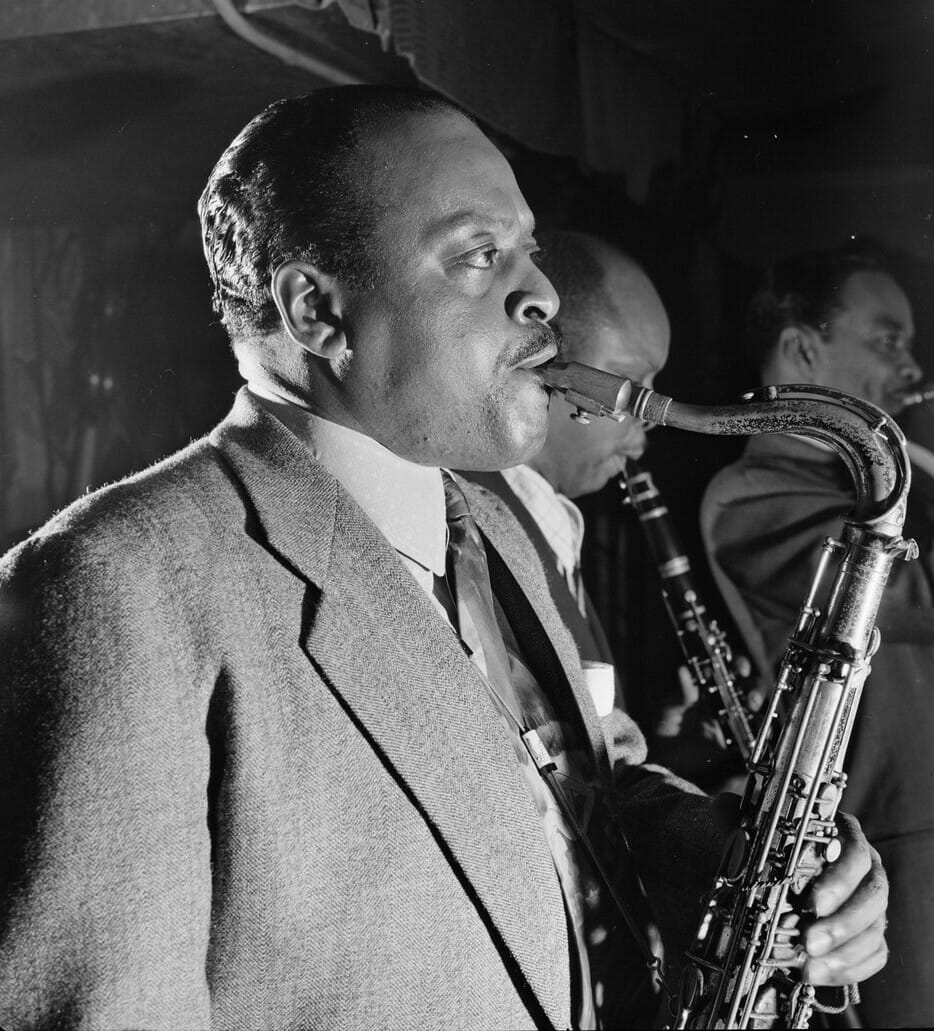
Ben Webster
Benjamin Francis Webster (March 27, 1909 – September 20, 1973) was an American jazz tenor saxophonist. He performed in the United States and Europe and recorded with many artists, including Duke Ellington, Billie Holiday, and Johnny Hodges.
Early Life and Career
Webster was born in Kansas City, Missouri. He studied violin, learned blues piano from Pete Johnson, and studied saxophone with Bud Johnson. He performed with Lester Young in Young’s family band, recorded with Blanche Calloway, and joined Benny Moten’s orchestra, appearing alongside Count Basie, Hot Lips Page, and Walter Page. In the 1930s, he played in bands led by Willie Bryant, Benny Carter, Cab Calloway, Fletcher Henderson, Andy Kirk, and Teddy Wilson.
With Ellington
From 1940, Webster was a soloist with Duke Ellington’s orchestra and recorded “Cotton Tail.” He considered the orchestra’s alto saxophonist Johnny Hodges a major influence. In 1989, Gunther Schuller wrote that Hodges had led Webster away from his earlier Coleman Hawkins-inspired style. Webster was close to Ellington band newcomers Jimmy Blanton and Billy Strayhorn.
Webster’s temperament, however, made him difficult for most of the band and Ellington himself to deal with. Mercer Ellington recalled that his father and the saxophonist argued whenever they were in the same room. Webster cried when he heard that Blanton had died, but, as baritone saxophonist Harry Carney remembered, “after a drink or two, he changed.” Webster left the band in 1943. One story says that, among his last acts as an Ellington band member, he slashed one of Ellington’s sports jackets with a razor. Clark Terry said Webster left after slapping Ellington.
Later Career in the United States
Webster worked on New York’s 52nd Street, frequently recording as both a leader and a sideman. During this period he worked with Raymond Scott, John Kirby, Bill DeArango, Sid Catlett, Jay McShann, and Jimmy Witherspoon. In 1948, he briefly returned to Ellington’s orchestra for a few months.
In 1953, he recorded The Consummate Artistry of Ben Webster (later known as King of the Tenors) with pianist Oscar Peterson, who remained an important collaborator for the next decade. Webster toured and recorded with Peterson, trumpeter Harry “Sweets” Edison, and others through Jazz at the Philharmonic. In 1956, he recorded an album with pianist Art Tatum. On December 16, 1957, he made The Hunt with Coleman Hawkins alongside fellow tenor saxophonist Coleman Hawkins.
In the late 1950s, Webster formed a quintet with Gerry Mulligan that frequently played at the Renaissance Club in Los Angeles. In 1959, the quintet—with pianist Jimmy Rowles, bassist Leroy Vinnegar, and drummer Mel Lewis—recorded Gerry Mulligan Meets Ben Webster.
In Europe
In late 1964, Webster moved to Europe and performed as he pleased. He lived in London, Scandinavia, and Amsterdam before settling in Copenhagen in 1969. In 1971, he reunited with Duke Ellington and the orchestra for several performances in Copenhagen. He also made a live recording in France with Earl Hines.
In September 1973, Webster suffered a stroke in Amsterdam and died on September 20. His body was cremated in Copenhagen, and his ashes were buried at Assistens Cemetery.
Webster’s private collection of jazz recordings and memorabilia is held at the University Library of Southern Denmark. He played the same saxophone from 1938 until his death and stipulated in his will that it should never be played again. The instrument is now on display at the Institute of Jazz Studies at Rutgers University. A street in Copenhagen is also named Ben Webster Vej in his honor.
The Ben Webster Foundation
After Webster’s death, Billy Moore Jr. and the estate’s trustees established the Ben Webster Foundation. It was formally approved in 1976 to support jazz in Denmark. The foundation uses Webster’s annual royalties to fund musicians in Denmark and the United States, and awards the prestigious Ben Webster Prize each year to an outstanding young musician. Its board, made up of Webster’s close friends and admirers, oversees his artistic rights and the reissue of his recordings.
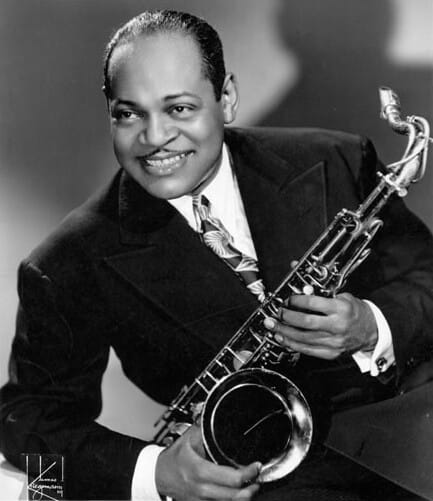
Coleman Hawkins
After several later-generation stars, we return to jazz’s roots with a concise biography ofColeman Hawkins (1904–1969).
Known as the father of the jazz tenor saxophone, Hawkins was nicknamed “Hawk” or “Bean.” Before he came along, the tenor saxophone was a peripheral instrument in jazz; he gave it a voice and a soul.
1. Defining the Tenor Saxophone (1920s–1934)
-
A Saxophone Pioneer: Born in Missouri, Hawkins studied piano and cello as a child and took up the saxophone at age nine.
-
With Fletcher Henderson’s Orchestra: In 1924, he joined Fletcher Henderson’s big band. Deeply influenced by Louis Armstrong, he helped transform the saxophone from a comic accompaniment instrument into a powerful, expressive voice for improvised solos.
2. Years in Europe and “Body and Soul” (1934–1939)
-
A European Haven: Seeking better opportunities and greater respect, Hawkins moved to Europe in 1934. There he worked with leading musicians, including gypsy-jazz guitarist Django Reinhardt.
-
A Landmark Recording: After returning to the United States in 1939, he recorded “Body and Soul.” In its famous two-chorus solo, he largely abandoned the original melody in favor of intricate improvisation over the chords. The record caused a sensation and is considered one of the greatest solos in jazz history. It also helped prepare the way for bebop.
3. A Master Across Generations (1940s–1950s)
-
A Mentor to Younger Musicians: Unlike many older musicians who resisted new music, Hawkins welcomed the younger generation. In 1944, he ledthe first bebop recording session, with emerging talents Dizzy Gillespie and Max Roach among the participants.
-
A Partnership with Monk: He was among the first to recognize Thelonious Monk’s genius and gave Monk important support and early recording opportunities.
4. Later Years and Final Chapter (1960s)
-
Still Exploring: Hawkins remained active into the 1960s, working with Duke Ellington and the younger standard-bearer Sonny Rollins.
-
Final Years: In his later years, Hawkins struggled with depression and alcoholism. He died of liver disease in 1969, aged 64.
Artistic Style and Standing
-
A Powerful Tone: Hawkins’s sound was broad, full, and emotionally charged, with a pronounced vibrato.
-
Vertical Improvisation: He favored improvising vertically throughchord structures and arpeggios, in striking contrast to Lester Young’s flowing, linear approach. Together, they established two major paths for the modern saxophone.
In Summary:Without Coleman Hawkins, the saxophone might never have become a leading voice in jazz. He representedpower and depthand served as a strong bridge from big-band swing to modern jazz.
Connections: You may notice that many of the older musicians who influenced Clifford Brown, Bud Powell, and others received support or inspiration from Hawkins. He was an anchor for his generation.
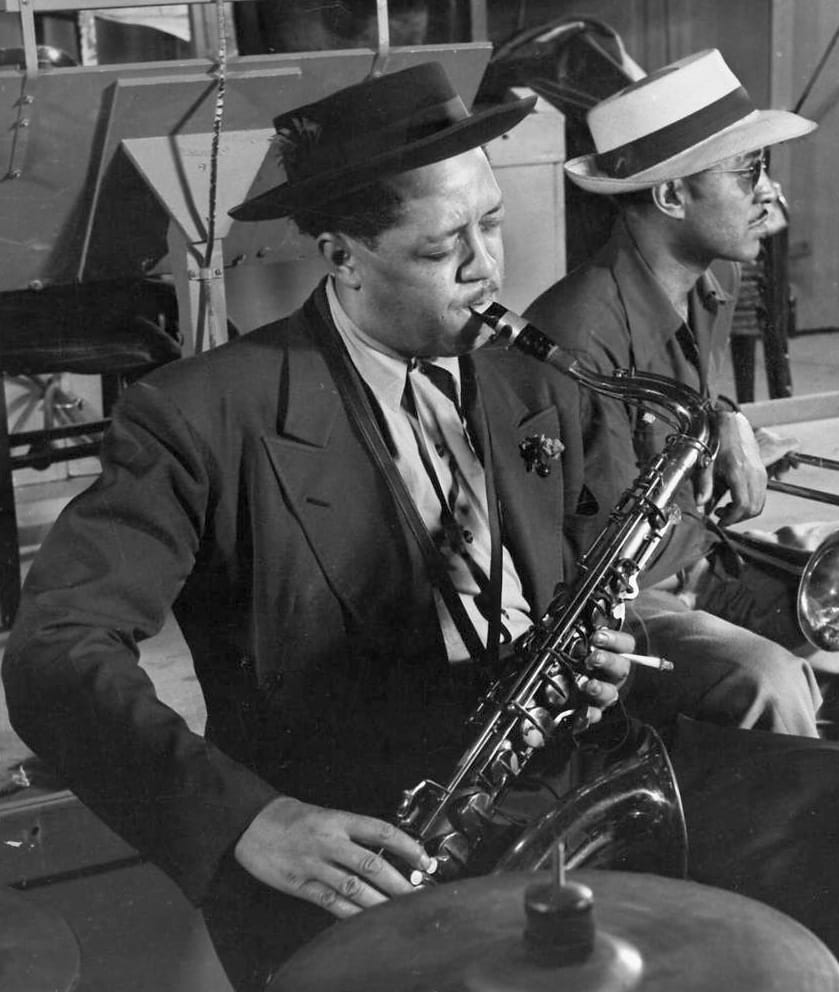
Lester Young
Lester Youngwas one of the most revolutionary tenor saxophonists in jazz history, nicknamed“Prez”(short for “the President,” a name given to him byBillie Holiday). In an era whenColeman Hawkinsdominated the saxophone, Young developed a very different style: light, poetic, and a clear forerunner of cool jazz.
A Fresh Voice in Kansas City (1909–1933)
Born into a musical family in Mississippi, Young toured across the country as a teenager with his family’s band.YoungHe first played drums and alto saxophone before settling on the tenor saxophone. Unlike the full, roaring tone then in fashion, he preferred a clear, light sound, close to that of the clarinet and with little vibrato. After settling in Kansas City in 1933, he soon joinedCount Basie’s big band and helped open a new chapter in jazz.
The Height of Swing and a Musical Soul Mate (1936–1943)
During his time with theCount Basieband,Young’s playing became one of its greatest strengths. On classics such as “Lester Leaps In,” he showed a remarkable gift for flowing melodic lines. During this period, he formed one of the most moving artistic friendships in music history withBillie Holiday.YoungHe gave her the nickname“Lady Day”, and she called him“Prez”. Their collaborations became a model of the close exchange between voice and horn, and each musician influenced the other’s musical language.
Military Trauma and a Change in Style (1944–1950)
In 1944,Youngwas drafted into the Army. For a sensitive, gentle artist who regularly used marijuana and alcohol, life in a deeply racist military camp was disastrous. He was court-martialed and confined for drug possession, an experience that severely damaged his health. WhenYoungreturned after the war, his tone had become darker and rougher. Some of its earlier lightness was gone, replaced by a heartbreaking weariness.
Isolation and Final Years (1950s–1959)
Although he was deeply admired by younger musicians such asStan Getz,Young’s health deteriorated amid years of heavy drinking. He became increasingly withdrawn and often spoke in a personal slang known as Lesterese. In 1959, he fell ill during a Paris engagement and returned to the United States. He died in a New York hotel hours after arriving, aged 49. His death prompted an outpouring of grief. Later,Charles Minguswrote the celebrated “Goodbye Pork Pie Hat,” named for the round pork-pie hat thatYoungoften wore.
3. Musical Style: A Pioneer of Linear Thinking
-
Linear Improvisation: UnlikeColeman Hawkins’s “vertical” approach, which focuses on chord structures,Younggave greater attention to the continuity of the melody. His improvisations moved like an unrestrained river, gliding around the beat and creating a sense of rhythmic weightlessness.
-
A Cool-Toned Sound: He set aside the heavy vibrato popular at the time in favor of a clear, airy tone. This cool aesthetic became a foundation of West Coast jazz a decade later.
-
Minimalism and Space: He was especially good at leaving space in his improvisations and letting the music breathe. His phrases could be unexpectedly simple yet land directly on the listener’s emotions.
In Summary: Lester Youngwas jazz’s“poet”. With restraint and elegance, he showed later saxophonists how to set aside force and conquer the world through melodic tenderness.
An Aesthetic Connection: For a 3D designer interested in lightweight construction and minimalism,Lester Young’s music is a model ofstreamlined surfaces. Its melody has no redundant structures; each turn follows a natural sense of momentum and ease.
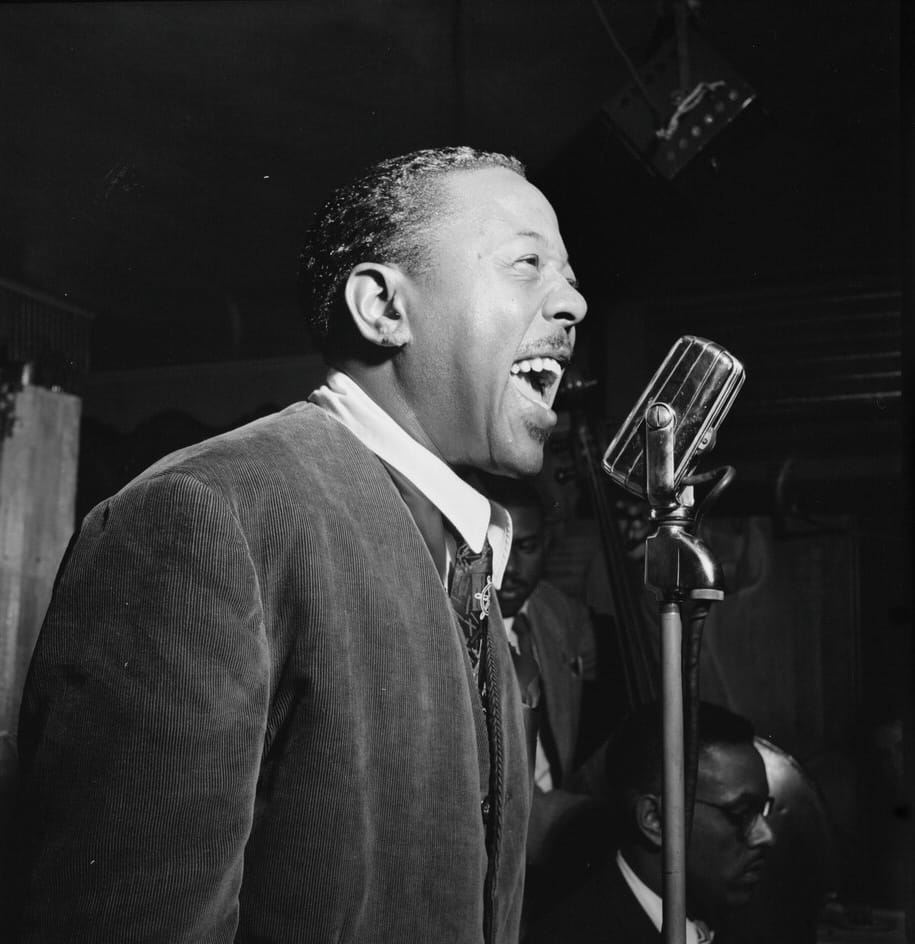
Roy Eldridge
Roy Eldridge, nicknamed“Little Jazz”, was a pivotal figure who connected early jazz with the modern era. He was one of the most important bridges between the pioneers of early jazzLouis Armstrongand the innovators who followedDizzy Gillespie. At the height of swing in the 1930s and 1940s, his extreme range, lightning speed, and combative spirit made him a model for trumpeters across the country.
The Pittsburgh Prodigy and the Rise of “Little Jazz” (1911–1935)
Born in Pittsburgh, Pennsylvania,EldridgeEldridge first studied drums and alto saxophone. The saxophone left a lasting mark on his trumpet style: he sought to play lines on the trumpet as fluid as a saxophonist’s. After moving to New York in the early 1930s, he quickly gained attention for his forceful improvisations. Because he was small in stature but full of energy, saxophone greatOtto Hardwickgave him“Little Jazz”, a nickname that stayed with him for life.
Challenging the Color Line (1936–1944)
Eldridgewas among the first Black musicians to break segregation barriers and join top white big bands. He played withGene KrupaandArtie Shaw. While with theGene Krupaband, his work with singerAnita O’Dayon “Let Me Off Uptown” became a major hit. On tour, however, he faced repeated and severe racism, which wounded his pride and led him to leave the groups in anger more than once.
A Guide toward Modern Jazz (1945–1950s)
When the bebop revolution began, the youngDizzy Gillespieopenly acknowledged that his own hero wasRoy Eldridge。Eldridge. His harmonic ideas and exploration of the upper register gave modern jazz some of its earliest blueprints. In the 1950s, he joined the Jazz at the Philharmonic (JATP) tours organized byNorman Granzand faced off in countless legendary trumpet-and-saxophone battles withColeman Hawkins, showing an unshakable competitive spirit.
Later Years and Final Chapter (1960s–1989)
Late in his career, Eldridge accompaniedElla Fitzgeraldand held a long residency at New York’s celebratedRyan’sclub. Even in his later years, he played with the same fierce, all-in commitment. A stroke in 1980 forced him to stop performing. He died in New York in 1989, aged 78, one of jazz history’s most fearless trumpet fighters.
3. Musical Style: Pushing Speed and Range to the Limit
-
A Trumpet Voice Shaped by the Saxophone:Eldridge’s playing leapt across wide intervals and raced through scales at high speed, breaking the limits of trumpet technique at the time.
-
Exploring the Upper Register: He greatly expanded the trumpet’s practical range. His high notes burst like fireworks, combining visual drama with intense emotional force.
-
Competitive Improvisation: He loved cutting contests. Whatever the opponent, he brought an almost obsessive intensity and aggression to an improvised exchange. That energy helped catalyze the shift from swing to bebop.
In Summary: Roy Eldridgewas jazz’s“torchbearer”. He forged speed and virtuosity from the trumpet tradition and personally carried that flame to the next generation of innovators.
An Aesthetic Connection: For designers who value performance and dynamic range,Roy Eldridge’s music is an art ofoverclocking. He worked at the instrument’s limits, turning every breath into a brilliant spark under pressure.
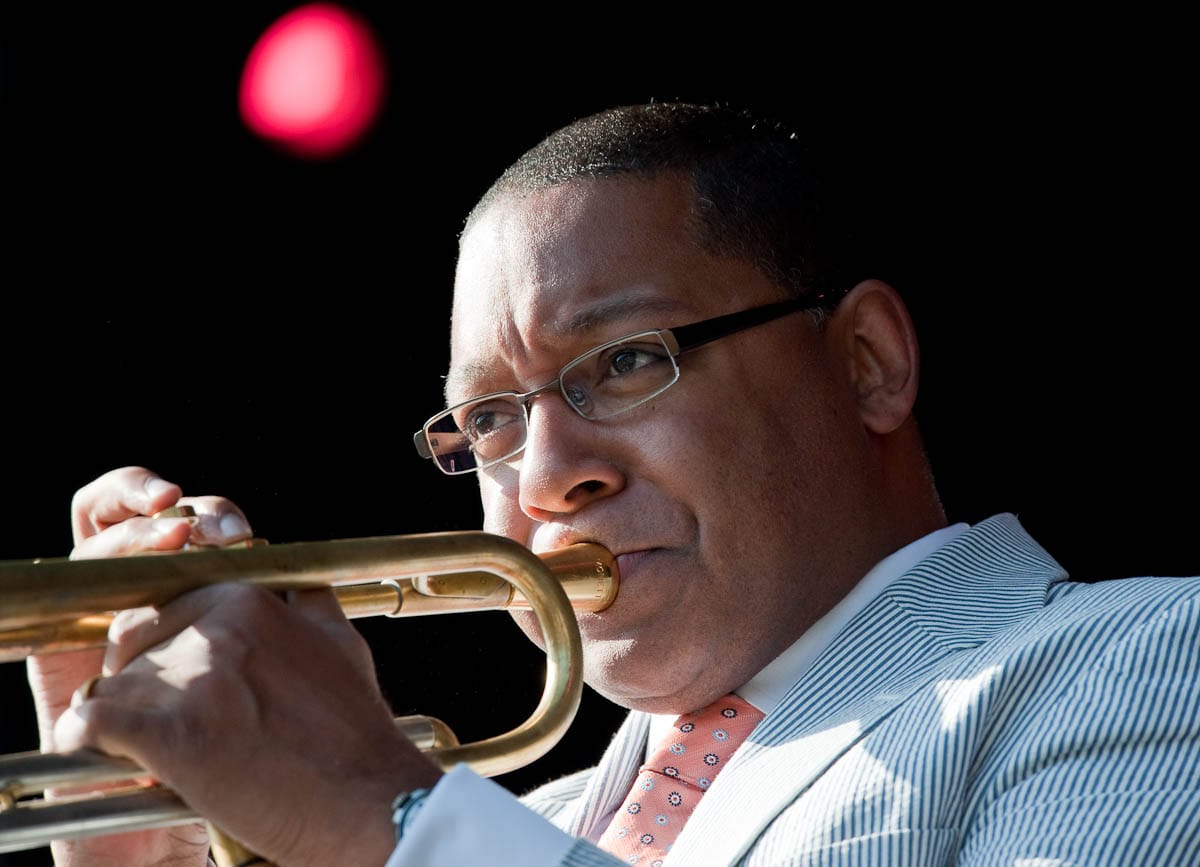
Wynton Marsalis
Wynton Marsalisis one of the most powerful and controversial figures in contemporary jazz. Alongside formidable trumpet technique, he is a prolific composer and educator, and a leading advocate of neoclassical jazz. He was the first musician to win Grammy Awards in both the jazz and classical categories in the same year, 1983, breaking down barriers between the two traditions.
A Musical Family and a Dual Talent (1961–1979)
Born into a musical family in New Orleans, his fatherEllis Marsalis Jr.was a noted piano teacher, while his brotherBranford Marsalisbecame a leading saxophonist.Wynton MarsalisHe began serious trumpet study at 12, and at 14 performed Haydn’s Trumpet Concerto with the New Orleans Philharmonic. At 17, he entered the Juilliard School. His exceptional ability in both classical music and jazz quickly made him a focus of the New York scene.
The Jazz Messengers and the Neoclassical Wave (1980s)
In 1980, at just 19,Wynton MarsalisjoinedArt Blakey’sJazz Messengers(the Jazz Messengers), an experience widely viewed as a turning point in his career. As free jazz and fusion waned in the 1980s, he helped lead a “return to tradition.” He argued for reclaiming the swing and blues spirit ofLouis Armstrong、Duke Ellingtonand theMiles Davis’s early work, and pushed back against the electronic and commercial trends of the day. He became a leader of the Young Lions and the neotraditional movement.
Jazz at Lincoln Center and the Pulitzer Prize (1987–Present)
helped establish Jazz at Lincoln Center in New York in 1987 and has served as its artistic director ever since. He helped give jazz a lasting institutional home and the stature of a respected American classical art. In 1997, his expansive composition《Blood on the Fields》won thePulitzer Prize for Music, the first jazz work to receive the award.
Cultural Diplomacy and Debate (2000s–Present)
As a leading international spokesperson for jazz,Wynton Marsalishas promoted the music through education and tours around the world. He has also defended a strict, conservative definition of “real jazz” and publicly criticizedMiles Davis’s later fusion work and hip-hop. His views have sparked enduring debate, but his role in renewing popular interest in traditional jazz is undeniable.
3. Musical Style: Precision and Historical Depth
-
Flawless Technique:Wynton Marsalis’s playing is known for its pitch accuracy, crisp articulation, and broad dynamic range. From blistering bebop lines to complex classical concertos, he shows remarkable control.
-
A Deep Commitment to Blues and Swing: He sees the blues and swing as essential to jazz. His improvisations often draw strongly on New Orleans traditions, with an emphasis on counterpoint and collective interplay.
-
A Composer’s Sense of Structure: As a composer, he brings big-band jazz together with the forms of classical suites. His works often tell broad historical stories and explore race, freedom, and the American experience.
In Summary: Wynton Marsalisis jazz’s “pope.” With the discipline of a classical musician, he restored dignity to the music and built a sturdy stronghold for tradition amid constant change.
An Aesthetic Reflection: For a 3D designer drawn to order and precise structure,Wynton Marsalis’s music is like aperfectly proportioned Parthenon. Every note seems carefully calculated, creating a beauty grounded in reason.
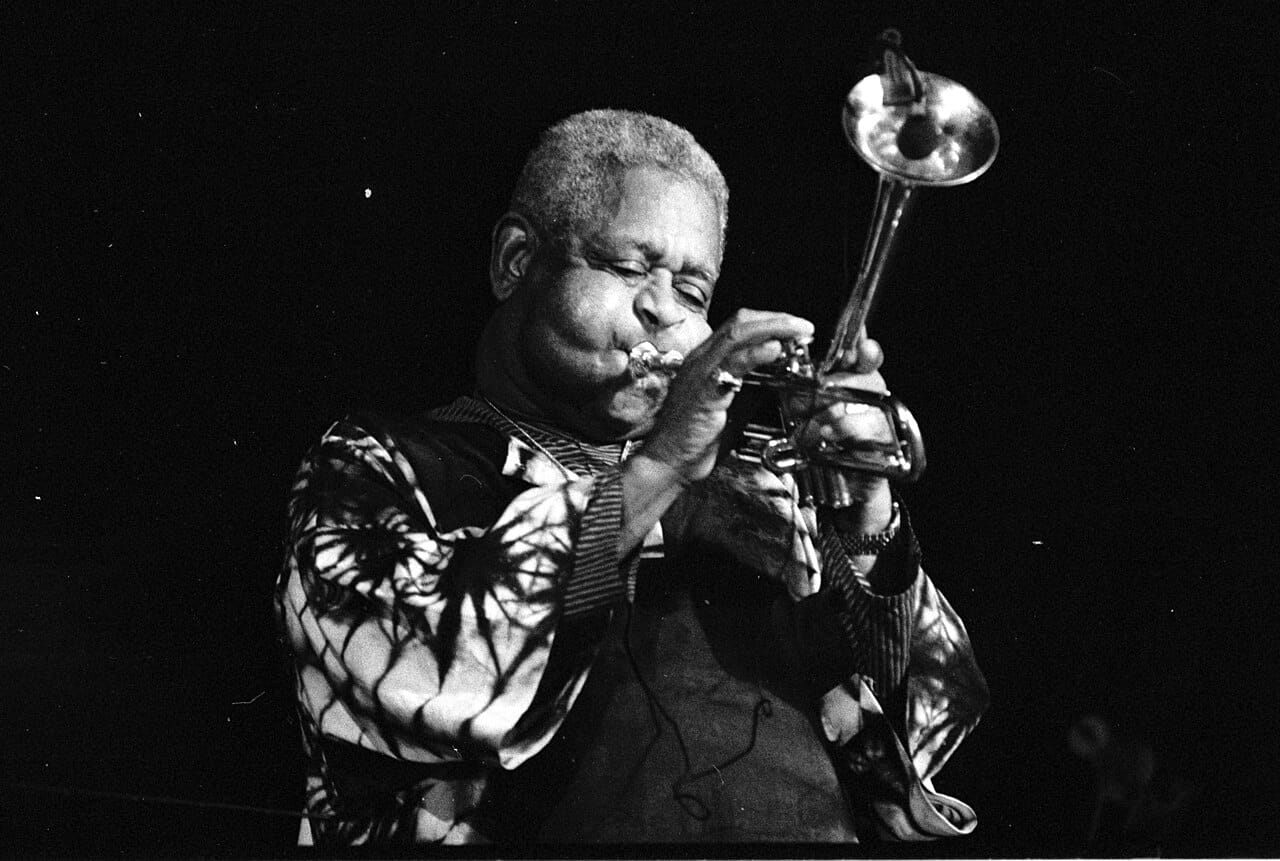
Dizzy Gillespie
Building on the musicians who came before him, we arrive at one of jazz history’s greatest characters and teachers—Dizzy Gillespie (1917–1993)。
If Charlie Parker was the soul of bebop, Dizzy was itsbrain, diplomat, and evangelist. He combined astonishing technique with a rare gift for passing complex musical ideas on to younger players.
1. Co-Founder of Bebop (1940s)
-
Revolutionary Partner: He helped conceive and advance the bebop revolution alongside Charlie Parker. Dizzy’s deep understanding of harmony—especially the tritone substitution—gave the music much of its theoretical foundation.
-
First Bebop Recordings: In 1944, he took part in what is widely considered the first bebop recording session, led by Coleman Hawkins. His compositions “A Night in Tunisia,” “Salt Peanuts,” and “Groovin’ High” became jazz cornerstones.
2. Pioneer of Afro-Cuban Jazz (1947–1950s)
-
Rhythmic Fusion: Gillespie had a deep sensitivity to rhythm. In 1947, he brought Cuban percussionist Chano Pozo into his band, helping pioneerLatin jazz. “Manteca” fused bebop’s complex harmony with the raw energy of Afro-Cuban rhythm.
-
Big-Band Breakthrough: While many bebop musicians turned to small groups, Gillespie successfully led several large bebop bands, showing that this forward-looking music could also have a grand scale.
3. Jazz Diplomat and Presidential Candidate (1960s–1980s)
-
Cultural Ambassador: He was the first jazz musician to lead overseas cultural tours on behalf of the U.S. State Department, performing across the Middle East and Latin America.
-
A Presidential Run: In 1964, he jokingly announced a run for U.S. president. He proposed renaming the White House the “Blues House” and appointing Miles Davis as CIA director. The episode captured his humor, fearlessness, and willingness to engage with public life.
4. Later Years and Mentorship
-
A Generous Mentor: Known for his generosity, Gillespie discovered and encouraged many younger musicians, including Cuban trumpet virtuoso Arturo Sandoval.
-
Final Years: He died of pancreatic cancer in 1993, aged 75.
His Signature Look
-
The Upturned Trumpet: The bell of his trumpet pointed upward at a 45-degree angle. The change followed an accident when someone stepped on his horn, but Gillespie found that the new angle helped him hear himself better. It became his visual trademark.
-
Puffed Cheeks: When he played, his cheeks ballooned like a bullfrog’s. Although this is discouraged in traditional trumpet training, Gillespie turned it into part of his singular sound and image.
-
Signature Style: Beret, thick-rimmed glasses, and goatee: the look became an enduring image of bebop cool around the world.
Musical Style: Speed and Wit
-
Virtuosity with Humor: His playing moved at remarkable speed, full of astonishing high notes and complex rhythmic leaps, yet it never felt heavy. It always carried Dizzy’s wit and sense of fun.
-
Scat Singing: He was also a great scat singer, using his voice to imitate the intricacies of a trumpet solo.
In Summary:Dizzy Gillespie was the“sun”of the jazz world. With his warmth and humor, he cleared away bebop’s reputation for being aloof and difficult, helping audiences around the world fall in love with the music. He brought technique, theory, and entertainment together like few others.
A Personal Connection: You may remember thatClifford Brownreceived a personal visit and encouragement from Gillespie while recovering from an early car accident. Dizzy was more than a musician; he was one of modern jazz’s pillars.
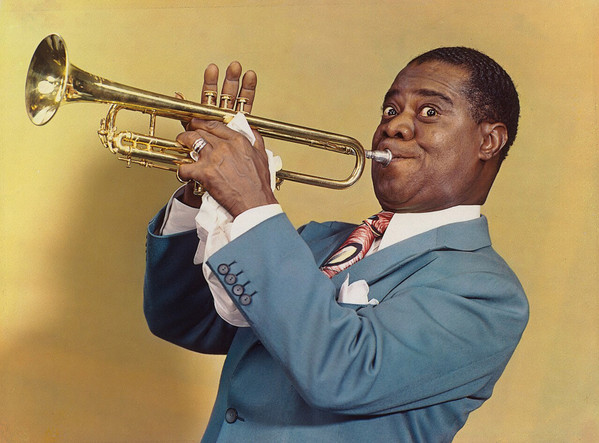
Louis Armstrong
Career
Louis Daniel Armstrong (August 4, 1901 – July 6, 1971), nicknamed “Satchmo,” “Satch,” and “Pops,” was an American jazz and blues trumpeter and singer. One of the most influential figures in jazz, his career spanned five decades and several eras. Armstrong received many honors, including a 1965 Grammy for Best Male Vocal Performance for “Hello, Dolly!” and a posthumous Grammy Lifetime Achievement Award in 1972. He has been inducted into the DownBeat Jazz Hall of Fame, the Rock & Roll Hall of Fame, and the National Rhythm & Blues Hall of Fame, among others.
Armstrong was born and raised in New Orleans. In the 1920s, his highly creative trumpet and cornet playing helped make him one of jazz’s founding figures, shifting the music’s focus from collective improvisation toward the soloist. Around 1922, he followed his mentor Joe “King” Oliver to Chicago and joined Oliver’s Creole Jazz Band. Armstrong made his mark in cutting contests, and his reputation reached bandleader Fletcher Henderson. He later moved to New York, where he became an influential soloist and recording artist. By the 1950s, Armstrong was an international music icon, appearing regularly on radio, television, and in films. Beyond music, he was a beloved entertainer who joked with audiences and maintained a warm, upbeat public image.
Among Armstrong’s best-known songs are “What a Wonderful World,” “La Vie en Rose,” “Hello, Dolly!,” “On the Sunny Side of the Street,” “Dream a Little Dream of Me,” “When You’re Smiling,” and “When the Saints Go Marching In.” He made three albums with Ella Fitzgerald: Ella and Louis (1956), Ella and Louis Again (1957), and Porgy and Bess (1959). His film appearances included A Rhapsody in Black and Blue (1932), Cabin in the Sky (1943), High Society (1956), Paris Blues (1961), A Man Called Adam (1966), and Hello, Dolly! (1969).
Armstrong had an unmistakable, deep, gravelly voice. He was an influential singer and a remarkable improviser, and he was also skilled at scat singing. By the final years of his life, his influence had reached well beyond jazz into popular music. He was among the first Black entertainers to cross over and win broad white and international audiences. Armstrong rarely spoke publicly about race, a silence that sometimes disappointed other Black Americans, but he publicly supported desegregation during the Little Rock Crisis. At a time when Black men had few opportunities to enter elite American society, he managed to do so. His recording of “Mack the Knife” was included on the Voyager Golden Record, a collection of images and sounds from Earth sent into space.
Early Life
Armstrong is believed to have been born in New Orleans on August 4, 1901, although the date has long been disputed. He often claimed that he was born on July 4, 1900. His parents were Mary Estelle “Mayann” Albert and William Armstrong. Albert came from Boutte, Louisiana, and gave birth to him at home at about age 16. Less than a year and a half later, she had a daughter, Beatrice “Mama Lucy” Armstrong (1903–1987), who was raised by Albert. William Armstrong left the family soon afterward.
Armstrong was raised by his grandmother until he was five, when he returned to his mother. He grew up poor in a rough neighborhood known as “the Battlefield,” in the southern part of Rampart Street. At six, he began attending Fisk School for Boys, a school for Black children, as New Orleans schools were segregated.
During this period, Armstrong lived with his mother and sister and worked for the Karnoffsky family, Lithuanian Jewish immigrants. He helped their sons, Morris and Alex, collect rags and scrap and deliver coal. In 1969, while being treated for heart and kidney problems at Beth Israel Hospital in New York City, Armstrong wrote a memoir, Louis Armstrong and the Jewish Family in New Orleans, 1907, about his time working for them.
In the memoir, Armstrong wrote that he sang “Russian Lullaby” with the Karnoffskys while their baby son David was being put to sleep. He believed they had taught him to “sing from the heart.” The lyrics he quoted appear to match “Russian Lullaby,” copyrighted by Irving Berlin in 1927, although Armstrong recalled singing the song as a child roughly twenty years earlier. In 1969, Gary Zucker, a doctor at Beth Israel Hospital, had shared Berlin’s lyrics with him, and Armstrong included them in his memoir. The discrepancy may reflect the fact that he wrote the memoir more than sixty years after the events. In any case, the Karnoffskys treated him well. Knowing that he had no father at home, they cared for him and helped raise him.
In Louis Armstrong and the Jewish Family in New Orleans, 1907, he described realizing that the family also faced discrimination from “other white people” who considered themselves superior to Jews: “I was only seven years old, but I could clearly see how white people treated the poor Jewish family I worked for.” Armstrong wrote that he learned from them “how to live—real life and toughness.” His first musical performance may have been beside the Karnoffskys’ junk wagon, where he played a tin horn to attract customers and compete with other vendors. Morris Karnoffsky advanced him money to buy a cornet at a pawnshop. As an adult, Armstrong wore a Star of David given to him by his Jewish manager, Joe Glaser, until his death, partly in gratitude to the family that had helped raise him.
Armstrong left school at eleven. His mother moved with Armstrong, Lucy, and her partner Tom Lee into a one-room cottage on Perdido Street, next door to her brother Ike and his two sons. Armstrong joined a quartet of four boys who sang on the street to earn money. Cornetist Bunk Johnson said that he taught the eleven-year-old to play by ear at Dago Tony’s bar. Later in life, Armstrong credited King Oliver with inspiring him. Recalling his youth, he said, “Every time I close my eyes and blow my trumpet—I look right in the heart of old New Orleans… It has given me something to live for.”
A January 2, 1913, report in the New Orleans Times-Democrat used a racial term that is now outdated. On December 31, 1912, Armstrong borrowed his stepfather’s gun without permission and fired a blank into the air. He was arrested, spent the night in juvenile court, and the next day was sent to the Colored Waif’s Home. Conditions there were stark: there were no mattresses, and meals were often just bread and molasses. Captain Joseph Jones ran the home like a military camp and used corporal punishment.
Armstrong developed his cornet playing in the home’s band. Peter Davis, who often visited the Armstrong home at Jones’s invitation, became his first music teacher and chose him to lead the band. Through it, Armstrong attracted the attention of Kid Ory at age thirteen.
On June 14, 1914, Armstrong was released into the care of his father and stepmother, Gertrude. He lived there with two stepbrothers for several months. After Gertrude had a daughter, Armstrong’s father continued to reject him, and he returned to his mother, Mary Albert. Armstrong had to share a bed with his mother and sister in their small home. His mother still lived near the Battlefield, leaving him exposed to old temptations, but he tried to find work in music.
Armstrong found work at Henry Ponce’s dance hall; Ponce was connected to organized crime. There he met Black Benny, a six-foot drummer who became his guide and bodyguard. At about fifteen, Armstrong acted as a pimp for a sex worker named Nootsy. Their relationship ended badly: Nootsy stabbed him in the shoulder, and his mother nearly strangled her.
Armstrong briefly studied shipping management at a local community college but had to leave when he could not afford the tuition. While selling coal in Storyville, he heard “spasm bands,” which made music with household objects. He also listened to early jazz in brothels and dance halls, including Pete Lala’s, where King Oliver had played.
Riverboat Education
Armstrong (fourth from left) with Fate Marable’s New Orleans band aboard the SS Sidney in 1919.
Early in his career, in the late 1910s, Armstrong played in New Orleans brass bands and on excursion boats. He toured with Fate Marable’s band aboard the Streckfus Steamers’ Sidney, traveling up and down the Mississippi River. Marable took pride in Armstrong’s musical knowledge and insisted that he and the other musicians learn to read music. Armstrong later compared his time with Marable to “going to college,” because it gave him broad experience reading scores. In 1918, Armstrong’s mentor King Oliver decided to head north and left his position in Kid Ory’s band; Armstrong took his place. He also became second trumpet in the Tuxedo Brass Band.
On the riverboat tours, Armstrong’s musicianship matured. By twenty he could read music. He became one of the first jazz musicians to play extended trumpet solos, bringing his own personality and style to them. He also began singing during performances.
Chicago recordings
“Dippermouth Blues”
Running time: 2 minutes, 24 seconds
A 1923 recording of Louis Armstrong playing cornet with King Oliver’s Creole Jazz Band.
In 1922, Armstrong moved to Chicago at King Oliver’s invitation, although he would return to New Orleans from time to time throughout his life. At the all-Black Lincoln Gardens on Chicago’s South Side, he played second cornet in Oliver’s Creole Jazz Band and earned enough to leave his day job. Despite strained racial relations, Chicago’s economy was booming. The city offered Black residents opportunities in factories, where they could earn good wages, as well as in entertainment.
Oliver’s band was among the most influential jazz groups in Chicago in the early 1920s. Armstrong lived in a luxurious apartment and had his first private bathroom. Excited by his arrival in Chicago, he took up a lifelong habit of writing to friends in New Orleans. He could play 200 high C’s in one breath. As his fame grew, other musicians began challenging him to cutting contests.
Armstrong’s first studio recordings were made with Oliver for Gennett Records on April 5 and 6, 1923. They endured hours of train travel to reach Richmond, Indiana, and the band was paid little. The recordings suffered from a lack of rehearsal, primitive equipment, poor acoustics, and a cramped studio. These were true acoustic recordings: the band played directly into a large horn connected to a stylus that cut grooves into the master disc. Electrical recording, with its wider dynamic range and more striking results, was not developed until 1926. At first Armstrong played so loudly that Oliver was barely audible when they stood side by side. To solve the problem, Armstrong had to stand in a corner of the room, fifteen feet away from Oliver.
Lil Hardin married Armstrong in 1924. She urged him to seek better opportunities and move beyond Oliver’s influence so he could develop his own style. At her suggestion, he played classical music at church concerts to broaden his skills and dressed more fashionably to offset his stocky build. Hardin’s influence eventually strained Armstrong’s relationship with his mentor, especially over pay: Oliver withheld extra earnings from Armstrong and other band members. In the summer of 1923, Armstrong’s mother, Mayann Albert, came to Chicago after learning that he was “unemployed, penniless, hungry, cold, and sick.” Hardin found and furnished an apartment for her to stay in during Armstrong’s visit.
Fletcher Henderson Orchestra
The Fletcher Henderson Orchestra in 1925. Armstrong is third from the left.
In 1924, Armstrong and Oliver parted amicably. Soon afterward, Armstrong was invited to New York City to join the Fletcher Henderson Orchestra, then the leading African American band. To fit in better with the other musicians, he switched to trumpet. Recordings from this period show Armstrong’s influence on Henderson’s tenor saxophone soloist, Coleman Hawkins.
Armstrong adapted to Henderson’s disciplined style, playing trumpet and trying trombone as well. The other musicians were influenced by his emotionally charged performances, which included singing and stories about New Orleans characters, especially preachers. The Henderson Orchestra played at prominent venues reserved for white audiences, including Roseland Ballroom, with arrangements by Don Redman. Duke Ellington’s orchestra went to Roseland to hear Armstrong.
During this period, Armstrong recorded with Clarence Williams, a friend from New Orleans, Williams’s Blue Five, Sidney Bechet, and blues singers Alberta Hunter, Ma Rainey, and Bessie Smith.
Hot Five
In 1925, disappointed with New York, Armstrong returned to Chicago. Lil arranged recording sessions for him with Okeh Records and a booking at the Dreamland Café. To his annoyance, she promoted him as “the world’s greatest trumpet player.” For a time, he joined the Lil Hardin Armstrong Band and worked for his wife. Armstrong formed Louis Armstrong and His Hot Five and recorded hits including “Potato Head Blues” and “Muggles.” “Muggles” was slang for marijuana, which Armstrong used throughout his life.
Louis Armstrong and His Hot Five, “Heebie Jeebies,” 1926
The Hot Five included Kid Ory on trombone, Johnny Dodds on clarinet, Johnny St. Cyr on banjo, and Lil Armstrong on piano; it usually had no drummer. In the twelve months beginning in November 1925, the group made 24 records. Armstrong led the band in a relaxed, informal way. As St. Cyr said, “You could feel very relaxed working with him; he was very liberal… always trying to give every musician a chance to show what he could do.”
The Hot Five and Hot Seven records included “Cornet Chop Suey,” “Struttin’ with Some Barbecue,” “Hotter Than That,” and “Potato Head Blues,” all featuring Armstrong’s inventive solos. Thomas Brothers described recordings such as “Struttin’ with Some Barbecue” as “tightly arranged and varied, with a bluesy feel and virtuosity”; the arrangements may have been performed at the Sunset Café. Soon afterward, Armstrong recorded with pianist Earl “Fatha” Hines. Their celebrated 1928 duet “Weather Bird,” along with Armstrong’s trumpet introduction and solo on “West End Blues,” remain among the most influential improvisations in jazz history. Young trumpeters across the country bought the records and learned his solos by heart.
Armstrong was now free to develop his own style, which included plenty of buoyant swing numbers such as “Whip That Thing, Miss Lil” and “Mr. Johnny Dodds, Aw, Play That Thing, Boy!”
Armstrong also performed with Erskine Tate’s little symphony orchestra, mostly at the Vendome Theatre. They provided music for silent films and live shows, including jazz versions of classical works such as Madama Butterfly. This gave Armstrong experience with longer compositions and taught him to perform for large audiences. He began experimenting with scat singing—improvised jazz singing with nonsense syllables—and became one of the first musicians to record it when he made “Heebie Jeebies” with the Hot Five in 1926. The record was so popular that the band became one of the best-known jazz groups in the country, even though it rarely performed live. Young musicians across the country, Black and white, were drawn to Armstrong’s new kind of jazz.
After splitting from Lil, Armstrong began playing at the Sunset Café with Carroll Dickerson’s orchestra, managed by Joe Glaser, an associate of Al Capone, with Earl Hines on piano. The group was later renamed Louis Armstrong and His Stompers. Hines served as musical director, while Glaser managed the band. Hines and Armstrong soon became close friends and successful collaborators. At the Sunset, Armstrong accompanied singer Adelaide Hall. During her engagement there, she experimented with and expanded her scat singing with Armstrong’s guidance and encouragement.
In the first half of 1927, Armstrong formed the Hot Seven, adding drummer Al “Baby” Dodds and tuba player Pete Briggs while retaining most of the Hot Five. John Thomas replaced Kid Ory on trombone. Later that year, Armstrong organized a new series of Hot Five sessions, which produced nine records. In the second half of 1928, he began recording with a new band: Zutty Singleton on drums, Earl Hines on piano, Jimmy Strong on clarinet, Fred Robinson on trombone, and Mancy Carr on banjo.
Harlem Renaissance
Armstrong had a major influence during the Harlem Renaissance of the 1920s. His music deeply affected the celebrated writer Langston Hughes, who admired him and considered him one of the era’s greatest musicians. Hughes wrote many books celebrating jazz and saw Armstrong as a leading figure in the Harlem Renaissance’s renewed appreciation of African American culture. Jazz, and musicians such as Armstrong, influenced Hughes’s writing; like them, he used jazz rhythms in his words.
Armstrong changed jazz during the Harlem Renaissance. As “the world’s greatest trumpet player,” he cemented his legendary status while continuing to focus on his singing career. His popularity brought Black and white audiences together.
Armstrong in 1955
By the 1950s, Armstrong was a beloved American icon and cultural ambassador with fans around the world. But a growing generation gap separated him from younger postwar jazz musicians such as Charlie Parker, Miles Davis, and Sonny Rollins. The postwar generation viewed its music as abstract art and considered Armstrong’s comic style—part musician, part stage entertainer—outdated and “Uncle Tom-like.” One critic said, “…he seemed to embody the blackface minstrel show we were so proud of.” Armstrong called bebop “Chinese music.” When asked during his 1954 Australian tour whether he played bebop, he rasped, “Bebop? I just play music. The people who invented that term are walking around with their instruments under their arms.”
Armstrong visiting Brazil in 1957
After his contract with Decca Records ended, Armstrong became a freelance musician and recorded for other labels. He continued touring extensively but suffered a heart attack in Italy in 1959 and had to rest.
In 1964, after more than two years away from the studio, Armstrong recorded his biggest-selling record, “Hello, Dolly!,” written by Jerry Herman and first sung by Carol Channing. His version spent 22 weeks on the Billboard Hot 100—longer than any other record that year—and reached No. 1. At 62 years, nine months, and five days old, he became the oldest singer to reach the top spot. His hit knocked the Beatles from the No. 1 position, where three different songs of theirs had held it for fourteen consecutive weeks.
External audio: Louis Daniel Armstrong in conversation with Studs Terkel on WFMT, June 24, 1962, 33:43; Studs Terkel Radio Archive
Armstrong toured into his sixties and, in 1965, visited several countries in the Communist bloc. Sponsored by the U.S. State Department, he also toured Africa, Europe, and Asia to great success, earning the nickname “Ambassador Satch” and inspiring Dave Brubeck’s jazz musical The Real Ambassadors. His travels included Egypt, Ghana, and Nigeria.
By 1968, approaching seventy, Armstrong’s health was deteriorating. Heart and kidney problems forced him to stop touring, although he continued to record. “What a Wonderful World” was among those recordings and topped the U.K. chart for a month. Armstrong made no public appearances in 1969 and spent most of the year recovering at home. His longtime manager, Joe Glaser, died during this period. By the summer of 1970, doctors considered Armstrong well enough to perform live again. He began another world tour, but a heart attack forced him to stop for two months.
Armstrong’s final trumpet recording was on his 1968 album The Satchmo Way, featuring Disney songs.
The Danish Radio Jazz Group
Biography
"Radiojazzgruppen" aka The Danish Radio Jazz Group was formed in 1961 by The Danish Broadcasting Corporation, [l=DR] as a nine piece band led by [a=Erik Moseholm]. The ensemble was discontinued in 1986.
[b]NB: Not to be mistaken for [a2021619] which is a big band and the alias of [a=Danish Radio Big Band].[/b]
Also not to be confused with the Swedish equivalent [a=Radiojazzgruppen].
Also known as: Danish Radio Jazz Orchestra, Radiojazzgruppen, The Danish Radio Jazz Orchestra, The New Radio Dance Orchestra, The Radio Jazz Group
Members: Louis Hjulmand, Palle Mikkelborg, Bernt Rosengren, Niels-Henning Ørsted Pedersen, Allan Botschinsky, Alex Riel, Ray Pitts, Bent Axen, Niels Husum, Torolf Mølgaard, Bent Nielsen, Fritz von Bülow, Poul Hindberg, Erik Moseholm, Torben Munk, Ole Kock Hansen, Ole Molin, Bent Jædig, Poul Kjældgård, Ib Renard, Svend Åge Nielsen
Links:

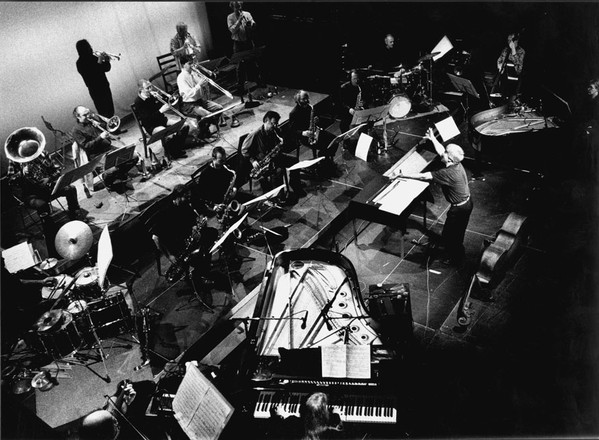
London Jazz Composers Orchestra
Biography
English free jazz orchestra, founded in 1970 by a group of musicians led by [a=Barry Guy].
Also known as: Barry Guy London Jazz Composers Orchestra, London Jazz Composers' Orchestra, The London Jazz Composers Orchestra, The London Jazz Composers' Orchestra
Members: Derek Bailey, Evan Parker, Radu Malfatti, John Warren, Dave Holland, Larry Stabbins, Harry Beckett, Bob Downes, Kenny Wheeler, Robin Hayward, Mats Gustafsson, Paul Lytton, Conrad Bauer, Barry Guy, Alan Tomlinson, Michael Gibbs, Karl Jenkins, Barre Phillips, Tony Coe, Henry Lowther, Tony Oxley, Chris Laurence, Simon Picard, David White (2), Jeff Clyne, Per Åke Holmlander, John Stevens (2), Trevor Watts, Philipp Wachsmann, Dave Holdsworth, Peter Kowald, Irene Schweizer, Paul Rutherford (2), Mark Charig, Peter McPhail, Paul Nieman, Melvyn Poore, Alan Wakeman, Dick Hart, Bernie Living, Howard Riley, Herb Robertson, Agustí Fernandez, Johannes Bauer, Mike Osborne, Torben Snekkestad, Paul Dunmall, Jon Corbett, Stephen Wick, Marc Unternährer, Michael Niesemann, Bruno Chevillon, Lucas Niggli, Richard Laughlin, Dave Spence, Jürg Wickihalder, Andreas Tschopp, Chris Bridges, Martin Eberle, Julius Gabriel
Links:
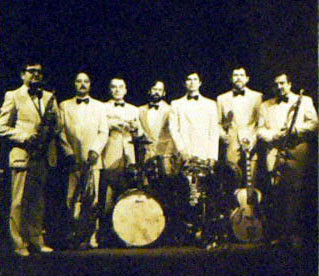
Classic Jazz Collegium
Biography
Czech traditional jazz orchestra.
Also known as: The Classic Jazz Collegium Orchestra
Members: Josef Rejman, Ivor Krátký, Miroslav Havránek, Pavel Klikar, Karel Mezera, Miroslav Klimeš, Zdeněk Fibrich, Jiří Pechar, Luboš Zajíček, Aleš Sládek, Eva Svobodová, Svatobor Macák, Bohumil Veselý, Václav Šalbaba, Josef Šťastný
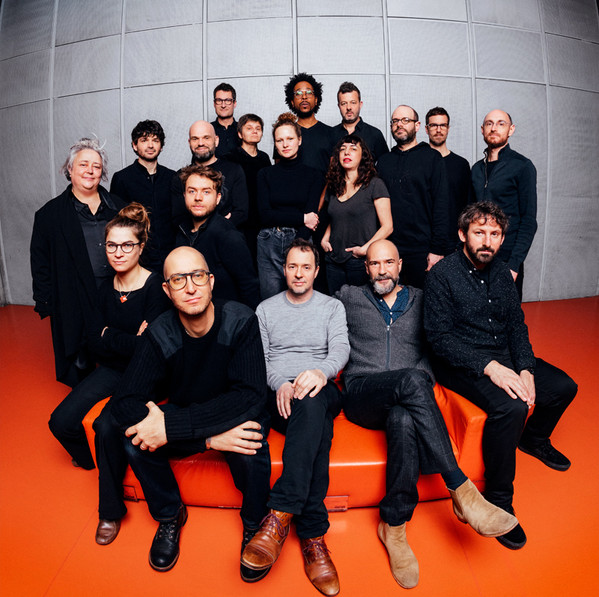
Orchestre National De Jazz
Biography
French jazz ensemble.
Also known as: L'Orchestre National De Jazz, O.N.J. 88 89, ONJ, ONJ 2006, ONJ 89/90, ONJ 90/91, ONJazz, Orchestre National De Jazz Laurent Cugny
Members: Gianluca Petrella, Nguyên Lê, Stefano Di Battista, Julien Lourau, Harry Beckett, Sophia Domancich, Xavier Garcia, Elise Caron, Michel Benita, Sophie Agnel, Alain Hatot, Michael Riessler, Renaud Garcia-Fons, Mico Nissim, Michael Leonhart, Marc Ducret, Glenn Ferris, Geoffroy Tamisier, Jean-Louis Chautemps, Paul Rogers (2), Serge Plume, Patrice Heral, Geoffroy De Masure, Stéphane Huchard, Jacques Bolognesi, Christian Martinez, François Jeanneau, Jean-Luc Ponthieux, Michel Godard, Chris Biscoe, Guillaume Poncelet, Flavio Boltro, Pierre-Olivier Govin, Daniel Zimmermann, Sylvain Daniel, Jean-François Canape, Yves Favre, Gérard Siracusa, Pierre Drevet, Gilbert Dall'anese, Vincent Courtois, Stéphane Belmondo, Bobby Rangell, André Ceccarelli, Jean-Louis Matinier, Eric Séva, François Verly, Philippe Legris, Ramón López, Philippe Guez, Jean-Louis Damant, Richard Foy, Eric Barret, Phil Abraham, Eric Echampard, Frédéric Couderc, Nicolas Folmer, Yves Robert, Bob Harrison (2), Jacques Peillon, Xavier Desandre Navarre, Heiri Känzig, Fabrice Martinez, Claude Barthélémy, Eric Mula, Stéphane Guillaume, Alexandra Grimal, Philippe Slominski, Christophe Marguet, Bruno Chevillon, François Laizeau, Pascal Benech, Philippe Sellam, Claus Stötter, François Moutin, Paul Brousseau, Didier Havet, Jean-Pierre Solves, Simon Spang-Hanssen, Denis Leloup, Olivier Benoit, Guillaume Roy, Régis Huby, Aaron Scott, Didier Levallet, Sebastien Llado, Médéric Collignon, Alain Grange, Claude Gomez, Jean Dousteyssier, Laurent Cugny, Yves Torchinsky, Jean-Marc Jafet, Franck Tortiller, Jean Gobinet, Frédéric Favarel, Frédéric Monino, David Pouradier Duteil, Nedim Nalbantoğlu, Matthieu Metzger, Hugues Mayot, Luca Bonvini, Antoine Illouz, Alain Vankenhove, Francis Bourrec, Vincent Limouzin, Denis Barbier, Andy Emler, Mathilde Fèvre, Antoine Hervé, Michel Delakian, Jean-Louis Pommier, Gérard Pansanel, Patrick Fabert, Christian Lété, Pierre-Michel Balthazar, Michel Marre, Laurent Hoevenaers, Jean-Rémy Guédon, Didier Ithursarry, Benoît De Mesmay, Bernard François, Lionel Benhamou, Michel Feugère, Catherine Delaunay, Denis Badault, Jocelyn Mienniel, Manuel Denizet, Bruno Ruder, Thomas De Pourquery, Serge Lazarevitch, Christian Laisné, Jean-Marc Larché, Jean-Luc Landsweerdt, Nicolas Mahieux, Alexis Thérain, Philippe Lemoine, Vincent Mascart, Olivier Lété, Joël Chausse, Sylvain Bardiau, François Chassagnite, Claude Egéa, Maria-Laura Baccarini, Jean-Michel Couchet, Vincent Lafont, Eve Risser, Susana Santos Silva, Yoann Serra, Christiane Bopp, Rémi Biet, Antonin-Tri Hoang, Stéphan Caracci, Théo Ceccaldi, Fabien Norbert, Rémi Dumoulin, Pierre Perchaud, Fidel Fourneyron, Julien Soro, Rafael Koerner, Fabien Debellefontaine, Didier Aschour, Lionel Surin, Raphaël Schwab, Leila Martial, Maxime Morel, Pierre Durand (3), Claire Fargier-Lagrange, Frédéric Maurin, Juliette Serrad, Laurent Blumenthal, Mokthar Samba, Bruno Rousselet (2), Judith Wekstein, Linda Oláh, Anna-Lena Schnabel, Morgane Carnet, Ellinoa, Elsa Moatti, Romain Dayez
Links:
- https://www.onj.org/
- https://orchestrenationaldejazz.bandcamp.com/
- https://fr.wikipedia.org/wiki/Orchestre_national_de_jazz
- https://en.wikipedia.org/wiki/Orchestre_National_de_Jazz
- https://www.imdb.com/name/nm12618200/
Czechoslovak Radio Jazz Orchestra
Biography
Big band of the Czechoslovak Radio, originally established in 1960 in Prague as “Taneční orchestr Československého rozhlasu” ([a=Czechoslovak Radio Dance Orchestra], 1967–1968 also known as [a=Orchestr Karla Krautgartnera (2)]) and led by [a=Karel Krautgartner] until 1968. Having identical personnel as the latter two, this orchestra name was used for jazz recordings and releases from 1962 until 1992, usually conducted by [a=Kamil Hála].
In 1993 the orchestra’s name was changed to “[a=Big Band Radio Praha]” and eventually to “[a=Big Band Českého Rozhlasu]” (BB ČRo), still featuring [a=František Kryka] as the longest active member since 1961, and led by [a=Václav Kozel] since September 2002 until December 2012. Since January 2013 until December 2014 the new Czech Radio “resident” big band is the former [a=Gustav Brom Orchestra], presently led by [a=Vladimír Valovič] as “Rozhlasový big band Gustava Broma”.
Also known as: CZ Radio Jazz Orchestra, Czechoslovak Radio Prague Jazz Orchestra, Džezový Orchestr Čs. Rozhlasu, JOČR, Jazz Orchestra Czech Radio, Jazz Orchestra Of The Czechoslovak Radio, Jazz Orchestra Radio Prague, Jazz-Orchestr, Jazz-Orchestr: Edy Valis, Jazz-Orchestra, Jazzový Orch. Čs. Rozhlasu, Jazzový Orchestr Československého Rozhlasu, Jazzový Orchestr Čs. Rozhlasu, Jazzový Orchestr Čs. Rozhlasu Praha, Jazzový Orchestr Čs. Rozhlasu V Praze, Jazzový Orchestr Čzechoslovenskeho Rozhlasu, Jazzový Orchestri, Jazzový orchestr Čs. rozhlasu, Jazzový orchestr Čs. rozhlasu v Praze, Jazzový Orchestr Čs. Rozhlasu, Prague Radio Dance Orchestra, Studie De La Jazz De La Radio Tchécoslovaque, Taneční Orchestr Československého Rozhlasu, Taneční Orchestr Čs. Rozhlasu, Tanečný Orchester Čs. Rozhlasu V Prahe, Ансамбль Пражского Радио
Members: Ivan Dominák, Josef Vejvoda, Laco Deczi, Karel Krautgartner, Rudolf Rokl, Felix Slováček, Ladislav Pikart, Václav Týfa, Radim Hladík, Zdeněk Dvořák, Michal Pavlíček, Jiří Tomek, Petr Kořínek, Jiří Jelínek, Zdeněk Pulec, Miroslav Koželuh, Jan Čapoun, Jiří Hlava, Miroslav Krýsl, Karel Růžička, Václav Hybš, Svatopluk Košvanec, Petr Král, Richard Kubernát, Pavel Vitoch, Josef Pavelka, Milan Ulrich, Vladimír Žižka, Vincenc Kummer, Bedřich Kuník, Kamil Hála, Luděk Hulan, Vladimír Tomek, Bedřich Beránek, Václav Král, František Kryka, Karel Turnovský, Artur Hollitzer, Štěpán Markovič, Jiří Doubrava, Tomáš Křemenák
Links:
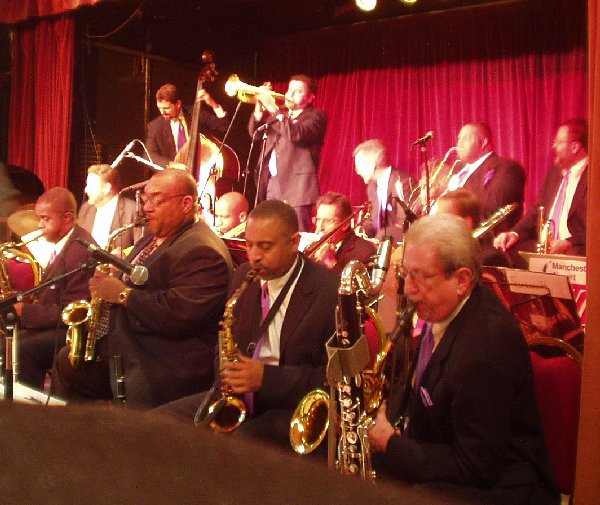
The Clayton-Hamilton Jazz Orchestra
Also known as: Clayton - Hamilton Jazz Orchestra, Clayton Hamilton Jazz Orchestra, Clayton-Hamilton Jazz Orchestra, The Clayton / Hamilton Jazz Orchestra, The Clayton Hamilton Jazz Orchestra, The Clayton Hamilton Orchestra, The Clayton-Hamilton Big Band, The Clayton-Hamilton Orchestra, The Clayton/Hamilton Jazz Orchestra
Members: Jacky Terrasson, Rickey Minor, Charles Davis, Anthony Wilson, Paul Jackson Jr., Jeff Hamilton, John Clayton, Luis Conte, Jack Nimitz, Oscar Brashear, Snooky Young, Bucky Pizzarelli, Chuck Findley, George Bohanon, Isaac Smith, Byron Stripling, Mike Lang, Bobby Bryant, Charles Owens, Thurman Green, David Duke, Richard Todd, Rick Baptist, Ray Brown (2), William Green, Herman Riley, Gilbert Castellanos, Maurice Spears, Joe Porcaro, Brad Warnaar, Sal Cracchiolo, Teddy Campbell, Bob Zimmitti, Robert Hurst, Tamir Hendelman, Yvonne S. Moriarty, Joe Meyer, Tom Peterson (2), Wayne Linsey, Jeff Clayton (3), Robert Hardaway, Ira Nepus, Terell Stafford, Rickey Woodard, George Thatcher, James Thatcher, John Thomas Johnson, Keith Fiddmont, Stephanie O'Keefe, Clay Jenkins, Bijon Watson, Kye Palmer, Ryan Porter, Marni Johnson, Lee Callet, Paul Klintworth, David Delhomme, Brian Swartz, Christoph Luty, Graham Dechter, James Ford (3), Doug Macdonald, Bill Cunliffe, William Barnhart, Adam Schroeder, Jim Hershman, Bobby Rodriguez (3), Robbie Hioki, Randy Napoleon, Jamie Hovorka, Herb Mickman, Juliane Gralle, Erik Hughes (2), Steve Kovalcheck, Larry Fuller (2), Dave Bjur, Jacob Scesney, Jon Hamar, Ivan Malespin
Links:
- http://www.hamiltonjazz.com/orchestra.html
- http://www.johnclaytonjazz.com/clayton_hamilton/index.html
- https://en.wikipedia.org/wiki/The_Clayton%E2%80%93Hamilton_Jazz_Orchestra
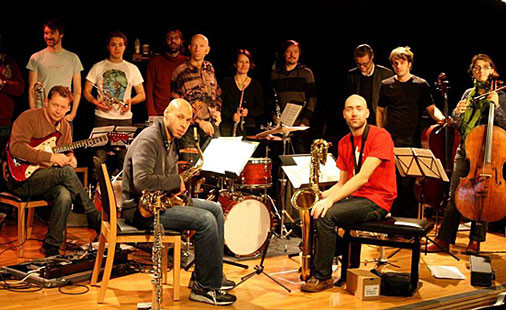
Trondheim Jazz Orchestra
Also known as: Trondheim Jazzorkester
Members: Sidsel Endresen, Christian Wallumrød, Erlend Skomsvoll, Jim Denley, Mathias Eick, Thomas Strønen, Ståle Storløkken, Erik Johannessen, Håkon Mjåset Johansen, Fredrik Wallumrød, Mats Eilertsen, Per Oddvar Johansen, Martin Küchen, Ingar Zach, Nils Jansen, Per Zanussi, Rhodri Davies, Øyvind Brandtsegg, Kirsti Huke, Clare Cooper, Tore Brunborg, Mattias Ståhl, Trude Eick, Morten J. Olsen, Hild Sofie Tafjord, Torstein Lofthus, Kjetil Møster, Håvard Lund, Bjørn Ole Solberg, Martin Taxt, Johan Hörlén, Terje Isungset, Christian Jaksjø, Eira Bjørnstad Foss, Bjørnar Habbestad, Michael Francis Duch, Petter Kateraas, Lene Grenager, Øyvind Engen, Maria Kannegaard, Steinar Raknes, Ola Kvernberg, Helge Norbakken, Nils-Olav Johansen, Jon Fält, Tor Haugerud, Siri Gjære, Jovan Pavlovic, Anja Lauvdal, Morten Barrikmo Engebretsen, Anita Kaasbøll, Mai Elise Solberg, Klaus Ellerhusen Holm, Kari Rønnekleiv, Tore Johansen (3), Atle Nymo, Ole Morten Vågan, Øyvind Brække, Hans Christian Frønes, Erik Eilertsen, Vigleik Storaas, Espen Reinertsen, Hayden Powell, Eirik Hegdal, Fredrik Sjølin, Frode Nymo, John Pål Inderberg, Kristoffer Kompen, Eivind Lønning, Hildegunn Øiseth, Gard Nilssen, Jo Fougner Skaansar, Kim Myhr, Karin Hammar, Hedvig Mollestad Thomassen, Mette Rasmussen, Anders Tveit, Petter Vågan, Marianne Baudouin Lie, Heidi Skjerve, Mats Äleklint, Tor Yttredal, Kyrre Laastad, Kristoffer Lo, Lars Ove Fossheim, Ingrid Helene Håvik, Daniel Herskedal, Njål Ølnes, Jørgen Mathisen, Frøy Aagre, Trond Kopperud, Jens Linell, Inger Besserudhagen, Hanne Rekdal, Shannon Mowday, Heiða Karine Jóhannesdóttir Mobeck, Alexander Zethson, Petter Eldh, Stein Villanger, Trine Knutsen, Stig Førde Aarskog, André Roligheten, Ellen Brekken, Sissel Vera Pettersen, Hanna Paulsberg, Siv Øyunn Kjenstad, Adrian Løseth Waade, Christian Skår Winther, Thomas Johansson (6), Pekka Stokke, Ingebjørg Loe Bjørnstad, Ina Sagstuen, Ida Marie Sørmo, Espen Berg (2), Tomas Eidsvåg, Matilda Rolfsson, Kari Eskild Havenstrøm, Petter Kraft, Martin Myhre Olsen, Ola Øverby, Natali Abrahamsen Garner, Amund Storløkken Åse, Ingvald André Vassbø, Håvard Aufles
Links:
- http://www.trondheimjazzorchestra.no/
- https://trondheimjazzorkester.bandcamp.com/
- http://www.myspace.com/trondheimjazzorchestra
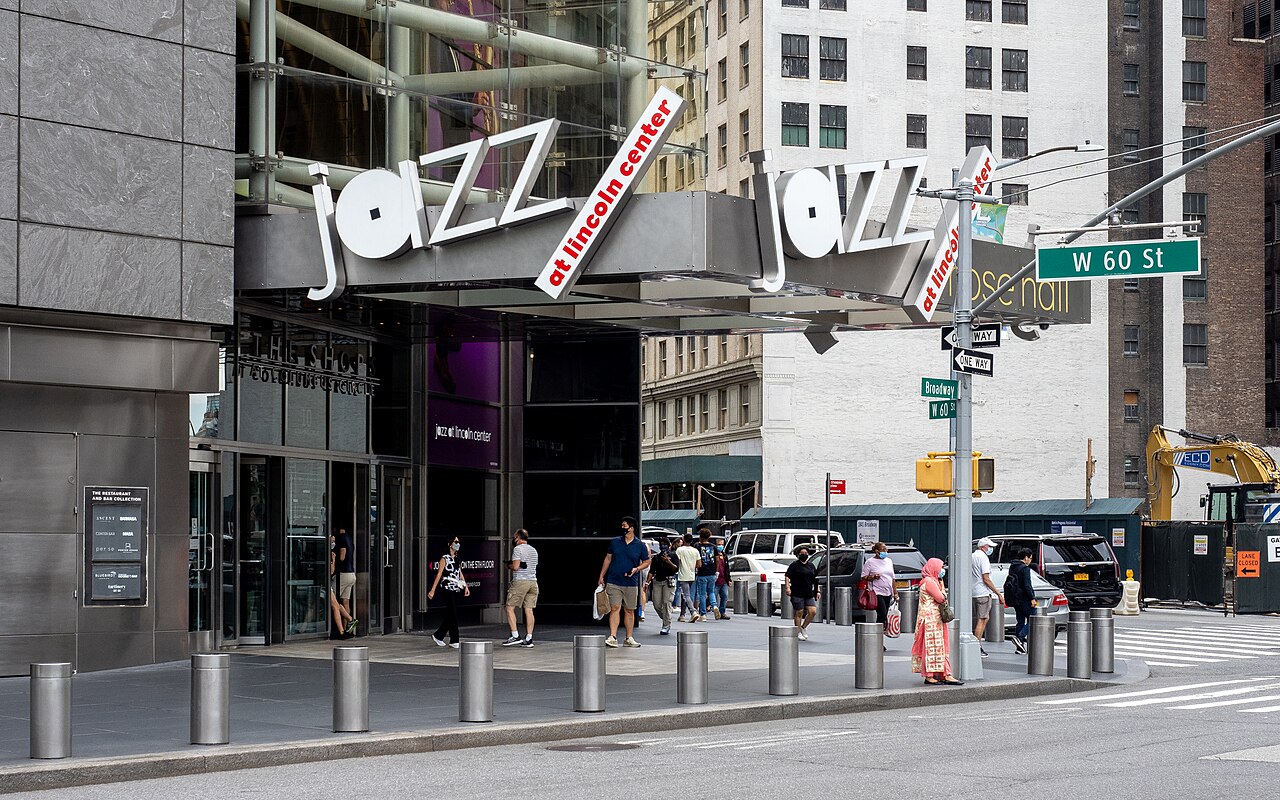
Jazz At Lincoln Center
Jazz at Lincoln Center (JALC) is a New York City institution and part of Lincoln Center. Founded in 1987, it officially opened in October 2004 at the Time Warner Center (now Deutsche Bank Center). Its mission is to celebrate the full breadth of jazz through education, programming, archives, and ceremonies. It promotes jazz, culture, and arts education around the world. Wynton Marsalis is its artistic director and the music director of the Jazz at Lincoln Center Orchestra.
The center presents performances by its orchestra and guest musicians and is also home to New York City Opera. Many concerts are streamed on its YouTube channel. It runs educational programs in its building, online, and in schools across the country.
Through concerts—more than 90 percent of seats at major performances are filled—tours, music education, sheet music, recordings on its Blue Engine label, and live performances on its JAZZ LIVE platform, the organization reaches about three million people of all ages each year.
Speakers throughout the building play recordings by great jazz artists such as Ella Fitzgerald, Dizzy Gillespie, and Louis Armstrong.
History
In the mid-1980s, Lincoln Center sought to attract younger audiences. Its venues sat unused during the summer, so the center wanted to put them to use while resident companies performed elsewhere. Jazz supporters at Lincoln Center campaigned to have the music recognized by the institution. In a 1986 report, the center said, “Lincoln Center should focus on improving the quality of its programming, and there is no compelling reason to include areas such as jazz.” Alina Bloomgarden, then director of visitor services, had proposed a resident jazz program for the third time. Some feared jazz audiences might be too rowdy, so Bloomgarden invited Wynton Marsalis to help plan a summer concert series. To succeed, the series had to be financially viable and demonstrate the value of its music and community.
In 1987, trumpeter Wynton Marsalis helped launch the Classical Jazz concert series, Lincoln Center’s first jazz series. It opened in August 1987 with a tribute to women in jazz, including Betty Carter, Sasha Dalton, and Marian McPartland. The series’ success mattered at a difficult time: many great jazz innovators had died, jazz clubs were closing, many colleges had no jazz programs, and electronic music was becoming commercialized. American society was also deeply divided. Many places remained segregated; the AIDS epidemic was spreading; the Cold War intensified militarization and globalization; and Ronald Reagan’s war on drugs led to mass incarceration. By the following year, the series had its own program on National Public Radio and began touring.
The music Marsalis hoped to preserve is captured in the three-movement suite “A New Orleans Ritual,” modeled on a New Orleans funeral procession. Stanley Crouch, a co-founder of Jazz at Lincoln Center, wrote an impassioned speech that the Reverend Jeremy Wright delivered. It came to be seen as a declaration of the organization’s purpose:
“Perhaps we listeners heard an enduring truth from the descendants of people who had been bought and sold as commodities—the people who stood on auction blocks and lived in slave quarters, whose existence formed the cross on which this nation’s Constitution was nailed. Yet even after that crucifixion, in the third century of slavery in the Americas, people rose with a vision of freedom. They lit the powerful wick extending from a candle and passed it on. Through music they showed what light meant: they would not submit to self-righteous dragons or let their hearts grow dark. They said, ‘Listen closely.’ They said, ‘If you give me a fair chance, I will help you understand democracy better.’ Yes, that is what they said. ‘If you give me a fair chance, I will help you understand democracy better.’ These are the people who created a noble sound.”
Gordon Davis, a Lincoln Center board member and its founding chairman, saw the summer series succeed and advocated for a permanent jazz program. The board agreed. By 1996, Jazz at Lincoln Center had become a constituent member alongside the New York Philharmonic, New York City Ballet, Metropolitan Opera, and European Arts Center. Its budget was $4 million in 1996, compared with the Metropolitan Opera’s $150 million; by 2016 it had exceeded $50 million. Marsalis has served as artistic director since 1987. Greg Scholl became executive director in 2012.
In January 2026, the Jazz at Lincoln Center Orchestra performed at the Sheldon Theatre in St. Louis, Missouri. Marsalis conducted the orchestra, which tours internationally in addition to performing at Appel Room and Rose Theater. Concerts are also streamed online, and educational programs appear on the center’s YouTube channel. Since 2015, the orchestra’s albums have been released on its own Blue Engine Records label.
The center promotes jazz education in high schools through its Essentially Ellington program. Professional musicians visit schools through Let Freedom Swing. In New York City, it operates tuition-free middle-school and high-school jazz academies and a summer academy. Each year, its orchestra tours the United States and visits schools. The Essentially Ellington High School Jazz Band Competition and Festival is held each year at Jazz at Lincoln Center.
In January 2026, Marsalis announced that he would step down as artistic director in July 2027 and serve as an adviser through June 2028. In an interview, he said, “Now is the best time to find the next generation of leaders. We want to do everything we can to cultivate what we have built, because we know this is an art form that will keep evolving and this institution will continue to thrive.” He will continue to perform with the Jazz at Lincoln Center Orchestra from time to time.
Lincoln Center Building Guide
- Samuel B. and David Rose Building (including the Walter Reade Theater)
- The Juilliard School
- Alice Tully Hall
- Vivian Beaumont Theater (including the Mitzi E. Newhouse and Claire Tow Theaters)
- Eleanor Bunin Munroe Film Center
- David Geffen Hall
- New York Public Library for the Performing Arts (including Bruno Walter Auditorium)
- Metropolitan Opera House
- Josie Robertson Plaza and Revson Fountain
- Damrosch Park
- David H. Koch Theater
- David Rubenstein Atrium
- Jazz at Lincoln Center
Rose Hall
Rose Theater, 2007
120 yards; 13 Jazz at Lincoln Center; 13 Jazz at Lincoln Center; 12; 11 David H. Koch Theater; 11 David H. Koch Theater; 10 Damrosch Park; 10 Damrosch Park; 9 Josie Robertson Plaza, Revson Fountain; 9 Josie Robertson Plaza, Revson Fountain; 8 Metropolitan Opera House; 8 Metropolitan Opera House; 7 New York Public Library for the Performing Arts (including Bruno Walter Auditorium); 7 New York Public Library for the Performing Arts (including Bruno Walter Auditorium); 6 David Geffen Hall; 6 David Geffen Hall; 5 Elinor Bunin Munroe Film Center; 5 Elinor Bunin Munroe Film Center; 4 Vivian Beaumont Theater (including the Mitzi E. Newhouse and Claire Tow theaters); 4 Vivian Beaumont Theater (including the Mitzi E. Newhouse and Claire Tow theaters); 3 Alice Tully Hall; 3 Alice Tully Hall; 2 Juilliard School; 2 Juilliard School; 1 Samuel B. and David Rose Building (including Walter Reade Theater); 1 Samuel B. and David Rose Building (including Walter Reade Theater).
Frederick P. Rose Hall is a performing arts center designed by Rafael Viñoly on the fifth floor of Deutsche Bank Center (formerly Time Warner Center). The $131 million facility opened in fall 2004 and was the world’s first center devoted entirely to jazz performance, education, and broadcasting. It was designed to give jazz a warm, clear sound. Rose Hall has three venues: Rose Theater, Appel Room, and Dizzy’s Club, named after trumpeter Dizzy Gillespie. The hall also houses the Irene Diamond Education Center, with rehearsal and recording studios. Its location was criticized because it sits in the upscale shopping complex at Columbus Circle, four blocks from Lincoln Center’s main campus. Jazz at Lincoln Center responded that this “temple of consumerism” presented music born of the struggle for freedom, music that encourages performers and listeners to strive for higher ideals.
Lincoln Center Jazz at Night
In 2025, the Rose Hall sign is visible during Lincoln Center Jazz at Night.
Leaders of Jazz at Lincoln Center set out to build a venue with acoustics suited to swing and blues. They also wanted it to house the organization’s educational and archival work. To attract a wider audience, Marsalis collaborated with popular musicians outside jazz, including Stevie Wonder, Paul Simon, and Bob Dylan. This drew new listeners and created a rich interplay among swing, rock, and rhythm and blues.
Rose Theater uses a “box within a box” design and has no rigid structural connection to the other Jazz at Lincoln Center venues. Its 1,233 seats can be adapted for opera, dance, drama, film, and orchestral performances. Rubber pads under the floor reduce outside noise and preserve a quiet, intimate atmosphere. Movable seating towers allow the theater to switch between concert and theater layouts. In concert mode, seats are placed behind and around the musicians, supporting the sound and sightlines while increasing capacity. In theater mode, the seating towers retract into an air-cushion system, creating a platform for opera, ballet, or modern dance sets.
Appel Room has 583 seats and a relaxed, intimate atmosphere. It normally has seven separate seating levels, but these can be reconfigured into four to make dancing and movement easier. A 50-foot glass wall looks out over Central Park. It tilts slightly upward so sound can reflect directly from the atrium and stage monitors to the ceiling. Sound-absorbing panels hang from the ceiling and walkways to diffuse and absorb sound.
Dizzy’s Club, named after American jazz trumpeter Dizzy Gillespie and sponsored by Coca-Cola, seats 140. It is designed as an intimate jazz club for live trios, pianists, and singers, with city views over Columbus Circle and Central Park. Its design aims for a “golden” sound that encourages interaction between artists and audiences, much like New York’s early jazz clubs.
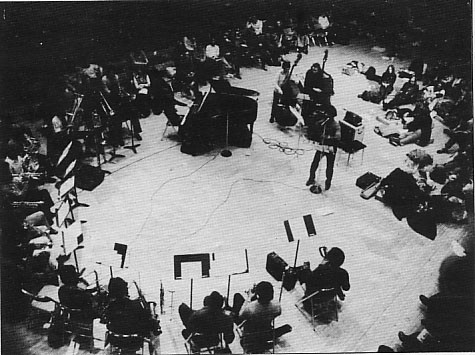
The Jazz Composer's Orchestra
Also known as: Jazz Composer's Orchestra, Jazz Composers Orchestra, The Jazz Composers Orchestra
Members: Frank Wess, Archie Shepp, Pharoah Sanders, Don Cherry, John Tchicai, Dave Holland, Ron Carter, Steve Lacy, Milton Cardona, Reggie Workman, Kenny Wheeler, Frank Lowe, Gato Barbieri, Cecil Taylor, Anthony Braxton, Enrico Rava, Michael Mantler, Carla Bley, Andrew Cyrille, Ed Blackwell, Jimmy Knepper, Dewey Redman, Paul Bley, Grachan Moncur III, Clifford Thornton, Charlie Haden, Randy Brecker, Jack Jeffers, Paul Motian, Reggie Johnson, Alan Silva, Jimmy Lyons (2), Cecil McBee, Barry Altschul, Richard Davis (2), Joseph Bowie, Bob Stewart, Carlos Ward, Roswell Rudd, Willie Ruff, Larry Coryell, Art Baron, Lew Tabackin, Hannibal Marvin Peterson, Eddie Gomez, Julius Watkins, Jeanne Lee, Leroy Jenkins, Beaver Harris, Fred Pirtle, Roger Blank, Steve Swallow, Robin Kenyatta, Howard Johnson (3), Charles Davis (2), Mark Elf, Ken McIntyre, Ted Daniel, Al Gibbons, Andy Gonzalez, James Emery, Sue Evans, Kent Carter, Sheila Jordan, Maurice McIntyre, Jane Robertson, Sharon Freeman, Perry Robinson, Hod O'Brien, George Barrow, Charles Bobo Shaw, Charles Brackeen, Pat Dixon, Charles Stephens, Romulus Franceschini, Michael Ridley, Roland Alexander, Milford Graves, Brian Trentham, Toni Marcus, Joan Kalisch, Wadada Leo Smith, Diedre Murray, Jerome Cooper, Robert Northern, A. Kobena Adzenyah, Janice Robinson (2), Mike Lawrence, Mike Bresler, Martin Alter, Lou Grassi, Janet Donaruma, Michael Krasnov, Jeffrey Schlegel, Bob Cunningham, Dan Johnson (2), Norris Jones, Asante Darkwa, Art Lewis, Laxmi G. Tewari, John Thompson (2), Gregory Williams (2), Jerry Gonzalez, Nan Newton, Steve Marcus, Mervine Grady, Titos Sompa, Stafford Osborne, Malonga Quasquelourd, Keith Marks, Frederick Simpson, Ngoma, Coster Massamba, Jakuba Abiona, Lloyd Michels, Becky Friend, Ray Codrington, Stephen Furtado, Gene Hull, Bob Donovan, Bill Davis (4), Vincent George, Gary Brocks, Gene Golden (2), Bob Carducci
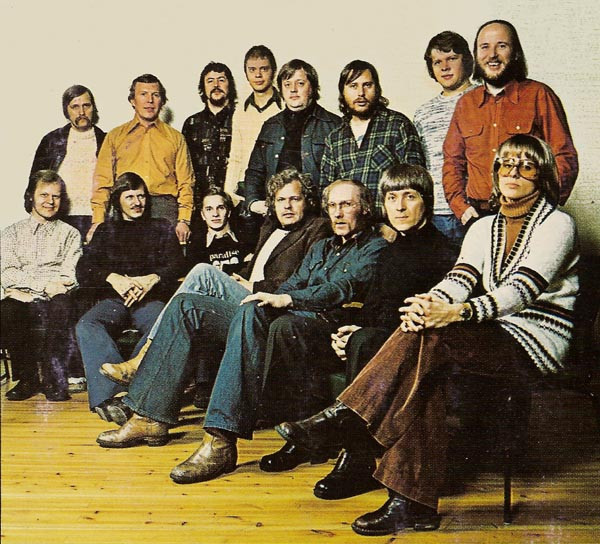
Umo Jazz Orchestra
Biography
UMO Jazz Orchestra is a Finnish big band jazz orchestra founded in 1975 by [a=Heikki Sarmanto] and [a=Esko Linnavalli]. UMO comes from the words "Uuden Musiikin Orkesteri" (New Music Orchestra in English).
The band name was changed to [a8381523] in November 2018.
Also known as: New Music Orchestra, New Music Orchestra (UMO), The UMO Jazz Orchestra, UMO, UMO Big Band, UMO Helsinki Jazz Orchestra, UMO Jazz Orchestra Ja Jousikvintetti, UMO New Music Orchestra, UMO – New Music Orchestra, Umo, Umo Helsinki Jazz Orchestra, Umo New Music Orchestra, Uuden Musiikin Orkesteri (UMO)
Members: Eero Koivistoinen, Olli Ahvenlahti, Heikki Sarmanto, Esko Rosnell, Pekka Pöyry, Pekka Sarmanto, Mikko Mustonen, Marzi Nyman, Antero Priha, Jan Kohlin, Esko Linnavalli, Jukkis Uotila, Olli Ojajärvi, Juhani Aalto, Unto Haapa-Aho, Juhani Aaltonen, Kaj Backlund, Markku Johansson, Pentti Lahti, Mircea Stan, Mikko Hassinen, Mongo Aaltonen, Mikko Pettinen, Petri Juutilainen, Teemu Salminen, Heikki Haimila, Tom Bildo, Kari Heinilä, Manuel Dunkel, Seppo Kantonen, Jouni Järvelä, Markus Ketola, Tero Saarti, Ville Huolman, Markku Veijonsuo, Simo Salminen, Pentti Lasanen, Jari Hongisto, Pepa Päivinen, Otto Berger, Esko Heikkinen, Timo Paasonen, Heikki Tuhkanen, Jörgen Petersen, Jukka Perko, Mikael Långbacka, Pekka Laukkanen, Lars Danielsson (3), Jarno Kukkonen, Kasperi Sarikoski, Mikko Mäkinen (3), Kirmo Lintinen, Teemu Mattsson, Ville Vannemaa, Valtteri Malmivirta
Links:
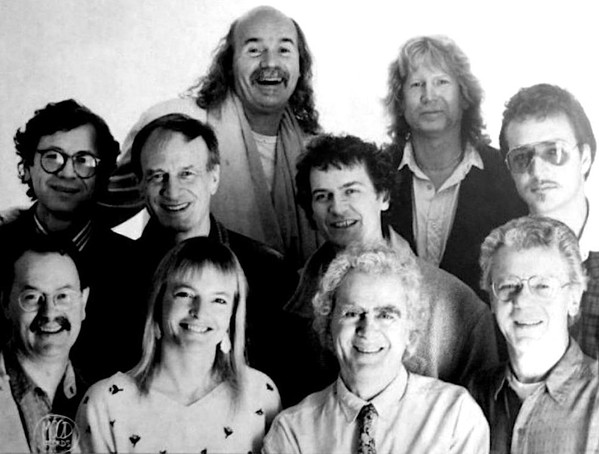
The United Jazz+Rock Ensemble
Biography
Featuring jazz players from Germany and beyond the Ensemble began life in 1975. Pianist [a=Wolfgang Dauner], initially recruiting musicians from his home base of Stuttgart (then a hotbed of avant-garde jazz), put together a rotating cast of musicians, and shared writing and arranging duties with guitarist [a=Volker Kriegel]. They recorded the first album under the United Jazz+Rock Ensemble name, Live im Schützenhaus, in 1977, to be released on the group's then founded [l=Mood Records] label. The album was a hit, eventually becoming the best-selling German jazz record of all times, and the Ensemble was awarded the "Deutscher Schallplattenpreis 1978" for artist of the year, followed by another 14 albums plus a variety of international collaborations.
Also known as: The United Jazz & Rock Ensemble, The United Jazz + Rock Ensemble, The United Jazz And Rock Ensemble, United Jazz & Rock Ensemble, United Jazz + Rock Ensemble, United Jazz And Rockensemble, United Jazz+Rock Ensemble
Members: Wolfgang Dauner, Dave King, Kenny Wheeler, Eberhard Weber, Volker Kriegel, Ian Carr, Charlie Mariano, Barbara Thompson, Albert Mangelsdorff, Jon Hiseman, Ack Van Rooyen, Johannes Faber, Christof Lauer, Peter O'Mara, Thorsten Benkenstein
Links:
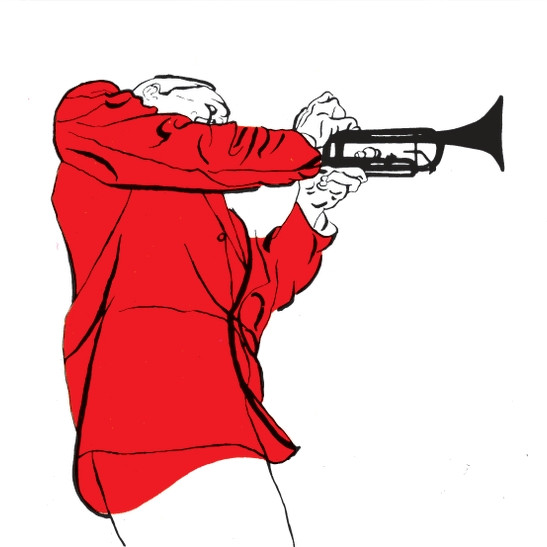
Jazz At The Philharmonic
Biography
Jazz At The Philharmonic is a trademark used by jazz entrepreneur and label owner [a=Norman Granz].
Please note: When used as a banner for the ever-changing jam session groups in his touring events or on records, Jazz At The Philharmonic can be used as main artist. But only when Jazz At The Philharmonic is billed on the release in the main artist's place - and when no other obvious main artist is billed on the release or promoted on cover and labels.
Norman Granz's Jazz at the Philharmonic releases do not follow a usual industry pattern for naming and crediting:
All JATP releases with the name and/or logo on them should be listed under the [l=Norman Granz Presents Jazz At The Philharmonic] series, even when Jazz At The Philharmonic is used as main artist. The shorter Jazz At The Philharmonic or any other variation of JatP ahould never be listed as a label, but instead as a series, with the relevant label in brackets afterward if necessary - such as [l=Norman Granz Presents Jazz At The Philharmonic (Verve)].
Company: In the 50's with the Inc. extension, the entity was also a company; [l=Jazz At The Philharmonic, Inc.]
Office: 451 N Canon Dr, Beverly Hills, CA
Also known as: J.A.T.P., J.A.T.P. All Stars, J.A.T.P. All-Stars, JATP, JATP All Stars, JATP All-Stars, Jazz All Stars, Jazz At The Philharmonic All Stars, Jazz At The Philharmonic All-Stars, Jazz At The Philharmonic Concert, Jazz At The Philharmonic Vol. 5, Jazz at the Philharmonic All-Stars, Norman Grantz' Jazz At The Philharmonic, Norman Granz "Jazz At The Philharmonic", Norman Granz Jazz, Norman Granz Jazz At The Philharmonic, Norman Granz' J.A.T.P., Norman Granz' Jazz At The Philharmonic, Norman Granz' Jazz At The Philharmonic Vol. #1, The All Stars, The JATP ALL-STARS, The JATP All Stars, The JATP's, The JATPs, The Jazz All Stars, The Jazz At The Philharmonic All-Stars
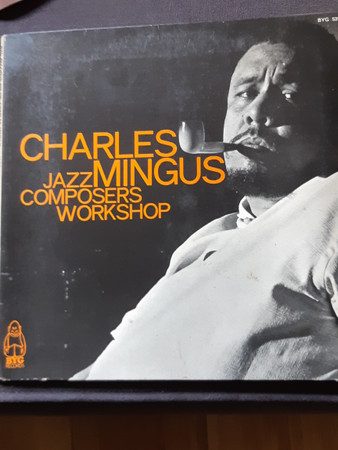
Charles Mingus Jazz Workshop
Also known as: Charles Mingus & The Jazz Workshop All Stars, Charles Mingus And His Jazz Composers Workshop, Charles Mingus' Jazz Workshop, Charlie Mingus Et Son Jazz Workshop, Charlie Mingus Jazz Workshop, J.W.I. : Jazz Workshop Inc., Jazz Workshop, The Charles Mingus Jazz Worksho, The Charles Mingus Jazz Workshop, The Charlie Mingus Jazz Workshop, The Charlie Mingus Jazz Worshop, チャーリー・ミンガス
Members: Richard Williams, Jackie McLean, Eric Dolphy, Yusef Lateef, Charles Mingus, Roland Kirk, Kenny Clarke, Teo Macero, J.J. Johnson, Don Butterfield, Dannie Richmond, Jaki Byard, Booker Ervin, Willie Dennis, Horace Parlan, Jimmy Knepper, Paul Bley, Doug Watkins, Johnny Coles, Ted Curson, Henry Grimes, Mal Waldron, Art Taylor, Pepper Adams, Bennie Green, Clifford Jordan, Kai Winding, John Lewis (2), Thad Jones, Britt Woodman, J.R. Monterose, Willie Jones, George Barrow, Bill Hardman, Charles McPherson, Herman Wright, Curtis Porter, John Laporta, Toshiko Akiyoshi, Clarence Shaw, Bob Hammer, Ed Armour, Jackson Wiley, Clem De Rosa, Nico Bunink, Wally Cirillo, Rudy Nichols
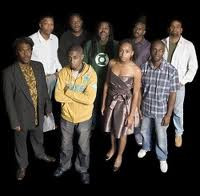
Jazz Warriors
Biography
A former band of all-black London-based jazz musicians. active from 1986 to 1994.
In 2011 a new group was formed with original group members, named The Jazz Warriors International
Also known as: Jazz Warrior
Members: Courtney Pine, Ray Carless, Adrian Reid, Gary Crosby, Tony Kofi
Links: