
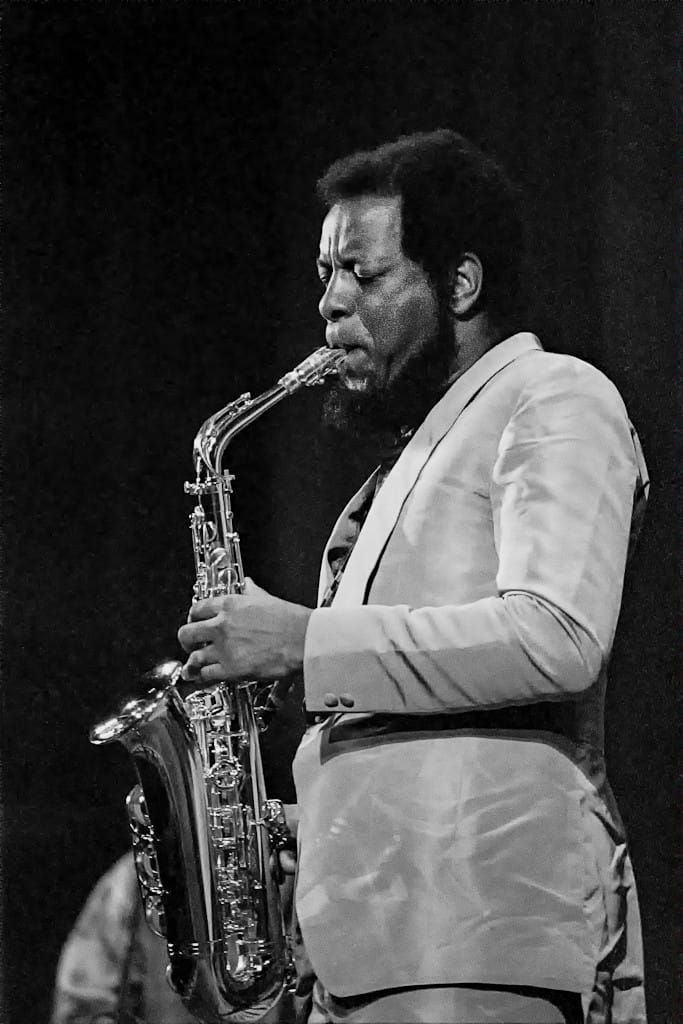
Ornette Coleman is a jazz artist featured on JazzMore. Genres: Jazz, Free Jazz, Avant-garde Jazz. From United States. Lifespan: March 9, 1930 - June 11, 2015.
Ornette Colemanwas one of jazz history’s most radical innovators and a leading pioneer of the free-jazz movement. He broke with the chord structures and rhythmic frameworks on which jazz had long depended, favoring improvisation guided by melodic instinct and feeling. Although his music provoked fierce controversy and even violence early in his career, he came to be recognized as one of the 20th century’s great artistic originals.
Born in Fort Worth, Texas,ColemanColeman’s early career was difficult. His unconventional intonation and unusual sense of rhythm led traditional bands to dismiss him; after one performance, he was even beaten and his saxophone was smashed. With little money, he later bought an inexpensivewhite plastic alto saxophone, which became one of his most recognizable early visual signatures. In the late 1950s, he met kindred spirits in Los Angeles, includingDon CherryandCharlie Haden, and recorded Something Else!!!! forContemporaryRecords.
In 1959,Colemanbrought his quartet to New York’sFive Spot Cafe, where a residency lasting several months stunned the jazz world. The audience included classical luminaries such asLeonard Bernstein. In 1960, he recorded the landmark album《Free Jazz: A Collective Improvisation》, using two quartets improvising simultaneously without predetermined chord changes. The album gave a movement its name and dramatically reshaped the boundaries of jazz.
In the 1970s,Colemandeveloped his own musical theory,Harmolodics. It gives melody, harmony, and rhythm equal standing rather than subordinating them to a fixed tonal center. He formed an electric band,Prime Time, exploring the meeting of jazz, funk, and rock. In 2007, his album《Sound Grammar》earned him thePulitzer Prize for Musicand a Grammy Lifetime Achievement Award in the same year, completing his transformation from “madman” to national treasure.
In 2015, the artist who had changed the course of music died of heart failure in New York, aged 85. His funeral lasted more than three hours and became a pilgrimage for avant-garde artists from around the world.
3. Musical Style: Releasing Intuition
Breaking Free from Chord Changes: InColeman’s music, improvisation was no longer a matter of filling in notes around predetermined chord progressions; it allowed melody to grow freely. He once said, “Music is a natural expression of feeling.”
A Human Voice on the Saxophone: His saxophone sound was unusual and deeply rooted in Texas blues. It could seem to cry, laugh, or shout. He deliberately sought pitches that sounded “out of tune” to achieve a more direct emotional intensity.
Democratic Group Improvisation: He emphasized equal dialogue among musicians. In his music, bass and drums were not merely keeping time; they were storytellers with the same importance as the lead instrument.
In Summary: Ornette Colemanwas jazz’s“abstract-expressionist master”. Like Jackson Pollock splashing paint, he freed notes from traditional grids and gave the music a will of its own.
An Aesthetic Connection: For a 3D designer,Ornette Coleman’s music is the fullest expression ofnon-uniform rational B-splines (NURBS). It rejects the rigidity of a flat plane in favor of an organic, dynamic surface shaped by control points, with every rise and fall pointing toward a raw impulse of the soul.
Explore other jazz artists who share genre tags with Ornette Coleman.