
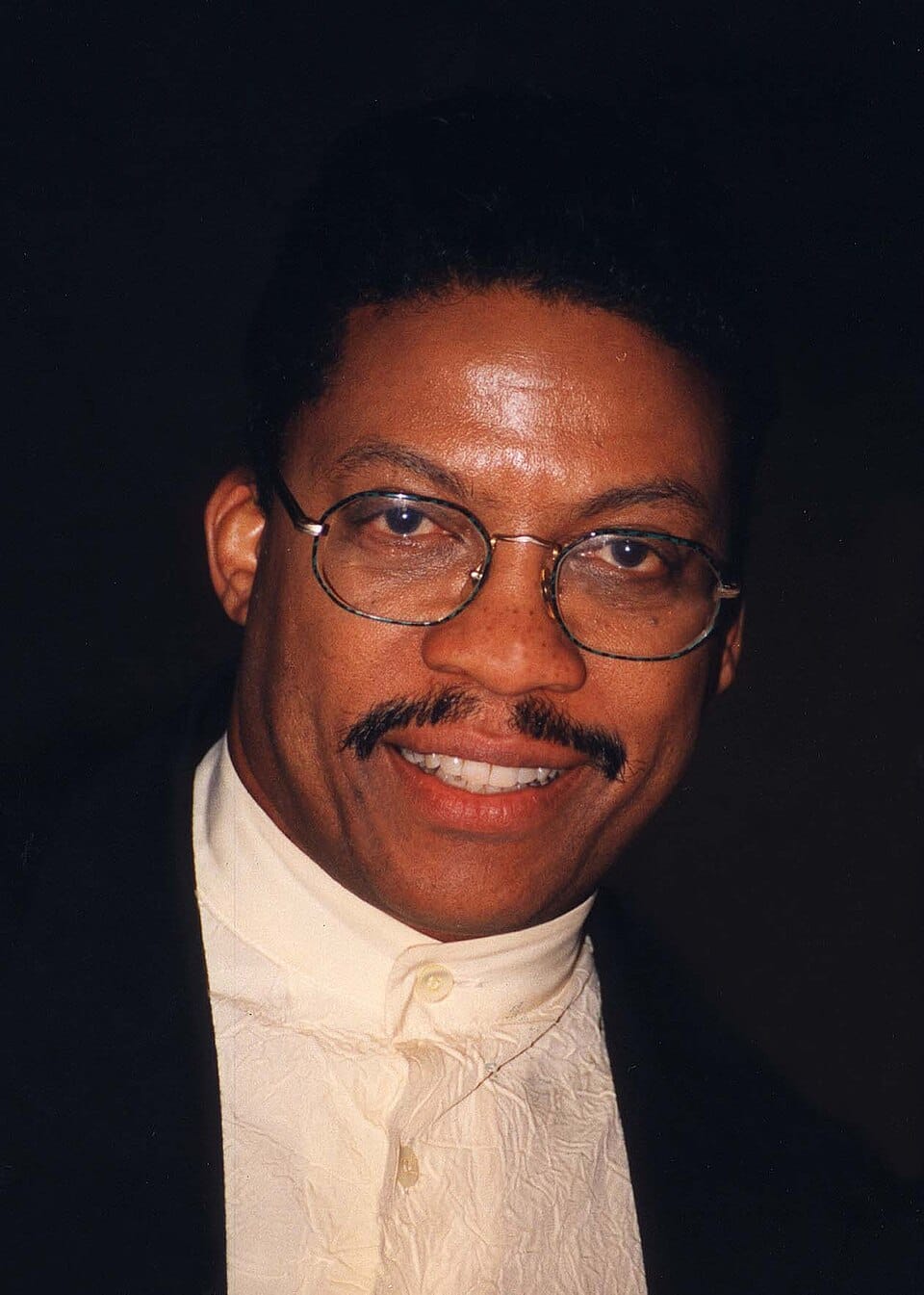
Herbie Hancock
After Freddie Hubbard, we come to one of jazz history’s greatest innovators and musical “geeks”—Herbie Hancock (born 1940)。
If Duke Ellington was jazz’s classical master, Herbie is itsLeonardo da Vinci. He has moved across hard bop, post-bop, fusion, funk, and even hip-hop, winning the respect of devoted jazz listeners and success on the pop charts alike.
1. A Piano Prodigy and the Jazz Messengers (1940s–1962)
-
Classical Roots: Born in Chicago, Hancock performed Mozart with the Chicago Symphony Orchestra at age 11 as a piano prodigy. A strong sense of classical structure remained with him throughout his career.
-
A Landmark Debut: He signed with Blue Note in 1962. His first album,《Takin’ Off》, quickly produced the hit “Watermelon Man.”
2. Miles Davis’s Second Great Quintet (1963–1968)
-
A Golden Quintet: Invited by Miles Davis, Hancock joined Wayne Shorter, Ron Carter, and Tony Williams to form one of the most celebrated quintets in jazz history.
-
A Harmonic Revolution: During this period, Hancock redefined the piano’s role in jazz. His flowing, spacious harmonies gave Davis’s modal jazz the perfect foundation.
3. The Meeting of Technology and Funk (1970s–1980s)
-
《Head Hunters》: In 1973, Hancock made a decisive turn toward synthesizers and funk rhythms. The resulting album became the first jazz record to go gold, and “Chameleon” remains essential study for musicians.
-
“Rockit” and Hip-Hop: In 1983, he created “Rockit.” The track won a Grammy, and its music video helped bring turntablism—especially scratching—to audiences around the world.
4. Later Years: Grammy Favorite and Cultural Icon
-
《River: The Joni Letters》: In 2007, his album honoring Joni Mitchell won theGrammy Award for Album of the Year, the first jazz album to win the top award since 1965.
-
A UNESCO Goodwill Ambassador: He founded International Jazz Day and has promoted peace and dialogue around the world through music.
Artistic Style: Intelligence in Motion
-
Modal Harmony and Space: Hancock has a remarkably expressive touch and makes deft use of space and dissonance to create a profound sense of the future.
-
A Technology Enthusiast: He was among the first jazz musicians to embrace computers, samplers, and synthesizers. As he puts it, “I’m a tech geek who loves music.”
-
A Chameleon’s Adaptability: In a single concert, he can move naturally between a Steinway grand piano and a complex array of electronic keyboards.
In Summary
Herbie Hancock is jazz’s“Steve Jobs”. Never content with the status quo, he keeps searching for the next meeting point between music and technology, and between art and popular culture.
Connections: Among the musicians mentioned earlier, Hancock shared a long friendship and many piano duets withChick Corea, and had countless memorable musical encounters withFreddie Hubbard、and Dexter Gordon.All three musicians shared countless memorable musical moments with Hancock.
If you work in 3D modeling and printing, you may especially enjoy Hancock: his music itself feels likehigh-precision modeling, driven by experimentation and a fascination with new tools.

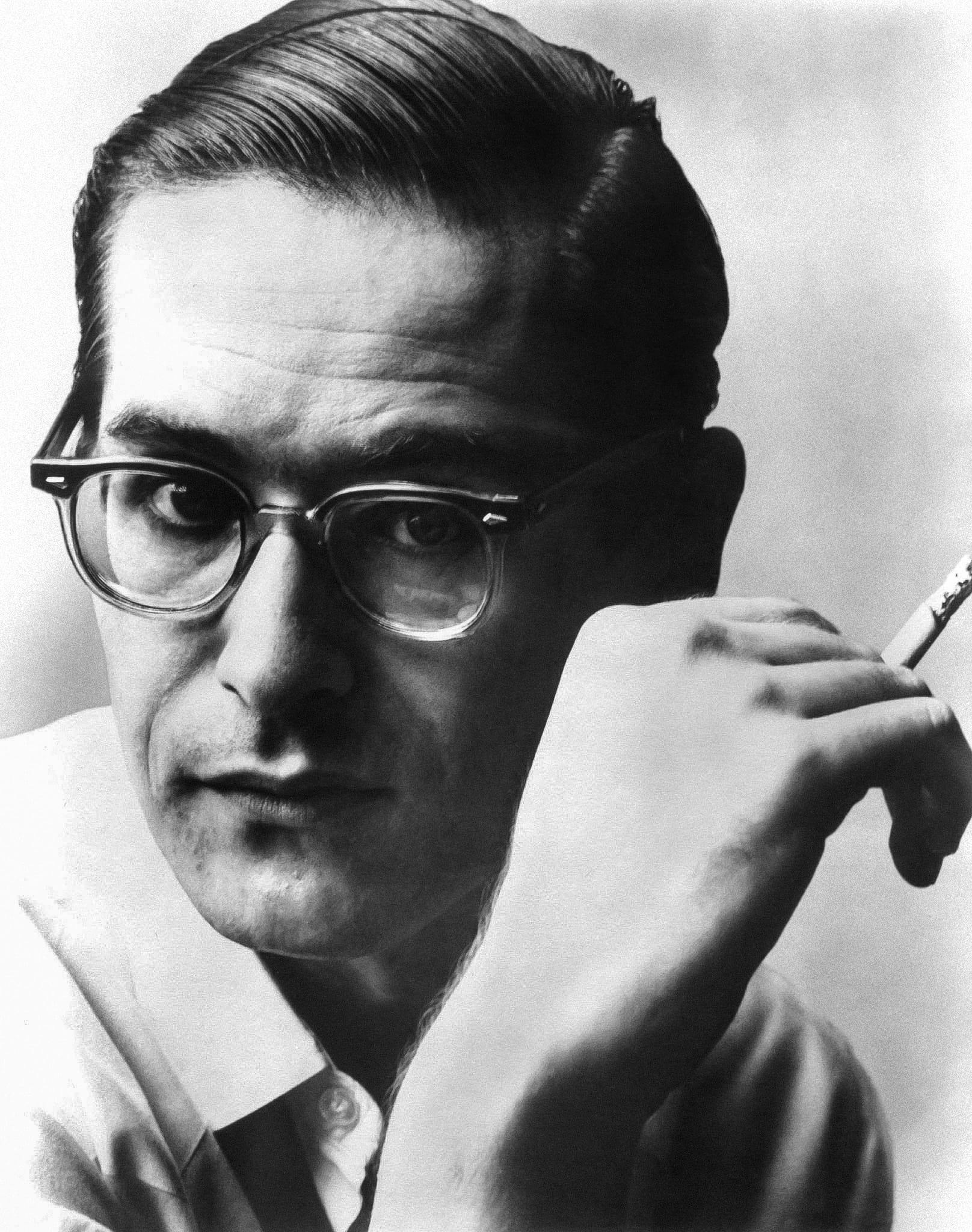
Bill Evans
🎹 The “piano poet” of jazz
Bill Evans was one of the most influential pianists in jazz history. He changed the way jazz piano was played, blending the colors of European classical music—especially the Impressionism of Debussy and Ravel—with jazz improvisation.
1. Signature Musical Qualities
-
Restraint and Poetry:Unlike the exuberance of early jazz, Evans’s playing was inward and reflective, with a light touch and richly layered sound.
-
Harmonic Innovation:His use of rootless voicings made the piano sound more open, modern, and fluid.
-
A Revolution in the Piano Trio:In his best-known “first great trio,” he overturned the old hierarchy of piano lead with bass and drums in support. The three musicians improvised as equals, in a dialogue that felt like conversation.
💿 Essential Albums
If you are just getting to know Evans, these are several widely recognized masterpieces:
| Album | Year | Notes |
| 《Kind of Blue》 | 1959 | Although this is a Miles Davis album, Evans is one of its central voices, contributing a spare, contemplative modal-jazz sensibility. |
| 《Waltz for Debby》 | 1961 | One of the best-known live recordings in jazz, made at the Village Vanguard in New York and a perfect showcase for the trio’s rapport. |
| 《Sunday at the Village Vanguard》 | 1961 | Recorded on the same evening as Waltz for Debby, it puts the talent of bass prodigy Scott LaFaro in the foreground. |
| 《Portrait in Jazz》 | 1959 | A peak of the early trio, including a distinctive reinterpretation of standards such as “Autumn Leaves.” |
| 《Undercurrent》 | 1962 | A duet with guitarist Jim Hall: cool and clear in tone, like an intimate conversation late at night. |
🌉 A Connection with Ben Webster
Although Evans was a pioneer of the more modern cool-jazz and modal-jazz traditions, while Ben Webster was a master of swing, both had an exceptional command ofballads.
A Small Anecdote:In 1958, Bill Evans and Ben Webster both appeared on Benny Carter’s album The Jazz Giant. On the record, Webster’s full, breathy saxophone weaves together with Evans’s precise, luminous piano—a memorable moment in jazz history.
Later Years and Legacy
Like many of his contemporaries, Evans struggled with drug addiction and the loss of loved ones. These hardships made his later music even more desolate and profound. He died in 1980; one critic described his life as “the longest suicide in history.”
Today, nearly every modern jazz pianist has been influenced by Bill Evans in some way. His music is not only jazz, but a profound meditation on solitude, love, and beauty.
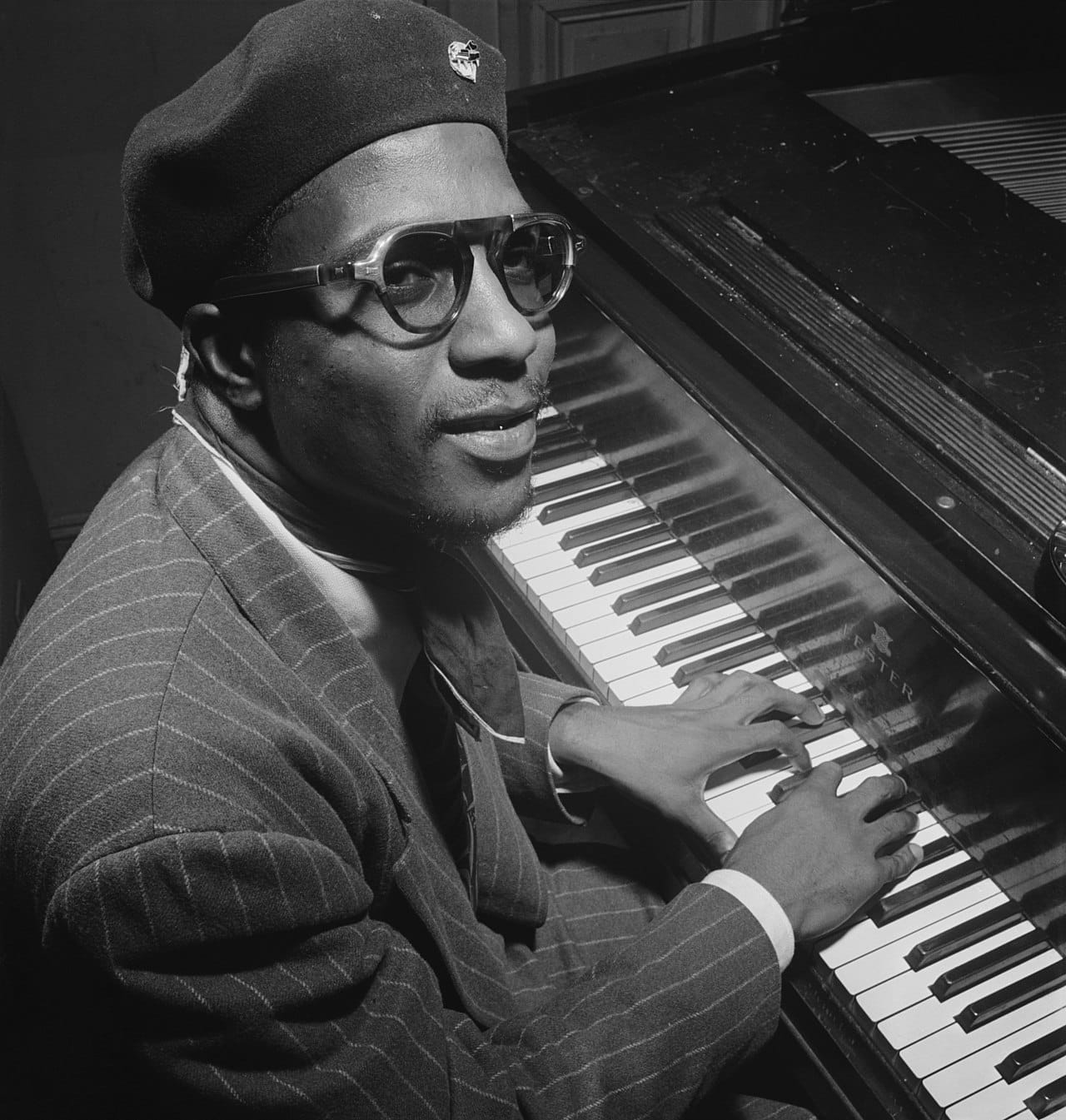
Thelonious Monk
Thelonious Monkwas one of jazz history’s most original and uncompromising pianists and composers. A founder of the bebop movement, he developed a fractured, off-kilter style and an unconventional sense of harmony that made him impossible to categorize. His compositions are among the most frequently recorded in jazz, second only to those ofDuke Ellington. Considering thatMonkwrote only about 70 pieces in his life, compared withEllington’s more than a thousand, this is remarkable.
Minton’s Playhouse and the Bebop Laboratory (1940s)
Born in North Carolina, Monk moved with his family to Harlem as a child.MonkAs the house pianist at Minton’s Playhouse, he helped invent a new musical language—bebop—withDizzy Gillespie、Charlie Parkerand others. While his contemporaries pursued dazzling runs of fast notes,Monkwent in the opposite direction, focusing on unusual rhythmic intervals and sharp dissonances. In 1944, he wrote the enduring classic “’Round Midnight” forCootie Williams, which became his best-known composition.
Years of Silence and Blue Note (1947–1952)
From the late 1940s into the early 1950s,Monkrecorded a series of far-sighted works forBlue Note, including “Epistrophy” and “Straight, No Chaser.” His musical ideas were ahead of their time, and a drug case after he tried to protect a friendBud Powellled to the loss of his cabaret card, preventing him from performing in New York clubs. For years, he faced financial hardship and remained on the margins of the mainstream.
The Quintet’s Peak and a Time Cover (1950s–1960s)
After his cabaret card was restored in 1957,Monkbegan a legendary engagement at the Five Spot Cafe withJohn Coltrane. It became one of the great moments in jazz history. He later released acclaimed albums forRiverside, including《Brilliant Corners》. By 1964,Monk’s work had finally gained broad recognition, and he became one of the few jazz musicians to appear on the cover of Time.
Withdrawal and Final Years (1970s–1982)
From the 1970s onward,Monk’s health and mental state gradually declined. He grew quiet and eventually withdrew from public life. During the final decade of his life, he rarely played piano and lived in the home of his close friend,Pannonica de Koenigswarter. In 1982, the jazz world’s “high priest” died of a stroke, aged 64.
3. Musical Style: An Architecture of Silence and Displacement
-
A Percussive Touch at the Piano:MonkHe played with fingers that barely bent, striking the keys vertically as if they were percussion instruments. The result was a crisp, stark, and forceful sound.
-
The Art of Space: He excelled at sudden pauses, using silence to intensify the notes around it. He once said, “There are no wrong notes on the piano, only wrong moments.”
-
Unusual Harmony and Rhythm: He favored dissonant intervals such as major seconds. His improvisations were jagged and full of unexpected rhythmic shifts. Listening to him can feel like missing a step—only to be caught by the surprising logic of the music.
-
Performance as Gesture: During live performances, while other musicians took solos,Monkwould often get up and dance in strange circles around the piano. It was his distinctive way of feeling the rhythm.
In Summary: Thelonious Monkwas jazz’s“deconstructivist architect”. He took apart traditional melody and rhythm and used the fragments to build a tightly structured, wonderfully strange spiritual space.
An Aesthetic Connection: For a 3D designer,Monk’s music is a model ofnonlinear modeling. He rejected smooth curves in favor of distinctive, forceful hard surfaces and geometric breaks. Every displacement carries an intense logic of its own.
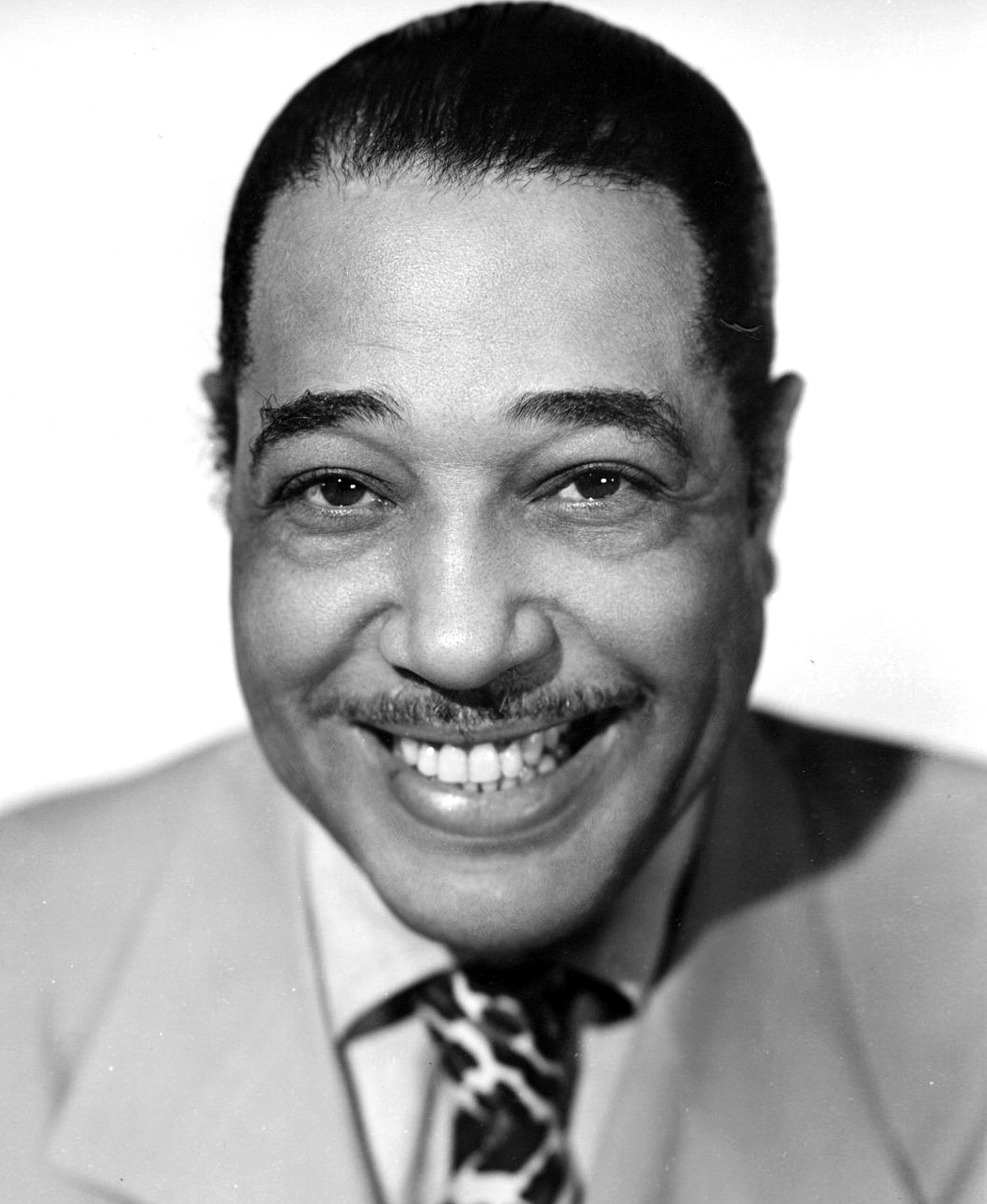
Duke Ellington
After discussing Hawkins and Dizzy, we arrive at one of the greatest creative forces in jazz history—Duke Ellington (1899–1974)。
If others were great performers, Duke was a greatcomposer and painter. He brought jazz from the clubs to Carnegie Hall and raised it to the level of an art form alongside classical music.
1. An Elegant Start and the Cotton Club (1899–1930s)
-
An Aristocratic Nickname: Born into a middle-class family in Washington, D.C., Ellington was called “Duke” by his classmates from childhood because of his elegant manner and dress.
-
The Jungle Style: In 1927, his orchestra began a residency at Harlem’s celebratedCotton Club. To accompany the club’s revues, he used brass mutes to create sounds that imitated animal calls, establishing the distinctive early style that became known as “jungle music.”
2. The Orchestra as an Instrument (1940s)
-
Writing for Individual Musicians: Ellington’s greatest innovation was that he did not write simply for “the tenor saxophone”; he wrote for “Ben Webster.” He knew each musician’s sound and tailored his music to the people in his orchestra.
-
Masterpieces: This period produced many lasting classics, including “Take the ‘A’ Train,” written by his creative partner Billy Strayhorn; “It Don’t Mean a Thing (If It Ain’t Got That Swing)”; and the extended narrative work Black, Brown and Beige.
3. Rebirth at Newport (1956)
-
A Career Resurges: Big bands fell out of fashion in the 1950s, and Ellington’s career entered a difficult period. At the 1956Newport Jazz Festival, saxophonist Paul Gonsalves played an extended solo of 27 choruses that sent the crowd into a frenzy. Ellington returned to the top and appeared on the cover of Time magazine.
4. Later Years and Final Chapter (1960s–1974)
-
A Cross-Generational Pioneer: In his later years, Ellington composed three celebrated Sacred Concerts and recorded with younger musicians such as Charles Mingus and John Coltrane, demonstrating his remarkable openness.
-
Final Years: He died of pneumonia in 1974. More than 12,000 people attended his funeral, marking the end of an era.
Artistic Style: Jazz as a Painter’s Palette
-
A Sense of Color: Ellington had an exceptional ear for timbre. He liked combining unlikely instruments—for example, clarinet with a muted trumpet—to create new and unexpected colors.
-
Beyond Categories: He disliked the label “jazz” and preferred to call his music“beyond category”. His work could be as grand as a big band and as nuanced as Impressionist music.
In Summary
Duke Ellington was jazz’s“Monet”. He used the big band as his paintbrush, layering colors across the canvas of time.
Connections: As you may know,Coleman HawkinsandDexter Gordonboth recorded tribute albums to Duke late in their careers. Ellington was a great tree whose shade sheltered nearly every modern jazz musician.
As a designer, you may appreciate Ellington’s command ofstructure and color: he never relied on force for its own sake, but pursued precise emotional expression.
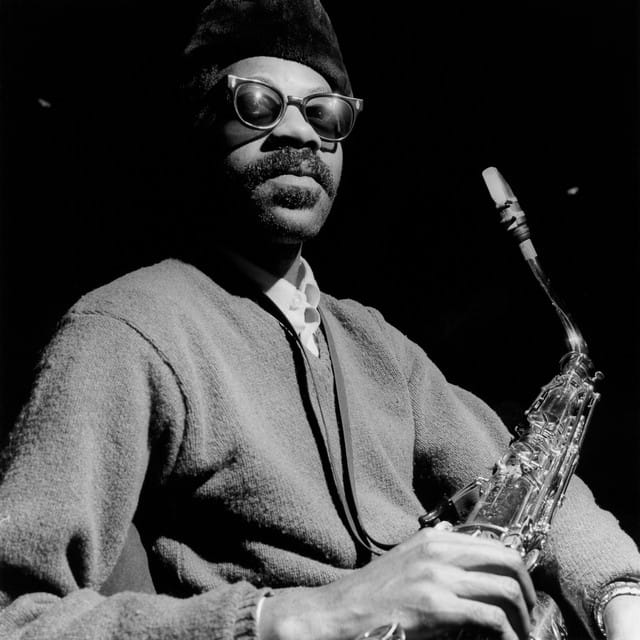
Joe Henderson
A concise biography ofJoe Henderson (1937–2001):
One of the most original tenor saxophonists in jazz history, Henderson emerged in the early 1960s with a remarkably flexible tone, deep blues roots, and an openness to avant-garde music.
1. Rise at Blue Note (1960s)
-
Early Breakthrough: Born in Lima, Ohio, Henderson moved to New York in 1962 and quickly became one of Blue Note’s star artists.
-
Classic Collaborations: He played on landmark albums including Lee Morgan’s The Sidewinder and Horace Silver’s Song for My Father.
-
Peak Years as a Leader: As a bandleader, he recorded acclaimed albums such as Page One, Our Thing, and Inner Urge. His composition “Recorda Me” remains a standard study piece for jazz musicians around the world.
2. Fusion and Exploration (1970s–1980s)
-
Miles’s Band and Fusion: He briefly joined Miles Davis’s band and began exploring electronic instruments and jazz fusion.
-
An Independent Path: In the 1970s, he recorded a series of adventurous albums for Milestone, including The Elements, exploring multitrack recording and freer structures.
3. Late-Career Success and Tributes (1990s)
-
A Second Peak: After a quieter period, Henderson reached a second career peak in the early 1990s after signing with Verve.
-
A Grammy Winner: A series of tribute albums honoring Billy Strayhorn, Miles Davis, and Antonio Carlos Jobim brought him major Grammy success. His 1992 album《Lush Life》won broad commercial success and widespread critical acclaim.
4. Death (2001)
-
: After living with emphysema for many years, Henderson died of heart failure in San Francisco in 2001, aged 64.
Musical Style: A Ghostly Chameleon
-
Tone Alchemy: Henderson had a distinctive tone, shifting in an instant from a gentle, delicate murmur to a gritty, piercing cry.
-
A Master of Rhythm: He excelled at using short, fragmented motifs in improvisation and fitting them together like puzzle pieces into expansive phrases.
-
A Versatile Musician: He was among the few musicians able to move convincingly acrosshard bop、modal jazzandfree jazz, while retaining a distinctive voice in each style.
In Summary:Joe Henderson was jazz’s“quiet master”. Unlike musicians who sought an extreme personal spotlight, he brought great intelligence and structural beauty to his playing.
An Artistic Connection: For a 3D designer, Joe Henderson’s music is likeasymmetrical geometry—it may seem spontaneous and irregular, but it rests on a remarkably rigorous internal logic, making it ideal background music for complex wiring or spatial design.
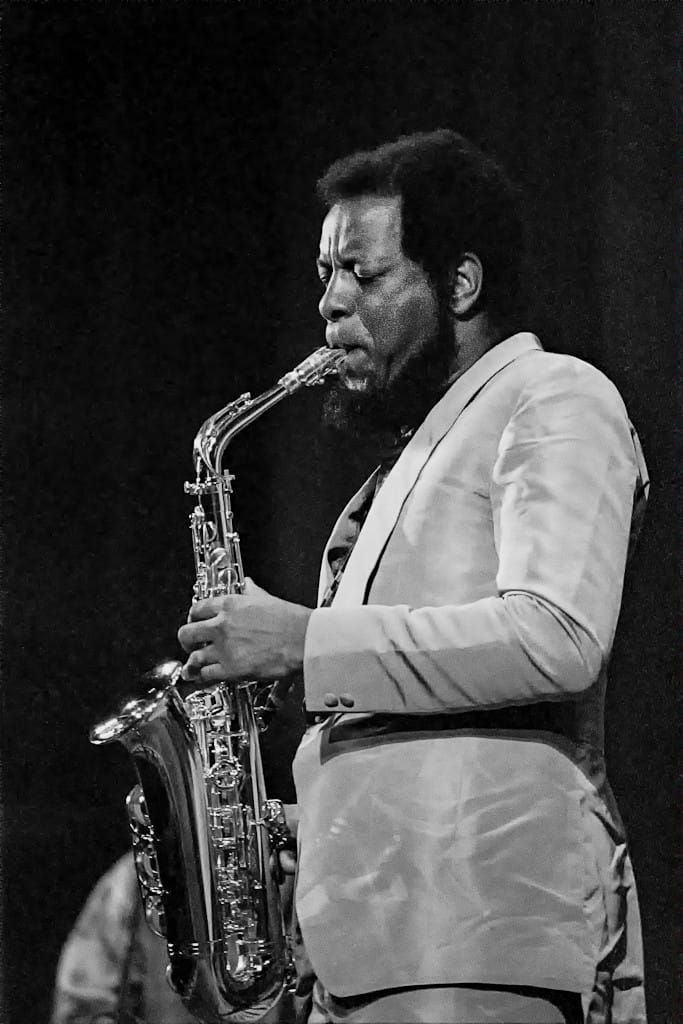
Ornette Coleman
Ornette Colemanwas one of jazz history’s most radical innovators and a leading pioneer of the free-jazz movement. He broke with the chord structures and rhythmic frameworks on which jazz had long depended, favoring improvisation guided by melodic instinct and feeling. Although his music provoked fierce controversy and even violence early in his career, he came to be recognized as one of the 20th century’s great artistic originals.
A Lone Pioneer and a Plastic Saxophone (1930s–1958)
Born in Fort Worth, Texas,ColemanColeman’s early career was difficult. His unconventional intonation and unusual sense of rhythm led traditional bands to dismiss him; after one performance, he was even beaten and his saxophone was smashed. With little money, he later bought an inexpensivewhite plastic alto saxophone, which became one of his most recognizable early visual signatures. In the late 1950s, he met kindred spirits in Los Angeles, includingDon CherryandCharlie Haden, and recorded Something Else!!!! forContemporaryRecords.
The New York Shock and Free Jazz (1959–1962)
In 1959,Colemanbrought his quartet to New York’sFive Spot Cafe, where a residency lasting several months stunned the jazz world. The audience included classical luminaries such asLeonard Bernstein. In 1960, he recorded the landmark album《Free Jazz: A Collective Improvisation》, using two quartets improvising simultaneously without predetermined chord changes. The album gave a movement its name and dramatically reshaped the boundaries of jazz.
Harmolodics and the Pulitzer Prize (1970s–2000s)
In the 1970s,Colemandeveloped his own musical theory,Harmolodics. It gives melody, harmony, and rhythm equal standing rather than subordinating them to a fixed tonal center. He formed an electric band,Prime Time, exploring the meeting of jazz, funk, and rock. In 2007, his album《Sound Grammar》earned him thePulitzer Prize for Musicand a Grammy Lifetime Achievement Award in the same year, completing his transformation from “madman” to national treasure.
Final Chapter (2015)
In 2015, the artist who had changed the course of music died of heart failure in New York, aged 85. His funeral lasted more than three hours and became a pilgrimage for avant-garde artists from around the world.
3. Musical Style: Releasing Intuition
-
Breaking Free from Chord Changes: InColeman’s music, improvisation was no longer a matter of filling in notes around predetermined chord progressions; it allowed melody to grow freely. He once said, “Music is a natural expression of feeling.”
-
A Human Voice on the Saxophone: His saxophone sound was unusual and deeply rooted in Texas blues. It could seem to cry, laugh, or shout. He deliberately sought pitches that sounded “out of tune” to achieve a more direct emotional intensity.
-
Democratic Group Improvisation: He emphasized equal dialogue among musicians. In his music, bass and drums were not merely keeping time; they were storytellers with the same importance as the lead instrument.
In Summary: Ornette Colemanwas jazz’s“abstract-expressionist master”. Like Jackson Pollock splashing paint, he freed notes from traditional grids and gave the music a will of its own.
An Aesthetic Connection: For a 3D designer,Ornette Coleman’s music is the fullest expression ofnon-uniform rational B-splines (NURBS). It rejects the rigidity of a flat plane in favor of an organic, dynamic surface shaped by control points, with every rise and fall pointing toward a raw impulse of the soul.
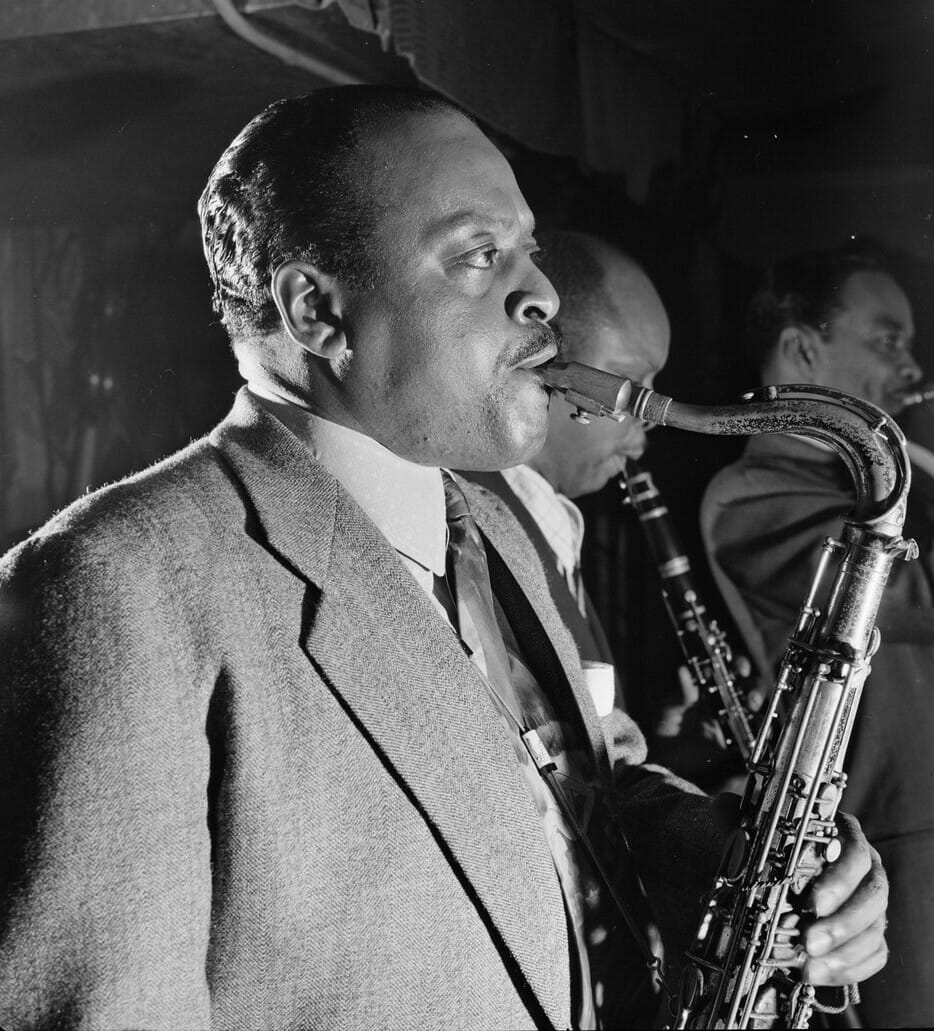
Ben Webster
Benjamin Francis Webster (March 27, 1909 – September 20, 1973) was an American jazz tenor saxophonist. He performed in the United States and Europe and recorded with many artists, including Duke Ellington, Billie Holiday, and Johnny Hodges.
Early Life and Career
Webster was born in Kansas City, Missouri. He studied violin, learned blues piano from Pete Johnson, and studied saxophone with Bud Johnson. He performed with Lester Young in Young’s family band, recorded with Blanche Calloway, and joined Benny Moten’s orchestra, appearing alongside Count Basie, Hot Lips Page, and Walter Page. In the 1930s, he played in bands led by Willie Bryant, Benny Carter, Cab Calloway, Fletcher Henderson, Andy Kirk, and Teddy Wilson.
With Ellington
From 1940, Webster was a soloist with Duke Ellington’s orchestra and recorded “Cotton Tail.” He considered the orchestra’s alto saxophonist Johnny Hodges a major influence. In 1989, Gunther Schuller wrote that Hodges had led Webster away from his earlier Coleman Hawkins-inspired style. Webster was close to Ellington band newcomers Jimmy Blanton and Billy Strayhorn.
Webster’s temperament, however, made him difficult for most of the band and Ellington himself to deal with. Mercer Ellington recalled that his father and the saxophonist argued whenever they were in the same room. Webster cried when he heard that Blanton had died, but, as baritone saxophonist Harry Carney remembered, “after a drink or two, he changed.” Webster left the band in 1943. One story says that, among his last acts as an Ellington band member, he slashed one of Ellington’s sports jackets with a razor. Clark Terry said Webster left after slapping Ellington.
Later Career in the United States
Webster worked on New York’s 52nd Street, frequently recording as both a leader and a sideman. During this period he worked with Raymond Scott, John Kirby, Bill DeArango, Sid Catlett, Jay McShann, and Jimmy Witherspoon. In 1948, he briefly returned to Ellington’s orchestra for a few months.
In 1953, he recorded The Consummate Artistry of Ben Webster (later known as King of the Tenors) with pianist Oscar Peterson, who remained an important collaborator for the next decade. Webster toured and recorded with Peterson, trumpeter Harry “Sweets” Edison, and others through Jazz at the Philharmonic. In 1956, he recorded an album with pianist Art Tatum. On December 16, 1957, he made The Hunt with Coleman Hawkins alongside fellow tenor saxophonist Coleman Hawkins.
In the late 1950s, Webster formed a quintet with Gerry Mulligan that frequently played at the Renaissance Club in Los Angeles. In 1959, the quintet—with pianist Jimmy Rowles, bassist Leroy Vinnegar, and drummer Mel Lewis—recorded Gerry Mulligan Meets Ben Webster.
In Europe
In late 1964, Webster moved to Europe and performed as he pleased. He lived in London, Scandinavia, and Amsterdam before settling in Copenhagen in 1969. In 1971, he reunited with Duke Ellington and the orchestra for several performances in Copenhagen. He also made a live recording in France with Earl Hines.
In September 1973, Webster suffered a stroke in Amsterdam and died on September 20. His body was cremated in Copenhagen, and his ashes were buried at Assistens Cemetery.
Webster’s private collection of jazz recordings and memorabilia is held at the University Library of Southern Denmark. He played the same saxophone from 1938 until his death and stipulated in his will that it should never be played again. The instrument is now on display at the Institute of Jazz Studies at Rutgers University. A street in Copenhagen is also named Ben Webster Vej in his honor.
The Ben Webster Foundation
After Webster’s death, Billy Moore Jr. and the estate’s trustees established the Ben Webster Foundation. It was formally approved in 1976 to support jazz in Denmark. The foundation uses Webster’s annual royalties to fund musicians in Denmark and the United States, and awards the prestigious Ben Webster Prize each year to an outstanding young musician. Its board, made up of Webster’s close friends and admirers, oversees his artistic rights and the reissue of his recordings.
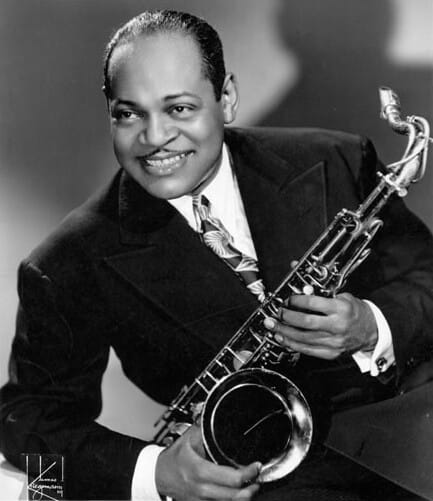
Coleman Hawkins
After several later-generation stars, we return to jazz’s roots with a concise biography ofColeman Hawkins (1904–1969).
Known as the father of the jazz tenor saxophone, Hawkins was nicknamed “Hawk” or “Bean.” Before he came along, the tenor saxophone was a peripheral instrument in jazz; he gave it a voice and a soul.
1. Defining the Tenor Saxophone (1920s–1934)
-
A Saxophone Pioneer: Born in Missouri, Hawkins studied piano and cello as a child and took up the saxophone at age nine.
-
With Fletcher Henderson’s Orchestra: In 1924, he joined Fletcher Henderson’s big band. Deeply influenced by Louis Armstrong, he helped transform the saxophone from a comic accompaniment instrument into a powerful, expressive voice for improvised solos.
2. Years in Europe and “Body and Soul” (1934–1939)
-
A European Haven: Seeking better opportunities and greater respect, Hawkins moved to Europe in 1934. There he worked with leading musicians, including gypsy-jazz guitarist Django Reinhardt.
-
A Landmark Recording: After returning to the United States in 1939, he recorded “Body and Soul.” In its famous two-chorus solo, he largely abandoned the original melody in favor of intricate improvisation over the chords. The record caused a sensation and is considered one of the greatest solos in jazz history. It also helped prepare the way for bebop.
3. A Master Across Generations (1940s–1950s)
-
A Mentor to Younger Musicians: Unlike many older musicians who resisted new music, Hawkins welcomed the younger generation. In 1944, he ledthe first bebop recording session, with emerging talents Dizzy Gillespie and Max Roach among the participants.
-
A Partnership with Monk: He was among the first to recognize Thelonious Monk’s genius and gave Monk important support and early recording opportunities.
4. Later Years and Final Chapter (1960s)
-
Still Exploring: Hawkins remained active into the 1960s, working with Duke Ellington and the younger standard-bearer Sonny Rollins.
-
Final Years: In his later years, Hawkins struggled with depression and alcoholism. He died of liver disease in 1969, aged 64.
Artistic Style and Standing
-
A Powerful Tone: Hawkins’s sound was broad, full, and emotionally charged, with a pronounced vibrato.
-
Vertical Improvisation: He favored improvising vertically throughchord structures and arpeggios, in striking contrast to Lester Young’s flowing, linear approach. Together, they established two major paths for the modern saxophone.
In Summary:Without Coleman Hawkins, the saxophone might never have become a leading voice in jazz. He representedpower and depthand served as a strong bridge from big-band swing to modern jazz.
Connections: You may notice that many of the older musicians who influenced Clifford Brown, Bud Powell, and others received support or inspiration from Hawkins. He was an anchor for his generation.
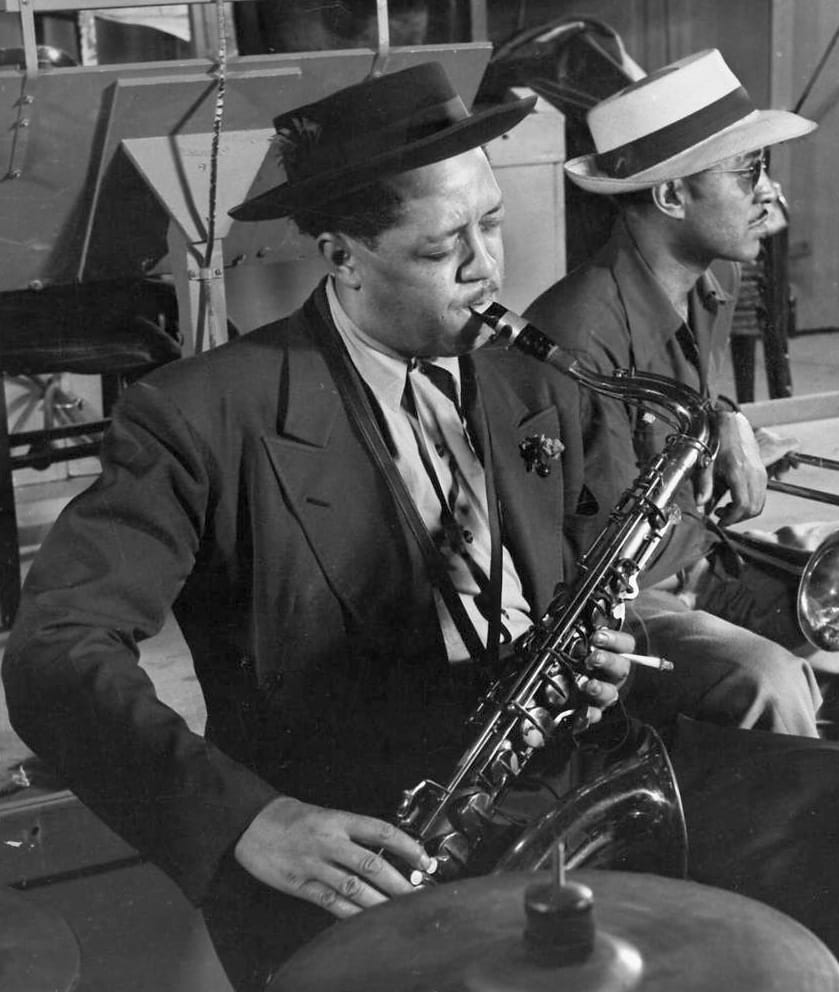
Lester Young
Lester Youngwas one of the most revolutionary tenor saxophonists in jazz history, nicknamed“Prez”(short for “the President,” a name given to him byBillie Holiday). In an era whenColeman Hawkinsdominated the saxophone, Young developed a very different style: light, poetic, and a clear forerunner of cool jazz.
A Fresh Voice in Kansas City (1909–1933)
Born into a musical family in Mississippi, Young toured across the country as a teenager with his family’s band.YoungHe first played drums and alto saxophone before settling on the tenor saxophone. Unlike the full, roaring tone then in fashion, he preferred a clear, light sound, close to that of the clarinet and with little vibrato. After settling in Kansas City in 1933, he soon joinedCount Basie’s big band and helped open a new chapter in jazz.
The Height of Swing and a Musical Soul Mate (1936–1943)
During his time with theCount Basieband,Young’s playing became one of its greatest strengths. On classics such as “Lester Leaps In,” he showed a remarkable gift for flowing melodic lines. During this period, he formed one of the most moving artistic friendships in music history withBillie Holiday.YoungHe gave her the nickname“Lady Day”, and she called him“Prez”. Their collaborations became a model of the close exchange between voice and horn, and each musician influenced the other’s musical language.
Military Trauma and a Change in Style (1944–1950)
In 1944,Youngwas drafted into the Army. For a sensitive, gentle artist who regularly used marijuana and alcohol, life in a deeply racist military camp was disastrous. He was court-martialed and confined for drug possession, an experience that severely damaged his health. WhenYoungreturned after the war, his tone had become darker and rougher. Some of its earlier lightness was gone, replaced by a heartbreaking weariness.
Isolation and Final Years (1950s–1959)
Although he was deeply admired by younger musicians such asStan Getz,Young’s health deteriorated amid years of heavy drinking. He became increasingly withdrawn and often spoke in a personal slang known as Lesterese. In 1959, he fell ill during a Paris engagement and returned to the United States. He died in a New York hotel hours after arriving, aged 49. His death prompted an outpouring of grief. Later,Charles Minguswrote the celebrated “Goodbye Pork Pie Hat,” named for the round pork-pie hat thatYoungoften wore.
3. Musical Style: A Pioneer of Linear Thinking
-
Linear Improvisation: UnlikeColeman Hawkins’s “vertical” approach, which focuses on chord structures,Younggave greater attention to the continuity of the melody. His improvisations moved like an unrestrained river, gliding around the beat and creating a sense of rhythmic weightlessness.
-
A Cool-Toned Sound: He set aside the heavy vibrato popular at the time in favor of a clear, airy tone. This cool aesthetic became a foundation of West Coast jazz a decade later.
-
Minimalism and Space: He was especially good at leaving space in his improvisations and letting the music breathe. His phrases could be unexpectedly simple yet land directly on the listener’s emotions.
In Summary: Lester Youngwas jazz’s“poet”. With restraint and elegance, he showed later saxophonists how to set aside force and conquer the world through melodic tenderness.
An Aesthetic Connection: For a 3D designer interested in lightweight construction and minimalism,Lester Young’s music is a model ofstreamlined surfaces. Its melody has no redundant structures; each turn follows a natural sense of momentum and ease.
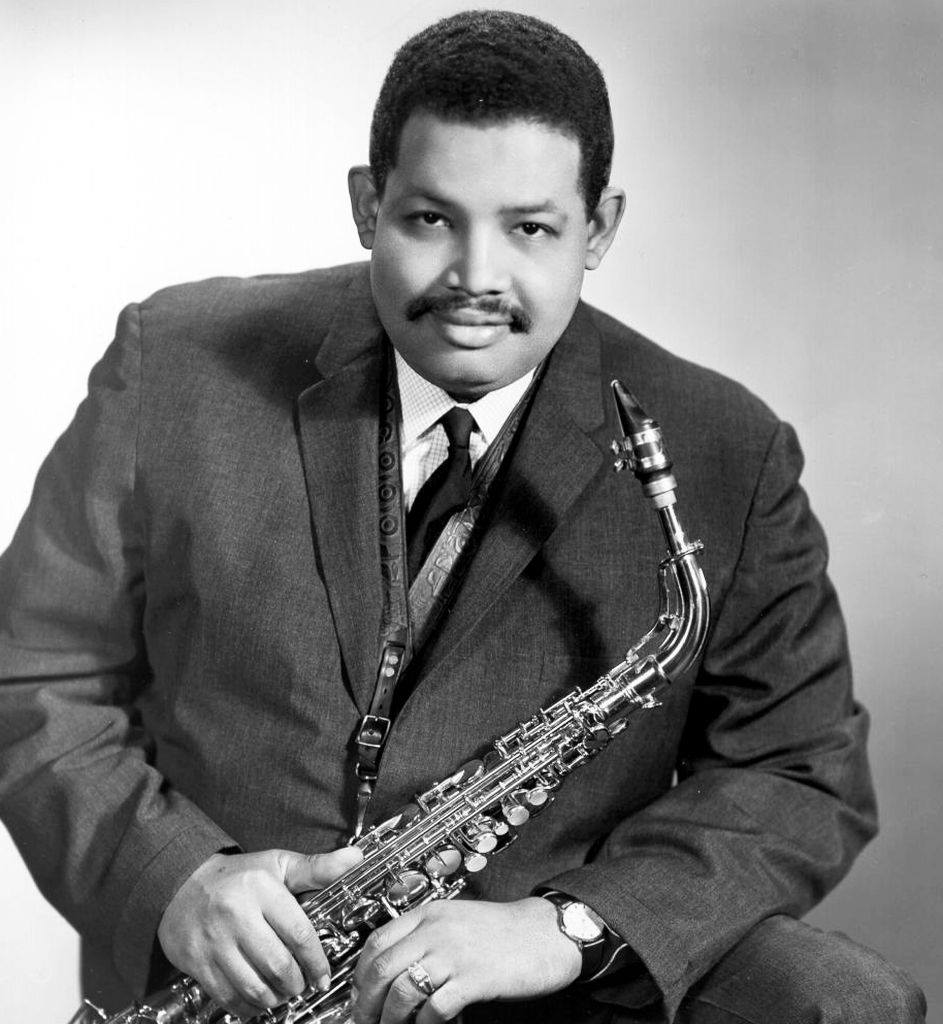
Cannonball Adderley
After Bud Powell, here is a concise biography ofCannonball Adderley (1928–1975). A leading figure in hard bop and soul jazz, he was known for an irresistibly engaging style.
1. Early Life and the Origin of His Nickname (1928–1954)
-
A Musical Start: Born in Tampa, Florida, Adderley grew up in a musical family. Before moving to New York, he taught a high-school band in Florida.
-
The Nickname: “Cannonball” began as a mispronunciation of “Cannibal.” His classmates teased him with it because he had a healthy appetite in elementary school.
2. Overnight Success (1955)
-
“Charlie Parker’s Successor”: Adderley came to New York in 1955 to continue his studies. One night at Café Bohemia, he filled in for a late-arriving musician and astonished the audience. By the next day, the city’s jazz community was talking about “the new Charlie Parker.”
3. The Miles Davis Years (1957–1959)
-
A Peak Collaboration: In 1957, Adderley joined Miles Davis’s sextet, sharing the saxophone section with John Coltrane.
-
Landmark Albums: During this period he played on two of the most celebrated albums in jazz history:《Milestones》and《Kind of Blue》. He also recorded one of his signature albums for Blue Note,《Somethin’ Else》(with Miles making a guest appearance).
4. Bandleader and Soul Jazz (1959–1970s)
-
The Quintet Years: After leaving Davis’s group, Adderley formed a new quintet with his younger brother, trumpeter Nat Adderley.
-
A Crossover Hit: Blending gospel and blues, the band helped pioneer soul jazz. In 1966, “Mercy, Mercy, Mercy,” written by the group’s keyboardist Joe Zawinul, also became a major pop hit.
-
An Educator on Stage: He often explained the music to audiences during performances. His humorous, informative introductions made him especially popular.
5. Death and Influence (1975)
-
Adderley died suddenly of a cerebral hemorrhage in 1975, aged 46.
-
Historical Importance: He was among the most commercially successful and influential jazz musicians of the 1950s and 1960s. He brought modern jazz, often considered difficult, back to its rhythmic and joyful roots. His playing was full of warmth and vitality.
In Summary:If Bud Powell represented jazz’s profound and tortured genius, Cannonball Adderley represented itslively, blues-rooted, and accessibleside. His playing combined exceptional technique with a strong sense of storytelling and joy.
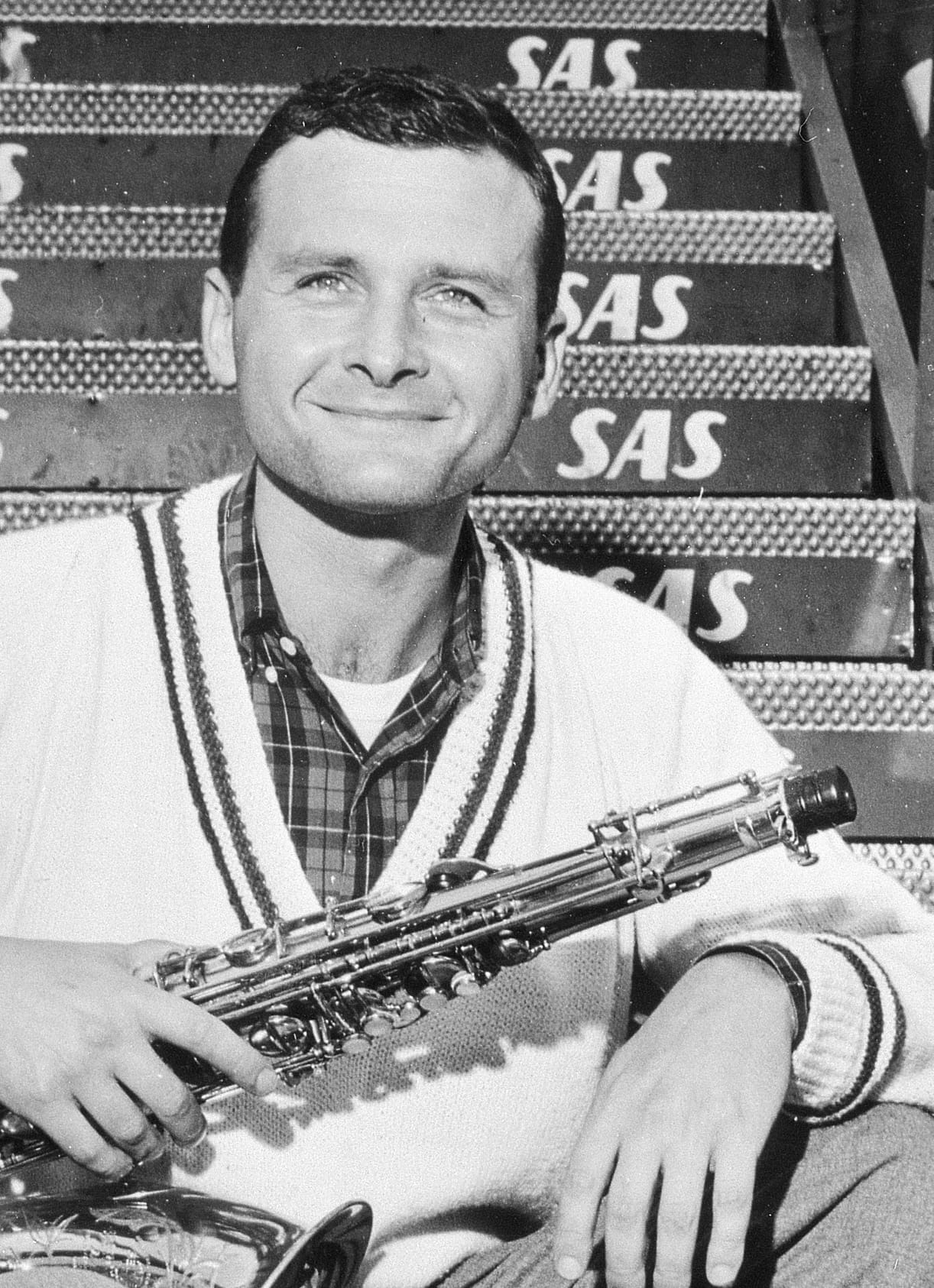
Stan Getz
Stan Getzwas one of jazz history’s most admired tenor saxophonists, with a remarkably pure tone. Known as“The Sound”(“the Sound”), he helped makeBossa Nova(bossa nova) a global phenomenon in the 1960s, bringing the warmth of Brazilian music together with the sophistication of jazz.
The Rise of “The Sound” (1940s–1950s)
Born in Philadelphia to Ukrainian Jewish immigrant parents,Getzwas a musical prodigy who mastered several instruments in his teens. In the late 1940s, he joinedWoody Herman’s big band as one of the famous Four Brothers saxophone section. His performance on “Early Autumn” made him a star. He was deeply influenced byLester Young, favoring light, flowing melodic lines over the powerful, weighty style ofColeman Hawkins.
West Coast Cool and the Struggle with Addiction (1950s)
In the 1950s,Getzbecame a leading voice of West Coast jazz. Like many gifted musicians of his generation, he struggled for years with heroin addiction. In 1954, he was arrested for trying to rob a pharmacy to obtain morphine, a crisis that nearly ended his career. He later moved to Europe—living in Sweden and Denmark for several years—to escape the drug scene in the United States. His artistry did not decline there; encouraged by European audiences, he became even more accomplished.
The Bossa Nova Wave and Grammy Peak (1962–1964)
After returning to the United States in 1961,Getzrecorded the albumCharlie Byrdwith guitarist《Jazz Samba》, bringing Brazil’s new rhythms into jazz. In 1964, he joined Brazilian musiciansJoão GilbertoandAntônio Carlos Jobimto record the landmark album《Getz/Gilberto》. The song “The Girl from Ipanema,” sung byAstrud Gilberto, won theGrammy Award for Record of the Year. The album became one of the best-selling in jazz and defined a cool, international aesthetic.
Fusion and Final Years (1970s–1991)
did not rest on his earlier achievements. He played with younger musicians such asGetzin a jazz-fusion group and recorded the classic albumChick Corea、Stanley Clarke. In his later years, he focused on teaching and acoustic performance. The “golden voice” of jazz died of liver cancer in Malibu in 1991, aged 64.《Captain Marvel》In his later years, he focused on music education and acoustic performance. In 1991, the jazz world’s “Golden Voice” died of liver cancer in Malibu, aged 64.
3. Musical Style: Effortless Elegance
-
A Pure Tone:Getz’s saxophone sound is clear and pure, like a beam of light cutting through the morning mist.
-
Natural Phrasing: His improvisations feel effortless, with notes flowing into one another as if no breath were needed. Even at high speed, he retained a cool, lyrical quality.
-
A Cross-Cultural Interpreter: He could translate Brazilian rhythms, with their distinctive character, into a jazz language understood by listeners around the world. That lightness became his lifelong artistic signature.
In Summary: Stan Getzwas jazz’s“poet”. With his saxophone, he stripped away aggression and clutter, leaving pure melodic beauty.
An Aesthetic Connection: For a 3D designer pursuing refined surface quality and flowing form,Stan Getz’s music is a perfect example ofG2/G3 curvature continuity. His melodies avoid abrupt turns; every transition is as smooth and natural as flowing water.
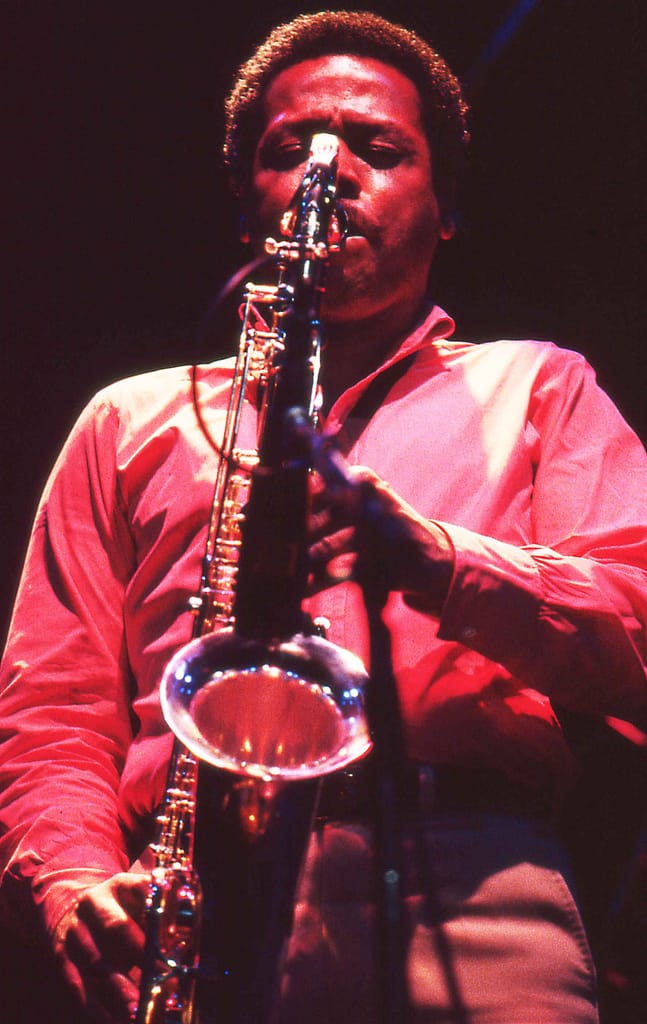
Wayne Shorter
Wayne Shorteris widely regarded as one of jazz history’s greatest composers and a master of both tenor and soprano saxophone. His career crossed hard bop, modal jazz, and fusion. A deep, mysterious, and philosophical musical voice made him one of jazz’s great thinkers.
The Jazz Messengers and the Rise of the “Wise One” (1959–1963)
Born in Newark, New Jersey,ShorterjoinedArt Blakey’sJazz Messengers(the Jazz Messengers) in 1959 and soon became the group’s musical director. He wrote many hard-bop classics during this period. His thoughtful nature and detached musical perspective earned him the nickname “the Wise One.”
A Key Voice in Miles Davis’s Quintet (1964–1970)
In 1964, he joinedMiles Davis’s Second Great Quintet, where he andHerbie Hancock、Ron CarterandTony Williamshelped rewrite the history of jazz.Shorterwas the quintet’s most prolific composer, contributing classics such as “Footprints,” “Nefertiti,” and “E.S.P.” Their modal harmonies and sense of space stood at the heart of the group. He later played a central role onMiles Davis, a landmark fusion album, and《In a Silent Way》.《Bitches Brew》(another landmark album).
Weather Report and the Peak of Fusion (1970s–1980s)
In 1970, he co-founded the legendary jazz-fusion groupJoe Zawinulwith keyboardistWeather Report. In the group,Shorterturned increasingly to soprano saxophone, whose sound was airy as silk yet sharply focused. Recordings such as “Birdland” became artistic and commercial high points of the fusion era.
The Final Quartet and Spiritual Exploration (2000s–2023)
In the 21st century,Shorterformed a celebrated quartet withDanilo Pérez、John PatitucciandBrian Blade. The group pursued an approach called “Zero Gravity,” breaking away from predetermined frameworks in search of intuition and spiritual connection. Shorter received a Grammy Lifetime Achievement Award in 2015 and several Grammy Awards for Best Jazz Album, remaining at the forefront of innovation.
3. Musical Style: Poetic Space and Structural Art
-
A Composer’s Mind:Shorter: Shorter’s improvisations often sound like composition in real time. Rather than piling up notes, he usesspaceand unexpected turns to create a surreal atmosphere.
-
Two Distinct Saxophone Voices: His tenor saxophone has a full, slightly melancholy sound. His soprano playing helped define the instrument in modern jazz: elegant, precise, and touched with a mysterious, almost cosmic quality.
-
Buddhist and Philosophical Influences: A devoted Buddhist,Shorteroften explored life, the universe, and rebirth in his music. He once said, “Music should be like a story that has not yet been finished.”
In Summary: Wayne Shorterwas jazz’s“philosopher”. With his saxophone, he painted nonlinear, fantastical abstractions, showing that jazz could be as profound as poetry and as expansive as the night sky.
An Aesthetic Connection: For a 3D designer drawn to flowing forms and surreal structures,Wayne Shorter’s music is an aural model ofparametric design. Each phrase feels like a surface generated in space: guided by inner logic yet full of unpredictable, organic beauty.
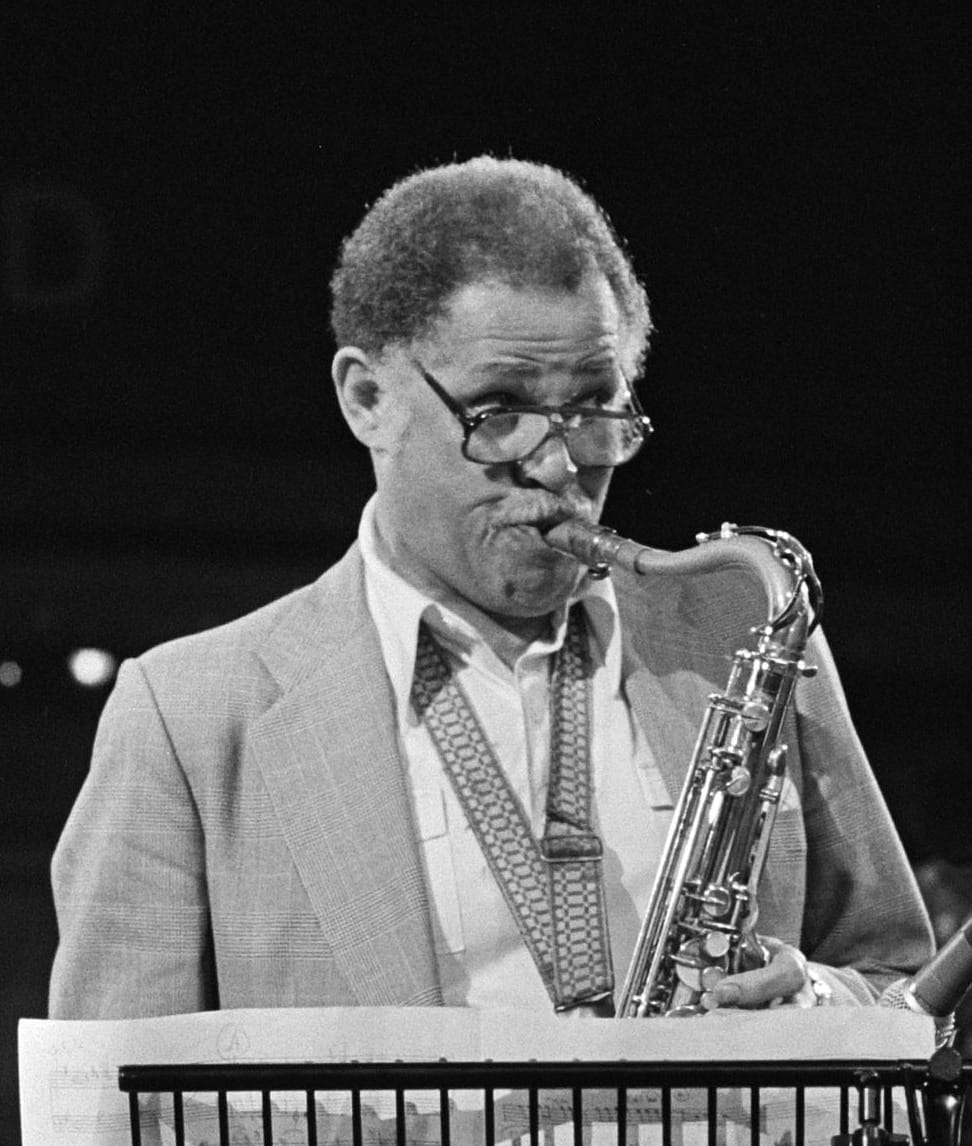
Dexter Gordon
A concise biography ofDexter Gordon (1923–1990).
One of the most iconic tenor saxophonists in jazz history, Gordon stood 6 feet 6 inches tall and was nicknamed “Long Tall Dexter.” He was the first musician to bring bebop successfully to the tenor saxophone and a key bridge between Coleman Hawkins, John Coltrane, and Sonny Rollins.
1. A Bebop Pioneer in Los Angeles (1940s)
-
A Medical Family: Born in Los Angeles, Gordon grew up in a family of doctors; his father had treated Duke Ellington. He began on clarinet at 13 and switched to tenor saxophone at 17.
-
Learning in the Bands: Early in his career, he developed his skills in the bands of Lionel Hampton and Louis Armstrong.
-
Saxophone Battles: In the late 1940s, his saxophone duels with Wardell Gray, including “The Chase,” caused a sensation. Their competitive style later became a jazz tradition.
2. Decline and Renewal (1950s–1961)
-
A Dark Decade: Drug addiction led Gordon to prison several times in the 1950s, and his career fell into a deep slump.
-
A Blue Note Revival: In 1961, he joined Blue Note and recorded Doin’ Allright, Dexter Calling…, and what is widely considered his masterpiece,《Go!》. These albums reveal his giant, mature sound and his characteristic laid-back sense of time, often described as playing “behind the beat.”
3. Years in Europe (1962–1976)
-
Paris and Copenhagen: Tired of racism and the drug environment in the United States, Gordon moved to Europe for 14 years.
-
Landmark Recordings: In Europe, he made the celebrated album Our Man in Paris with Bud Powell, showing remarkable creativity. He was treated like a rock star by European audiences, and his life became more stable.
4. A Hero’s Return and an Oscar Nomination (1976–1990)
-
A Triumphant Homecoming: When Gordon returned to the United States in 1976, his performances at the Village Vanguard in New York caused a sensation and were seen as a triumphant comeback for jazz.
-
A Film Legacy: In 1986, he starred inRound Midnight. He played a down-and-out jazz musician with striking realism and received anAcademy Award nomination for Best Actor.
-
Final Years: He died of kidney failure in Philadelphia in 1990, aged 67.
Artistic Style and Influence
-
A Signature Sound: Gordon’s saxophone tone was huge and spacious, with an unmistakable confidence.
-
A Distinctive “Behind-the-Beat” Feel: He liked to play on the edge of the beat. His relaxed yet deeply rhythmic approach became a personal signature.
-
Quoting the Masters: His improvisations were full of humor, and he would unexpectedly quote familiar songs—from “Happy Birthday” to passages from Wagner.
-
A Sense of Ritual: Before playing a ballad, he often recited its lyrics to help the audience understand its emotional world.
In Summary:Dexter Gordon was jazz’s“elegant giant”. He brought Coleman Hawkins’s weight and power together with Lester Young’s fluidity, carrying both into modern jazz.
Connections: Gordon was an important early model for John Coltrane and Sonny Rollins. After those younger players became famous, he in turn absorbed elements of their hard-bop styles. This kind of influence across generations is rare and moving in jazz history.
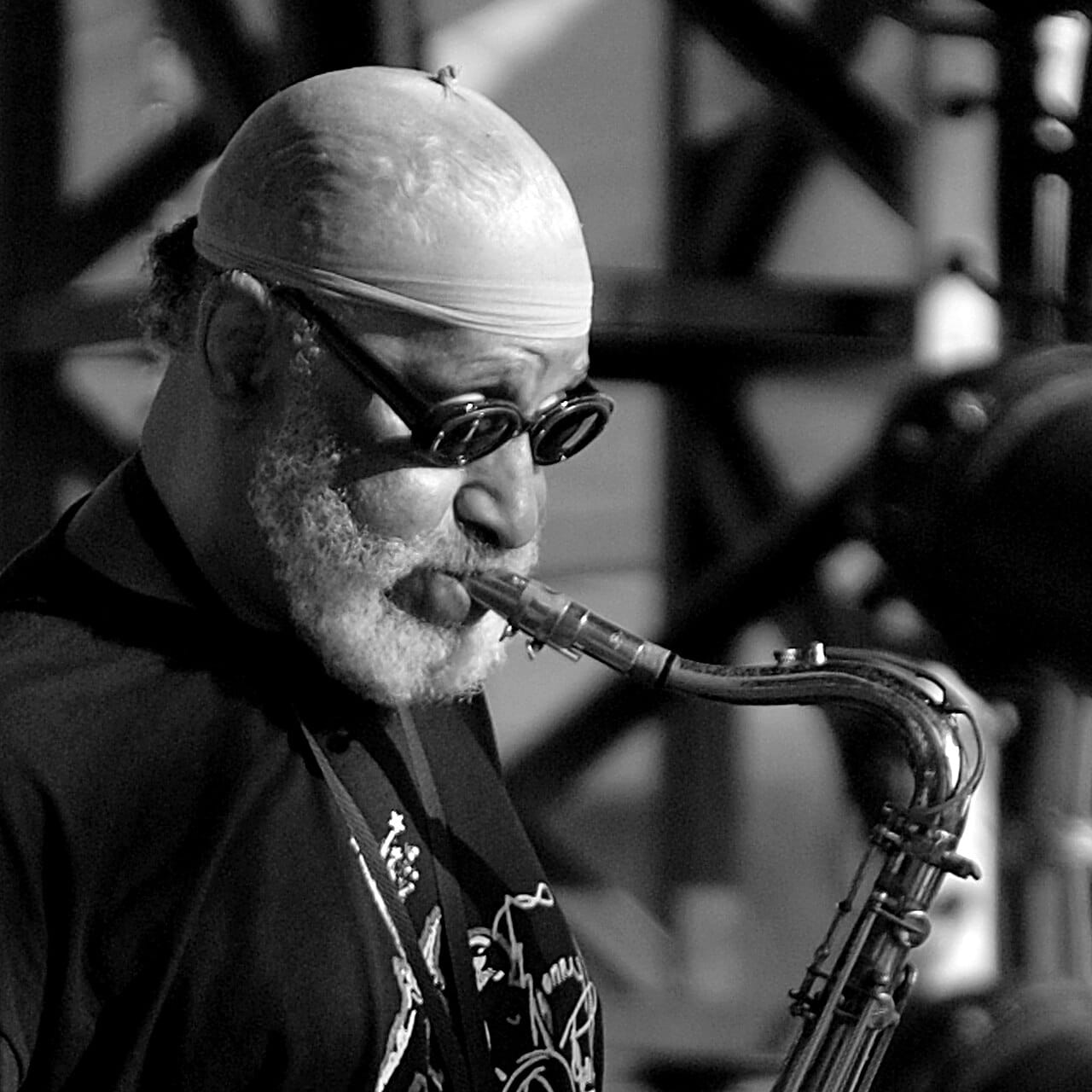
Sonny Rollins
Sonny Rollinsis widely regarded as one of jazz history’s greatest tenor saxophonists. His nickname was“Newk”. A defining figure of the hard-bop era, he was also a master of developing musical ideas through improvisation. Over a career spanning seven decades, his powerful breath, firm tone, and repeated retreats from the spotlight at the height of his success made him a symbol of self-renewal in jazz.
The Golden Boy of the Bebop Era (1940s–1954)
Born into a family of West Indian immigrants in Harlem, New York,Rollinsshowed remarkable talent as a teenager and played with bebop pioneers such asThelonious Monk、Bud Powell. In the early 1950s, he joinedMiles Davis’s band and recorded classic original compositions such as “Oleo” and “Airegin.” He was also struggling with addiction at the time. In 1954, he voluntarily stepped away from music for the first time, taking a manual-labor job in Chicago as he worked to recover and rebuild his life.
The Saxophone Colossus (1955–1958)
After returning in 1955,Rollinsjoined a quintet led byClifford BrownandMax Roach, launching an exceptionally creative period. In 1956, he recorded his best-known album,《Saxophone Colossus》(Saxophone Colossus). “St. Thomas” shows how deftly he brought Caribbean calypso rhythms together with jazz. He also established the piano-less trio format of saxophone, bass, and drums. Its spare setting gave him unusual freedom to improvise and confirmed his stature as a leading soloist.
The Hermit on the Bridge and His Return (1959–1971)
In 1959, at the height of his career,Rollinsannounced another retreat. Because practicing in his apartment disturbed his neighbors, he spent the next two years carrying his saxophone to New York’sWilliamsburg Bridgeeach day to practice over the East River. In 1962, he returned with the album《The Bridge》, showing a deeper and more exploratory sound. In the late 1960s, he traveled to India to study yoga and meditation, seeking the spiritual force behind music.
Crossing Genres and Later Honors (1972–2010s)
From the 1970s onward,Rollinswas open to funk and fusion. He even contributed a memorable solo on an album byRolling Stones. His generosity onstage was legendary; a single solo could last for tens of minutes. In 2011, he received the National Medal of Arts from President Barack Obama. Around 2014, respiratory problems led him to stop performing publicly, but he remains a spiritual beacon for jazz musicians.
3. Musical Style: Logic and Power
-
Thematic Improvisation:Rollins: One of Rollins’s greatest gifts was taking a simple melodic fragment—a motif—and developing it like a set of building blocks through rhythmic displacement, inversion, and variation into a sweeping statement.
-
A Tough, Full-Bodied Tone: His saxophone has a metallic, grainy quality, both powerful and witty. Even in serious improvisations, he may slip in a familiar melody or a sly phrase.
-
An Unerring Sense of Time: Even without a piano, he could create a powerful swing through accents and pauses in the saxophone line alone.
In Summary: Sonny Rollinswas jazz’s“seeker”. Through strict discipline and constant self-reinvention, he turned the saxophone into an instrument for thought and reflection.
An Aesthetic Connection: For a 3D designer interested in structural strength and dynamic balance,Rollins’s music is an excellent example ofgenerative modeling. He starts from a simple point, iterates on it, and gradually builds a complex, tension-filled topology.
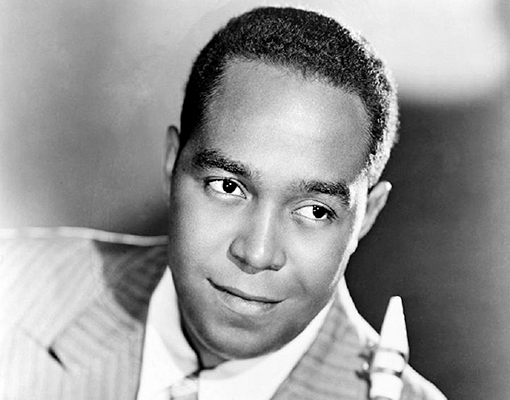
Charlie Parker
Charles Parker Jr. (August 29, 1920 – March 12, 1955)
Charles Parker Jr., nicknamed“Bird”or“Yardbird”, was an American jazz saxophonist, bandleader, and composer.
Parker was an exceptionally influential soloist and a leading figure in the development ofbebop, a style marked by fast tempos, virtuosity, and complex harmony. He introduced revolutionary rhythmic and harmonic ideas, including rapid passing chords, altered chords, and chord substitutions. His main instrument was the alto saxophone.
Parker became an icon to the hipster subculture and, later, the Beat Generation. He helped shape the image of the jazz musician as a uncompromising artist and intellectual rather than simply an entertainer.
Early Life
Charles Parker Jr. was born in Kansas City, Kansas, on August 29, 1920. His parents were Charles Parker Sr. and Adelaide “Addie” Bailey. His father worked as a Pullman porter and also toured as a pianist and singer, which had some influence on Parker’s musical development.
-
Age 11: Began studying the saxophone.
-
Age 14: Joined the Lincoln High School band and got a new alto saxophone.
-
1935: Left high school and began his professional music career.
Career
1936–1938: Improvisation and Intensive Study
In early 1936, Parker made a mistake during a jam session, and drummer Jo Jones threw a cymbal toward him to signal that he should leave the bandstand. The incident drove him to practice more intensely; he reportedly spent up to 15 hours a day practicing over the next few years. Late in 1936, he was seriously injured in a car accident while traveling to a performance, breaking ribs and injuring his spine. During his recovery, he further developed his ability to improvise over chord changes.
1939–1944: The Rise of Bebop
Parker moved to New York in 1939. While washing dishes at Jimmy’s Chicken Shack, he heard pianist Art Tatum. A breakthrough came while he was practicing “Cherokee”: he realized he could use a chord’s upper extensions as a melodic line, helping him develop the language ofbebop.
Between 1942 and 1944, a recording ban by the musicians’ union meant that much of bebop’s early development went undocumented. Parker formed a close friendship with Dizzy Gillespie, and together they helped define the new style.
1945–1953: A Career as a Leader
-
1945: Recorded classics including “Ko-Ko” and “Billie’s Bounce.”
-
1946: Suffered a physical and emotional breakdown in California and was treated at Camarillo State Hospital.
-
1949: Fulfilled a long-held wish to record with strings, making the celebrated Charlie Parker with Strings.
-
1953: Gave a legendary concert at Massey Hall in Toronto with Gillespie, Mingus, and others, playing a plastic saxophone.
Illness and Death
Parker struggled for years with heroin addiction, alcoholism, and mental health problems. The death of his daughter Pree in 1954 devastated him, and he attempted suicide.
On March 12, 1955, Parker died at age 34 in Baroness Pannonica de Koenigswarter’s suite at the Stanhope Hotel in New York. The official causes were lobar pneumonia and a bleeding ulcer. Because his body had been worn down, the medical examiner estimated his age at between 50 and 60.
Artistic Contributions and Style
| Feature | Description |
| Contrafact | Composing a new melody over the chord progression of an existing jazz standard, as in “Ornithology.” |
| Bird Changes | A distinctive reharmonization of the 12-bar blues, as in “Blues for Alice.” |
| Rhythmic Innovation | Flexible use of triplets and offbeat accents gave his solos a freer feel. |
| Notable Works | 《Confirmation》、《Anthropology》、《Scrapple from the Apple》、《Yardbird Suite》。 |
“You can tell the history of jazz in four words: Louis Armstrong, Charlie Parker.” —Miles Davis
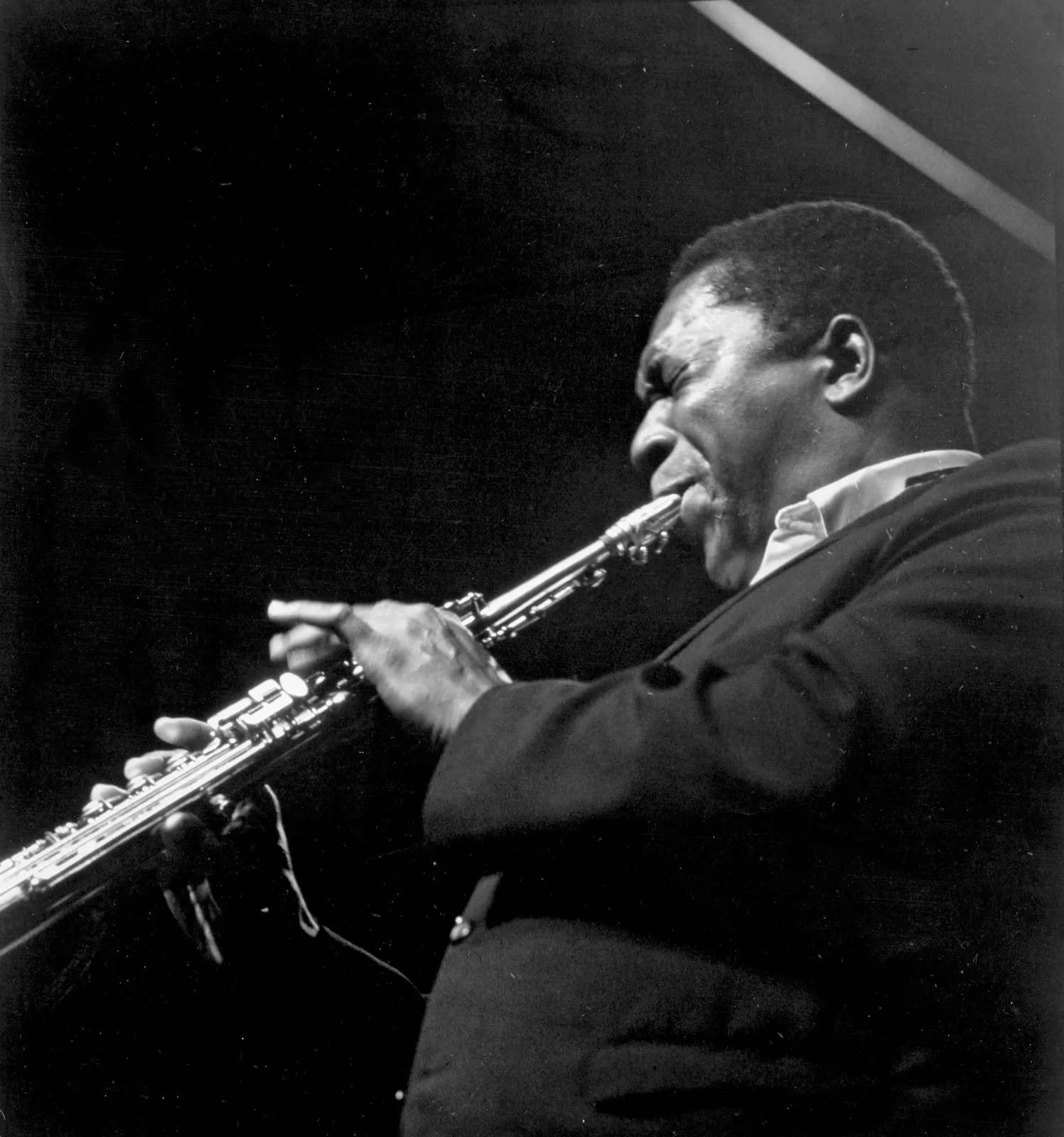
John Coltrane
A concise biography ofJohn Coltrane (1926–1967):
One of the greatest tenor saxophonists in jazz history, Coltrane was nicknamed “Trane.” He raised jazz from entertainment to a form ofspiritual practiceand became one of the music’s most influential innovators.
1. Apprenticeship and the Miles Davis Quintet (1940s–1957)
-
A Late-Blooming Star: Born in North Carolina, Coltrane developed his craft in Navy bands and various R&B groups. He did not become widely known until he joined Miles Davis’s quintet in 1955.
-
Recovery and Renewal: In 1957, Davis fired him because of his drug addiction. After a profound religious awakening, Coltrane overcame his drug and alcohol problems, returned to the scene, and began an inspiring collaboration with Thelonious Monk.
2. “Sheets of Sound” and Modal Jazz (1958–1960)
-
Sheets of Sound: After rejoining Davis’s band, Coltrane played on the landmark album《Kind of Blue》. On his own album《Giant Steps》, he showcased his fast, intricate, tightly reasoned “sheets of sound,” pushing beyond the limits of improvising over conventional chord changes.
-
The Soprano Saxophone: He revived interest in the neglected soprano saxophone and recorded one of the instrument’s most successful jazz adaptations, “My Favorite Things.”
3. The Classic Quartet and A Love Supreme (1961–1965)
-
A Spiritual Peak: With pianist McCoy Tyner, bassist Jimmy Garrison, and drummer Elvin Jones, Coltrane formed one of the most powerful quartets in jazz history.
-
A Landmark Album: In 1965, he released the spiritual suiteA Love Supreme. More than a record, it was an offering of gratitude to God and marked a turn from modal jazz toward spiritual exploration.
4. Free Jazz and the Final Years (1966–1967)
-
Free Jazz: In his later years, Coltrane broke down the restraints of rhythm and melody, recording controversial free-jazz works such as《Ascension》in pursuit of pure emotional force and spiritual transcendence.
-
Death: Coltrane died of liver cancer in 1967, aged 40.
Musical Style: A Relentless Explorer
-
Relentless Curiosity: Coltrane was a jazz ascetic, practicing saxophone for more than ten hours a day. He once said, “I never feel that my playing is complete. I always feel there is something better to come.”
-
Spirituality and Tension: His playing carried enormous tension and intensity; his later works often had the solemnity of a ritual.
-
A Global Outlook: He was among the first jazz musicians to bring Indian music, African elements, and Eastern scales into the music.
In Summary:John Coltrane was jazz’s“saint”. His music is more than a sequence of notes; it is an ongoingquestion addressed to the universe and the divine。
Connections: Among the musicians mentioned earlier,Joe HendersonandDexter Gordonwere deeply influenced by Coltrane. After 1967, it can seem that tenor saxophonists everywhere were trying to find a way out of his enormous shadow.
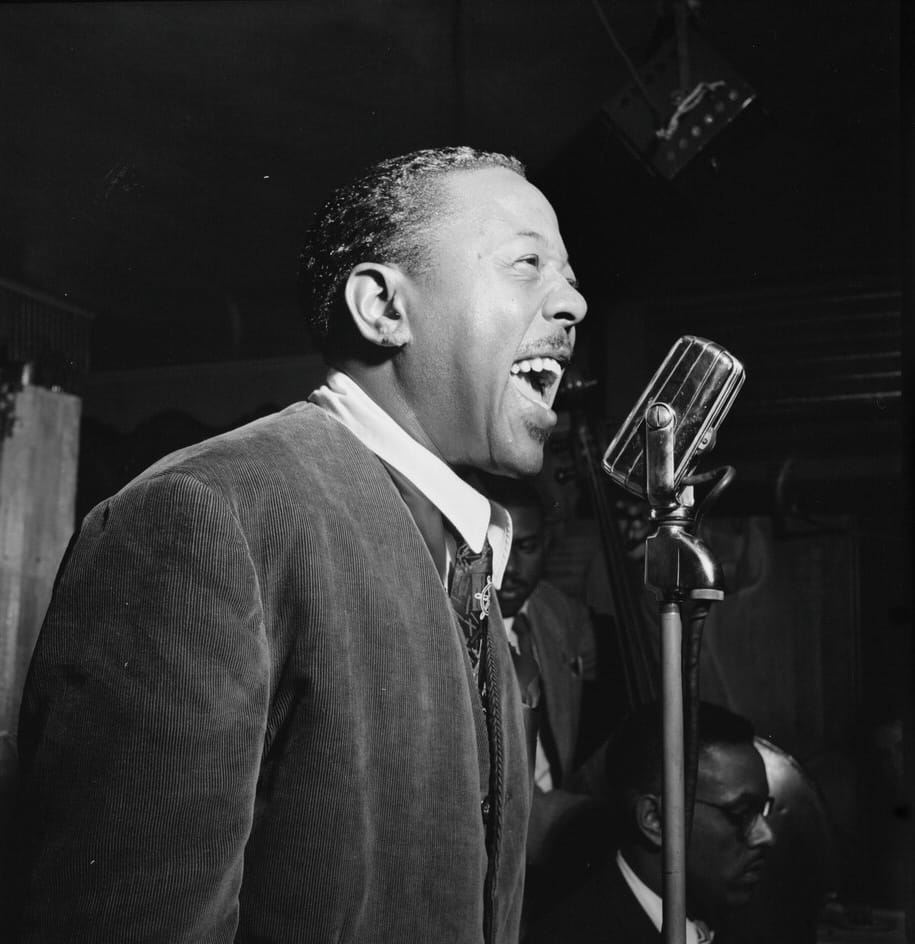
Roy Eldridge
Roy Eldridge, nicknamed“Little Jazz”, was a pivotal figure who connected early jazz with the modern era. He was one of the most important bridges between the pioneers of early jazzLouis Armstrongand the innovators who followedDizzy Gillespie. At the height of swing in the 1930s and 1940s, his extreme range, lightning speed, and combative spirit made him a model for trumpeters across the country.
The Pittsburgh Prodigy and the Rise of “Little Jazz” (1911–1935)
Born in Pittsburgh, Pennsylvania,EldridgeEldridge first studied drums and alto saxophone. The saxophone left a lasting mark on his trumpet style: he sought to play lines on the trumpet as fluid as a saxophonist’s. After moving to New York in the early 1930s, he quickly gained attention for his forceful improvisations. Because he was small in stature but full of energy, saxophone greatOtto Hardwickgave him“Little Jazz”, a nickname that stayed with him for life.
Challenging the Color Line (1936–1944)
Eldridgewas among the first Black musicians to break segregation barriers and join top white big bands. He played withGene KrupaandArtie Shaw. While with theGene Krupaband, his work with singerAnita O’Dayon “Let Me Off Uptown” became a major hit. On tour, however, he faced repeated and severe racism, which wounded his pride and led him to leave the groups in anger more than once.
A Guide toward Modern Jazz (1945–1950s)
When the bebop revolution began, the youngDizzy Gillespieopenly acknowledged that his own hero wasRoy Eldridge。Eldridge. His harmonic ideas and exploration of the upper register gave modern jazz some of its earliest blueprints. In the 1950s, he joined the Jazz at the Philharmonic (JATP) tours organized byNorman Granzand faced off in countless legendary trumpet-and-saxophone battles withColeman Hawkins, showing an unshakable competitive spirit.
Later Years and Final Chapter (1960s–1989)
Late in his career, Eldridge accompaniedElla Fitzgeraldand held a long residency at New York’s celebratedRyan’sclub. Even in his later years, he played with the same fierce, all-in commitment. A stroke in 1980 forced him to stop performing. He died in New York in 1989, aged 78, one of jazz history’s most fearless trumpet fighters.
3. Musical Style: Pushing Speed and Range to the Limit
-
A Trumpet Voice Shaped by the Saxophone:Eldridge’s playing leapt across wide intervals and raced through scales at high speed, breaking the limits of trumpet technique at the time.
-
Exploring the Upper Register: He greatly expanded the trumpet’s practical range. His high notes burst like fireworks, combining visual drama with intense emotional force.
-
Competitive Improvisation: He loved cutting contests. Whatever the opponent, he brought an almost obsessive intensity and aggression to an improvised exchange. That energy helped catalyze the shift from swing to bebop.
In Summary: Roy Eldridgewas jazz’s“torchbearer”. He forged speed and virtuosity from the trumpet tradition and personally carried that flame to the next generation of innovators.
An Aesthetic Connection: For designers who value performance and dynamic range,Roy Eldridge’s music is an art ofoverclocking. He worked at the instrument’s limits, turning every breath into a brilliant spark under pressure.
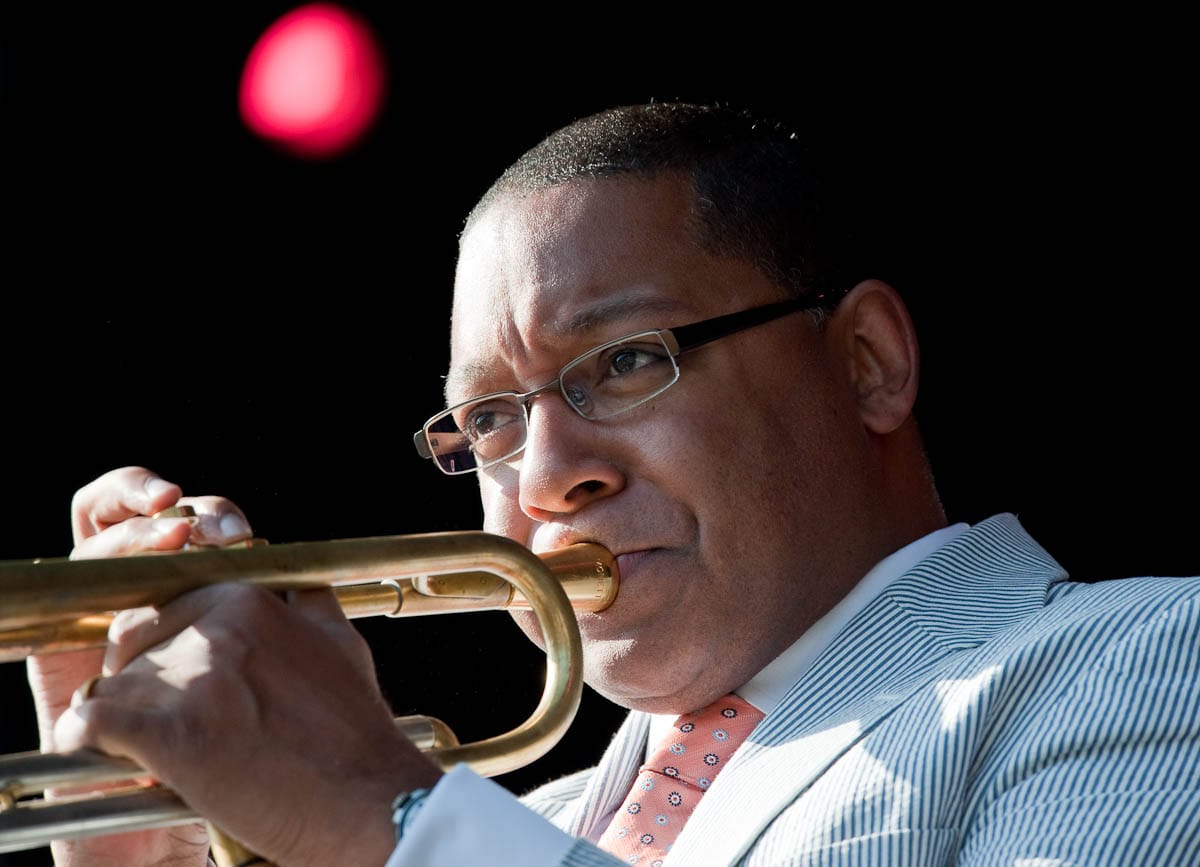
Wynton Marsalis
Wynton Marsalisis one of the most powerful and controversial figures in contemporary jazz. Alongside formidable trumpet technique, he is a prolific composer and educator, and a leading advocate of neoclassical jazz. He was the first musician to win Grammy Awards in both the jazz and classical categories in the same year, 1983, breaking down barriers between the two traditions.
A Musical Family and a Dual Talent (1961–1979)
Born into a musical family in New Orleans, his fatherEllis Marsalis Jr.was a noted piano teacher, while his brotherBranford Marsalisbecame a leading saxophonist.Wynton MarsalisHe began serious trumpet study at 12, and at 14 performed Haydn’s Trumpet Concerto with the New Orleans Philharmonic. At 17, he entered the Juilliard School. His exceptional ability in both classical music and jazz quickly made him a focus of the New York scene.
The Jazz Messengers and the Neoclassical Wave (1980s)
In 1980, at just 19,Wynton MarsalisjoinedArt Blakey’sJazz Messengers(the Jazz Messengers), an experience widely viewed as a turning point in his career. As free jazz and fusion waned in the 1980s, he helped lead a “return to tradition.” He argued for reclaiming the swing and blues spirit ofLouis Armstrong、Duke Ellingtonand theMiles Davis’s early work, and pushed back against the electronic and commercial trends of the day. He became a leader of the Young Lions and the neotraditional movement.
Jazz at Lincoln Center and the Pulitzer Prize (1987–Present)
helped establish Jazz at Lincoln Center in New York in 1987 and has served as its artistic director ever since. He helped give jazz a lasting institutional home and the stature of a respected American classical art. In 1997, his expansive composition《Blood on the Fields》won thePulitzer Prize for Music, the first jazz work to receive the award.
Cultural Diplomacy and Debate (2000s–Present)
As a leading international spokesperson for jazz,Wynton Marsalishas promoted the music through education and tours around the world. He has also defended a strict, conservative definition of “real jazz” and publicly criticizedMiles Davis’s later fusion work and hip-hop. His views have sparked enduring debate, but his role in renewing popular interest in traditional jazz is undeniable.
3. Musical Style: Precision and Historical Depth
-
Flawless Technique:Wynton Marsalis’s playing is known for its pitch accuracy, crisp articulation, and broad dynamic range. From blistering bebop lines to complex classical concertos, he shows remarkable control.
-
A Deep Commitment to Blues and Swing: He sees the blues and swing as essential to jazz. His improvisations often draw strongly on New Orleans traditions, with an emphasis on counterpoint and collective interplay.
-
A Composer’s Sense of Structure: As a composer, he brings big-band jazz together with the forms of classical suites. His works often tell broad historical stories and explore race, freedom, and the American experience.
In Summary: Wynton Marsalisis jazz’s “pope.” With the discipline of a classical musician, he restored dignity to the music and built a sturdy stronghold for tradition amid constant change.
An Aesthetic Reflection: For a 3D designer drawn to order and precise structure,Wynton Marsalis’s music is like aperfectly proportioned Parthenon. Every note seems carefully calculated, creating a beauty grounded in reason.
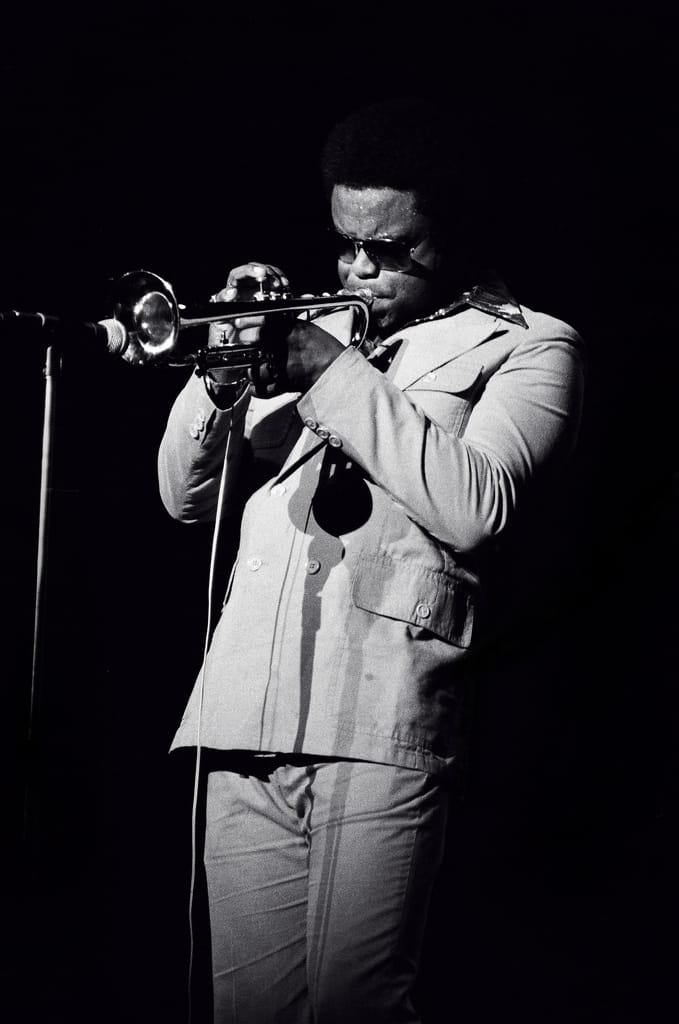
Freddie Hubbard
After introducing jazz pioneers from Coleman Hawkins to Duke Ellington, we return to the leading trumpet voice of thehard-bopandpost-boperas—Freddie Hubbard (1938–2008)。
If Clifford Brown was a shooting star, Hubbard was aflame that burned for half a century. He was one of the most technically accomplished and brilliant-toned trumpeters in jazz history.
1. New York and the Jazz Messengers (1958–1964)
-
A Fast Start: At 20, he left Indianapolis for New York. His explosive power and precision quickly drew attention, and early in his career he worked with such leading figures as Thelonious Monk and John Coltrane.
-
At the Messengers’ Peak: In 1961, Hubbard replaced Lee Morgan in Art Blakey’sJazz Messengers, a move that marked his arrival among the top ranks of jazz musicians.
-
Landmark Sessions: Hubbard could move between tradition and the avant-garde. He played on two groundbreaking albums that changed the course of jazz: Ornette Coleman’s《Free Jazz》and John Coltrane’s《Ascension》。
2. A Golden Age of Blue Note (1960s)
-
A Prolific Period: As a leader for Blue Note, he recorded landmark albums including Ready for Freddie and The Artistry of Freddie Hubbard.
-
A Hard-Bop Standard-Bearer: His playing offered a textbook example of hard bop: fast runs, crisp articulation, and signature bursts into the upper register.
3. Fusion and Mainstream Success in the 1970s
-
《Red Clay》: Recorded for CTI in 1970, Red Clay became his most successful commercial album, combining funk and soul with an irresistibly memorable melody.
-
Grammy Recognition: In 1972, he won the Grammy Award for Best Jazz Performance by a Group for the album《First Light》.
4. Later Challenges and Final Years (1990s–2008)
-
A Lip Injury: In 1992, exhaustion and years of intense playing contributed to a serious split and infection in his upper lip. The injury was devastating for a trumpeter. His technique never fully recovered, and he increasingly turned to the gentler flugelhorn.
-
Final Years: He died of a heart attack in California in 2008, aged 70.
Artistic Style: Brilliance with a Metallic Edge
-
Flawless Technique: Hubbard’s playing was known for itsmodernity. His wide interval leaps were remarkably precise, giving the music a sharp, almost metallic edge.
-
A Full, Radiant Tone: Compared with Chet Baker’s slender sound, Hubbard’s trumpet was broad and bright, like brass shining in the sun.
-
A Versatile Musician: He could play blazing fast tunes as confidently as he could bring tenderness to a ballad.
In Summary
Freddie Hubbard was the trumpet world’s“all-around warrior”. He carried Clifford Brown’s legacy forward and pushed it into more modern and forceful territory.
Connections: Among the musicians mentioned earlier, Hubbard shared deep artistic ties withDexter Gordon(they recorded Doin’ Allright together),Art Blakey、andHerbie Hancock—all of whom shared a deep artistic connection with him. Hubbard was the fiercest brass voice of an era rich with heroes.
For a 3D artist, Hubbard’s music may suggest a metallic render: bright, solid, with every detail in sharp focus.
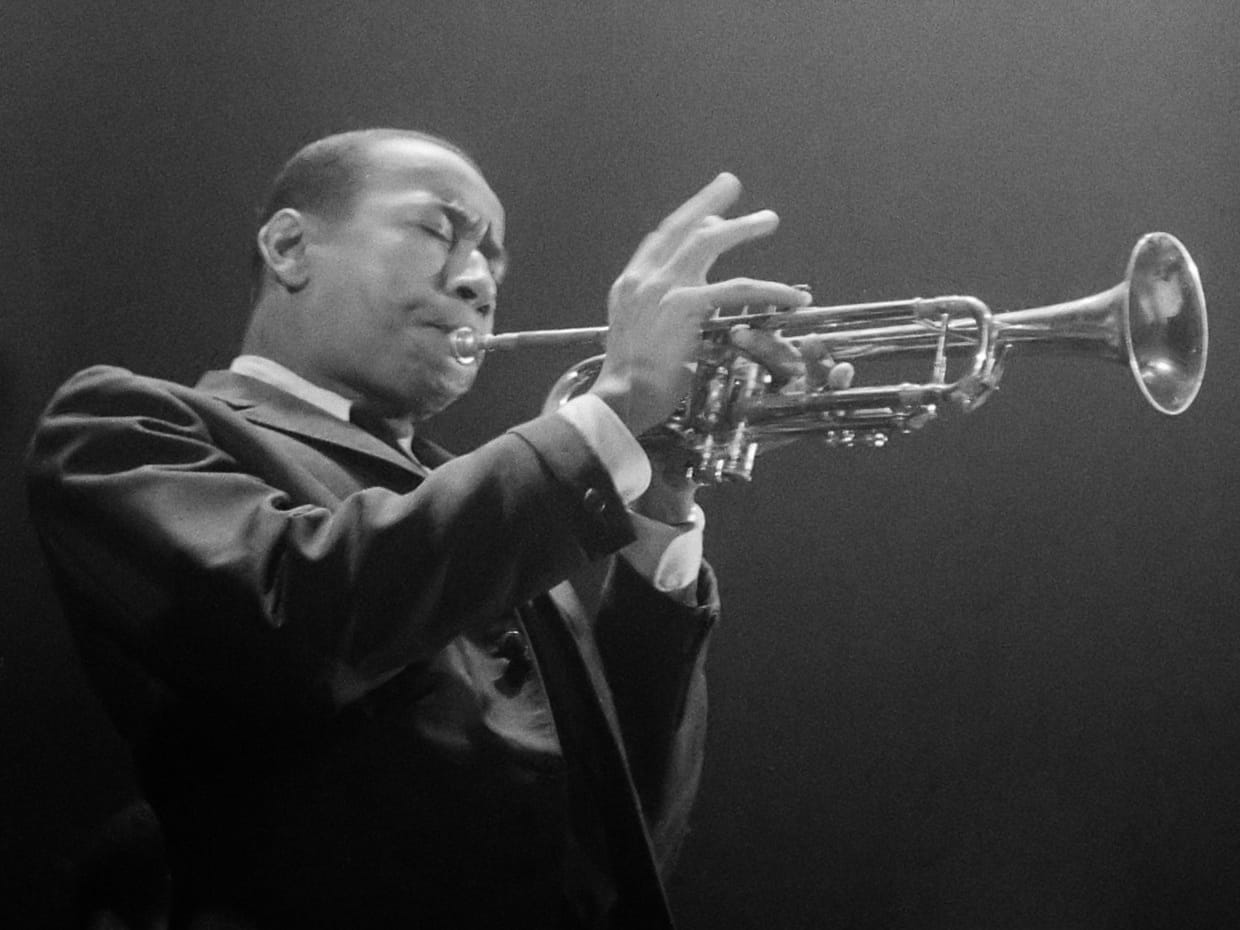
Lee Morgan
Lee MorganLee Morgan was one of jazz’s most gifted and dazzling trumpet prodigies, and a defining figure in the hard-bop movement. Known for his fiery playing, dazzling technique, and assertive tone, he fused jazz with soul and funk in the 1960s and achieved remarkable commercial success. His life ended at 33 in a tragic act of violence, one of the most heartbreaking episodes in jazz.
A Teenage Star (1938–1956)
Born in Philadelphia,MorganMorgan showed extraordinary musical instincts as a boy. He was already playing professionally at 15, and at 18 joinedDizzy Gillespie’s big band, where his astonishing solo on “A Night in Tunisia” caused a sensation. That same year he began a prolific recording career withBlue Note. He was quickly regarded as the most formidable trumpet successor toClifford Brown.
The Jazz Messengers and The Sidewinder (1958–1965)
In 1958, Morgan joinedArt Blakey’sJazz Messengers(the Jazz Messengers) and played on the hard-bop landmark album《Moanin’》. His playing grew more assured and mature during this period. After briefly leaving New York amid struggles with addiction, he made a strong return in 1963 and recorded his best-known single,《The Sidewinder》. Its blend of jazz and R&B unexpectedly broke into the pop charts and helped rescueBlue Notefrom financial trouble.
Artistic Growth and Social Awareness (1966–1971)
In the late 1960s,Morgan’s music moved toward more exploratory post-bop and modal jazz, while he also became more politically engaged. He helped launch the Jazz People’s Workshop to protest the mainstream media’s neglect of Black musicians. His fiery playing took on a more experimental edge.
The Final Night (1972)
On a snowy night in February 1972,Morganwas performing between sets at New York’sSlug’s Saloonjazz club when an argument with his common-law wife,Helen Moore, escalated over their relationship.Helenfired a gun at him inside the club. Heavy snowfall delayed the ambulance, andMorgandied from blood loss at age 33. The tragedy later became the subject of the acclaimed documentary I Called Him Morgan.
3. Musical Style: A Spark in Motion
-
An Aggressive Touch:Morgan’s tone was bright, crisp, and powerful. He made striking use of half-valving and fast vibrato, creating a distinctive sound that could seem to laugh or sneer.
-
A Balance of Fire and Feeling: He could play at breathtaking speed on up-tempo pieces, yet bring a vulnerable, deeply affecting sensitivity to ballads.
-
A Signature Blues Foundation: No matter how complex his lines became, Morgan’s playing retained a strong blues feeling. He had a gift for finding what would excite listeners, and every note seemed charged with life.
In Summary: Lee Morganwas jazz’s“son of fire”. He burned through his talent in a short life, leaving behind vivid, high-energy recordings that define one of hard bop’s most brilliant colors.
An Aesthetic Connection: For designers drawn to dynamic form and visual impact,Lee Morgan’s music is a study inhigh saturation and high contrast. Each phrase feels like a burst of bright color from a spray-paint canvas, full of improvisational tension and unrestrained energy.
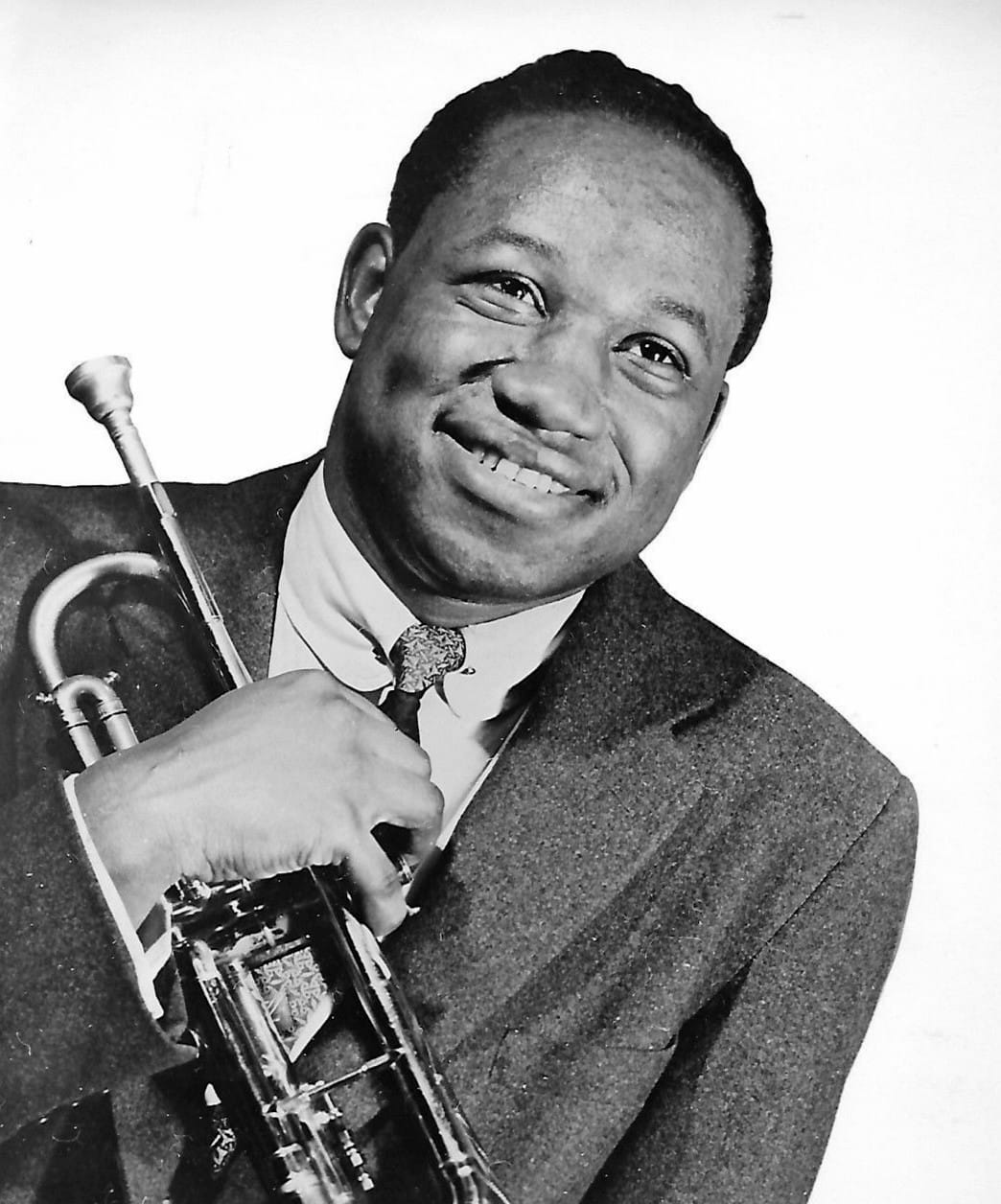
Clifford Brown
After several of jazz’s great masters, here is a concise biography ofClifford Brown (1930–1956). One of the most poignant losses in jazz history, he transformed modern trumpet playing in just 25 years and became a central voice ofhard bop.
1. A Prodigy with a Mathematical Mind (1930–1950)
-
Early Musical Promise: Born into a musical family in Wilmington, Delaware, Brown began piano lessons at age ten and quickly showed exceptional talent.
-
A Student of Music and Mathematics: He studied mathematics at Delaware State College before transferring to Maryland State College. The rigor of his thinking later came through in improvisations that were disciplined, fluent, and carefully structured.
2. A Near-Fatal Car Crash and a New Beginning (1950–1953)
-
The First Crash: In 1950, Brown was seriously injured in a car accident and spent a year in hospital. During his recovery, jazz master Dizzy Gillespie visited him and offered encouragement.
-
Return to the Scene: After recovering, he honed his skills in R&B bands, then joined the groups of Tadd Dameron and Lionel Hampton. A live album recorded with Art Blakey at Birdland in 1954 became one of hard bop’s foundational statements.
3. The Clifford Brown–Max Roach Quintet at Its Peak (1954–1956)
-
A Dream Team: In 1954, Brown formed the celebrated Clifford Brown–Max Roach Quintet with the legendary drummer. It is regarded as one of the finest hard-bop groups in jazz history.
-
A Model of Excellence: Brown was known for his exceptionally clear tone, astonishing speed, and logical phrasing. Just as significant, in an era when drug use was widespread, he maintained ahealthy, disciplinedlife and became a role model for musicians such as Sonny Rollins.
4. A Star Falls (1956)
-
The Tragedy: In the early hours of June 26, 1956, Brown, pianist Richie Powell (Bud Powell’s younger brother), and Powell’s wife were driving to Chicago when their car crashed on a rain-slick road. Brown, just 25, was killed.
-
A Lasting Tribute: His death stunned the jazz world. Saxophonist Benny Golson wrote the elegy “I Remember Clifford,” one of the most moving tributes in jazz.
Artistic Style and Legacy
-
Technical Mastery: Brown brought together Dizzy Gillespie’s power and Fats Navarro’s lyrical beauty. His improvisations seemed carefully considered, with every phrase fitting precisely into place.
-
A Legacy of Character: Brown showed that jazz’s highest artistic achievements could be reached through discipline and practice, without drugs or self-destruction.
In Summary:Clifford Brown was a shooting star in jazz. Though his time in the spotlight was brief, his brilliance continues to illuminate generations of trumpet players. He embodiedtechnical purity and personal integrity.
A Connection to Other Artists: In an earlier biography, Chick Corea mentioned Bud Powell. Clifford Brown was killed in the same accident as Bud’s younger brother, Richie Powell. The lives of the great musicians of jazz’s golden age were often closely intertwined.
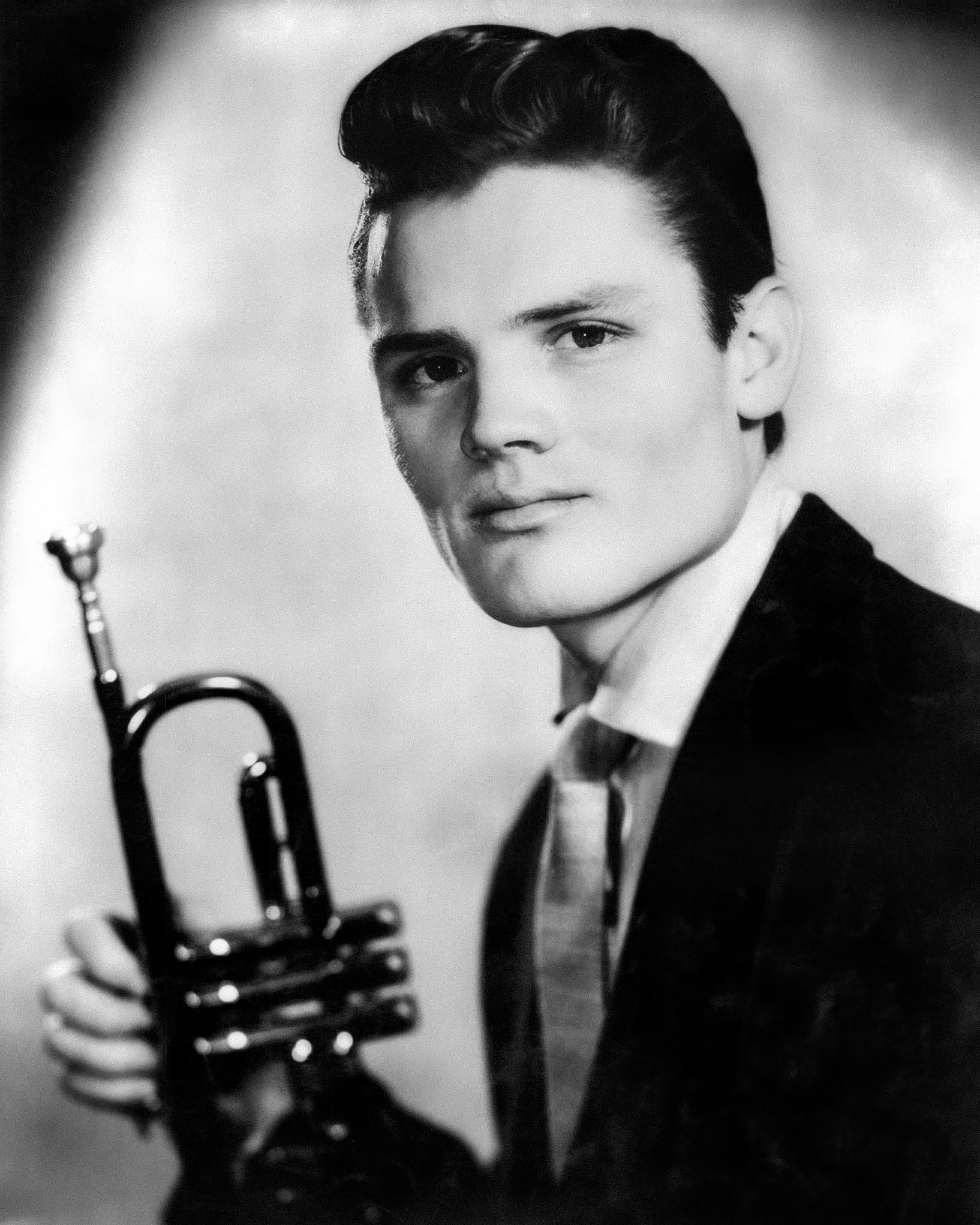
Chet Baker
After Cannonball Adderley, here is a concise biography ofChet Baker (1929–1988). Known as the “Prince of Cool,” he was admired for his tender trumpet playing and whisper-soft singing, and became a leading figure incool jazz.
1. Golden Years and a James Dean–Like Idol (1950s)
-
Breakthrough: In 1952, he joined Gerry Mulligan’s piano-less quartet and became famous overnight with “My Funny Valentine,” which remained his signature song.
-
A Double Talent: Alongside his trumpet playing, Baker sang with a tender, fragile voice. The 1954 album Chet Baker Sings made him widely known.
-
Matinee-Idol Looks: In his youth, Baker had movie-star looks and was often called jazz’s James Dean. He also made a brief attempt at acting in Hollywood.
2. Addiction and Decline (1960s)
-
Struggles with Addiction: From the late 1950s onward, he struggled with heroin addiction. Drug-related arrests and deportations took him in and out of the United States and several European countries, including Italy, Germany, and the United Kingdom.
-
A Devastating Blow: In 1966, a dispute connected to drug dealing led to a severe beating in California. His front teeth were knocked out—a devastating injury for a trumpet player. For several years he could barely play and at one point worked at a gas station.
3. A Long Return and European Years (1970s–1980s)
-
Back to the Trumpet: In the early 1970s, he began practicing arduously with dentures in an effort to recover his playing. He officially returned to the New York jazz scene in 1973.
-
Years in Europe: During the final decade of his life, he spent much of his time touring and recording in Europe. Years of drug use had taken a visible toll, yet his playing and singing gained a weathered, broken depth that resonated strongly with European audiences.
4. A Strange Death (1988)
-
: On May 13, 1988, Baker was found dead on the street outside a hotel in Amsterdam, the Netherlands, with severe head injuries. Police concluded that he had fallen from a second-floor window. Drugs were found in his system, and his death was ruled accidental, though it has continued to inspire speculation.
Artistic Style and Legacy
-
The Beauty of Restraint: His music relied less on technical display than on beautiful melodies, open space, and emotional subtlety.
-
Influence Beyond Music: His image and tragic life inspired many works, including the documentary Let’s Get Lost (Let’s Get Lost) and the biographical film Born to Be Blue, starring Ethan Hawke (Born to Be Blue)。
In Summary:If Cannonball Adderley was “sunshine,” Chet Baker was “moonlight.” His music is full ofloneliness, fragility, and a tenderness that can break your heart. He remains one of jazz history’s most romantic and heartbreaking talents.
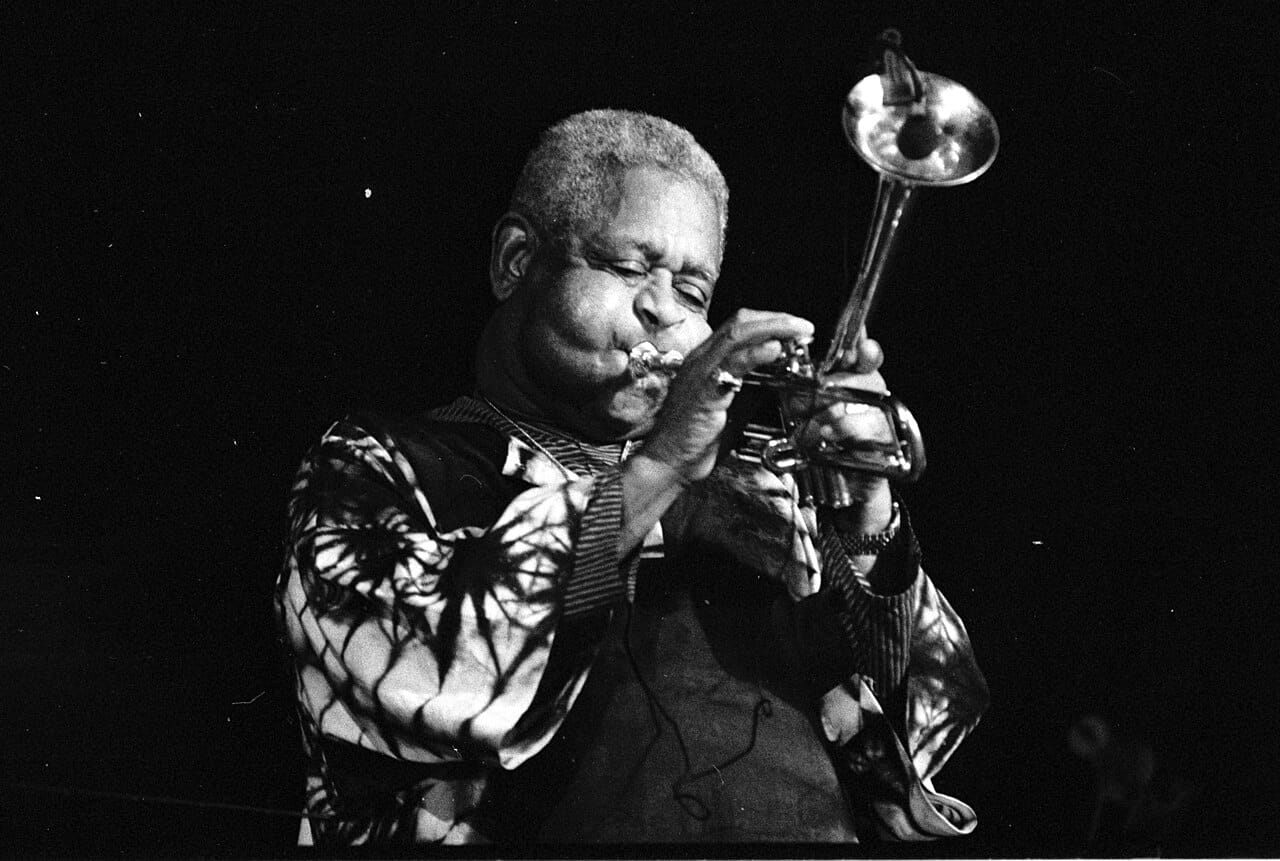
Dizzy Gillespie
Building on the musicians who came before him, we arrive at one of jazz history’s greatest characters and teachers—Dizzy Gillespie (1917–1993)。
If Charlie Parker was the soul of bebop, Dizzy was itsbrain, diplomat, and evangelist. He combined astonishing technique with a rare gift for passing complex musical ideas on to younger players.
1. Co-Founder of Bebop (1940s)
-
Revolutionary Partner: He helped conceive and advance the bebop revolution alongside Charlie Parker. Dizzy’s deep understanding of harmony—especially the tritone substitution—gave the music much of its theoretical foundation.
-
First Bebop Recordings: In 1944, he took part in what is widely considered the first bebop recording session, led by Coleman Hawkins. His compositions “A Night in Tunisia,” “Salt Peanuts,” and “Groovin’ High” became jazz cornerstones.
2. Pioneer of Afro-Cuban Jazz (1947–1950s)
-
Rhythmic Fusion: Gillespie had a deep sensitivity to rhythm. In 1947, he brought Cuban percussionist Chano Pozo into his band, helping pioneerLatin jazz. “Manteca” fused bebop’s complex harmony with the raw energy of Afro-Cuban rhythm.
-
Big-Band Breakthrough: While many bebop musicians turned to small groups, Gillespie successfully led several large bebop bands, showing that this forward-looking music could also have a grand scale.
3. Jazz Diplomat and Presidential Candidate (1960s–1980s)
-
Cultural Ambassador: He was the first jazz musician to lead overseas cultural tours on behalf of the U.S. State Department, performing across the Middle East and Latin America.
-
A Presidential Run: In 1964, he jokingly announced a run for U.S. president. He proposed renaming the White House the “Blues House” and appointing Miles Davis as CIA director. The episode captured his humor, fearlessness, and willingness to engage with public life.
4. Later Years and Mentorship
-
A Generous Mentor: Known for his generosity, Gillespie discovered and encouraged many younger musicians, including Cuban trumpet virtuoso Arturo Sandoval.
-
Final Years: He died of pancreatic cancer in 1993, aged 75.
His Signature Look
-
The Upturned Trumpet: The bell of his trumpet pointed upward at a 45-degree angle. The change followed an accident when someone stepped on his horn, but Gillespie found that the new angle helped him hear himself better. It became his visual trademark.
-
Puffed Cheeks: When he played, his cheeks ballooned like a bullfrog’s. Although this is discouraged in traditional trumpet training, Gillespie turned it into part of his singular sound and image.
-
Signature Style: Beret, thick-rimmed glasses, and goatee: the look became an enduring image of bebop cool around the world.
Musical Style: Speed and Wit
-
Virtuosity with Humor: His playing moved at remarkable speed, full of astonishing high notes and complex rhythmic leaps, yet it never felt heavy. It always carried Dizzy’s wit and sense of fun.
-
Scat Singing: He was also a great scat singer, using his voice to imitate the intricacies of a trumpet solo.
In Summary:Dizzy Gillespie was the“sun”of the jazz world. With his warmth and humor, he cleared away bebop’s reputation for being aloof and difficult, helping audiences around the world fall in love with the music. He brought technique, theory, and entertainment together like few others.
A Personal Connection: You may remember thatClifford Brownreceived a personal visit and encouragement from Gillespie while recovering from an early car accident. Dizzy was more than a musician; he was one of modern jazz’s pillars.
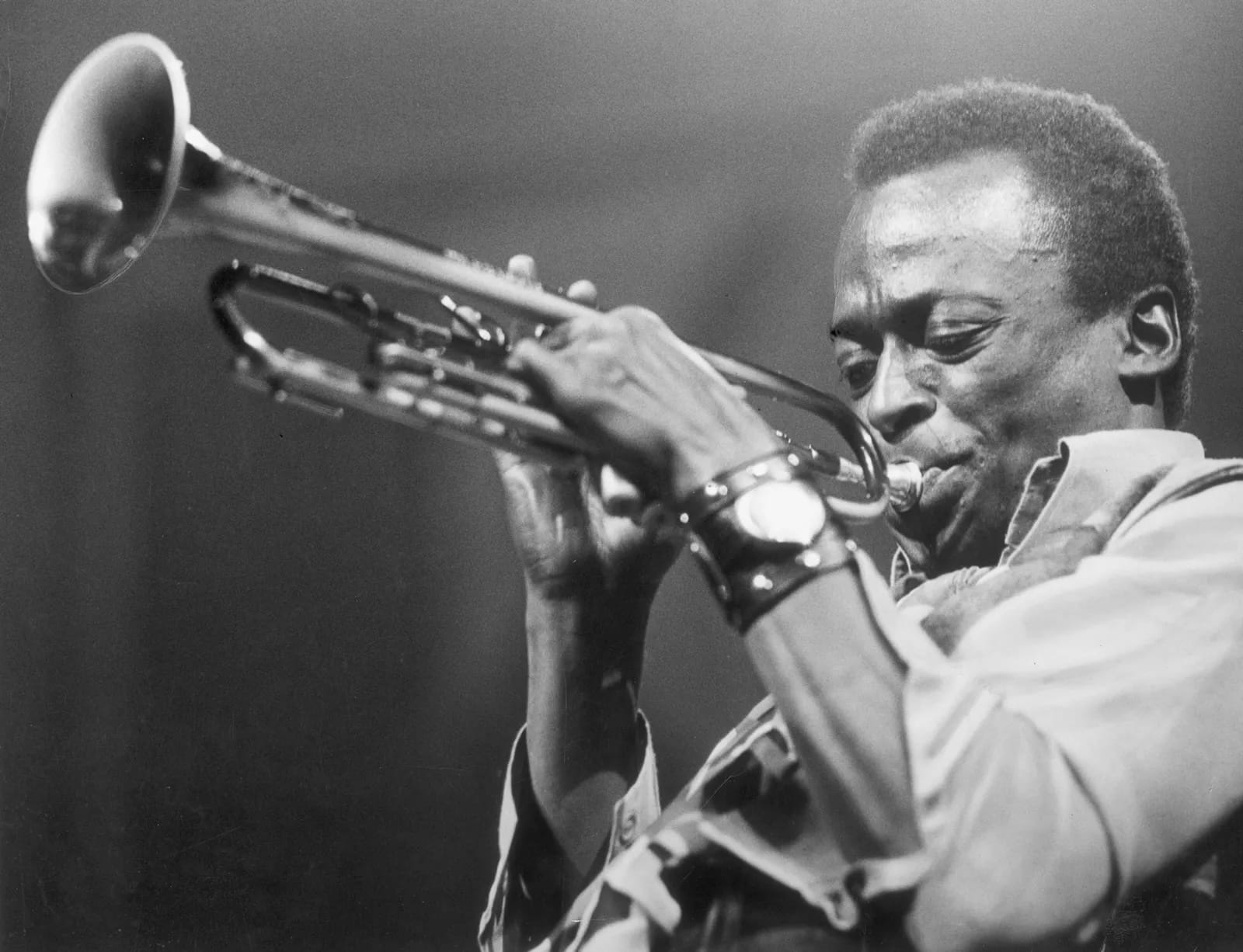
Miles Davis
Trumpeter, bandleader, and composer
Born May 26, 1926 in Alton, Illinois, USA, died September 28, 1991 in Santa Monica, California, USA (aged 65)
One of the most important figures in jazz history, Davis adopted multiple musical directions in a five-decade career that kept him at the forefront of many major stylistic developments in jazz. His album "[m=5460]" (1959) is the highest selling jazz album ever with over five million copies sold.
Miles settled in New York City to study at Juilliard School. He made his professional debut as a member of [a272028] from 1944 to 1948. In 1948, Davis began to found his own ensembles. At that time, he met [a255137], who contributed to [a497768]'s scores and arrangements. The dozen sides they recorded in 1949-50 were eventually assembled as the LP "[m=62308]" (1957), with Davis and Evans working together again from 1957 on further projects.
Miles Davis was prominent in the creation of the 'Hard Bop' style in the mid-1950s (his first regular quintet featured [a97545]), and the "time, no changes" approach in his second quintet a decade later. In the late 1960s, he introduced electronic instruments and rock and funk rhythms in his music. Around 1975, he went on a hiatus over health and personal problems, re-emerging in 1980.
He married dancer/actress [a7671712] on December 12, 1959; the couple divorced in 1968. He then married singer [a1076460] in September 1968; they divorced in 1970. He then married actress [a6279083] on November 26, 1981; they divorced in 1989. Father of [a680784] and [a1493787]. Uncle of [a279708] (Jr).
Inducted into Rock And Roll Hall of Fame in 2006 (Performer).
Winner of eight Grammy Awards:
- Best Jazz Composition Of More Than Five Minutes Duration for Sketches Of Spain on [m=48172]
- Best Jazz Performance - Large Group Or Soloist With Large Group for [m=8260]
- Best Jazz Instrumental Performance, Soloist for [m=65130]
- Best Jazz Instrumental Performance, Soloist for [m=63355]
- Best Jazz Instrumental Performance, Big Band for [m=62288]
- Best Jazz Instrumental Performance, Soloist (On A Jazz Recording) for [m=62288]
- Best R&B Instrumental Performance for [m=62359]
- Best Large Jazz Ensemble Performance for [m=188032]
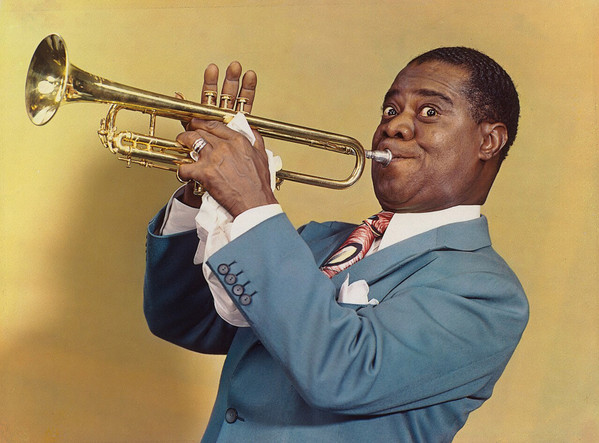
Louis Armstrong
Career
Louis Daniel Armstrong (August 4, 1901 – July 6, 1971), nicknamed “Satchmo,” “Satch,” and “Pops,” was an American jazz and blues trumpeter and singer. One of the most influential figures in jazz, his career spanned five decades and several eras. Armstrong received many honors, including a 1965 Grammy for Best Male Vocal Performance for “Hello, Dolly!” and a posthumous Grammy Lifetime Achievement Award in 1972. He has been inducted into the DownBeat Jazz Hall of Fame, the Rock & Roll Hall of Fame, and the National Rhythm & Blues Hall of Fame, among others.
Armstrong was born and raised in New Orleans. In the 1920s, his highly creative trumpet and cornet playing helped make him one of jazz’s founding figures, shifting the music’s focus from collective improvisation toward the soloist. Around 1922, he followed his mentor Joe “King” Oliver to Chicago and joined Oliver’s Creole Jazz Band. Armstrong made his mark in cutting contests, and his reputation reached bandleader Fletcher Henderson. He later moved to New York, where he became an influential soloist and recording artist. By the 1950s, Armstrong was an international music icon, appearing regularly on radio, television, and in films. Beyond music, he was a beloved entertainer who joked with audiences and maintained a warm, upbeat public image.
Among Armstrong’s best-known songs are “What a Wonderful World,” “La Vie en Rose,” “Hello, Dolly!,” “On the Sunny Side of the Street,” “Dream a Little Dream of Me,” “When You’re Smiling,” and “When the Saints Go Marching In.” He made three albums with Ella Fitzgerald: Ella and Louis (1956), Ella and Louis Again (1957), and Porgy and Bess (1959). His film appearances included A Rhapsody in Black and Blue (1932), Cabin in the Sky (1943), High Society (1956), Paris Blues (1961), A Man Called Adam (1966), and Hello, Dolly! (1969).
Armstrong had an unmistakable, deep, gravelly voice. He was an influential singer and a remarkable improviser, and he was also skilled at scat singing. By the final years of his life, his influence had reached well beyond jazz into popular music. He was among the first Black entertainers to cross over and win broad white and international audiences. Armstrong rarely spoke publicly about race, a silence that sometimes disappointed other Black Americans, but he publicly supported desegregation during the Little Rock Crisis. At a time when Black men had few opportunities to enter elite American society, he managed to do so. His recording of “Mack the Knife” was included on the Voyager Golden Record, a collection of images and sounds from Earth sent into space.
Early Life
Armstrong is believed to have been born in New Orleans on August 4, 1901, although the date has long been disputed. He often claimed that he was born on July 4, 1900. His parents were Mary Estelle “Mayann” Albert and William Armstrong. Albert came from Boutte, Louisiana, and gave birth to him at home at about age 16. Less than a year and a half later, she had a daughter, Beatrice “Mama Lucy” Armstrong (1903–1987), who was raised by Albert. William Armstrong left the family soon afterward.
Armstrong was raised by his grandmother until he was five, when he returned to his mother. He grew up poor in a rough neighborhood known as “the Battlefield,” in the southern part of Rampart Street. At six, he began attending Fisk School for Boys, a school for Black children, as New Orleans schools were segregated.
During this period, Armstrong lived with his mother and sister and worked for the Karnoffsky family, Lithuanian Jewish immigrants. He helped their sons, Morris and Alex, collect rags and scrap and deliver coal. In 1969, while being treated for heart and kidney problems at Beth Israel Hospital in New York City, Armstrong wrote a memoir, Louis Armstrong and the Jewish Family in New Orleans, 1907, about his time working for them.
In the memoir, Armstrong wrote that he sang “Russian Lullaby” with the Karnoffskys while their baby son David was being put to sleep. He believed they had taught him to “sing from the heart.” The lyrics he quoted appear to match “Russian Lullaby,” copyrighted by Irving Berlin in 1927, although Armstrong recalled singing the song as a child roughly twenty years earlier. In 1969, Gary Zucker, a doctor at Beth Israel Hospital, had shared Berlin’s lyrics with him, and Armstrong included them in his memoir. The discrepancy may reflect the fact that he wrote the memoir more than sixty years after the events. In any case, the Karnoffskys treated him well. Knowing that he had no father at home, they cared for him and helped raise him.
In Louis Armstrong and the Jewish Family in New Orleans, 1907, he described realizing that the family also faced discrimination from “other white people” who considered themselves superior to Jews: “I was only seven years old, but I could clearly see how white people treated the poor Jewish family I worked for.” Armstrong wrote that he learned from them “how to live—real life and toughness.” His first musical performance may have been beside the Karnoffskys’ junk wagon, where he played a tin horn to attract customers and compete with other vendors. Morris Karnoffsky advanced him money to buy a cornet at a pawnshop. As an adult, Armstrong wore a Star of David given to him by his Jewish manager, Joe Glaser, until his death, partly in gratitude to the family that had helped raise him.
Armstrong left school at eleven. His mother moved with Armstrong, Lucy, and her partner Tom Lee into a one-room cottage on Perdido Street, next door to her brother Ike and his two sons. Armstrong joined a quartet of four boys who sang on the street to earn money. Cornetist Bunk Johnson said that he taught the eleven-year-old to play by ear at Dago Tony’s bar. Later in life, Armstrong credited King Oliver with inspiring him. Recalling his youth, he said, “Every time I close my eyes and blow my trumpet—I look right in the heart of old New Orleans… It has given me something to live for.”
A January 2, 1913, report in the New Orleans Times-Democrat used a racial term that is now outdated. On December 31, 1912, Armstrong borrowed his stepfather’s gun without permission and fired a blank into the air. He was arrested, spent the night in juvenile court, and the next day was sent to the Colored Waif’s Home. Conditions there were stark: there were no mattresses, and meals were often just bread and molasses. Captain Joseph Jones ran the home like a military camp and used corporal punishment.
Armstrong developed his cornet playing in the home’s band. Peter Davis, who often visited the Armstrong home at Jones’s invitation, became his first music teacher and chose him to lead the band. Through it, Armstrong attracted the attention of Kid Ory at age thirteen.
On June 14, 1914, Armstrong was released into the care of his father and stepmother, Gertrude. He lived there with two stepbrothers for several months. After Gertrude had a daughter, Armstrong’s father continued to reject him, and he returned to his mother, Mary Albert. Armstrong had to share a bed with his mother and sister in their small home. His mother still lived near the Battlefield, leaving him exposed to old temptations, but he tried to find work in music.
Armstrong found work at Henry Ponce’s dance hall; Ponce was connected to organized crime. There he met Black Benny, a six-foot drummer who became his guide and bodyguard. At about fifteen, Armstrong acted as a pimp for a sex worker named Nootsy. Their relationship ended badly: Nootsy stabbed him in the shoulder, and his mother nearly strangled her.
Armstrong briefly studied shipping management at a local community college but had to leave when he could not afford the tuition. While selling coal in Storyville, he heard “spasm bands,” which made music with household objects. He also listened to early jazz in brothels and dance halls, including Pete Lala’s, where King Oliver had played.
Riverboat Education
Armstrong (fourth from left) with Fate Marable’s New Orleans band aboard the SS Sidney in 1919.
Early in his career, in the late 1910s, Armstrong played in New Orleans brass bands and on excursion boats. He toured with Fate Marable’s band aboard the Streckfus Steamers’ Sidney, traveling up and down the Mississippi River. Marable took pride in Armstrong’s musical knowledge and insisted that he and the other musicians learn to read music. Armstrong later compared his time with Marable to “going to college,” because it gave him broad experience reading scores. In 1918, Armstrong’s mentor King Oliver decided to head north and left his position in Kid Ory’s band; Armstrong took his place. He also became second trumpet in the Tuxedo Brass Band.
On the riverboat tours, Armstrong’s musicianship matured. By twenty he could read music. He became one of the first jazz musicians to play extended trumpet solos, bringing his own personality and style to them. He also began singing during performances.
Chicago recordings
“Dippermouth Blues”
Running time: 2 minutes, 24 seconds
A 1923 recording of Louis Armstrong playing cornet with King Oliver’s Creole Jazz Band.
In 1922, Armstrong moved to Chicago at King Oliver’s invitation, although he would return to New Orleans from time to time throughout his life. At the all-Black Lincoln Gardens on Chicago’s South Side, he played second cornet in Oliver’s Creole Jazz Band and earned enough to leave his day job. Despite strained racial relations, Chicago’s economy was booming. The city offered Black residents opportunities in factories, where they could earn good wages, as well as in entertainment.
Oliver’s band was among the most influential jazz groups in Chicago in the early 1920s. Armstrong lived in a luxurious apartment and had his first private bathroom. Excited by his arrival in Chicago, he took up a lifelong habit of writing to friends in New Orleans. He could play 200 high C’s in one breath. As his fame grew, other musicians began challenging him to cutting contests.
Armstrong’s first studio recordings were made with Oliver for Gennett Records on April 5 and 6, 1923. They endured hours of train travel to reach Richmond, Indiana, and the band was paid little. The recordings suffered from a lack of rehearsal, primitive equipment, poor acoustics, and a cramped studio. These were true acoustic recordings: the band played directly into a large horn connected to a stylus that cut grooves into the master disc. Electrical recording, with its wider dynamic range and more striking results, was not developed until 1926. At first Armstrong played so loudly that Oliver was barely audible when they stood side by side. To solve the problem, Armstrong had to stand in a corner of the room, fifteen feet away from Oliver.
Lil Hardin married Armstrong in 1924. She urged him to seek better opportunities and move beyond Oliver’s influence so he could develop his own style. At her suggestion, he played classical music at church concerts to broaden his skills and dressed more fashionably to offset his stocky build. Hardin’s influence eventually strained Armstrong’s relationship with his mentor, especially over pay: Oliver withheld extra earnings from Armstrong and other band members. In the summer of 1923, Armstrong’s mother, Mayann Albert, came to Chicago after learning that he was “unemployed, penniless, hungry, cold, and sick.” Hardin found and furnished an apartment for her to stay in during Armstrong’s visit.
Fletcher Henderson Orchestra
The Fletcher Henderson Orchestra in 1925. Armstrong is third from the left.
In 1924, Armstrong and Oliver parted amicably. Soon afterward, Armstrong was invited to New York City to join the Fletcher Henderson Orchestra, then the leading African American band. To fit in better with the other musicians, he switched to trumpet. Recordings from this period show Armstrong’s influence on Henderson’s tenor saxophone soloist, Coleman Hawkins.
Armstrong adapted to Henderson’s disciplined style, playing trumpet and trying trombone as well. The other musicians were influenced by his emotionally charged performances, which included singing and stories about New Orleans characters, especially preachers. The Henderson Orchestra played at prominent venues reserved for white audiences, including Roseland Ballroom, with arrangements by Don Redman. Duke Ellington’s orchestra went to Roseland to hear Armstrong.
During this period, Armstrong recorded with Clarence Williams, a friend from New Orleans, Williams’s Blue Five, Sidney Bechet, and blues singers Alberta Hunter, Ma Rainey, and Bessie Smith.
Hot Five
In 1925, disappointed with New York, Armstrong returned to Chicago. Lil arranged recording sessions for him with Okeh Records and a booking at the Dreamland Café. To his annoyance, she promoted him as “the world’s greatest trumpet player.” For a time, he joined the Lil Hardin Armstrong Band and worked for his wife. Armstrong formed Louis Armstrong and His Hot Five and recorded hits including “Potato Head Blues” and “Muggles.” “Muggles” was slang for marijuana, which Armstrong used throughout his life.
Louis Armstrong and His Hot Five, “Heebie Jeebies,” 1926
The Hot Five included Kid Ory on trombone, Johnny Dodds on clarinet, Johnny St. Cyr on banjo, and Lil Armstrong on piano; it usually had no drummer. In the twelve months beginning in November 1925, the group made 24 records. Armstrong led the band in a relaxed, informal way. As St. Cyr said, “You could feel very relaxed working with him; he was very liberal… always trying to give every musician a chance to show what he could do.”
The Hot Five and Hot Seven records included “Cornet Chop Suey,” “Struttin’ with Some Barbecue,” “Hotter Than That,” and “Potato Head Blues,” all featuring Armstrong’s inventive solos. Thomas Brothers described recordings such as “Struttin’ with Some Barbecue” as “tightly arranged and varied, with a bluesy feel and virtuosity”; the arrangements may have been performed at the Sunset Café. Soon afterward, Armstrong recorded with pianist Earl “Fatha” Hines. Their celebrated 1928 duet “Weather Bird,” along with Armstrong’s trumpet introduction and solo on “West End Blues,” remain among the most influential improvisations in jazz history. Young trumpeters across the country bought the records and learned his solos by heart.
Armstrong was now free to develop his own style, which included plenty of buoyant swing numbers such as “Whip That Thing, Miss Lil” and “Mr. Johnny Dodds, Aw, Play That Thing, Boy!”
Armstrong also performed with Erskine Tate’s little symphony orchestra, mostly at the Vendome Theatre. They provided music for silent films and live shows, including jazz versions of classical works such as Madama Butterfly. This gave Armstrong experience with longer compositions and taught him to perform for large audiences. He began experimenting with scat singing—improvised jazz singing with nonsense syllables—and became one of the first musicians to record it when he made “Heebie Jeebies” with the Hot Five in 1926. The record was so popular that the band became one of the best-known jazz groups in the country, even though it rarely performed live. Young musicians across the country, Black and white, were drawn to Armstrong’s new kind of jazz.
After splitting from Lil, Armstrong began playing at the Sunset Café with Carroll Dickerson’s orchestra, managed by Joe Glaser, an associate of Al Capone, with Earl Hines on piano. The group was later renamed Louis Armstrong and His Stompers. Hines served as musical director, while Glaser managed the band. Hines and Armstrong soon became close friends and successful collaborators. At the Sunset, Armstrong accompanied singer Adelaide Hall. During her engagement there, she experimented with and expanded her scat singing with Armstrong’s guidance and encouragement.
In the first half of 1927, Armstrong formed the Hot Seven, adding drummer Al “Baby” Dodds and tuba player Pete Briggs while retaining most of the Hot Five. John Thomas replaced Kid Ory on trombone. Later that year, Armstrong organized a new series of Hot Five sessions, which produced nine records. In the second half of 1928, he began recording with a new band: Zutty Singleton on drums, Earl Hines on piano, Jimmy Strong on clarinet, Fred Robinson on trombone, and Mancy Carr on banjo.
Harlem Renaissance
Armstrong had a major influence during the Harlem Renaissance of the 1920s. His music deeply affected the celebrated writer Langston Hughes, who admired him and considered him one of the era’s greatest musicians. Hughes wrote many books celebrating jazz and saw Armstrong as a leading figure in the Harlem Renaissance’s renewed appreciation of African American culture. Jazz, and musicians such as Armstrong, influenced Hughes’s writing; like them, he used jazz rhythms in his words.
Armstrong changed jazz during the Harlem Renaissance. As “the world’s greatest trumpet player,” he cemented his legendary status while continuing to focus on his singing career. His popularity brought Black and white audiences together.
Armstrong in 1955
By the 1950s, Armstrong was a beloved American icon and cultural ambassador with fans around the world. But a growing generation gap separated him from younger postwar jazz musicians such as Charlie Parker, Miles Davis, and Sonny Rollins. The postwar generation viewed its music as abstract art and considered Armstrong’s comic style—part musician, part stage entertainer—outdated and “Uncle Tom-like.” One critic said, “…he seemed to embody the blackface minstrel show we were so proud of.” Armstrong called bebop “Chinese music.” When asked during his 1954 Australian tour whether he played bebop, he rasped, “Bebop? I just play music. The people who invented that term are walking around with their instruments under their arms.”
Armstrong visiting Brazil in 1957
After his contract with Decca Records ended, Armstrong became a freelance musician and recorded for other labels. He continued touring extensively but suffered a heart attack in Italy in 1959 and had to rest.
In 1964, after more than two years away from the studio, Armstrong recorded his biggest-selling record, “Hello, Dolly!,” written by Jerry Herman and first sung by Carol Channing. His version spent 22 weeks on the Billboard Hot 100—longer than any other record that year—and reached No. 1. At 62 years, nine months, and five days old, he became the oldest singer to reach the top spot. His hit knocked the Beatles from the No. 1 position, where three different songs of theirs had held it for fourteen consecutive weeks.
External audio: Louis Daniel Armstrong in conversation with Studs Terkel on WFMT, June 24, 1962, 33:43; Studs Terkel Radio Archive
Armstrong toured into his sixties and, in 1965, visited several countries in the Communist bloc. Sponsored by the U.S. State Department, he also toured Africa, Europe, and Asia to great success, earning the nickname “Ambassador Satch” and inspiring Dave Brubeck’s jazz musical The Real Ambassadors. His travels included Egypt, Ghana, and Nigeria.
By 1968, approaching seventy, Armstrong’s health was deteriorating. Heart and kidney problems forced him to stop touring, although he continued to record. “What a Wonderful World” was among those recordings and topped the U.K. chart for a month. Armstrong made no public appearances in 1969 and spent most of the year recovering at home. His longtime manager, Joe Glaser, died during this period. By the summer of 1970, doctors considered Armstrong well enough to perform live again. He began another world tour, but a heart attack forced him to stop for two months.
Armstrong’s final trumpet recording was on his 1968 album The Satchmo Way, featuring Disney songs.
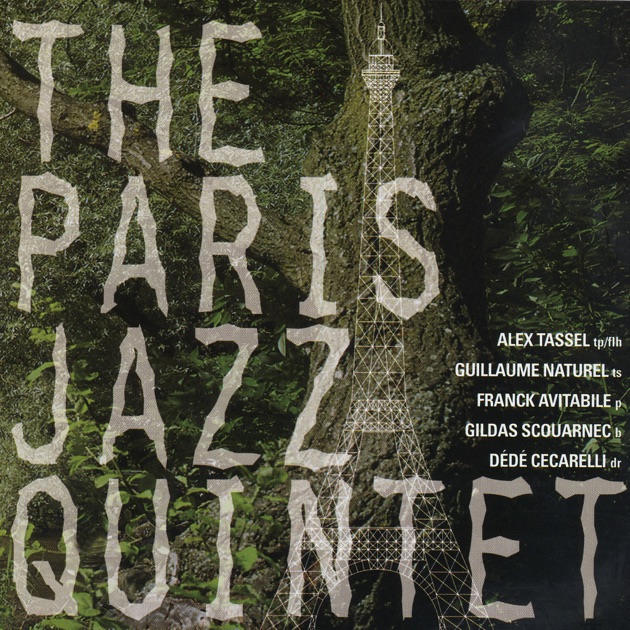
Quintet de Jazz Parisien
1. The LineupA supergroup of leading French jazz musicians active in the 2000s. Its core members included:
-
Alex Tassel(trumpet / flugelhorn)
-
Guillaume Naturel(saxophone / flute)
-
Franck Avitabile(piano)
-
Gildas Scouarnec(bass)
-
André “Dédé” Ceccarelli(drums)
2. Biography
The Paris Jazz QuintetThe quintet represented the high standard of French jazz in the early 21st century. It was not a temporary backing band, but a close-knit group built aroundoriginalityand a modern post-bop spirit.
-
A Modern Face of European Jazz: Working in the classic trumpet, saxophone, piano, bass, and drums format, the group showed how the Paris jazz scene could honor American bebop while adding a distinctly European elegance and sense of form.
-
Key Album: Their best-known release is the self-titled album issued in 2007,《The Paris Jazz Quintet》. Most of its tracks were written by band members. Pieces such as “Marineland” and “Passages Secrets” demonstrate tightly crafted arrangements and fiery improvisational exchanges.
-
A Masterful Rhythm Section: The drummerAndré Ceccarelliis one of Europe’s most respected players. His contribution gives the group a dynamic, finely textured rhythmic foundation, allowing it to navigate fast and complex lines with ease.
A Critic’s Column: A Modern Echo from Paris
As a critic, it is best to approach this quintet without the filter of “old-school tribute” and consider how itreimaginestradition.
-
A Balance of Technique and Poetry:Alex Tassel’s trumpet has a warm tone and a distinctly modern modal quality, whileGuillaume Naturel’s horn playing is more forceful. Their conversation creates the group’s most compelling balance: Parisian lyricism with the muscular energy of hard-driving jazz.
-
Post-Bop’s Intricate Design: Their music feels like a finely calibrated intellectual game. On tracks such as “Heerestraat 44,” you can hear the harmony shift and move through the interplay of piano and bass. It is both a sensory pleasure and a study in musical logic.
-
A City’s Soundtrack: IfDjango Reinhardtrepresents the old Paris of gypsy swing and street-side fire,The Paris Jazz Quintetstands for the contemporary city: composed, precise, internationally minded, and never indulgent.
In Summary: The Paris Jazz Quintetis apowerful calling cardfor contemporary French jazz. With assured technique and distinctly modern original music, the quintet shows that Paris remains one of the liveliest laboratories on the global jazz map.
A Note from the Critic:If you are tired of dated versions of jazz standards, try the self-titled album. Its clean, decisive modern sound makes every note feel precisely placed in space.
The Modern Jazz Sextet
Biography
Jazz group, recorded for Norgran in 1956.
[b]Do not confuse with [a=Modern Jazz Sextet].[/b]
Also known as: Modern Jazz Sekstet, Modern Jazz Sextet, The Modern Jazz Sextett
Members: Dizzy Gillespie, Sonny Stitt, Percy Heath, John Lewis (2), Charlie Persip, Skeeter Best
Links:

The Danish Radio Jazz Group
Biography
"Radiojazzgruppen" aka The Danish Radio Jazz Group was formed in 1961 by The Danish Broadcasting Corporation, [l=DR] as a nine piece band led by [a=Erik Moseholm]. The ensemble was discontinued in 1986.
[b]NB: Not to be mistaken for [a2021619] which is a big band and the alias of [a=Danish Radio Big Band].[/b]
Also not to be confused with the Swedish equivalent [a=Radiojazzgruppen].
Also known as: Danish Radio Jazz Orchestra, Radiojazzgruppen, The Danish Radio Jazz Orchestra, The New Radio Dance Orchestra, The Radio Jazz Group
Members: Louis Hjulmand, Palle Mikkelborg, Bernt Rosengren, Niels-Henning Ørsted Pedersen, Allan Botschinsky, Alex Riel, Ray Pitts, Bent Axen, Niels Husum, Torolf Mølgaard, Bent Nielsen, Fritz von Bülow, Poul Hindberg, Erik Moseholm, Torben Munk, Ole Kock Hansen, Ole Molin, Bent Jædig, Poul Kjældgård, Ib Renard, Svend Åge Nielsen
Links:
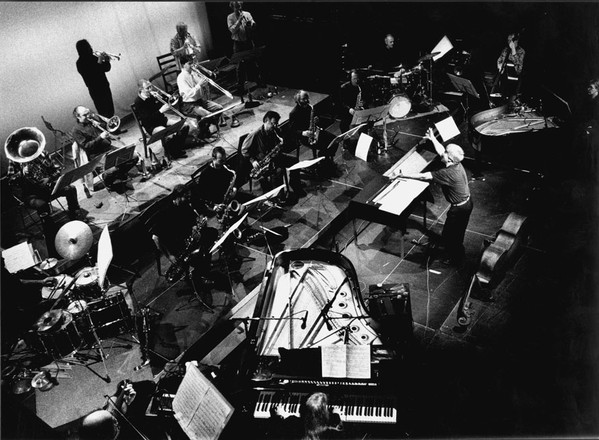
London Jazz Composers Orchestra
Biography
English free jazz orchestra, founded in 1970 by a group of musicians led by [a=Barry Guy].
Also known as: Barry Guy London Jazz Composers Orchestra, London Jazz Composers' Orchestra, The London Jazz Composers Orchestra, The London Jazz Composers' Orchestra
Members: Derek Bailey, Evan Parker, Radu Malfatti, John Warren, Dave Holland, Larry Stabbins, Harry Beckett, Bob Downes, Kenny Wheeler, Robin Hayward, Mats Gustafsson, Paul Lytton, Conrad Bauer, Barry Guy, Alan Tomlinson, Michael Gibbs, Karl Jenkins, Barre Phillips, Tony Coe, Henry Lowther, Tony Oxley, Chris Laurence, Simon Picard, David White (2), Jeff Clyne, Per Åke Holmlander, John Stevens (2), Trevor Watts, Philipp Wachsmann, Dave Holdsworth, Peter Kowald, Irene Schweizer, Paul Rutherford (2), Mark Charig, Peter McPhail, Paul Nieman, Melvyn Poore, Alan Wakeman, Dick Hart, Bernie Living, Howard Riley, Herb Robertson, Agustí Fernandez, Johannes Bauer, Mike Osborne, Torben Snekkestad, Paul Dunmall, Jon Corbett, Stephen Wick, Marc Unternährer, Michael Niesemann, Bruno Chevillon, Lucas Niggli, Richard Laughlin, Dave Spence, Jürg Wickihalder, Andreas Tschopp, Chris Bridges, Martin Eberle, Julius Gabriel
Links:
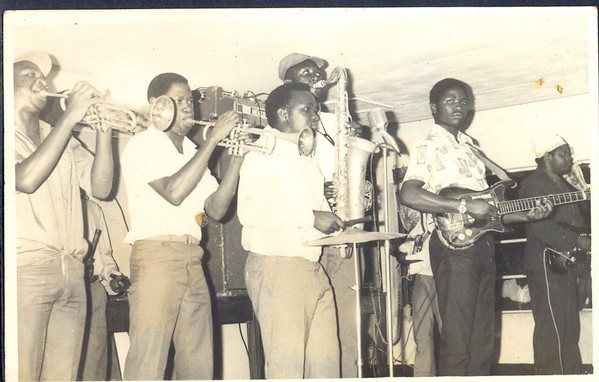
Morogoro Jazz Band
Biography
Tanzanian group from Morogoro also known as [b]K.Z. Morogoro Jazz Band[/b] (K.Z. standing for Kuliko Zote, Swahili for "better than the others").
The band originally played live at the clubs and bars of Morogoro and became very popular in the 1960s and 1970s. The leader of the band was guitarist Mbaraka Mwinshehe, who dropped out of school to join the band in 1965. Coincidentally, the band was formed the same year Mwinsheshe was born, in 1944. The original lineup of the band featured [b]Makala Kindamile[/b], [b]Joseph Thomas[/b], [b]Seif Ally[/b], [b]Daudi Ally[/b] and [b]Shaabana Mwambe[/b]. [a1212087], who would later found [b]Cuban Marimba Band[/b], was also an early member of the band.
Mwinshehe left Morogoro Jazz Band in 1973 to found another very successful muziki wa dansi band, [b]Super Volcano[/b].
Also known as: K. Z. Morogoro Jazz Band, K.Z. Morogoro Jazz Band, Moro Goro Jazz Band, Morogoro Jazz, The Morogoro Jazz Band
Members: Mbaraka Mwinshehe, Choka Mzee
Super Jazz Des Jeunes
Biography
Super Jazz des Jeunes are an institution of Haitian music. Headed by saxophonist and arranger [a=René St. Aude], they developed what they termed ‘Voudou Jazz’, blending traditional folk songs and rhythms with big band arrangements – something also promoted by the more uptown orchestra of [a=Issa el Saieh].
Also known as: Jazz Des Jeunes, L'Immortel Jazz Des Jeunes, Le Jazz des Jeunes, Super Jazz De Jeunes
Members: Rene Saint-Aude, René St. Aude
Links:
- http://www.strut-records.com/tag/super-jazz-des-jeunes/
- http://musique.haiti.free.fr/haitian%20records%20vol%2001/fiches/superjazz0000pagedr.htm
- http://www.lameca.org/dossiers/konpa!_haitian_popular_music/eng/p1.htm
- https://rateyourmusic.com/artist/super_jazz_des_jeunes
Classic Jazz Collegium
Biography
Czech traditional jazz orchestra.
Also known as: The Classic Jazz Collegium Orchestra
Members: Josef Rejman, Ivor Krátký, Miroslav Havránek, Pavel Klikar, Karel Mezera, Miroslav Klimeš, Zdeněk Fibrich, Jiří Pechar, Luboš Zajíček, Aleš Sládek, Eva Svobodová, Svatobor Macák, Bohumil Veselý, Václav Šalbaba, Josef Šťastný
Polish Jazz Quartet
Biography
Polish jazz group founded in 1963 by [a=Jan Ptaszyn Wróblewski].
Members: Wojciech Karolak, Jan Ptaszyn Wróblewski, Andrzej Dąbrowski, Juliusz Sandecki
Grand Kalle And African Jazz
Biography
Grand Kalle et l'African Jazz (often referred to simply as African Jazz) was perhaps the first full-time, professional band in what was then called Belgian Congo, now the Democratic Republic of the Congo. It was founded in 1953 by Joseph Kabasele Tshamala, popularly know as Grand Kalle. The band has split in 1963.
Members are :
[a=Joseph Kabasele] (leader & vocals)
[a=Dr. Nico] (guitar, 1953-63)
[a=Dechaud] Mwamba (guitar, 1953-63)
[a=Emmanuel Baloji Tino Baroza] (guitar)
Albert Taumani (bass)
Joseph Mwena (bass, 1953-63)
Baskis (percussion)
[a=Antoine "Depuissant" Kaya] (percussion, 1953-63)
Isaac Musekiwa (saxophone, 1954-?)
[a=Roger Izeidi] (vocals, maracas, ?-1963)
[a=Menga André] (saxophone)
Dominique [a=Willy Kuntima] (trumpet)
[a=Tabu Ley Rochereau] (vocals, 1959-63)]
[a=Vicky Longomba] (vocals, 1960)
[a=Brazzos] (bass, 1960)
Pierre "Petit Pierre" Yantula (congas, 1960)
Charles Hénault (drums, 1960-?)
[a=Manu Dibango] (saxophone, piano, 1961)
Joseph [a=Mujos] Mulamba (vocals, ?-1963)
[a=Papa Noel] (guitar, 1963)
Jean [a=Bombenga] (vocals, 1963)
Mathieu Kouka (vocals, 1963)
[a=André "Damoiseau" Kambite] (guitar, 1963)
[a=Casimir "Casino" Mutshipule] (guitar, 1963)
Also known as: Afr. Jazz, Afric. Jazz, African Jazz, African Jazz 1960, African Jazz Orchestra, Club-Kale, Club-Kale Et L'Orchestre African Jazz, Dechaud, Dechaud et L'African Jazz, Dechaud-De La France, Grand Kalle & African Jazz, Grand Kalle & L' African Jazz, Grand Kalle & L'African Jazz, Grand Kalle & l'African Jazz, Grand Kalle - African Jazz, Grand Kalle Ronde, Grand Kalle et L' African Jazz, Grand Kalle et L'African Jazz, Grand Kallé & African Jazz, Grand Kallé Et L'African Jazz, Joseph Kabasselle Et L'African Jazz, Kabaselle Et L'African Jazz, Kabaselle et L'African Jazz, Kabasellé Et L'African Jazz, Kale Et L'African Jazz, Kale Et L'Orchestre African Jazz, Kale-Roger, Kalle & African Jazz, Kalle & L'African Jazz, Kalle Et L'African Jazz, Kalle Orchestre African Jazz, Kallé, Kallé Et L'Orchestre « African Jazz », Kallé-Orch. African-Jazz S direction de Kallé, Kalé Et L'Orchestre African Jazz, L'African Jazz, L'African-Jazz, L'Ensemble L'African Jazz, L'Orchestre African Jazz, L'Orchestre African-Jazz S / Direction De Kallé, L'orchestre African Jazz, Le Chanteur Kabasellé et L'African-Jazz, Le Grand Kalle, Le Grand Kalle et l'African Jazz, Le Grand Kallé, Le Trio Vocal De L'African Jazz, Le Trio Vocal de L'African Jazz, Orch. African Jazz, Orch. African-Jazz, Orch. African-Jazz*, Orchestre African Jazz, Orchestre African Jazz - Direction Kalle, Orchestre African Jazz - Direction: Kalle, l'African Jazz
Members: Manu Dibango, Tabu Ley Rochereau, Eyenga Moseka, Dr. Nico, Vicky Longomba, Joseph Kabasele, Bombenga, Dechaud, Pierrot (8), Brazzos, Charlie (108), Edouard Lutula, André "Damoiseau" Kambite, Casimir "Casino" Mutshipule, Alex Mayukuta, Mathieu Kuka, Jean "Rolly" Nsita, Isaac Musekiwa
Links:
Malombo Jazz Makers
Also known as: (Malombo Jazz), Malombo Jazz, Malompo Jazz
Members: Lucky Ranku, Julian Bahula, Abbey Cindi
Links: